
Phoenix and Arizona Cities Dominate US Extreme Summer Heat Rankings for 2026 Travel
New climate data reveals Phoenix and Lake Havasu City as the hottest US destinations, with Arizona claiming four of the top seven hottest summer cities, forcing a shift in outdoor travel strategies.

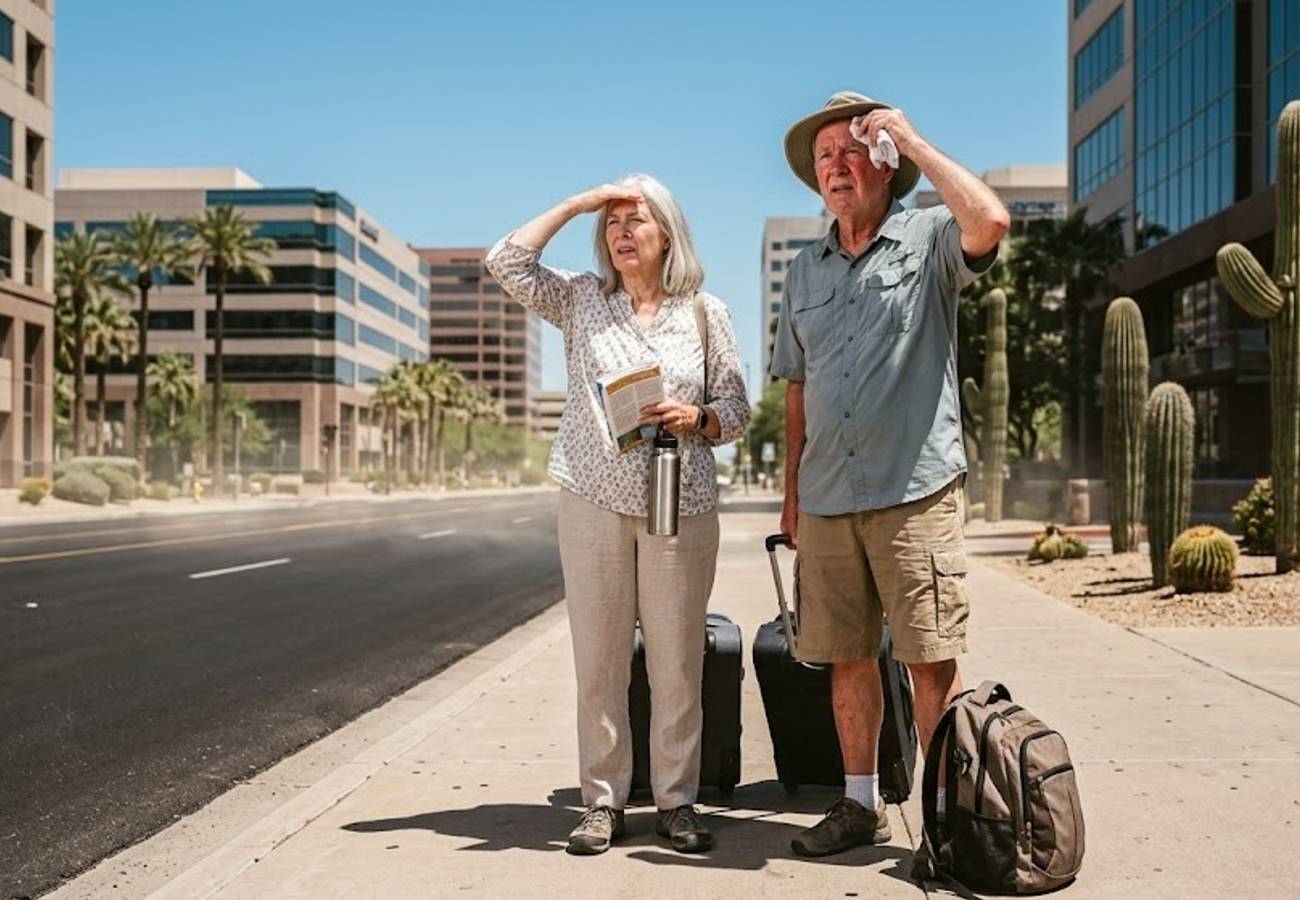
Image generated by AI
Summer travel in the United States is no longer just about destination choice, but about thermal endurance. New research indicates that Phoenix and other Arizona hubs are redefining "extreme heat," with sustained temperatures that fundamentally alter how tourists experience the American Southwest.
While many travelers associate high temperatures with temporary heatwaves, the data for Phoenix and its neighbors shows a persistent, seasonal baseline of intense heat. This shift is forcing a transformation in itinerary planning, moving outdoor excursions to early morning windows and increasing the reliance on indoor, climate-controlled attractions.
The Arizona Heat Dominance
Arizona’s influence on the national heat map is profound, claiming four of the seven hottest summer cities in the United States. Phoenix, the state capital, ranks second nationally. Between June and August, the city maintains an average summer temperature of 96.4°F, based on observations from 2020 to 2024.
Unlike cities that spike during specific weather events, Phoenix experiences this heat as a sustained seasonal state. The environment is characterized by extreme dryness, with average humidity hovering at 24.9% and minimal rainfall of 0.015 inches per day. With clear skies appearing 69% of the time, the lack of cloud cover exacerbates the thermal impact on pedestrians and outdoor enthusiasts.
Lake Havasu City: The National Peak
While Phoenix is a major metropolitan hub, Lake Havasu City holds the title of the hottest city in the U.S. during the summer. It records a staggering average temperature of 97.9°F.
The conditions here are even more arid than in Phoenix, with humidity dropping to 19.4% and rainfall averaging a mere 0.009 inches per day. Perhaps most striking is the sunshine exposure; clear skies prevail 96.1% of the time, creating a relentless environment of direct solar radiation.
Comparing the Desert Giants: Las Vegas and Yuma
Las Vegas and Yuma both share the third spot in the rankings, each recording an average summer temperature of 93.7°F. However, the "feel" of the heat differs significantly between the two due to atmospheric moisture.
- Las Vegas: Defined by nearly absolute sunshine, with clear skies 99.2% of the time—the highest proportion of any city in the top ten. Humidity is a low 18.5%.
- Yuma: While the temperature matches Las Vegas, the humidity is significantly higher at 31.9%. This increase in moisture makes the air feel "heavier" and more oppressive, despite a similarly low rainfall average of 0.003 inches per day.
The Humidity Factor in Texas and California
The research highlights a critical distinction between the "dry heat" of the West and the "humid heat" of the South. Texas cities like Eagle Pass and Laredo appear in the top ten, but their impact on the human body is driven by moisture.
Eagle Pass ranks fifth with an average of 88.9°F, but its humidity is 54.7%. Laredo follows at 88°F, recording the highest humidity of the entire group at 60.8%. This combination of heat and moisture creates a different physiological challenge for travelers compared to the arid conditions of Arizona.
Meanwhile, California's El Centro ranks fourth with an average of 92.8°F. It is the driest city in the study, receiving only 0.001 inches of rain per day, with clear skies dominating 97.3% of the season.
Regional Heat Metrics: Top 10 Summer Cities
| City | Avg Summer Temp (°F) | Humidity (%) | Daily Rainfall (Inches) | Clear Skies (%) |
|---|---|---|---|---|
| Lake Havasu City, AZ | 97.9 | 19.4 | 0.009 | 96.1 |
| Phoenix, AZ | 96.4 | 24.9 | 0.015 | 69.0 |
| Las Vegas, NV | 93.7 | 18.5 | 0.006 | 99.2 |
| Yuma, AZ | 93.7 | 31.9 | 0.003 | 91.9 |
| El Centro, CA | 92.8 | 32.2 | 0.001 | 97.3 |
| Eagle Pass, TX | 88.9 | 54.7 | 0.020 | 94.2 |
| Laredo, TX | 88.0 | 60.8 | 0.057 | 93.0 |
| Tucson, AZ | 87.3 | 34.4 | 0.059 | 92.0 |
| St. George, UT | 87.1 | 23.9 | 0.015 | 98.7 |
Strategic Travel Adjustments
For those visiting these regions, the data suggests that traditional sightseeing schedules are no longer viable. The high percentage of clear skies in cities like St. George (98.7%) and Las Vegas (99.2%) means there is virtually no natural relief from the sun during daylight hours.
Travelers are encouraged to:
- Prioritize "indoor-first" itineraries between 11:00 AM and 5:00 PM.
- Schedule hiking and urban exploration for the pre-dawn or post-sunset windows.
- Account for the "humidity gap"—recognizing that 88°F in Laredo can feel more taxing than 93°F in Las Vegas.
The American summer is evolving, turning the Southwest into a masterclass in extreme climate adaptation.
Related Travel Guides
Disclaimer
This article is for informational and educational purposes only. It does not constitute legal, financial, or professional advice. While we strive to provide accurate and up-to-date information, travel policies, regulations, and conditions change rapidly. Always verify information with official sources before making travel decisions. Nomad Lawyer makes no representations about the accuracy, reliability, completeness, or suitability of the information provided. Readers should consult qualified professionals for advice specific to their circumstances. The views expressed in this article are those of the author and do not necessarily reflect the views of Nomad Lawyer.
Preeti Gunjan
Contributor & Community Manager
A passionate traveller and community builder. Preeti helps grow the Nomad Lawyer community, fostering engagement and bringing the reader experience to life.
Learn more about our team →