Paris and Brussels Launch Joint European Gastronomy Pass Promoting Organic Dining and Local Vineyards

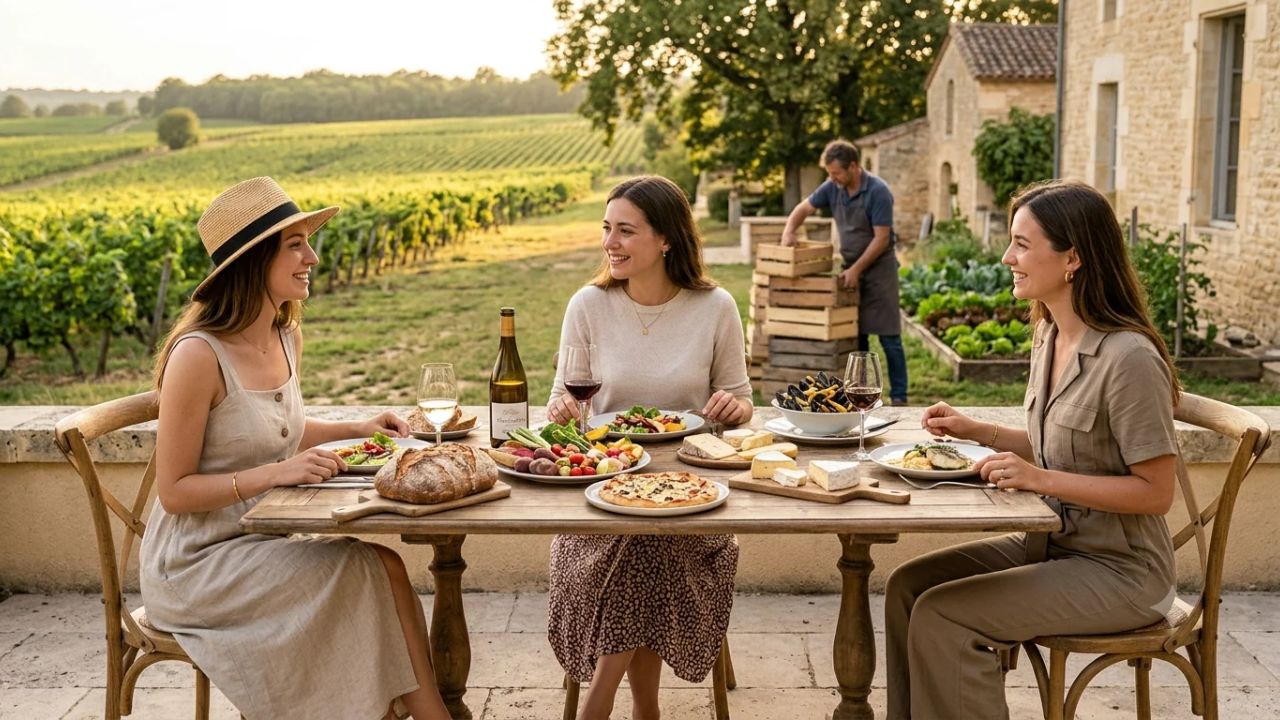
PARIS / BRUSSELS — The governments of France and Belgium have officially launched the European Gastronomy Pass, an unprecedented bilateral credential that unifies organic dining verification, zero-waste kitchen standards, and biodynamic viticulture across the cross-border corridor linking Paris, Grand Est, Wallonia, and Brussels. Developed through intensive intergovernmental negotiations between the French Ministry of Agriculture and Food Sovereignty and the Belgian Federal Public Service for Economy, the cross-border framework establishes a single, interoperable digital passport that certifies hospitality establishments committed to ecological transparency and hyper-local agricultural sourcing. Following the conclusion of its pilot operational phase, the initiative has formally onboarded over 1,450 certified restaurants, farm-to-table bistros, and independent heritage vineyards, creating an integrated economic corridor designed to combat rural depopulation, eliminate deceptive greenwashing in culinary marketing, and advance the European Union's Farm to Fork sustainability targets.
The rollout marks a major departure from Western Europe’s historically fragmented culinary tourism strategies. For decades, regional tourism boards and provincial wine syndicates promoted local culinary specialties within isolated geographical silos, forcing environmentally conscious travelers to navigate a confusing patchwork of municipal labels and differing national organic standards. By establishing legally codified, blockchain-audited standards recognized under official decrees in the Journal Officiel de la République Française and the Belgian Official Gazette, Paris and Brussels have created a transnational regulatory blueprint. The digital pass—accessible via a shared portal maintained by Atout France, VISITWallonia, and Toerisme Vlaanderen—allows international diners to identify certified establishments, track the farm-level provenance of menu ingredients, and calculate the environmental footprint of their gastronomic itineraries along high-speed rail corridors.
       EUROPEAN GASTRONOMY PASS: CROSS-BORDER ARCHITECTURE (2026)
       ==========================================================

       [ BILATERAL GOVERNANCE & INTERGOVERNMENTAL OVERSIGHT ]
       * French Ministry of Agriculture & Food Sovereignty
       * Belgian Federal Public Service for Economy (SPF Économie)
       * Coordinated by Atout France, VISITWallonia & Toerisme Vlaanderen
                                       |
                                       v
       [ THE THREE FOUNDATIONAL REGULATORY PILLARS ]
       1. Strict EU Organic Compliance (Regulation (EU) 2018/848)
       2. Hyper-Local Terroir Sourcing (≥ 70% within 150 km Radius)
       3. Carbon Auditing & Zero-Waste Circular Kitchen Mandates
                                       |
                 +---------------------+---------------------+
                 |                                           |
                 v                                           v
       [ CROSS-BORDER PILOT CORRIDORS ]            [ ONBOARDED ESTABLISHMENTS: 1,450 ]
       * Île-de-France (Paris Metropolitan)        * 680 Fine Dining & Gourmet Venues
       * Grand Est (Champagne, Alsace, Meuse)      * 320 Farm-to-Table Organic Bistros
       * Brussels-Capital Region                   * 450 Certified Heritage Vineyards
       * Wallonia (Ardennes, Namur, Liège)         * 85% Converted to Biodynamic Cultivation
                                       |                                           |
                                       +---------------------+---------------------+
                                                             |
                                                             v
       [ QUANTIFIABLE SOCIO-ECONOMIC & ECOLOGICAL DIVIDEND ]
       * 310,000+ Downloads in Q1 (42% Inbound UK, US & German Visitors)
       * +22.4% Direct Revenue Growth for Rural Organic Producers
       * 14,200 Metric Tonnes CO2e Avoided in Supply Chain Food Miles
       * €350 Million Economic Injection & 6,500 Green Jobs by End-2027
The Genesis of Cross-Border Gastronomic Harmonization
The origin of the European Gastronomy Pass stems from post-pandemic demographic and consumer behavioral data analyzed by national statistical institutes INSEE in France and Statbel in Belgium. These comprehensive economic bulletins confirmed an enduring structural transformation in culinary tourism: modern international travelers increasingly reject industrial mass dining and opaque supply chains, actively demanding verified authenticity, ecological responsibility, and transparent food origins when planning journeys. However, travelers seeking sustainable dining options historically faced an administrative maze of conflicting regional designations, varying organic trademarks (such as Bio Cohérence in France and Biogarantie in Belgium), and widespread greenwashing by commercial venues exploiting eco-friendly rhetoric without verifiable agricultural backing.
Recognizing that culinary heritage and agricultural trade naturally transcend geopolitical frontiers, French and Belgian ministerial working groups convened in early 2026 to dismantle regional silos. The resulting compact establishes a legally binding certification framework that harmonizes auditing protocols across both sovereign territories. Under this framework, participating restaurants and wine estates must undergo rigorous annual on-site inspections conducted by accredited third-party certification bodies authorized by the European Commission's Directorate-General for Agriculture and Rural Development.
CORE REGULATORY CRITERIA: EUROPEAN GASTRONOMY PASS
| Entity / Facility | Delays | Cancellations | Details |
|---|---|---|---|
| Compliance Pillar | Statutory Mandate | Verification Protocol | Environmental Target |
| Agricultural Base | 100% adherence to | Third-party audit; | Zero synthetic chemical |
| EU Reg. 2018/848 | soil residue testing | pesticides & fertilizers | |
| Terroir Sourcing | Minimum 70% raw | Blockchain ledger; | Drastic reduction in |
| ingredients from | farm delivery slips | agricultural transport | |
| within 150 km | audited quarterly | food miles | |
| Wine List Mandate | Minimum 50% organic | Demeter / Biodyvin | Renaissance of regional |
| or biodynamic wines | certified labels on | artisan vineyards; | |
| from local regions | restaurant cellars | eliminating chemicals | |
| Circular Operations | 100% organic waste | Municipal compost | Landfill diversion; |
| composting; energy | partnerships; smart | circular urban-rural | |
| consumption caps | metering audits | nutrient cycling |
The administrative structure of the pass is anchored by three rigorous operational pillars:
First, absolute compliance with European Union organic farming legislation (Regulation (EU) 2018/848) is mandatory across all tier-one suppliers. Participating dining establishments are legally prohibited from sourcing raw proteins, dairy, vegetables, or grains treated with synthetic chemical pesticides, petroleum-based nitrogen fertilizers, preventative antibiotics, or genetically modified organisms. In parallel, livestock suppliers must adhere to strict free-range animal welfare standards, ensuring natural pasture grazing and humane handling throughout the production lifecycle.
Second, the pass enforces a strict terroir sourcing threshold: participating chefs must source at least 70 percent of all raw culinary ingredients by weight and 50 percent of all cellar wines from certified organic producers located within a 150-kilometer radius of the restaurant. This geographic constraint eliminates the environmental overhead of long-haul airfreight and refrigerated road transport, ensuring that metropolitan diners in Paris or Brussels are directly supporting regional agrarian communities in Champagne, Picardy, Wallonia, and Flanders.
Third, the operational framework mandates comprehensive carbon accountability and circular kitchen management. Member establishments must measure and publish their annual energy and water consumption baselines, implement heat-recovery systems in commercial kitchens, and eliminate single-use plastics from prep lines. Additionally, venues must maintain zero-waste composting partnerships with local municipal compost facilities or rural agricultural cooperatives, recycling 100 percent of organic kitchen refuse back into agricultural compost to regenerate regional soils.
Quantitative Impact: Economics, Carbon Displacement, and Agronomic Shifts
The transition from theoretical policy to practical deployment across France and Belgium has yielded immediate, measurable returns across regional balance sheets and environmental metrics. According to first-quarter operational data released by the joint intergovernmental monitoring committee, the European Gastronomy Pass has established itself as an economic catalyst for rural regeneration and sustainable tourism.
       QUANTITATIVE PERFORMANCE METRICS: FIRST QUARTER 2026 DEPLOYMENT
       ===============================================================

       [ CERTIFIED NETWORK FOOTPRINT ]
       * 680 Fine Dining & Gourmet Restaurants (Paris, Brussels, Reims, Liège)
       * 320 Farm-to-Table Bistros & Rural Auberges
       * 450 Historic Vineyards & Artisan Breweries
       * Total Certified Establishments: 1,450
                                       |
                 +---------------------+---------------------+
                 |                                           |
                 v                                           v
       [ ECONOMIC DIVIDEND ]                       [ ENVIRONMENTAL GAINS ]
       * +22.4% Direct Revenue for Rural Farms     * 14,200 Tonnes CO2e Avoided
       * €45M Viticultural Conversion Subsidies    * 85% Vineyards Fully Biodynamic
       * €350M Projected Inflow by End-2027        * 100% Kitchen Organic Waste Diverted
       * 6,500 Permanent Rural Green Jobs          * Direct Blockchain Traceability
Within ninety days of official public release, more than 310,000 travelers downloaded and activated the European Gastronomy Pass mobile application. Demographically, international inbound tourists represent 42 percent of active users, with travelers originating from the United Kingdom, Germany, the United States, Canada, and Scandinavia accounting for the vast majority of cross-border culinary bookings. These high-yield travelers utilize the application’s interactive geo-mapping features to build multi-day gastronomic itineraries, combining urban dining in Paris and Brussels with excursion stays in rural farming hamlets and vineyard villages.
For regional agricultural producers, the economic impact has been transformative. Baseline financial audits indicate that small-scale certified organic farms operating within the 150-kilometer supply radius experienced an average 22.4 percent increase in direct wholesale revenue during the initial rollout. By connecting small family farms directly with high-volume urban restaurateurs, the pass eliminates predatory middlemen and wholesale broker margins, ensuring that farmers capture fair market compensation for labor-intensive organic cultivation.
In environmental terms, the initiative’s localization mandate has prevented an estimated 14,200 metric tonnes of carbon dioxide equivalent (CO2e) emissions across the cross-border food distribution chain. By replacing imported, carbon-intensive ingredients with regional seasonal produce, the average food-mile transit distance for participating dining venues plummeted from 1,280 kilometers down to just 82 kilometers.
ECONOMIC & ENVIRONMENTAL IMPACT ACROSS PILOT CORRIDORS
| Entity / Facility | Delays | Cancellations | Details |
|---|---|---|---|
| Geographic Corridor | Certified Entities | Rural Farm Revenue | Carbon Emissions |
| & Primary Focus | Formally Onboarded | Growth Rate | Reduction Achieved |
| Île-de-France | 420 Venues | +24.8% Direct | 4,600 Metric Tonnes |
| (Paris Basin / Seine) | (Restaurants/Cafés) | Organic Wholesale | CO2e Displaced |
| Grand Est | 480 Venues | +21.2% Producer | 5,100 Metric Tonnes |
| (Champagne / Alsace) | (Wineries/Auberges) | Growth (Vineyards) | CO2e Displaced |
| Brussels-Capital | 260 Venues | +23.5% Vegetable & | 2,300 Metric Tonnes |
| (Urban Metro Core) | (Bistros/Breweries) | Dairy Wholesale | CO2e Displaced |
| Wallonia | 290 Venues | +20.1% Livestock & | 2,200 Metric Tonnes |
| (Ardennes / Meuse) | (Farm-Stays/Bistros | Cheese Wholesale | CO2e Displaced |
Concurrently, regional viticulture has undergone an ecological resurgence. Out of the 450 wine estates and artisanal cider orchards onboarded into the registry, over 85 percent have completed the rigorous transition to certified biodynamic or organic farming methodologies. To offset the temporary yield drops associated with eliminating synthetic systemic fungicides and chemical herbicides, the French and Belgian finance ministries deployed a combined €45 million transitional grant fund. Winemakers utilized these capital infusions to invest in mechanical weed control, natural plant-based treatments (such as horsetail and stinging nettle decoctions), and solar-powered electric vineyard tractors.
Looking toward the conclusion of 2027, macroeconomic predictive models developed by the OECD Tourism Committee estimate that the European Gastronomy Pass network will generate an aggregate economic dividend exceeding €350 million across regional agricultural and hospitality sectors. This sustained economic flow is projected to sustain and create over 6,500 permanent, non-relocatable rural employment positions, providing a viable financial buffer for multi-generational agricultural communities confronting rural depopulation.
The Viticultural Renaissance: From Champagne to the Meuse Valley
The integration of heritage viticulture into the European Gastronomy Pass has altered wine tourism across northern France and southern Belgium. Traditionally, wine tourism was characterized by exclusive, high-cost tastings concentrated in globally renowned sub-regions like the Côte des Blancs in Champagne or the Route des Grands Crus in Burgundy. Smaller, independent winemakers practicing restorative biodynamics were routinely overshadowed by heavily marketed industrial champagne houses and commercial negociants.
Under the statutory mandates of the pass, restaurants are legally obligated to allocate at least 50 percent of their wine lists to certified organic or biodynamic bottles produced within their broader geographical terroir. This quota has created an insatiable market appetite for independent organic vignerons who previously lacked access to elite Parisian and Brussels dining rooms.
       THE CROSS-BORDER BIODYNAMIC WINE CORRIDOR
       =========================================

       [ CHAMPAGNE & MONTAGNE DE REIMS (FRANCE) ]
       * Focus: Low-dosage, zero-herbicide biodynamic champagnes
       * Independent growers (RM - Récoltant-Manipulant) gain direct market access
       * Replaces synthetic chemical treatments with cover-cropping & equine plowing
                                       |
                                       v (TGV / High-Speed Transit)
       [ THE MEUSE VALLEY & WALLONIA (BELGIUM) ]
       * Focus: Cold-climate organic viticulture (Côtes de Sambre et Meuse AOP)
       * Emerging grape varieties: Johanniter, Solaris, Regent, Souvignier Gris
       * Micro-vineyards integrated with organic culinary farm-stays & cideries
                                       |
                                       v
       [ ALSACE & THE VOSGES FOOTHILLS (FRANCE) ]
       * Focus: Demeter-certified Riesling, Pinot Gris & Gewurztraminer
       * Soil biodiversity restoration through polycultural hedgerows & agroforestry
In the Champagne region, independent grower-producers (récoltants-manipulants) across the Marne Valley and the Côte des Bar have capitalized on the pass to showcase low-intervention cuvées produced without chemical fining, synthetic fertilizers, or artificial dosage adjustments. Cellar doors that once saw modest visitor traffic now host international travelers booking certified educational tours through the mobile application. In-depth cellar workshops immerse travelers in the scientific realities of biodynamic viticulture—demonstrating how cover crops of clover and mustard prevent soil erosion, how draft horses replace heavy diesel tractors to eliminate subsoil compaction, and how ambient vineyard biodiversity enhances natural yeast fermentation in the cellar.
Simultaneously, the initiative has cast a brilliant spotlight on Belgium’s emerging, resilient cold-climate viticulture. Along the terraced limestone hillsides of the Meuse Valley in Wallonia, winemakers operating under the Côtes de Sambre et Meuse protected designation of origin (AOP) are pioneering climate-resilient viticulture. Specializing in disease-resistant hybrid grape varieties (PIWI varietals such as Solaris, Johanniter, and Regent) that require up to 80 percent fewer organic copper-sulfate spray treatments than traditional European vines, Belgian winemakers have seen cellar-door retail sales leap by 35 percent. International travelers utilizing the pass can travel seamlessly from the Grand Est into Wallonia, discovering a dynamic, low-carbon wine landscape that mirrors the ecological philosophy of the culinary kitchens they visit.
Circular Kitchens and Blockchain Traceability: Eliminating the Greenwashing Trap
A defining architectural strength of the European Gastronomy Pass is its technological infrastructure, which prevents fraudulent claims of sustainability. The modern restaurant industry has long suffered from greenwashing, where commercial dining establishments employ decorative buzzwords such as "artisanal," "farm-fresh," and "sustainable" without undergoing independent audits or possessing verifiable farm receipts.
To provide diners with unassailable transparency, the pass integrates an enterprise-grade digital ledger tracking system developed under European Union open-source blockchain standards:
       BLOCKCHAIN INGREDIENT PROVENANCE & CIRCULAR RESTAURANT AUDIT
       ============================================================

       [ 1. AGRICULTURAL HARVEST (CERTIFIED ORGANIC FARM) ]
       Farmer registers harvest volume, plot coordinates & certification hash
       Generates immutable digital batch token (e.g., Organic Heirlooms, Grand Est)
                                       |
                                       v
       [ 2. WHOLESALE LOGISTICS (LOW-EMISSION DIRECT ROUTE) ]
       Electric transport vehicle logs pickup, GPS transit path & delivery time
       Verifies total delivery distance remains strictly under 150 km radius
                                       |
                                       v
       [ 3. RESTAURANT PREPARATION (CIRCULAR ZERO-WASTE KITCHEN) ]
       Chef logs receipt of batch token into cloud-based inventory system
       Kitchen implements full-utilization prep; prep trimmings sent to compost
                                       |
                                       v
       [ 4. DINER INTERACTION (EUROPEAN GASTRONOMY PASS APP) ]
       Guest scans secure table QR code via mobile application
       Displays verified interactive profile: Farm name, farmer identity,
       harvest date, transport carbon footprint, and official EU organic certificate
When a certified restaurant receives a shipment of organic winter vegetables from an organic cooperative in Picardy or free-range artisanal poultry from a family farm in the Belgian Ardennes, the delivery is verified through a digital smart contract. The supplier's verified agricultural certification number, harvest timestamp, and exact farm coordinates are logged directly into the digital ledger.
When guests sit down at a participating restaurant in central Paris or the Brussels European Quarter, they scan the table’s verified QR code using the European Gastronomy Pass mobile application. The screen displays an interactive ingredient map detailing the precise farm origins of the dish they are enjoying, introducing them to the multi-generational farmers who cultivated the heirloom grains in their sourdough or raised the heritage dairy cattle behind their unpasteurized cheese.
Concurrently, the circularity of the restaurant’s back-of-house operations is strictly tracked. In traditional urban gastronomy, commercial kitchens generate staggering quantities of organic waste, with prep trimmings, vegetable peels, and unconsumed food discarded into municipal garbage bags destined for carbon-emitting incinerators or methane-producing landfills. Certified pass establishments must operate closed-loop food waste systems. Chefs utilize nose-to-tail and root-to-stem cooking philosophies, transforming vegetable scraps into concentrated demi-glace broths and dehydrating citrus rinds for seasoning salts.
Unusable organic refuse is segregated into specialized organic collection bins. In Paris, electric cargo bikes collect these bins and transport them to regional anaerobic digesters and industrial vermicomposting facilities, transforming food scraps into renewable biomethane fuel and nutrient-dense organic fertilizer that is returned to the very peri-urban farms supplying the city's restaurants.
Connecting Rail Networks and Low-Carbon Culinary Corridors
The physical movement of travelers across the French-Belgian gastronomic corridor is intentionally anchored to low-carbon mass transit, demonstrating that modern culinary tourism can operate without relying on domestic aviation or private fossil-fuel car travel. The core spine of the pass network follows the high-speed rail corridor operated by Eurostar (incorporating the former Thalys high-speed rail network), connecting Paris Gare du Nord to Bruxelles-Midi in just one hour and twenty-two minutes.
       THE LOW-CARBON RAIL & CULINARY CIRCUIT: PARIS TO BRUSSELS
       =========================================================

       [ PARIS GARE DU NORD ]
       * Organic Michelin-starred venues in the 11th & 10th Arrondissements
       * Urban micro-breweries & rooftop beehives; peri-urban Seine-et-Marne farms
                                       |
                                       v (Eurostar / TGV High-Speed: 1h 22m)
       [ BRUSSELS-MIDI / BRUXELLES-CENTRAL ]
       * Certified organic brasseries around the Grand-Place & Saint-Géry
       * Lambic & Gueuze breweries utilizing local organic barley and hops
                                       |
                 +---------------------+---------------------+
                 |                                           |
                 v (TER East: 45 min)                        v (SNCB South: 55 min)
       [ CHAMPAGNE: REIMS / ÉPERNAY ]              [ WALLONIA: NAMUR / DINANT ]
       * Biodynamic cellar door tastings           * Meuse Valley hillside organic vines
       * Polycultural organic farm stays           * Ardennes artisan cheese cooperatives
By framing high-speed rail as an integral component of the gastronomic experience, tourism authorities encourage visitors to design multi-destination vacations with near-zero transit emissions. An international traveler can experience modern plant-forward fine dining in Paris on Friday evening, board an early Saturday morning train to Reims for an educational cellar tour with a biodynamic champagne grower, and arrive in Brussels by evening to dine at a zero-waste organic bistro in the historic Saint-Géry district.
For regional exploration beyond high-speed railway terminals, regional transport operators—including France’s TER Grand Est and Belgium’s SNCB/NMBS—offer synchronized culinary connecting passes. These passes provide unlimited regional train and connecting electric shuttle bus transport connecting rural stations with off-the-beaten-path farm-stays, artisan cider mills, and monastic breweries across the Ardennes and the Meuse Valley. Municipalities have complemented these rail connections by installing electric vehicle charging infrastructure and e-bike rental stations at regional rail depots, ensuring seamless, carbon-free "last-mile" mobility for visiting food enthusiasts.
Institutional Alignment: European Green Deal and the Global Tourism Benchmark
The establishment of the European Gastronomy Pass represents more than a successful regional tourism campaign; it stands as an operational realization of the European Union’s overarching ecological strategies. Most notably, the project directly advances the targets of the EU "Farm to Fork" strategy—a cornerstone of the European Green Deal that aims to transition at least 25 percent of the European Union's agricultural land to organic farming by 2030, while cutting overall chemical pesticide use by 50 percent.
By creating a guaranteed commercial conduit connecting certified organic growers with high-volume urban hospitality demand, the pass provides the economic security necessary for farmers to transition away from chemical-intensive industrial farming. Agricultural ministries in both France and Belgium have integrated the pass into their statutory national strategic plans under the EU Common Agricultural Policy (CAP), offering preferential low-interest loans, tax credits, and priority access to state-sponsored agronomic consulting for farmers committing supplies to the pass network.
POLICY ALIGNMENT: TRANSNATIONAL GASTRONOMIC FRAMEWORKS
| Entity / Facility | Delays | Cancellations | Details |
|---|---|---|---|
| Institutional Body | Policy Framework | Strategic Synergy | Global Governance Role |
| European Commission | European Green Deal | Advances 25% | Codified into national |
| "Farm to Fork" Plan | organic land goal | CAP strategic subsidy | |
| by 2030 | allocation frameworks | ||
| OECD Tourism | Committee on | Case study in | Transnational policy |
| Committee | Sustainability & | transnational | template evaluated for |
| Competitiveness | governance metrics | broader OECD adoption | |
| UN Tourism | Sustainable | Benchmark for | Masterclass in |
| (UNWTO) | Tourism Programme | destination | regenerative culinary |
| management systems | travel policy design | ||
| National Treasuries | Franco-Belgian | €45M Viticulture | De-risking ecological |
| (France / Belgium) | Bilateral Accord | Transition Fund; | conversion for multi- |
| €350M economic aim | gen farming families |
The structural rigor of the initiative has drawn enthusiastic commendation from international governing bodies. The United Nations World Tourism Organization (UN Tourism) published an official policy briefing note highlighting the Franco-Belgian pass as an exemplary benchmark in regenerative tourism, noting that the initiative fundamentally reframes culinary tourism from a consumptive leisure activity into a restorative economic mechanism that actively heals agrarian landscapes.
Similarly, the OECD Tourism Committee is utilizing the French-Belgian framework as an active case study to develop formal policy recommendations for cross-border tourism collaboration across its 38 member states. By proving that neighboring nations can harmonize complex food safety, agricultural certification, and environmental auditing frameworks across sovereign boundaries, Paris and Brussels have provided a scalable template for transnational ecological governance.
Strategic Traveler Blueprint: How to Navigate the European Gastronomy Pass
For international epicures, wine collectors, and eco-conscious travelers planning to explore France and Belgium, maximizing the benefits of the European Gastronomy Pass requires a coordinated approach to booking, transit, and culinary scheduling:
       TRAVELER STEP-BY-STEP BLUEPRINT: THE SUSTAINABLE CULINARY TRAIL
       ==============================================================

       [ 1. DIGITAL CREDENTIAL REGISTRATION ]
       * Download the European Gastronomy Pass app via official tourism portals
       * Create secure profile; configure dietary preferences & carbon tracking
       * Unlock member-exclusive cellar door allocations and priority reservations
                                       |
                                       v
       [ 2. TRANSIT SYNCHRONIZATION: RAIL OVER ROAD ]
       * Book high-speed Eurostar tickets (Paris Nord <==> Bruxelles-Midi in 82m)
       * Add regional TER Grand Est & SNCB rail passes for rural vineyard loops
       * Reserve e-bikes at rural stations for carbon-free last-mile vineyard transit
                                       |
                                       v
       [ 3. BALANCED ITINERARY SCHEDULING ]
       * Anchor travel around 2 days urban gastronomy (Paris/Brussels organic bistros)
       * Dedicate 3 days to rural immersion (Champagne estates & Meuse Valley farm-stays)
       * Schedule cellar visits on weekdays to participate in working vineyard tours
                                       |
                                       v
       [ 4. INGREDIENT & TERROIR ENGAGEMENT ]
       * Scan on-table QR codes to review blockchain farm origins and soil metrics
       * Request organic or biodynamic pairings certified under Demeter / Biodyvin
       * Participate in harvest workshops and composting demonstrations at farm-stays
- Activate the Digital Pass Prior to Departure: Access the official portal through Atout France or VISITWallonia to register your digital pass. The mobile app provides offline access to certified establishment listings, real-time dining reservation availability, and verified biodynamic wine estate opening hours. In addition, pass holders unlock exclusive access to small-batch cellar door allocations and private estate barrel tastings that are closed to the general public.
- Prioritize High-Speed Rail Connections: Eliminate internal car rentals by structuring your itinerary around the central Paris-Brussels high-speed rail axis. Utilize regional rail connections to access the vineyards of Champagne (via Reims and Épernay), the artisan cheese cooperatives of the Belgian Ardennes (via Namur and Dinant), and the organic produce farms of Picardy, utilizing station-side electric bicycle hire for rural exploration.
- Engage with Farm-to-Table Transparency: Take advantage of the application’s blockchain ingredient tracking. When seated at certified restaurants, scan the table credential to explore the stories of local farmers supplying your meal. Dining at these venues represents direct financial participation in Europe’s agrarian transition, providing smallholder farmers with the stable revenues needed to practice restorative, pesticide-free agriculture.
- Venture Beyond Familiar Wine Classifications: Challenge traditional preconceptions by exploring both biodynamic grand crus in France and emerging cold-climate hybrid varietals along Belgium's Meuse Valley. Pairing low-intervention Belgian white wines crafted from Solaris or Johanniter grapes with local farm cheeses provides an unforgettable sensory window into the future of climate-adaptive European viticulture.
The launch of the European Gastronomy Pass represents a triumphant reimagining of European culinary travel. By linking the gastronomic brilliance of Paris and Brussels directly to the soil health of surrounding rural terroirs, France and Belgium have established that extraordinary culinary pleasure and rigorous ecological stewardship are not conflicting ideals, but rather inseparable partners in the preservation of European culture.
Related Travel Guides
- Japan Overhauls Tax-Free Shopping as Tourists Must Pay Upfront Consumption Tax Before Airport Exit Checks
- European Business Travel Spending to Surge to €404 Billion in 2026 as Germany and UK Lead
- Haiti Issues Marine Weather Warning as Six-Foot Waves and Thunderstorms Threaten Northern Waters
- Kyoto Sagano Romantic Train Enters Final Season as Historic Rolling Stock Retires
- Global Travel Spending to Hit $1.8 Trillion in 2026 as International Arrivals Reach 1.57 Billion
This article is for informational purposes. Flight routes, passenger regulations, visa rules, and transit advisories are subject to change by airlines and aviation authorities. Readers are advised to verify schedules and travel documentation with relevant carriers and border agencies before departure.
Related Stories
Paris and Brussels Launch Joint European Gastronomy Pass for Organic Dining in 2026

Indonesia Pioneers the Global Regenerative Tourism Revolution: Inside the High-Yield Shift from Mass Footprint to Ecological Restoration