
Paraguay Tourism Takes the Chaco Into Focus as Jaguar Safaris and Estancia Stays Rise
Paraguay Tourism Takes the Chaco Into Focus as Jaguar Safaris and Estancia Stays Rise

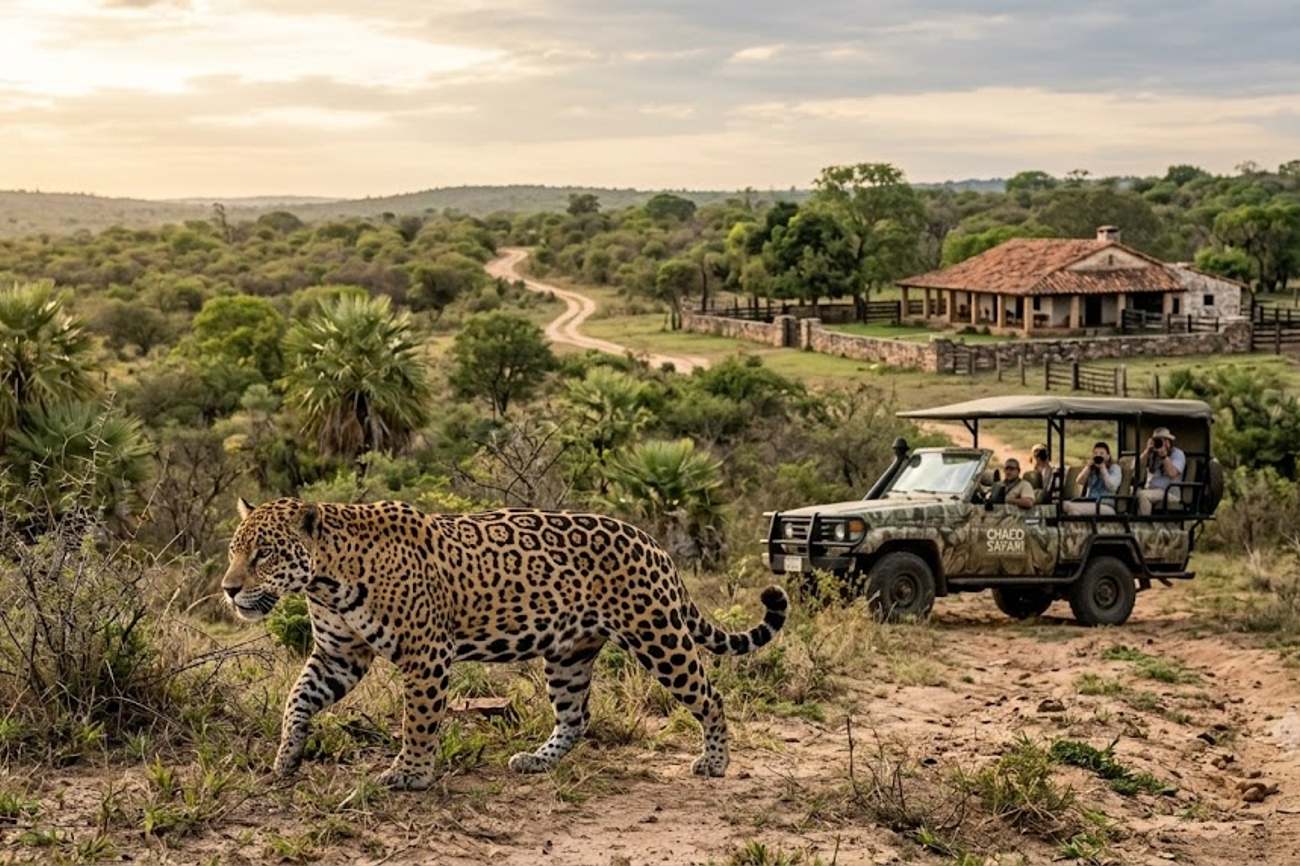
Image generated by AI
Analysis: Travel Industry Trend Analyst Date: October 2023 Topic: The Pivot to Specialized Wilderness Tourism in the Gran Chaco Organization: nomadlawyer.org
While traditional urban tourism in Paraguay has historically centered on the capital and border hubs, the strategic shift toward the Gran Chaco represents a move into high-yield, low-impact specialized travel. The emergence of the Defensores del Chaco National Park as a primary anchor—covering 720,000 hectares—signals a departure from mass-market tourism toward a conservation-led model that prioritizes biodiversity over passenger volume.
The Gran Chaco in Numbers: Scaling Wilderness Tourism
The data indicates that Paraguay is no longer competing for the general leisure traveler but is instead targeting the "specialist" segment. The primary asset in this strategy is the Defensores del Chaco National Park, an area of 720,000 hectares spanning the Boquerón and Alto Paraguay regions. To put this in perspective, the park's remoteness is a quantified barrier to entry: it is located approximately 660 kilometres from Asunción. This distance necessitates specialized logistics, including 4x4 vehicles and regulated access managed by park authorities and guardaparques.
The focus of this expansion is heavily weighted toward "Apex Predator Tourism." The Ministry of Environment and Sustainable Development (MADES) has transitioned from passive observation to active data collection. In July 2026, MADES reported the deployment of camera traps and monitoring technology to map jaguar distribution and behavior. This data-driven approach culminated in an international specialist summit held from 1 to 4 September, focusing on standardized monitoring methods for jaguar populations. By integrating these scientific metrics into the visitor experience, Paraguay is shifting the value proposition from simple sightseeing to "conservation-led" travel.
Comparative Context: The Shift to Specialized Nature Travel
When comparing the Gran Chaco's trajectory to broader South American trends, we see a movement away from the "Amazonian Rainforest" archetype. While destinations like Brazil and Peru focus on tropical biodiversity, Paraguay is leveraging the "Dry Forest" and "Cerro León" landscapes to carve out a unique market share. This is a strategic diversification; by offering an environment that differs from the continent's typical rainforests, Paraguay reduces direct competition with established giants.
The integration of "Estancia Tourism" further differentiates the Chaco model. Unlike the purely wild reserves found in other regions, the Chaco integrates productive agricultural landscapes with biodiversity. This hybrid model allows for a distribution of tourism expenditure into rural businesses, preventing the "leakage" of capital that often occurs when tourism is concentrated in urban centers.
The following table illustrates the shift in Paraguay's tourism product offering:
| Metric | Traditional Urban/Border Model | Emerging Chaco Wilderness Model |
|---|---|---|
| Primary Driver | Trade and Urban Transit | Biodiversity and Conservation |
| Core Geography | Asunción / Border Towns | Defensores del Chaco (720,000 ha) |
| Access Requirement | Standard Infrastructure | Specialized 4x4 / Regulated Entry |
| Key Wildlife Target | General Flora/Fauna | Jaguars, Pumas, Giant Anteaters |
| Economic Impact | Concentrated Urban Centers | Distributed Rural Estancias |
| Cultural Focus | National History | Indigenous Ayoreo & Guaraní Ñandeva |
According to data from the World Tourism Organization (UNWTO), sustainable tourism is increasingly driven by "authentic" and "remote" experiences. Paraguay is aligning with this global trend by incorporating Indigenous communities—specifically the Ayoreo and Guaraní Ñandeva—into the tourism framework. The "Ñande Chaco" project, launched in 2026 in partnership with the Wildlife Conservation Society Paraguay, focuses on the communities of Pykasu, Siracua-Centro, and Ñu Guasu. This ensures that the growth in visitor numbers is tied to Indigenous rights and biodiversity conservation rather than extractive tourism.
What This Means for Travelers
For the individual traveler, the data suggests that the Gran Chaco is not a "plug-and-play" destination. The 660-kilometre distance from the capital and the regulated nature of the Defensores del Chaco National Park mean that spontaneous travel is virtually impossible.
- Logistics Planning: Travelers must secure specialized 4x4 transport and obtain explicit permissions from park authorities. Booking these services 3-6 months in advance is recommended due to the limited number of certified guides capable of navigating the dry forest.
- Seasonal Timing: Given the focus on jaguar tracking and camera trap data, travelers should coordinate visits with the peak activity windows of the species. High-value travelers should look toward Estancia-based accommodations to serve as a logistical hub for remote excursions.
- Cultural Engagement: The shift toward community-managed crafts and the proposed Gran Chaco American Interpretation Centre suggests that the best experiences will be those that integrate local Indigenous guides. Travelers should prioritize itineraries that explicitly mention the Ñande Chaco project or similar community-led initiatives.
Forward Projection: The Institutionalization of the Chaco
The trajectory of the region suggests a move toward a highly regulated "Biosphere" model. The establishment of the Chaco Biosphere Reserve management committee in August 2026 is a critical indicator. By bringing together government institutions, producers, and Indigenous peoples, Paraguay is creating a governance structure that prevents the "over-tourism" seen in other South American hotspots.
We can expect the "Interpretation Centre" to become the primary gateway for visitors, acting as a filter to ensure that those entering the 720,000-hectare reserve are educated on conservation protocols. This institutionalization will likely lead to an increase in the "per-visitor" spend, as the experience shifts from budget backpacking to high-cost, specialized wildlife photography and scientific tourism. For those tracking market movements via IATA or Statista, this represents a pivot toward the "Luxury Wilderness" segment, where exclusivity is driven by remoteness and ecological scarcity.
FAQ: Gran Chaco Tourism 2026
Will prices for Chaco trips increase? Yes. The shift toward regulated, conservation-led tourism and the requirement for specialized 4x4 logistics and certified guides will likely drive up the cost per trip compared to urban tourism.
Is this a good time to book a wildlife safari? Yes, as the infrastructure for "Estancia Tourism" is expanding. However, because access to Defensores del Chaco is regulated, you must book through authorized operators to ensure entry.
Which animals are the primary draw for this region? The data highlights the jaguar as the primary symbol, but the region is also a critical habitat for pumas, giant anteaters, tapirs, and armadillos.
How does this differ from an Amazon trip? The Chaco focuses on "dry forests" and mountain formations (like Cerro León) rather than tropical rainforests, offering a distinct ecosystem and a less crowded, more remote experience.
The Gran Chaco is transitioning from a forgotten frontier to a precision-engineered conservation product.
Tags: Defensores del Chaco, Jaguar Conservation 2026, Paraguay Wilderness Growth, Gran Chaco Biosphere, Indigenous Tourism Paraguay, Specialized Nature Travel
Related Travel Guides
- Korea Tourism Roadshow Draws 500+ Travel Trade Professionals, Signalling Fresh India Growth
- Brazil Shakes Up Global Wellness Travel By Creating The Perfect Sanctuary Deep Within Chapada Diamantina, Here’s The Latest Update
- 9 Viral Upstate New York Escapes from Watkins Glen and Boldt Castle to Howe Caverns and Cooperstown That Travelers Cannot Ignore in 2026
Disclaimer
This article is for informational and educational purposes only. It does not constitute legal, financial, or professional advice. While we strive to provide accurate and up-to-date information, travel policies, regulations, and conditions change rapidly. Always verify information with official sources before making travel decisions. Nomad Lawyer makes no representations about the accuracy, reliability, completeness, or suitability of the information provided. Readers should consult qualified professionals for advice specific to their circumstances. The views expressed in this article are those of the author and do not necessarily reflect the views of Nomad Lawyer.
Raushan Kumar
Founder & Lead Developer
Full-stack developer with 11+ years of experience and a passionate traveller. Raushan built Nomad Lawyer from the ground up with a vision to create the best travel and law experience on the web.
Learn more about our team →