
Paraguay Launches Integrated Heritage Tourism Route Linking Itapúa and the Paraná Corridor in 2026
Paraguay is transforming southern tourism by linking UNESCO Jesuit Reductions in Itapúa with the Itaipú Dam via new infrastructure and transport corridors.
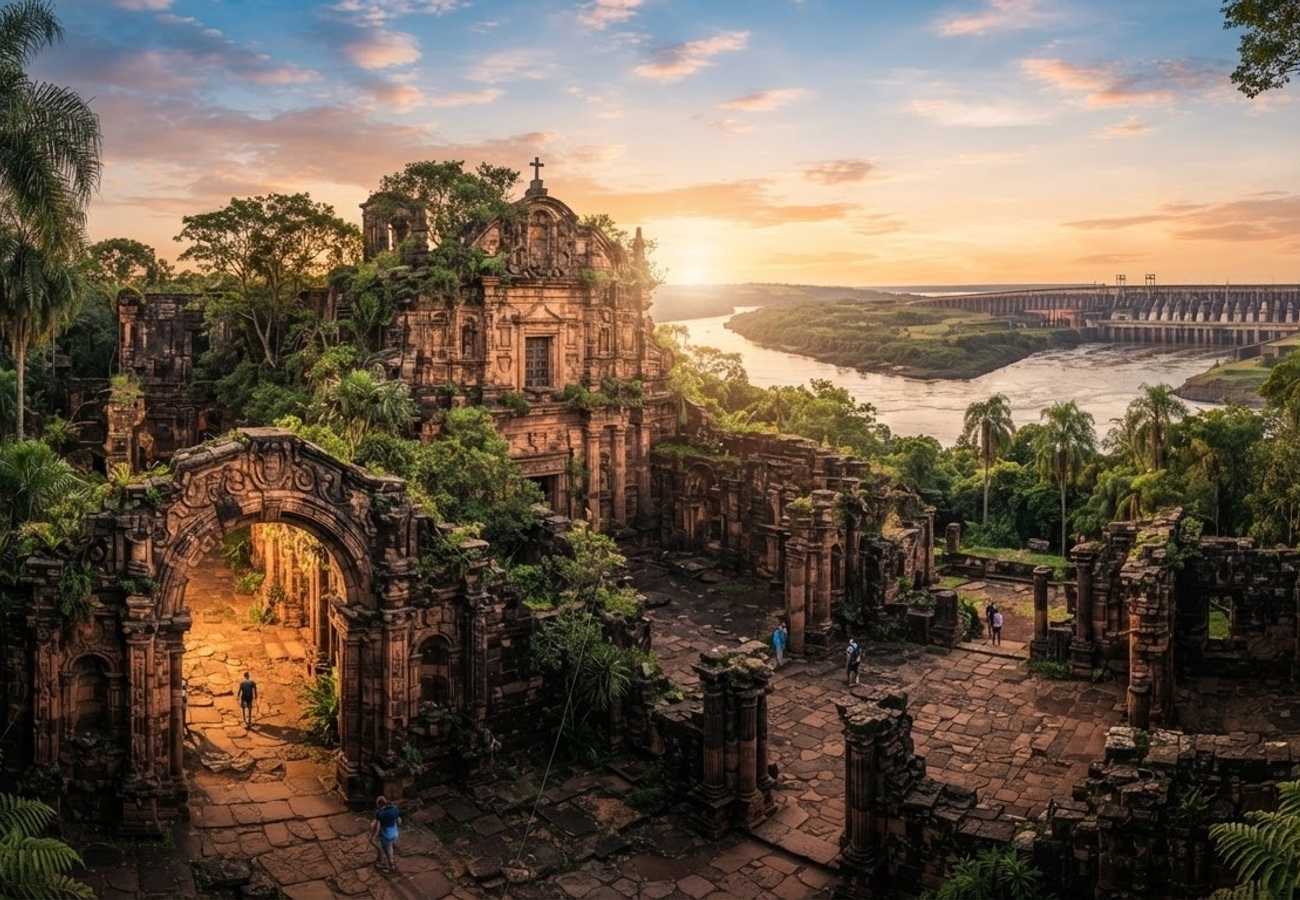
Image generated by AI
Paraguay is fundamentally restructuring its southern tourism landscape by integrating the historical Jesuit Reductions of Itapúa with the modern engineering marvel of the Itaipú Dam into a single, interconnected heritage route. This strategic expansion, supported by significant infrastructure upgrades along the Paraná corridor, aims to transition the region from a series of isolated day-trip destinations into a comprehensive, multi-city travel circuit.
The initiative focuses on the southern reaches of the country, where the intersection of colonial history and industrial achievement creates a unique value proposition for international travelers. By improving ground transport between the hub of Ciudad del Este and the city of Encarnación, regional operators are now capable of offering structured, multi-day itineraries that encourage longer visitor stays and distributed economic impact across several departments.
Itapúa Emerges as a Cultural Tourism Anchor
The department of Itapúa is currently undergoing a transformation to solidify its position as the heart of Paraguay's cultural tourism. Central to this effort are the archaeological complexes of the former Jesuit missions, which serve as primary draws for history enthusiasts and academic travelers.
The region is home to two globally recognized sites: La Santísima Trinidad de Paraná and Jesús de Tavarangüé. Both are designated as UNESCO World Heritage sites, preserving the stone architecture and urban layouts of the Jesuit mission settlements. Recent infrastructural renovations at these sites are designed to improve visitor flow and accessibility without compromising the integrity of the archaeological remains.
Beyond the ruins themselves, the development of better visitor facilities and improved road access is fostering a symbiotic relationship between the heritage sites and the local economy. This includes the expansion of boutique accommodations, regional restaurants, and professional guiding services that allow tourists to immerse themselves in the local culture of Itapúa.
Contrasting the Jesuit Reductions of Trinidad and Jesús
While both sites belong to the same historical era, the two Jesuit Reductions offer distinct architectural and atmospheric experiences, providing depth to the cultural corridor.
La Santísima Trinidad de Paraná is widely noted for its substantial surviving stone structures and the sheer scale of its architectural remains. In contrast, Jesús de Tavarangüé provides a different perspective, featuring the remains of an unfinished church and associated mission buildings that offer insight into the construction challenges and social organization of the time.
For the international traveler, the proximity of these two sites allows for a comparative study of colonial religious life. Rather than treating these locations as standalone excursions, the new regional strategy encourages visitors to pair these sites with visits to nearby rural communities and the sampling of regional gastronomy, effectively turning a historical tour into a holistic cultural experience.
Encarnación as the Strategic Gateway to the South
Encarnación serves as the critical urban anchor for this emerging network. Positioned strategically on the banks of the Paraná River, directly opposite Argentina, the city provides the necessary logistics and hospitality infrastructure to support high volumes of tourists.
The city is evolving from a simple transit point into a primary base of operations. By utilizing Encarnación as a starting point, travelers can easily access the Jesuit sites before venturing further along the Paraná corridor. This shift is expected to increase the average length of stay for visitors, as the city offers a sophisticated urban environment that complements the rustic nature of the archaeological sites.
Furthermore, Encarnación's geography makes it a prime location for cross-border tourism. There is significant potential for integrated packages that allow travelers to move seamlessly between northeastern Argentina and southern Paraguay, tapping into a wider South American tourism market.
Integrating the Engineering Scale of Itaipú Dam
A defining feature of this new tourism product is the inclusion of the Itaipú Dam, which introduces a starkly different dimension to the itinerary. Located near Ciudad del Este, this hydroelectric complex is one of the most significant engineering feats in human history.
By linking the Itaipú Dam with the Jesuit Reductions, Paraguay is creating a narrative of contrast: the spiritual and colonial past versus the industrial and energetic future. This combination appeals to a diverse range of travelers, including those interested in architecture, civil engineering, and environmental science.
The transition from the centuries-old stone carvings of the missions to the massive concrete walls of the dam provides a comprehensive overview of the Paraná River's role in shaping the nation's identity—first as a frontier for religious expansion and later as a powerhouse for regional energy.
Logistics and the Shift Toward Unified Regional Routes
The viability of this corridor depends entirely on the ground connectivity between Ciudad del Este and Encarnación. The improvement of road logistics is the "glue" that allows regional operators to move away from fragmented, single-destination tours.
Industry sources indicate that operators are now designing multi-day packages that link the three pillars of the route:
- The Engineering Pillar: Itaipú Dam (Ciudad del Este)
- The Urban Pillar: Encarnación
- The Heritage Pillar: The Jesuit Reductions of Trinidad and Jesús
This unified approach ensures that transport providers, hotels, and local guides are part of a single supply chain, reducing the friction of travel for the tourist and increasing the total expenditure per visitor.
Sustainable Growth and Heritage Preservation
As visitor numbers rise, the focus has shifted toward managing tourism in a way that protects the fragile archaeological sites. Infrastructure investment is not merely about increasing capacity but about implementing sustainable visitor management systems.
By distributing tourists across a wider circuit—rather than concentrating them solely in the major cities—Paraguay is effectively spreading the economic benefits to smaller, secondary destinations. This prevents "over-tourism" at any single site while providing a more authentic and less crowded experience for the traveler.
Why This Matters: The Traveler's Perspective
From a logistical standpoint, this integration removes the primary barrier to visiting southern Paraguay: the difficulty of coordinating transport between disparate high-value sites. For the modern traveler, this means the difference between a stressful, self-organized trip and a seamless, curated experience.
From a cultural perspective, this route provides an "Information Gain" that a single-site visit cannot. The traveler no longer sees the Jesuit missions as isolated ruins but as part of a broader geographical and historical evolution that culminates in the modern industrialization of the Paraná River. It transforms a vacation into an educational journey through the socio-economic history of the Southern Cone.
Paraguay is successfully bridging the gap between its colonial echoes and its industrial ambitions, creating a world-class tourism corridor.
Related Travel Guides
Disclaimer
This article is for informational and educational purposes only. It does not constitute legal, financial, or professional advice. While we strive to provide accurate and up-to-date information, travel policies, regulations, and conditions change rapidly. Always verify information with official sources before making travel decisions. Nomad Lawyer makes no representations about the accuracy, reliability, completeness, or suitability of the information provided. Readers should consult qualified professionals for advice specific to their circumstances. The views expressed in this article are those of the author and do not necessarily reflect the views of Nomad Lawyer.