
Papua New Guinea Opens New Road Route From Port Moresby To Lae
Papua New Guinea Opens New Road Route From Port Moresby To Lae

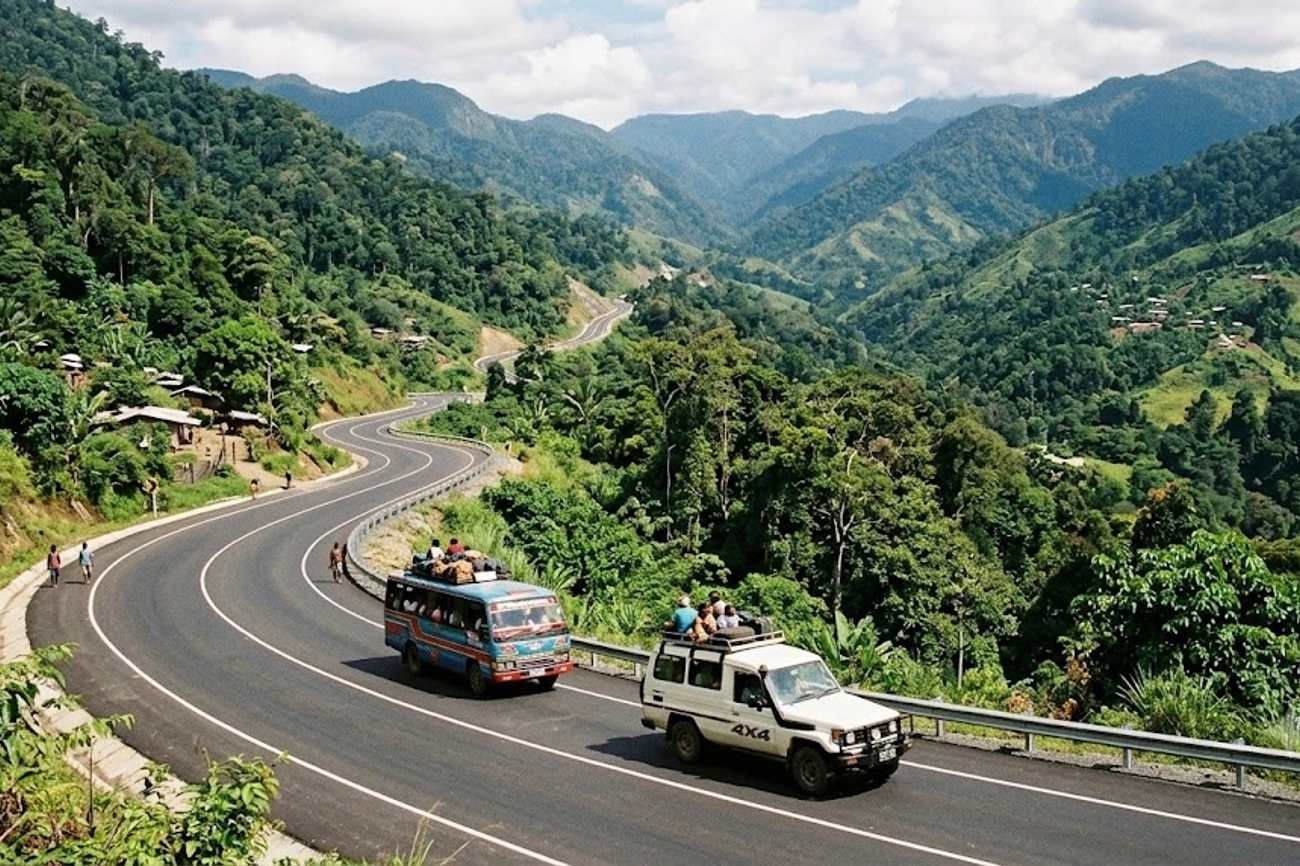
Image generated by AI
182 kilometres of newly constructed road now bridge the gap between the Oiwa junction in Menyamya and the Epo junction in Kerema, fundamentally altering the logistical map of Papua New Guinea. On September 6, 2026, Prime Minister James Marape initiated the first historic road journey along this connected Trans-National Highway, signaling a shift from a nation dependent on fragmented air corridors to one with a viable overland artery. This connection links the capital, Port Moresby, with the industrial hub of Lae, cutting through the Central, Gulf, and Morobe provinces. For the first time, the "Connect PNG" program has successfully mitigated one of the most significant geographic barriers in the South Pacific, creating a physical link between the coastal lowlands and the rugged interior.
The Logistics of the Connect PNG Initiative
The completion of the stretch between the Gulf Province and Morobe Province is not merely a civil engineering achievement; it is a strategic pivot in how the state manages its remote heartland. Historically, travel between Port Moresby and Lae required domestic flights or treacherous maritime routes, as the dense rainforests and mountainous terrain rendered overland travel nearly impossible for the general public.
The new corridor functions as a bridge between two of the country's most critical economic nodes. Port Moresby serves as the primary international gateway for all overseas arrivals, while Lae operates as the dominant industrial center and port, acting as the essential staging ground for any movement into the Highlands. By integrating these two cities via the Trans-National Highway, the government is attempting to decentralize access to the interior.
The route's trajectory is designed to integrate with the existing Highlands Highway, extending the reach of the journey into the Eastern Highlands, Chimbu, Jiwaka, and Western Highlands. This creates a theoretical "grand tour" capability, where a traveler could transition from the coastal environment of the capital, through the lowland forests of the Gulf, into the industrial hub of Lae, and finally ascend into the high-altitude peaks of Mount Hagen or Goroka.
Infrastructure Data and Route Specifications
The following table outlines the core components of the new overland connectivity project as of September 2026.
The establishment of a reliable road link between Port Moresby and Lae marks a significant shift in domestic logistics, offering a terrestrial alternative to costly air travel. Travelers can now coordinate their journeys through the Papua New Guinea Tourism Promotion Authority, which provides essential guidance on regional safety and cultural etiquette.
| Feature | Specification/Detail |
|---|---|
| Key Construction Segment | Oiwa junction (Menyamya) to Epo junction (Kerema) |
| Distance of New Segment | 182 kilometres |
| Primary Cities Linked | Port Moresby $\rightarrow$ Lae |
| Provinces Traversed | Central, Gulf, Morobe |
| Highlands Integration | Eastern Highlands, Chimbu, Jiwaka, Western Highlands |
| Inaugural Date | September 6, 2026 |
| Strategic Program | Connect PNG |
Expert Analysis: The Friction Between Access and Infrastructure
For the seasoned traveler and the logistics professional, the opening of this route presents a paradox: increased accessibility does not equate to increased ease of travel. The direct consequence of this new road is the elimination of the "air-gap" that previously protected remote communities from sudden influxes of visitors, but the pricing and safety pressure will now shift to ground operators.
The current state of the Trans-National Highway is not a "tourist road" in the conventional sense. It is a functional utility road. For travelers booking this route, the immediate reality is that self-driving is virtually impossible and highly discouraged. The reliance on organized expeditions with local drivers is not a suggestion—it is a logistical necessity. The pricing pressure this creates means that "adventure travel" in Papua New Guinea will remain a high-cost, curated experience, as the risk profile of the road requires specialized vehicles and expert navigation.
From a regulatory and cultural standpoint, this road introduces a volatile variable into the Papua New Guinea Tourism Promotion Authority framework. When travel was limited to flights, tourists landed in "bubbles"—isolated airstrips where the community was prepared for their arrival. Overland travel allows for gradual, unplanned encounters with rural villages and traditional agricultural sites. Without strict guidelines on community engagement and photography permissions, this increased access could lead to cultural friction.
Furthermore, the integration with the Highlands Highway means that the logistical "bottleneck" has simply moved. While the 182-kilometre gap is closed, the overall journey time remains highly variable due to weather-induced landslides and road degradation. The business model for tourism in the region must therefore shift from "destination-based" (flying to a spot) to "journey-based" (the road as the experience).
While road infrastructure expands, air travel remains the primary method for rapid transit between the capital and the Morobe Province. Passengers seeking flight schedules and booking options should consult Air Niugini, the national carrier, to ensure seamless connectivity across the Highlands.
Key Takeaways
- End of Isolation: The 182km stretch between Oiwa and Epo junctions now allows for continuous overland travel from Port Moresby to Lae.
- Highlands Integration: The route connects the Trans-National Highway to the Highlands Highway, enabling multi-province itineraries spanning coastal and mountain regions.
- No Self-Driving: The road is not suitable for independent rentals; all travel must be conducted via professional local operators.
- Cultural Sensitivity: Increased road access requires a heightened commitment to using local guides and respecting indigenous land rights.
- Eco-Tourism Potential: The corridor opens new possibilities for nature-based tourism in Morobe and the Gulf provinces, provided infrastructure grows alongside visitor numbers.
FAQ: Papua New Guinea Overland Travel 2026
Can I rent a car to drive from Port Moresby to Lae? No. The road conditions are not suitable for conventional self-driving. It is strongly recommended to hire professional local operators and experienced drivers who understand the terrain and community dynamics.
Which provinces does the new Trans-National Highway connection pass through? The route specifically connects the capital to Lae via sections of the Central, Gulf, and Morobe provinces before linking further into the Highlands.
How does this road change the way I visit the Highlands? Previously, most visitors relied on domestic flights. You can now potentially travel overland from the coast, through Lae, and continue into the Eastern Highlands, Chimbu, Jiwaka, and Western Highlands.
Is the road fully paved and ready for tourists? While the connection is open, it is not a polished tourist corridor. The government has stated that further improvements are required, and journey times remain unpredictable.
The map of the South Pacific has just been redrawn, but the road remains a challenge for the bold.
Tags: Connect PNG, Port Moresby-Lae Route, Morobe Province, Gulf Province, Highlands Highway 2026, Papua New Guinea Infrastructure
Related Travel Guides
- Thailand Travel Mistakes Ruin Vacations When Tourists Rush Frantically Through Bangkok And Phuket Without Resting, Here’s The Update
- Cyprus Transforms The Travel Industry By Turning Quiet Hidden Border Towns Into The Ultimate Year-Round Escape For Travelers
- Europe Travel Hidden Gems Three Scenic Detours Offering Peaceful Alpine Escapes Beyond Crowded Tourist Hotspots
Disclaimer
This article is for informational and educational purposes only. It does not constitute legal, financial, or professional advice. While we strive to provide accurate and up-to-date information, travel policies, regulations, and conditions change rapidly. Always verify information with official sources before making travel decisions. Nomad Lawyer makes no representations about the accuracy, reliability, completeness, or suitability of the information provided. Readers should consult qualified professionals for advice specific to their circumstances. The views expressed in this article are those of the author and do not necessarily reflect the views of Nomad Lawyer.
Raushan Kumar
Founder & Lead Developer
Full-stack developer with 11+ years of experience and a passionate traveller. Raushan built Nomad Lawyer from the ground up with a vision to create the best travel and law experience on the web.
Learn more about our team →