
Palma Airport to Cala d’Or Transport Guide 2026: Best Ways to Reach Mallorca's East Coast
Navigate the 60km journey from Palma de Mallorca Airport to Cala d’Or with a detailed breakdown of costs, travel times, and transport modes for 2026.

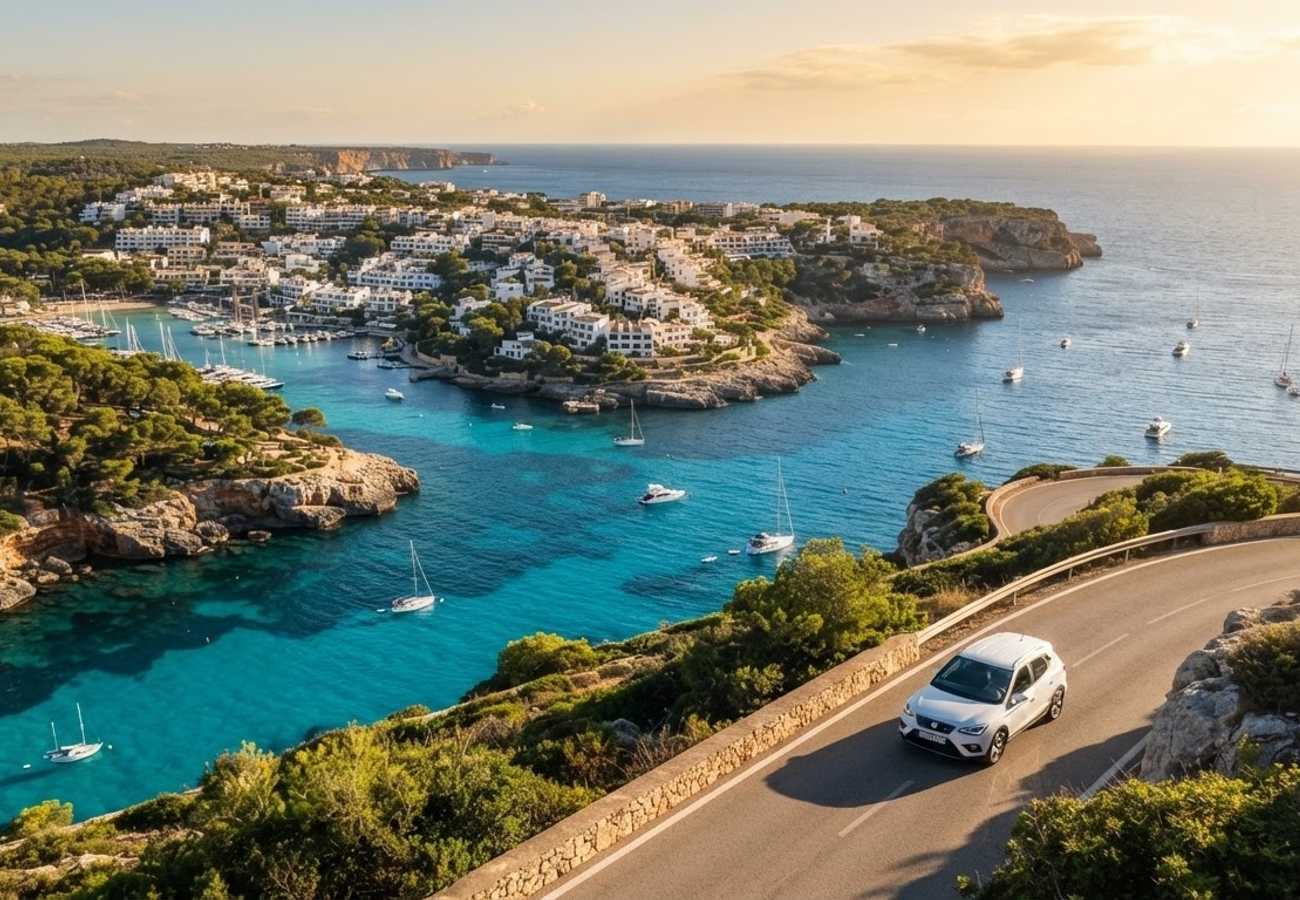
Image generated by AI
The 60km transit from Palma de Mallorca Airport to the southeast coast can take anywhere from 55 minutes to 3 hours depending on your choice of transport. For most travelers, the balance between cost and sanity hinges on arrival time and luggage volume.
The Shift Toward Southeast Mallorca
Cala d’Or is not a suburb of Palma but a purpose-built resort cluster on the southeast coast. The journey typically follows the Ma-19 motorway toward Campos, transitioning into the Ma-5120 and Ma-4012 regional roads toward Santanyí.
For the visitor, the real impact of this geography is that your specific destination within the resort—whether it be Cala Egos, Cala Ferrera, or Cala Serena—will dictate your final arrival time. A hotel on the central Avenida de Bélgica is significantly more accessible than a secluded villa in the backstreets of Cala Egos. With no train or metro connectivity to the east coast, travelers must rely on road-based logistics.
Transport Comparison: Costs and Timelines
Choosing the right vehicle depends on your budget and tolerance for transit stops. Below is the current data for the Palma Airport to Cala d’Or route.
| Transport Mode | Est. Cost (One Way) | Est. Travel Time | Best For |
|---|---|---|---|
| TIB Public Bus | 7 to 12 euros | 80 to 180 mins | Solo budget travelers |
| Shared Shuttle | 15 to 25 euros | 90 to 180 mins | Small groups/Hotel stays |
| Official Taxi | 80 to 110 euros | 55 to 70 mins | Late arrivals/Families |
| Private Transfer | Fixed (Pre-booked) | 55 to 70 mins | High-comfort/Direct door-to-door |
Breaking Down the Options
Seasonal Public Transit (TIB)
The TIB interurban bus network is the most economical choice. In peak summer, dedicated airport lines run through Llucmajor and Campos. However, these are seasonal (typically late spring to late October).
Outside peak windows or for late-night arrivals, the journey becomes a multi-step process: boarding the airport bus to Palma city center, then connecting to a TIB route toward Santanyí or Portocolom. This can stretch a 60-minute drive into a 3-hour odyssey.
Shared Shuttles
Operators like Shuttle Direct, Hoppa, and Flybus offer a middle ground. You pre-book a seat and share the vehicle with others. While the price is attractive—often 15 to 25 euros per adult—the "shuttle lag" is real. Because these vehicles make multiple stops at various hotels, a journey that takes one hour by private car can easily reach 3 hours if your hotel is the final stop on the circuit.
Taxis and Private Transfers
For those arriving after 21:00 or traveling with heavy beach gear, the official taxi rank is the most efficient route. Fares generally range from 80 to 110 euros for up to four passengers. It is important to note that night, weekend, or public holiday surcharges apply, pushing costs toward the higher end of the spectrum.
Private transfers (via companies like Gamobus or Solhop) provide the same speed as a taxi but with the security of a fixed, pre-paid price, eliminating the uncertainty of the meter during high-season traffic.
Visitor Insider Tips
To navigate the east coast like a local, keep these practicalities in mind:
- The "Golden Window" for Buses: If using the TIB network, aim for mid-morning departures. This avoids the early morning airport rush and the afternoon heat, typically landing you in Cala d’Or within 80 to 100 minutes.
- Payment Protocol: While contactless bank cards are widely accepted on TIB buses, keep a small amount of cash for local kiosks and small cafes in the Cala d’Or coves.
- Villa Logistics: If staying in a private villa rather than a hotel, avoid shared shuttles. Many shuttle operators only drop at designated hotel hubs; you may find yourself walking a significant distance with luggage.
- Taxi Queue Strategy: In July and August, expect a 10 to 30 minute wait at the official airport taxi rank. If you are in a rush, a pre-booked private transfer is the only way to bypass the queue.
Tourism Outlook and Sustainability
The shift toward the southeast coast has prompted an increase in regional road maintenance, but the reliance on cars remains high. To support the local economy and reduce the environmental footprint, visitors are encouraged to use the TIB bus network when possible or opt for electric vehicle rentals, which are becoming more prevalent at Palma Airport. Supporting small, family-run guesthouses in the Santanyí area rather than large international chains helps ensure the cultural heritage of the region remains intact.
The journey to the east coast is the first step in experiencing Mallorca's most pristine turquoise waters.
Related Travel Guides
Disclaimer
This article is for informational and educational purposes only. It does not constitute legal, financial, or professional advice. While we strive to provide accurate and up-to-date information, travel policies, regulations, and conditions change rapidly. Always verify information with official sources before making travel decisions. Nomad Lawyer makes no representations about the accuracy, reliability, completeness, or suitability of the information provided. Readers should consult qualified professionals for advice specific to their circumstances. The views expressed in this article are those of the author and do not necessarily reflect the views of Nomad Lawyer.
Kunal K Choudhary
Co-Founder & Contributor
A passionate traveller and tech enthusiast. Kunal contributes to the vision and growth of Nomad Lawyer, bringing fresh perspectives and driving the community forward.
Learn more about our team →