
Mega-Capacity Routes Dominate Global Aviation: Over 1 Million Seats Annually on Five Key A380 Corridors by 2026
Breaking airline news and aviation industry updates for 2026.

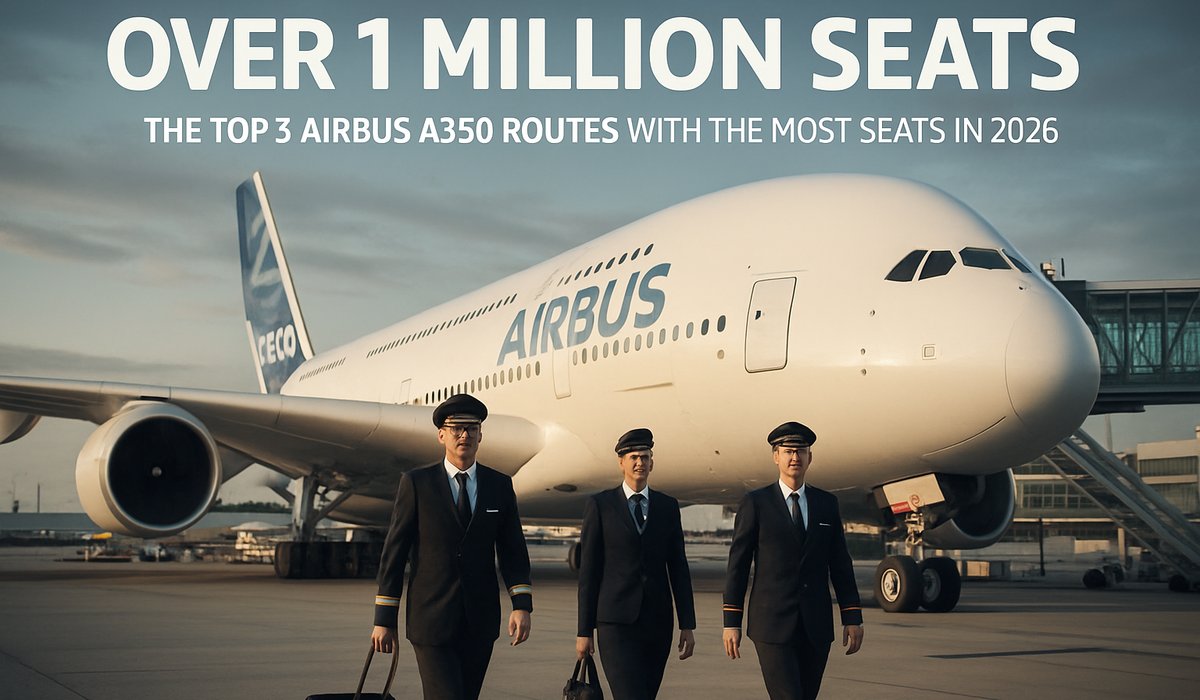
Image generated by AI
Mega-Capacity Routes Dominate Global Aviation: Over 1 Million Seats Annually on Five Key A380 Corridors by 2026
As airlines maximize efficiency on congested airport slots, the double-deck Airbus giant shapes long-haul travel patterns
The A380 Paradox: Capacity Over Frequency
The Airbus A380—aviation's largest commercial passenger aircraft—continues to reshape global travel corridors despite its limited fleet deployment worldwide. Carrying between 450 and 550 passengers per flight, the superjumbo jet has become the strategic weapon of choice for airlines facing a critical operational challenge: how to move record passenger volumes without exhausting precious takeoff and landing slots at congested international hubs.
Unlike conventional narrow-body aircraft that might operate multiple daily rotations on high-demand routes, the A380's enormous capacity means a single departure can replace what would otherwise require two separate flights. This operational efficiency has proven invaluable as airports from London to Hong Kong struggle with slot scarcity and infrastructure constraints.
Five Routes Set to Move Over 1 Million Passengers Annually
Analysis of 2026 scheduling projections reveals five critical international corridors where A380 deployment will collectively accommodate more than 1 million annual seats. These routes represent the intersection of sustained demand, airport capacity limitations, and premium long-haul market opportunity—precisely the conditions where the double-deck aircraft delivers maximum value.
These high-capacity corridors primarily connect Europe's major financial centers with the Middle East and Asia-Pacific gateways, reflecting established patterns in premium business travel and leisure markets. Airlines operating these routes have optimized their fleets to maximize revenue per available seat-kilometer while strategically managing costly airport slot allocations.
Fleet Constraints Shape Strategic Deployment
The A380 operator base remains remarkably lean, with most carriers maintaining fleets of eight to twelve aircraft maximum. This limited deployment reflects both the aircraft's substantial operating costs and the specialized infrastructure requirements at receiving airports. Only a select group of global carriers—predominantly Middle Eastern, European, and Asian airlines—have committed to significant A380 investments.
The concentration of capacity on specific high-density routes underscores a fundamental truth in modern aviation: ultra-large aircraft succeed only where market demand, airport infrastructure, and slot availability align perfectly. As such, the five routes projected to exceed 1 million annual A380 seats represent the global aviation industry's highest-value long-haul corridors.
Looking Forward to 2026
With production of new A380s effectively concluded and existing fleets aging, these five mega-capacity routes will likely remain critical to airline profitability through the remainder of this decade. Airlines continue extracting maximum utility from their A380 investments, ensuring these routes maintain their position as some of aviation's most important international connections.
Frequently Asked Questions
What routes typically use the Airbus A380? The A380 operates primarily on long-haul international corridors connecting major financial hubs with high sustained demand, particularly between Europe and Asia-Pacific via Middle Eastern gateways.
Why don't airlines use A380s on more routes? Limited airport infrastructure, high operating costs, and the need for substantial daily passenger volumes make A380 deployment viable on only the world's highest-capacity routes.
How many A380s are in global commercial service? Most A380 operators maintain fleets of 8-12 aircraft due to production constraints and operational economics specific to ultra-large aircraft.
Will airlines order new A380 aircraft after 2026? Production has effectively concluded, so existing fleets will continue serving these premium routes, though potential revival programs remain under industry discussion.
How do A380 routes impact airline revenue? By moving 450-550 passengers per flight, the A380 maximizes revenue per precious airport slot, critical at congested hubs where landing rights are scarce and expensive.
Related Travel Guides
External Resources
Disclaimer
This article is for informational and educational purposes only. It does not constitute legal, financial, or professional advice. While we strive to provide accurate and up-to-date information, travel policies, regulations, and conditions change rapidly. Always verify information with official sources before making travel decisions. Nomad Lawyer makes no representations about the accuracy, reliability, completeness, or suitability of the information provided. Readers should consult qualified professionals for advice specific to their circumstances. The views expressed in this article are those of the author and do not necessarily reflect the views of Nomad Lawyer.
Preeti Gunjan
Contributor & Community Manager
A passionate traveller and community builder. Preeti helps grow the Nomad Lawyer community, fostering engagement and bringing the reader experience to life.
Learn more about our team →