South Africa Travel Restores OR Tambo Domestic Terminal Power After Substation Fault

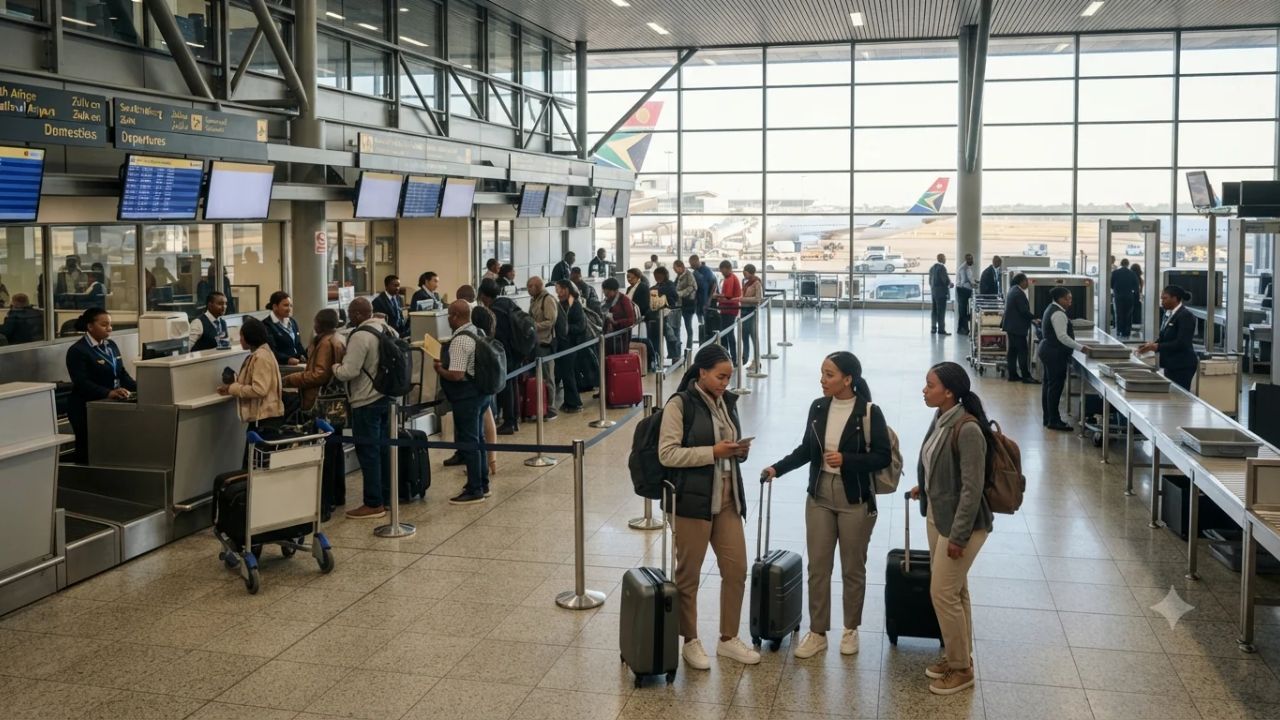
Domestic flight operations across South Africa are stabilizing following a major electrical infrastructure failure at O.R. Tambo International Airport (JNB) in Johannesburg early Friday morning, November 27, 2026. A sudden technical fault at Substation 9 knocked out main electrical feeds to the Domestic Terminal at approximately 04:00 SAST, paralyzing automated check-in counters, digital ticket readers, baggage conveyance sorting belts, and security X-ray scanners during the airport's peak morning departure bank. While airport operator Airports Company South Africa (ACSA) confirmed that full electrical power was restored by 08:45 SAST through backup generation and stabilized grid switching, domestic airlines—including South African Airways (SAA) and FlySafair—warned passengers that lingering security lines, manual processing backlogs, and aircraft turnaround delays will ripple across nationwide flight schedules throughout the day.
The outage struck the primary aviation artery of Southern Africa at the most vulnerable operational window of the day. Between 04:30 and 07:30 SAST, thousands of business commuters, domestic holidaymakers, and international connection passengers converge upon O.R. Tambo’s Domestic Terminal to board high-frequency trunk services linking Johannesburg with Cape Town International (CPT), Durban’s King Shaka International (DUR), Port Elizabeth (PLZ), and George (GRJ). With primary screening machines rendered inoperable in affected security zones, aviation security officers from the South African Civil Aviation Authority (SACAA) and contracted screening personnel were forced to implement emergency manual hand-searches of carry-on baggage. Because physical luggage searches require significantly more time per passenger than automated conveyor screening, departure halls experienced immediate pedestrian congestion that stretched through the concourse.
While early operational reports confirmed that the disruption remained isolated to the Domestic Terminal and avoided mass cancellations, the nearly four-hour blackout created a severe operational deficit. Aircraft waiting at domestic contact stands and remote aprons were unable to load baggage at standard cycle speeds, pushing back scheduled departure times and creating rotational delays that affected airframes scheduled for multiple domestic hops. In response, ACSA and domestic carriers have urged all departing passengers to arrive at least two and a half to three hours prior to scheduled domestic departures, monitor carrier smartphone applications, and keep physical identification documents accessible to expedite manual security verification.
| Disruption Metric | Verified Incident Data / Operating Benchmark | Source / Institutional Authority | Aviation & Traveler Significance |
|---|---|---|---|
| Impacted Facility | Domestic Terminal, O.R. Tambo International (JNB) | Airports Company South Africa (ACSA) | South Africa’s busiest domestic aviation gateway |
| Root Cause | Electrical fault at primary Substation 9 | ACSA Spokesperson Ofentse Dijoe | Isolated to domestic distribution network |
| Outage Start Time | ~04:00 SAST (Friday, November 27, 2026) | ACSA Operations Control Centre | Coincided with initial morning departure bank |
| Power Restoration Time | ~08:45 SAST (Nearly 4-hour duration) | ACSA Engineering & Technical Services | Restored via auxiliary generators & stabilized grid |
| Primary System Failures | Check-in desks, baggage belts, X-ray scanners | Domestic Airline Ground Handling Teams | Triggered mandatory manual screening protocols |
| Airlines Affected | South African Airways, FlySafair, Airlink, CemAir, Lift | Domestic Flight Operations Coordination | Knock-on turnaround delays across domestic networks |
| Operational Impact | Severe passenger queues, rotational flight delays | Airline Passenger Advisories | Delays predominated over outright cancellations |
| Primary Route Corridors | JNB to Cape Town (CPT) & Durban (DUR) | Domestic Aviation Route Schedule | Heavy disruption along South Africa's "Golden Triangle" |
| Security Screening Status | Manual hand-searches replaced offline X-ray units | SACAA Civil Aviation Regulations (CARs) | Maintained 100% compliance at the cost of processing speed |
| Traveler Guidance | Arrive 2.5 to 3 hours early; monitor live mobile apps | South African Airways & ACSA Passenger Notice | Mitigates missed flight risk during queue clearing |
Chronology of the Disruption: How the Substation 9 Fault Unfolded
Understanding the cascade of operational delays requires a precise examination of how the electrical failure unfolded across O.R. Tambo's terminal infrastructure during the early morning hours:
Timeline of O.R. Tambo Domestic Terminal Power Crisis:
┌─────────────────────────────────────────────────────────────┐
│ 04:00 SAST - THE INITIAL ELECTRICAL FAULT                   │
│ - Technical failure occurs at Substation 9                  │
│ - Power drops across Domestic Terminal check-in & screening │
│ - Main terminal lighting drops to emergency battery levels   │
├─────────────────────────────────────────────────────────────┤
│ 04:30–07:00 SAST - PEAK MORNING BANK & BOTTLENECK           │
│ - Thousands of passengers arrive for 06:00–07:30 departures │
│ - Check-in desks resort to manual/offline passenger manifest│
│ - X-ray machines offline; security shifts to hand-searching │
│ - Queues stretch across the public concourse and retail zone│
├─────────────────────────────────────────────────────────────┤
│ 08:45 SAST - RESTORATION & GRID STABILIZATION               │
│ - ACSA technical crews restore power via backup generators  │
│ - Automated conveyor belts, scanners, & e-gates reboot      │
│ - Official statement issued by ACSA spokesperson Ofentse Dijoe│
├─────────────────────────────────────────────────────────────┤
│ 09:00 SAST ONWARD - BACKLOG PROCESSING & ROTATIONAL DELAYS  │
│ - Ground crews work through thousands of stranded bags       │
│ - Aircraft depart with 45-to-90 minute delay margins        │
│ - SAA & FlySafair issue travel advisories urging early arrival│
└─────────────────────────────────────────────────────────────┘
The 04:00 SAST Trigger Event
The failure originated at Substation 9, an electrical distribution hub responsible for stepping down high-voltage power feeds to supply terminal subsystems, check-in islands, security screening checkpoints, and baggage sorting conveyors in the Domestic Terminal. At roughly 04:00 SAST, an equipment fault within the substation triggered circuit breakers, severing the primary power supply.
While critical life-safety systems—such as emergency exit lighting, fire suppression alarms, and essential air traffic control communication links—transferred immediately to uninterruptible power supply (UPS) battery banks, non-critical terminal processing equipment experienced an abrupt shutdown.
The Peak Morning Bottleneck (04:30 to 07:00 SAST)
The timing of the fault could hardly have been more challenging for airport ground operations. O.R. Tambo functions as the primary hub for South Africa’s corporate workforce, with corporate commuters boarding early morning flights to reach Cape Town, Durban, and Gqeberha for 09:00 meetings. Between 04:30 and 06:30, thousands of passengers entered the terminal building.
With digital check-in kiosks dark and automated baggage drop systems halted, airline agents were forced to process passengers through auxiliary battery-powered laptops or manual paper check-in sheets. Baggage could not be dispatched via automated induction conveyors into the subterranean sorting matrix, requiring ground staff to manually stack checked luggage on baggage carts behind check-in desks.
Mandatory Manual Security Screening
The most severe operational choke point occurred at central security screening. Modern civil aviation security standards enforced by the South African Civil Aviation Authority (SACAA) and the International Civil Aviation Organization (ICAO) strictly prohibit uninspected cabin baggage from entering sterile airside concourses.
Because primary multi-view X-ray inspection systems and automated carry-on tray return belts were depowered in portions of the domestic checkpoint, aviation security officers had no choice but to initiate 100 percent manual physical hand-searches of passenger bags.
Hand-searching a piece of carry-on luggage—unzipping compartments, physically inspecting electronic devices, testing liquids, and repacking—requires an average of three to four minutes per passenger, compared to just 15 to 20 seconds through an operational automated X-ray tunnel. Consequently, processing capacity was slashed by more than 80 percent, causing lines to spill out of the screening zone and snake through the public departure hall.
Security Processing Rate Comparison:
Automated X-Ray Conveyor Lane:   [========================================] 250–300 Passengers/Hour
Emergency Manual Hand-Search:    [=====] 40–50 Passengers/Hour (−83% Capacity Drop!)
Power Restoration at 08:45 SAST
ACSA’s specialized electrical engineering teams, working alongside municipal power technicians from the City of Ekurhuleni, isolated the fault within Substation 9. By synchronizing heavy-duty emergency diesel generator sets with stabilized grid circuits, engineers restored energized power to the Domestic Terminal at approximately 08:45 SAST.
Spokesperson Ofentse Dijoe publicly confirmed the restoration, noting that terminal systems were being progressively energized to ensure that power surges did not damage sensitive electronic screening or baggage sorting hardware. However, as aviation analysts observed, bringing the lights back on did not instantly erase the backlog of thousands of passengers and bags waiting to clear terminal formalities.
Domestic Airline Impact: Turnaround Delays vs. Flight Cancellations
The operational disruption remained concentrated within the Domestic Terminal, leaving O.R. Tambo’s International Terminal (Terminal A) and central transit facilities largely unaffected. Nevertheless, the nature of domestic airline fleet scheduling ensured that the four-hour power outage had repercussions across South Africa’s national airspace.
Domestic Hub-and-Spoke Delay Propagation:
[O.R. TAMBO DOMESTIC TERMINAL (JNB)]
          │
          │ Morning Turnaround Delays (45–90 mins)
          ├───────────────────────────────┬───────────────────────────────┐
          ▼                               ▼                               ▼
[CAPE TOWN INT'L (CPT)]         [DURBAN KING SHAKA (DUR)]       [REGIONAL OUTPOSTS]
- Delayed return flights to JNB - Delayed midday rotations      - Port Elizabeth (PLZ)
- High evening gate congestion  - Aircraft out of position      - George (GRJ) / East London
The "Golden Triangle" Corridor Under Strain
South Africa’s domestic aviation network is anchored by the "Golden Triangle"—the high-density air triangle connecting Johannesburg (JNB), Cape Town (CPT), and Durban (DUR). The Johannesburg–Cape Town air route alone ranks consistently among the top ten busiest domestic passenger routes on earth, with carriers operating flights every 20 to 30 minutes during morning and evening rush hours.
Because low-cost carriers like FlySafair and full-service operators like South African Airways operate high-utilization narrowbody fleets (primarily Boeing 737-800 and Airbus A320 aircraft), a single aircraft may complete six to eight domestic flight sectors per day with tight 30-to-40-minute ground turnarounds.
When morning departures from Johannesburg were delayed by 60 to 90 minutes while waiting for passengers to clear manual security checkpoints and for ground staff to load backlogged baggage, those delays were imported directly into Cape Town and Durban. As a result, subsequent midday and afternoon departures originating in the Western Cape and KwaZulu-Natal suffered cumulative schedule slippage, even though their local airport facilities operated normally.
Why Mass Cancellations Were Avoided
A key feature of the incident was that domestic carriers prioritized schedule delays over outright flight cancellations. Several factors enabled airlines to keep their flights airborne:
- Air Traffic Control Flow Management: Air Traffic and Navigation Services (ATNS) cooperated with airline dispatchers to adjust slot allocations and coordinate flexible departure sequencing, preventing runway gridlock.
- Passenger Loading Flexibility: Rather than departing with half-empty cabins, airlines held departures for 30 to 45 minutes to allow passengers stuck in manual security lines to reach their gates.
- Crew Duty-Time Margins: Because the disruption struck at the very beginning of the operating day (04:00), flight crews had ample legal duty-time hours remaining under SACAA flight time limitations (FTL), avoiding immediate crew timeouts that typically trigger cascade cancellations.
Airline Responses and Passenger Guidance
South Africa's major domestic airlines mobilized customer service teams to assist travelers while issuing clear operational guidance:
Airline Operational Advisory Matrix:
┌─────────────────────────────────────────────────────────────┐
│ SOUTH AFRICAN AIRWAYS (Flag Carrier Operations):            │
│ - Proactive SMS & email passenger notifications             │
│ - Flexible rebooking waivers for delayed connection fliers  │
│ - Mandatory recommendation: Arrive 2.5 to 3 hours early    │
├─────────────────────────────────────────────────────────────┤
│ FLYSAFAIR (High-Frequency Low-Cost Carrier):                │
│ - Dedicated airport customer service desks managing queues │
│ - Sequential boarding calls prioritizing delayed flights    │
│ - Digital flight tracker alerts via WhatsApp and mobile web │
├─────────────────────────────────────────────────────────────┤
│ REGIONAL CARRIERS (Airlink, CemAir, Lift):                  │
│ - Expedited hand-baggage verification at boarding gates     │
│ - Coordinated gate transfers for bush-safari connection fliers│
└─────────────────────────────────────────────────────────────┘
South African Airways: Maintaining Passenger Care
South African Airways took immediate proactive measures, publishing advisories across digital platforms and broadcasting updates within airport halls. The national carrier emphasized that while the power outage stemmed from municipal and airport authority infrastructure rather than airline equipment, its ground staff were prioritizing passenger comfort, expedited check-in assistance, and rebooking support for travelers who missed onward regional or international connections.
SAA encouraged all passengers traveling out of O.R. Tambo throughout Friday and over the weekend to plan ahead, factor in additional travel time, and verify departure schedules through the airline's mobile portal prior to leaving home or their hotels.
Managing Checked Baggage Backlogs
One of the most persistent operational challenges following power restoration is the reconciliation of checked luggage. When conveyor belts stopped, hundreds of bags were sorted manually or held in staging areas.
Airlines warned that in some instances, flights had to depart without all checked luggage loaded in order to preserve critical airport departure slots. Dedicated baggage recovery teams at O.R. Tambo worked to transfer delayed bags onto subsequent flights to Cape Town, Durban, and regional hubs, coordinating door-to-door courier deliveries for affected travelers upon arrival at their destination.
Electrical Architecture at O.R. Tambo: Redundancy and Substation Dynamics
The electrical failure at Substation 9 highlights the immense technical complexity of powering modern aerodrome infrastructure. O.R. Tambo International Airport is not a single building; it is a sprawling industrial complex covering over 1,600 hectares, consuming electrical energy on par with a medium-sized South African city.
O.R. Tambo Airport Electrical Zoning and Power Distribution:
┌─────────────────────────────────────────────────────────────┐
│ ESKOM NATIONAL GRID / EKURHULENI MUNICIPAL HIGH-VOLTAGE FEED│
└──────────────────────────────┬──────────────────────────────┘
                               │ High-Voltage Transmission Lines
                               ▼
┌─────────────────────────────────────────────────────────────┐
│ AIRPORT MAIN INCOMING SUBSTATION MATRIX (Substations 1–12)  │
└───────┬─────────────────────────────────────────────┬───────┘
        │                                             │
        ▼ Dedicated Feed                              ▼ Dedicated Feed
┌──────────────────────────────┐       ┌──────────────────────────────┐
│ SUBSTATION 9 (FAULT LOCATION)│       │ SUBSTATION 4 & 5 (ISOLATED)  │
│ - Domestic Terminal Lighting │       │ - International Terminal (A) │
│ - Domestic Check-in Islands  │       │ - Air Traffic Control Tower  │
│ - Domestic Security Screening│       │ - Runway Visual Aids & ILS   │
│ - Baggage Induction Belts    │       │ - Central Terminal Building  │
└──────────────────────────────┘       └──────────────────────────────┘
        │ Emergency Switchover                        │ Fully Powered
        ▼                                             ▼
┌──────────────────────────────┐       ┌──────────────────────────────┐
│ AUXILIARY DIESEL GENERATORS  │       │ UNINTERRUPTED NORMAL SERVICE │
│ Restored Power at 08:45 SAST │       │ No Disruption to Long-Haul   │
└──────────────────────────────┘       └──────────────────────────────┘
Electrical Substation Zoning
O.R. Tambo utilizes a zoned substation distribution network designed to isolate faults and prevent total aerodrome blackouts:
- Substations 4, 5, and 7: Power the International Terminal (Terminal A), immigration halls, international boarding piers, and customs inspection zones. Because these substations operated independently, long-haul international flights—including arrivals and departures by British Airways, Emirates, Lufthansa, and Delta Air Lines—proceeded without electrical interruption.
- Airside Runway Infrastructure: Primary navigational aids, runway edge lighting, precision approach path indicators (PAPI), and instrument landing systems (ILS) are wired to dedicated, mission-critical power loops protected by dual automatic transfer switches (ATS) and rotary uninterruptible power supply (UPS) systems, ensuring that flight safety was never compromised during the terminal blackout.
- Substation 9: Specifically serves the domestic terminal processing floor. While the technical zoning successfully contained the outage to the domestic zone, it concentrated the operational impact entirely on domestic carriers and travelers.
Emergency Diesel Generation and ATS Switchover
When a substation experiences an electrical fault, automated transfer switches are designed to trigger auxiliary backup generators within seconds. However, technical complications—such as transient voltage spikes, busbar faults, or load-shedding breaker trips—can prevent automated switchover, requiring electrical engineers to physically inspect switchgear, isolate the short circuit, and manually route generator feeds to terminal distribution boards. This complex diagnostic and safety verification process accounted for the nearly four-hour window required to safely re-energize the terminal.
Passenger Rights and Consumer Protection in South African Aviation
For passengers caught in airport infrastructure disruptions, understanding legal rights and compensation frameworks under South African law is essential.
South African Air Traveler Protection Framework:
┌─────────────────────────────────────────────────────────────┐
│ 1. CONSUMER PROTECTION ACT (ACT 68 OF 2008 - CPA):          │
│    - Right to timely performance of service                 │
│    - Right to full refund or rebooking if flight is canceled│
├─────────────────────────────────────────────────────────────┤
│ 2. INFRASTRUCTURE "ACT OF GOD" VS. AIRLINE FAULT:           │
│    - Substation outages qualify as extraordinary third-party│
│      infrastructure failures outside direct airline control │
│    - Airlines exempt from cash delay compensation           │
│    - Airlines MUST provide duty of care (rebooking, meals)  │
├─────────────────────────────────────────────────────────────┤
│ 3. TRAVEL INSURANCE SAFEGUARDS:                             │
│    - Comprehensive domestic travel insurance covers missed  │
│      hotel nights, event tickets, and emergency transfers   │
│    - Keep official airline delay confirmation letters       │
└─────────────────────────────────────────────────────────────┘
The Consumer Protection Act (CPA)
Under South Africa’s Consumer Protection Act (CPA, Act 68 of 2008), consumers are entitled to services delivered with reasonable care and diligence. However, in aviation, an electrical infrastructure failure at a state-operated airport is legally classified as an extraordinary circumstance or third-party infrastructure disruption outside the airline’s direct operational control.
Consequently:
- Airlines are not legally mandated to pay cash compensation for schedule delays caused by the airport substation fault.
- However, airlines retain a strict duty of care. Carriers must offer passengers the choice between complimentary rebooking onto the next available flight or a full refund of the unused ticket coupon if the passenger elects not to travel.
- For passengers facing extended delays exceeding four hours, airlines typically provide refreshment vouchers redeemable at operational airport dining establishments.
Travel Insurance Claim Protocols
Travelers who experienced missed hotel bookings in Cape Town or Durban, lost pre-paid rental car reservations, or missed cruise embarkations should file claims under their domestic travel insurance policies. To validate a claim:
- Obtain an official written delay verification letter or stamp from your airline's airport customer service desk.
- Retain all original boarding passes, baggage tags, and itemized receipts for necessary food, beverage, and ground transit expenses incurred during the delay.
- Submit documentation to your insurance underwriter within the policy's specified notification window (typically within 14 to 30 days of the incident).
Practical Traveler Guide: Navigating Outages and Delays at O.R. Tambo
For travelers flying out of O.R. Tambo during periods of infrastructure disruption or lingering queue recovery, adopting a structured travel strategy minimizes friction:
AIRPORT CONTINGENCY TRAVEL CHECKLIST:
┌─────────────────────────────────────────────────────────────┐
│ 1. ARRIVE AT LEAST 2.5 TO 3 HOURS PRIOR TO DEPARTURE:       │
│    - Buffer against lingering security and check-in lines   │
├─────────────────────────────────────────────────────────────┤
│ 2. DIGITAL PREPARATION & OFFLINE BOARDING PASSES:           │
│    - Download boarding passes to your smartphone wallet     │
│    - Screenshot QR codes in case airport Wi-Fi/cellular drops│
├─────────────────────────────────────────────────────────────┤
│ 3. CARRY-ON COMPLIANCE & PHYSICAL IDENTIFICATION:           │
│    - Keep your South African ID book, Smart ID, or passport  │
│      in an easily accessible pocket                         │
│    - Pack power banks and essential medication in cabin bags│
├─────────────────────────────────────────────────────────────┤
│ 4. MONITOR OFFICIAL AIRPORT & AIRLINE DIGITAL CHANNELS:     │
│    - ACSA Mobile App (available on iOS and Android)         │
│    - Official airline apps: SAA, FlySafair, Airlink         │
├─────────────────────────────────────────────────────────────┤
│ 5. OFFICIAL ASSISTANCE CONTACTS:                             │
│    - ACSA General Enquiries: (011) 723 1400 / (011) 921 6262│
│    - ACSA Customer Care Email: [email protected]  │
└─────────────────────────────────────────────────────────────┘
1. Optimize Your Arrival Window
While standard domestic travel advice suggests arriving 90 minutes prior to departure, travelers flying during the aftermath of an electrical disruption should arrive at least two and a half to three hours prior to scheduled departure. This buffer provides sufficient margin to navigate residual security screening queues and ensures that checked luggage has adequate time to be inducted into the sorting system.
2. Prepare Offline Travel Credentials
During terminal power failures, public Wi-Fi networks and cellular reception can become overloaded as thousands of stranded passengers attempt to access data simultaneously.
- Download your electronic boarding pass directly to your smartphone's offline wallet (Apple Wallet or Google Wallet) before arriving at the airport.
- Take a high-resolution screenshot of the QR code so that ticket scanners can verify your booking even without active mobile internet connectivity.
- Carry a valid government-issued photo ID (South African Green Barcoded ID Book, Smart ID Card, valid South African Driver’s License, or International Passport) in your hand, avoiding the need to unpack bags at security checkpoints.
3. Consider Hand-Luggage Only Travel
If traveling for short business trips or weekend getaways, travelers should consider packing strictly within cabin baggage allowances (typically one 7 kg roller bag plus a small personal item). Bypassing checked baggage counters allows travelers to proceed directly from the Gautrain rail terminal or rideshare drop-off zone straight to security screening, saving up to 45 minutes of wait time.
The power failure at O.R. Tambo International Airport's Domestic Terminal serves as a powerful reminder of the vital role that underlying electrical infrastructure plays in modern aviation. Through prompt engineering intervention by ACSA and disciplined operational management by domestic airlines, Southern Africa's primary aviation hub averted mass cancellations, demonstrating resilience while working through a demanding morning recovery.
Frequently Asked Questions
What caused the power outage at O.R. Tambo International Airport on November 27, 2026?
The power interruption was caused by a sudden technical fault at Substation 9, an internal electrical distribution substation responsible for supplying power to the Domestic Terminal at O.R. Tambo International Airport.
What time did the power go out and when was it restored?
Power was interrupted at approximately 04:00 SAST on Friday morning, November 27, 2026. Following emergency generator deployment and electrical grid stabilization by ACSA engineering teams, electricity was fully restored at approximately 08:45 SAST, lasting nearly four hours.
Did the power outage affect the International Terminal?
No. The electrical failure was isolated to Substation 9, which powers the Domestic Terminal. The International Terminal (Terminal A) and airside airfield navigational systems are served by independent substations and auxiliary power grids, allowing international flights to operate normally.
Were domestic flights canceled because of the power failure?
Early reporting from ACSA and domestic airlines confirmed that there were no widespread flight cancellations at the outset of the incident. Airlines prioritized schedule delays, holding departures where feasible to allow passengers stuck in manual security queues to board. However, rotational knock-on delays persisted throughout the day.
Why did security screening lines take so long during the outage?
Because the outage depowered automated X-ray baggage inspection tunnels in portions of the domestic checkpoint, aviation security personnel were mandated by civil aviation safety regulations to conduct 100 percent manual physical hand-searches of all carry-on baggage. Hand-searching takes significantly longer per passenger than automated conveyor screening, creating severe bottlenecks.
What advice did South African Airways give to passengers?
South African Airways (SAA) issued passenger advisories thanking travelers for their patience, affirming passenger comfort as a priority, and strongly urging domestic travelers to arrive at the airport earlier than usual (at least two and a half to three hours prior to departure) to ensure sufficient time for check-in and security formalities.
How are checked bags handled following the outage?
While automated conveyor systems have resumed operation, ground handling crews must process a significant backlog of luggage accumulated during the four-hour outage. In some cases, flights were dispatched with delayed bags following on subsequent flights. Airlines coordinate door-to-door courier delivery for luggage separated from travelers.
What official contact numbers are available for travelers seeking assistance?
Travelers can contact Airports Company South Africa (ACSA) through:
- General Enquiries Phone Lines: (011) 723 1400 or (011) 921 6262.
- Customer Care Email:
[email protected]. - Live Flight Information: The official ACSA Mobile App and direct airline mobile applications.
Are passengers entitled to cash compensation for delays caused by the power outage?
Under South Africa's Consumer Protection Act (CPA), airport power outages are generally treated as extraordinary third-party infrastructure failures outside the airline's direct control, exempting carriers from cash delay compensation. However, airlines maintain a duty of care, providing free rebooking onto subsequent flights, ticket refunds if passengers choose not to travel, and meal vouchers for extended delays.
What domestic routes experienced the greatest knock-on delays?
The greatest delays occurred on South Africa's high-frequency "Golden Triangle" routes connecting Johannesburg (JNB) with Cape Town International (CPT) and Durban King Shaka International (DUR), as well as regional routes to Port Elizabeth/Gqeberha (PLZ), George (GRJ), and East London (ELS).
Related Travel Guides
- Air India And KM Malta Partner On Single-Ticket Travel To Malta Starting December - Explore how Air India and KM Malta Airlines' codeshare unlocks single-ticket travel and through-checked baggage via six European hubs.
- Malaysia, Thailand And Other In Focus As ASEAN Medical Tourism Triples - Discover how Southeast Asia’s medical and wellness travel market is projected to expand to $218.4 billion by 2034.
- Paris Beats Amsterdam and Barcelona in AI Rankings of Attractive Urban Travel Destinations - Discover how deep-learning computer vision evaluated 3 million streetscape images across 162 global cities.
- Munich Airport Deploys 540 Workers and 175 Vehicles for Winter Flight Safety - Learn how Bavarian aviation authorities coordinate 24/7 de-icing operations to keep European runways safe during adverse winter weather.
This article is for informational purposes. Flight routes, passenger regulations, visa rules, and transit advisories are subject to change by airlines and aviation authorities. Readers are advised to verify schedules and travel documentation with relevant carriers and border agencies before departure.
Related Stories
Denmark Targets 55 Million Passengers at Copenhagen Airport: Master Plan, Terminal 3 Expansion, and Nordic Aviation Leadership
Barcelona-El Prat Airport Faces 15% Flight Capacity Cut as Aena Closes Runways for €3.1 Million Taxiway Upgrade