Denmark Targets 55 Million Passengers at Copenhagen Airport: Master Plan, Terminal 3 Expansion, and Nordic Aviation Leadership

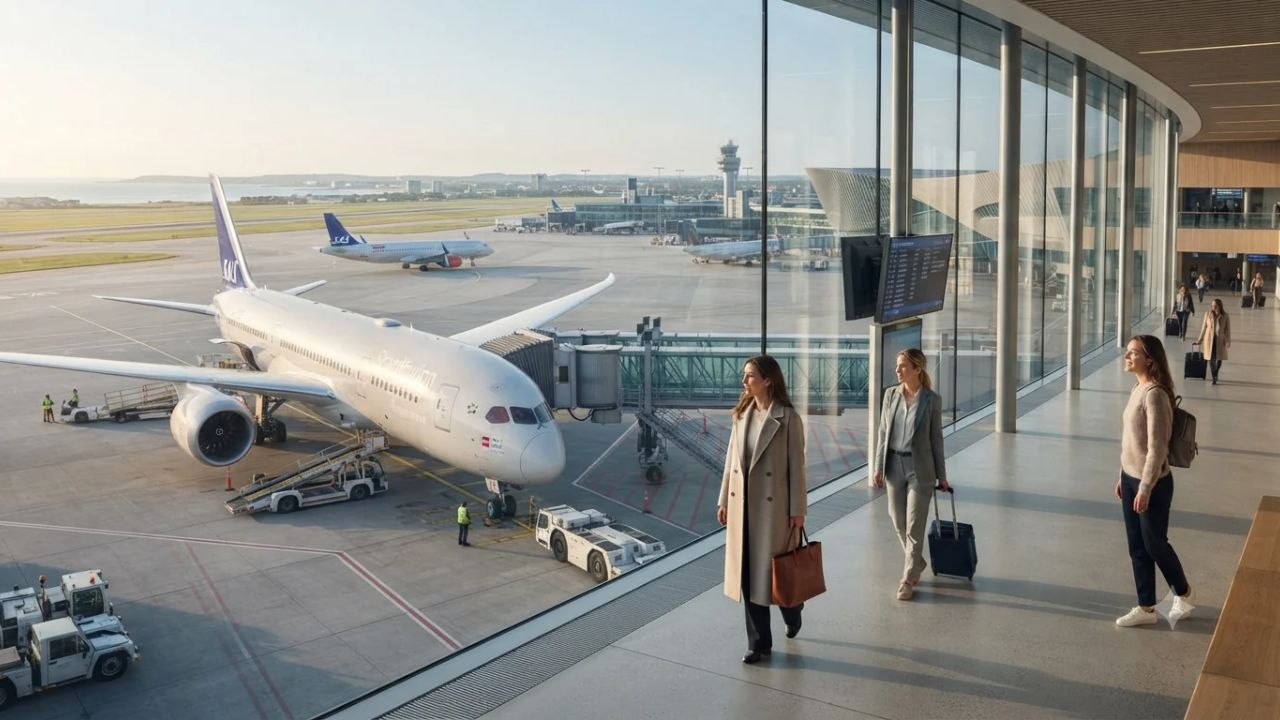
Denmark has unveiled a transformative master expansion plan for Copenhagen Airport, establishing a phased development framework to accommodate up to 55 million annual passengers entirely within its existing geographic footprint, reinforcing Scandinavia's primary aviation gateway against escalating transatlantic and global air travel demand.
The proposed long-term development strategy, announced by Copenhagen Airports A/S (CPH) alongside Danish planning authorities, establishes a vision that is 59.4 percent higher than the airport's full-year 2026 forecast of 34.5 million travellers. By focusing on progressive, demand-driven modular construction rather than an immediate speculative megaproject, Denmark aims to expand its passenger processing capacity by 20.5 million passengers over the coming decades. Critically, this expansion will occur strictly within the airport's current 1,100-hectare perimeter in Kastrup, eight kilometres south of central Copenhagen, preserving adjacent coastal ecosystems while adhering to updated environmental noise limitations.
The master plan arrives as Copenhagen Airport experiences sustained operational momentum. Passenger traffic reached 26.1 million movements during the first nine months of 2026—a 7 percent annual increase—backed by a record-shattering third quarter that welcomed 9.9 million travellers. With its separate 60,000-square-metre Terminal 3 expansion nearing completion in 2027 and a statutory regulatory roadmap extending to 2028, Copenhagen is positioning itself as the undisputed intercontinental hub for Northern Europe, serving a combined home catchment across eastern Denmark and southern Sweden.
A Decisive Aviation Strategy for Northern Europe
Copenhagen Airport (Kastrup) occupies a preeminent position in the aviation geography of Northern Europe. Established in 1925 as one of the world's earliest civil aerodromes, the airport has evolved into the busiest commercial aviation facility in Scandinavia, consistently handling higher passenger volumes than Stockholm Arlanda (ARN) and Oslo Gardermoen (OSL).
COPENHAGEN AIRPORT MASTER CAPACITY BLUEPRINT
| Benchmark Parameter | Strategic Level / Target Metric |
|---|---|
| Airport Name & IATA Identifier | Copenhagen Airport, Kastrup (CPH) |
| Current Geographic Footprint | Approximately 1,100 Hectares |
| Full-Year 2025 Baseline Traffic | 32.4 Million Commercial Passengers |
| Full-Year 2026 Forecast Volume | 34.5 Million Passengers (+6.5% YoY) |
| Target Master Plan Ceiling | 55.0 Million Annual Passengers |
| Net Long-Term Capacity Increase | +20.5 Million (+59.4% Expansion) |
| Physical Land Approach | Zero Land Expropriation (Contained) |
| Core Construction Modality | Phased, Demand-Led Infrastructure |
The decision to target a 55-million-passenger ceiling reflects a calculated response to long-term macroeconomic projections. Unlike greenfield airport developments that consume vast agricultural landscapes, Copenhagen's strategy relies on spatial optimization. By reconfiguring airfield aprons, relocating an underutilized transverse cross-runway, and modernizing existing terminal geometries, CPH will accommodate larger, next-generation widebody aircraft while minimizing capital exposure.
This modular philosophy enables the airport operator to scale investments in direct coordination with airline requirements. If global air travel experiences temporary downturns, capital expenditure can be paused; when passenger volumes surge, pre-approved building phases can be executed rapidly without restarting multi-year environmental reviews.
Sustained Traffic Records: The Empirical Foundation of CPH's Expansion
The ambition to reach 55 million annual passengers is justified by unprecedented passenger volumes recorded across 2026. Rather than experiencing a post-pandemic plateau, Copenhagen Airport has registered consistent growth across both short-haul European networks and long-haul intercontinental corridors.
2026 PASSENGER TRAFFIC SURGE AT CPH
| Entity / Route | Metrics | Operational Status |
|---|---|---|
| Period / Quarter | Passenger Movements | Annual Year-on-Year Growth |
| Full Year 2025 (Actual) | 32.4 Million | Baseline Recovery |
| Jan–Sep 2026 (9 Months) | 26.1 Million | +7.0% Expansion |
| Q3 2026 (Jul–Sep Peak) | 9.9 Million | All-Time Historic Record |
| October 2026 | 3.2 Million | +4.0% Over October 2025 |
| Full Year 2026 (Forecast) | 34.5 Million | +6.5% Projected Annual Peak |
Deconstructing the 2026 Traffic Acceleration
Between January and September 2026, 26.1 million passengers travelled through Copenhagen Airport. The summer peak quarter (July through September) set an all-time record in the airport’s 101-year history, processing 9.9 million travellers. Even as the peak summer holiday season subsided, autumn travel remained extraordinarily resilient. In October 2026, the airport processed 3.2 million passenger movements, a 4 percent increase over October 2025.
This momentum demonstrates that capacity constraints are no longer confined to July and August. Autumn school breaks in Denmark and Sweden, international business conferences, and extended shoulder-season city breaks have flattened the traditional winter trough, requiring year-round high-capacity infrastructure.
Denmark’s Planning Roadmap: Amending the Finger Plan 2019
Major airport infrastructure developments in Denmark require strict integration into national spatial planning frameworks. The statutory planning process is overseen by the Danish Agency for Planning and Rural Development (Plan- og Landdistriktsstyrelsen), operating in coordination with the Ministry of Transport and regional municipalities.
STATUTORY REGULATORY TIMELINE FOR CPH EXPANSION
| Category / Entity | Details / Impact |
|---|---|
| Component | Scope & Technical Specifications |
| Added Floor Space Area | 60,000 Square Metres of New Construction |
| Target Completion Window | 2027 Full Operational Commissioning |
| Baggage Reclaim Infrastructure | Vastly enlarged arrival halls & carousels |
| Passport Control Capacity | Expanded non-Schengen zones & e-gates |
| Security Screening Technology | Advanced 3D Computed Tomography (CT) lanes |
| Commercial Passenger Amenities | Expansive Nordic dining, retail, & lounges |
Solving the Non-Schengen Bottleneck
Historically, non-Schengen arrivals and departures—particularly high-density flights connecting to the United States, the United Kingdom, Canada, and Asia—have experienced spatial constraints in the older piers of Terminal 3.
The 60,000-square-metre expansion directly resolves this bottleneck. The project constructs a wide, light-filled central concourse extending outward toward the airfield, providing:
- Doubled Passport Control Capacity: Additional automated biometric e-gates and expanded manual inspection booths to handle the European Union's Entry/Exit System (EES) requirements without passenger queue spillover.
- Next-Generation Baggage Reclaim: High-capacity subterranean baggage conveyor systems and spacious arrival reclaim carousels that dramatically cut waiting times for long-haul luggage.
- Advanced 3D CT Security Scanning: High-throughput security lanes equipped with computed tomography scanners, allowing passengers to keep liquids, gels, and large electronic devices inside their carry-on luggage, accelerating security screening throughput by up to 50 percent.
- Enhanced Passenger Well-Being: Open architecture showcasing Scandinavian timber finishes, floor-to-ceiling glass facades overlooking the aprons, comfortable seating clusters, and an extensive array of Nordic gastronomy and duty-free retail concepts.
Airfield Reconfiguration: Relocating the Cross-Runway for Next-Gen Widebodies
Accommodating 55 million annual passengers requires significant modifications not only to passenger terminals, but to the airfield runway and taxiway layout.
Currently, Copenhagen Airport operates a three-runway system:
- Parallel Main Runways (04L/22R and 04R/22L): Handling the overwhelming majority of commercial takeoffs and landings, aligned northeast-to-southwest along the coastline.
- Cross-Runway (12/30): A transverse runway oriented northwest-to-southeast, utilized primarily during severe crosswind conditions or specific seasonal wind patterns.
AIRFIELD RECONFIGURATION SCHEMATIC
| Column 1 |
|---|
| [Main Runway 04L/22R] [Main Runway 04R/22L] |
| +-------------------\ +-------------------\ |
| \ \ |
| \ \ |
| [North-Western Apron Area] |
| - Unlocked by shortening/relocating transverse Runway 12/30 |
| - Dedicated heavy aircraft parking positions (MARS stands) |
| - Optimized for Airbus A350, Boeing 787, & Boeing 777X widebodies |
| - Direct dual-taxiway connections to main parallel runways |
Unlocking the North-Western Quadrant
The central physical bottleneck within CPH's existing 1,100-hectare boundary is the alignment of cross-runway 12/30, which cuts diagonally across the airfield, restricting the construction of new aircraft parking stands.
Under the master plan proposal, cross-runway 12/30 will be shortened and slightly realigned. This modification frees up extensive, valuable real estate in the north-western sector of the airfield. In this newly liberated zone, CPH will construct modern aircraft parking positions and remote boarding stands engineered specifically for larger, next-generation widebody aircraft—such as the Airbus A350-900/-1000, Boeing 787 Dreamliner, and Boeing 777X.
These stands will feature Multiple Aircraft Ramp System (MARS) configurations, capable of accommodating either one colossal widebody jet or two smaller narrowbody aircraft (such as Airbus A321LR or Boeing 737 MAX) depending on operational demand. This flexibility ensures optimal ramp utilization throughout daily flight banks.
Global Connectivity Benchmarks: IATA Projections and Long-Haul Momentum
Copenhagen's aggressive infrastructure investment aligns closely with long-term forecasts issued by the International Air Transport Association (IATA).
In its comprehensive global demand projections published in March 2026, IATA anticipated that worldwide passenger demand will more than double over the coming quarter-century:
| IATA Global Demand Scenario (to 2050) | Projected Global Demand (RPKs) | Average Annual Growth Rate |
|---|---|---|
| Lower-Growth Macro Scenario | 19.5 Trillion RPK | 2.9% Per Annum |
| Central Baseline Scenario | 20.8 Trillion RPK | 3.1% Per Annum |
| Higher-Growth Global Scenario | 21.9 Trillion RPK | 3.3% Per Annum |
| 2024 Global Baseline Reference | 9.0 Trillion RPK | Historic Starting Benchmark |
GLOBAL PASSENGER DEMAND TRAJECTORY (RPKs)
| Column 1 |
|---|
| (IATA Long-Term Forecast) |
| 2024 Baseline [=========] 9.0 Trillion RPK |
| 2050 Lower Case [===================] 19.5 Trillion RPK |
| 2050 Central Case [====================] 20.8 Trillion RPK |
| 2050 Higher Case [======================] 21.9 Trillion RPK |
IATA’s central scenario projects global revenue passenger kilometres (RPKs) expanding from 9 trillion in 2024 to 20.8 trillion by 2050, representing an annualized growth rate of 3.1 percent. In Europe, where slot constraints at legacy mega-hubs like London Heathrow, Amsterdam Schiphol, and Frankfurt severely restrict future flight additions, well-managed secondary mega-hubs like Copenhagen possess a golden opportunity to capture international connecting flows.
By building out capacity to 55 million passengers, Copenhagen ensures that it does not become a bottleneck in the Northern European aviation network, enabling global carriers to expand transatlantic, Middle Eastern, and Asian services without facing punitive slot constraints.
The Øresund Cross-Border Dynamic: A Dual Catchment of Denmark and Sweden
A unique strategic advantage of Copenhagen Airport is its binational catchment area. Rather than serving Denmark alone, CPH functions as the primary international gateway for southern Sweden (Skåne).
CPH PASSENGER REGIONAL DEMOGRAPHICS
| Route Metric | Performance Level (October 2026) |
|---|---|
| Monthly US Passenger Movements | 127,000 Transatlantic Travellers |
| Active Direct US Destinations | 10 Major Metropolitan Gateways |
| Top Destination Hub | New York (JFK & EWR Combined) |
| New York Market Concentration | Approximately 33% of Total US Traffic |
| Secondary Leading Destinations | San Francisco (SFO), Boston (BOS) |
| Other Connected US Hubs | Chicago (ORD), Los Angeles (LAX), |
| Washington (IAD), Miami, Seattle |
In October 2026 alone, approximately 127,000 passengers flew directly between Copenhagen and the United States across ten nonstop destinations. New York represented the dominant single market, accounting for roughly one-third of all American traffic, followed by strong passenger flows to San Francisco, Boston, and Chicago.
The Impact of SAS Joining SkyTeam
A decisive commercial catalyst behind CPH's long-haul ambitions was the historic migration of flag-carrier Scandinavian Airlines (SAS) from the Star Alliance to the SkyTeam alliance in September 2024.
Following an investment consortium led by Air France-KLM, SAS restructured its global route network around Copenhagen as its definitive global hub. SkyTeam partners—including Delta Air Lines, Air France, KLM, and Virgin Atlantic—are funneling transatlantic and intercontinental connecting traffic through CPH. Delta Air Lines operates direct services connecting Copenhagen to its transatlantic mega-hubs at New York JFK and Atlanta, while SAS continues to deploy its flagship fleet of Airbus A350-900 aircraft on prestigious long-haul links to North America and East Asia.
The proposed 55-million-passenger master plan provides SkyTeam with the terminal space, widebody gates, and rapid transfer infrastructure required to challenge Star Alliance (centered at Frankfurt and Munich) and oneworld (centered at London Heathrow and Helsinki) across Northern Europe.
Environmental Governance: Stringent Noise Limits and Sustainability Targets
Expanding airport capacity from 34.5 million to 55 million passengers raises immediate questions regarding environmental preservation, carbon emissions, and community noise exposure.
Denmark enforces some of the most rigorous environmental and spatial regulations in the world. CPH's master plan addresses these obligations directly through a multi-tiered sustainability compact.
ENVIRONMENTAL & COMMUNITY SAFEGUARD MATRIX
| Entity / Route | Metrics | Operational Status |
|---|---|---|
| Regulatory Domain | Statutory Agency | Standard Enforced |
| Airport Noise Limits | Trafikstyrelsen | Tightened noise exposure contours |
| (Aviation Authority) | based on 2018 traffic calculations | |
| Local Community Focus | Municipalities of | Strict evening & night noise caps |
| Tårnby and Dragør | protecting residential zones | |
| Ground Operations | Copenhagen Airports | Net-Zero carbon emissions for all |
| Environmental Board | ground vehicles, heating, & aprons | |
| Aviation Fuels | EU ReFuelEU Aviation | Mandatory progressive Sustainable |
| Framework Directives | Aviation Fuel (SAF) blending hubs |
Tightened Noise Contours
The Danish Civil Aviation and Railway Authority (Trafikstyrelsen) is formulating updated airport noise regulations. Rather than loosening noise limits to accommodate more flights, the regulatory proposal narrows the permitted scope for airport noise, utilizing 2018 traffic calculations as a baseline.
How can CPH handle 20.5 million additional passengers while reducing noise impact?
- Fleet Modernization: Airlines operating at CPH are rapidly phasing out older, louder jets in favor of next-generation aircraft—such as the Airbus A320neo family, Airbus A220, and Boeing 737 MAX—which feature modern high-bypass turbofan engines that reduce acoustic noise footprints by up to 50 percent compared to previous aircraft generations.
- Optimized Runway Usage: Relocating cross-runway 12/30 ensures that aircraft flight paths are concentrated over the waters of the Øresund strait rather than over densely populated residential neighborhoods in Tårnby and Dragør.
- Strict Night Curfews and Fines: CPH levies heavy acoustic surcharges on carriers operating during late-night hours, incentivizing airlines to deploy their quietest aircraft on early-morning and late-evening rotations.
Concurrently, Copenhagen Airport has pledged to achieve net-zero carbon emissions across its own ground operations, converting ground service equipment (baggage tugs, pushback tractors, service vans) to 100 percent electric power, sourcing geothermal heating, and establishing dedicated hydrant fueling infrastructure for Sustainable Aviation Fuel (SAF).
Economic Ripple Effect: Impact on Danish Tourism, Hospitality, and Business
The expansion of Copenhagen Airport is not merely an aviation project; it represents the primary economic engine for the Kingdom of Denmark.
Aviation connectivity correlates directly with economic productivity, foreign direct investment, and international tourism revenue:
- Differentiating Passenger Movements from Tourists: While total passenger movements include transit flyers and departing Danish residents, inbound overseas travellers generated billions of Danish kroner across the national visitor economy in 2026. Expanding capacity allows Denmark to welcome higher volumes of high-spending visitors from North America, Asia, and Europe.
- Regional Tourism Dispersal: Copenhagen Airport acts as the entry funnel for the entire nation. Arriving international tourists do not remain solely in the capital; they utilize Denmark’s efficient national rail network (DSB) to travel outward to Odense (the Hans Christian Andersen cultural hub on Funen), Aarhus, the windswept coastal dunes of Jutland, and the historic Viking heritage sites of Roskilde.
- MICE (Meetings, Incentives, Conferences, and Exhibitions): Copenhagen ranks among the world’s top destinations for international sustainability conferences, pharmaceutical symposiums, and green energy summits. The nearby Bella Center—Scandinavia’s largest exhibition and conference venue—sits just six minutes from the airport via direct Metro line M2, making CPH uniquely attractive for international delegates.
Practical Passenger Guide: Travelling Through Copenhagen Airport
For travellers flying through Copenhagen Airport today and in the coming years, understanding the airport’s layout and transit connections ensures a smooth journey.
+-----------------------------------------------------------------------------------+
|                        COPENHAGEN AIRPORT PASSENGER NAVIGATOR                     |
+-----------------------------------------------------------------------------------+
                                         |
                                         v
                         [København Lufthavn Station]
                                         |
                     +-------------------+-------------------+
                     |                                       |
                     v                                       v
         [Metro Line M2 (Elevated)]              [DSB Regional & Øresund Trains]
         - Departs every 4–6 minutes             - Departs every 10–15 minutes
         - Central Copenhagen in 13 mins         - Copenhagen Central (12 mins)
         - Direct to Kongens Nytorv & Nørreport  - Malmö, Sweden direct (20 mins)
                     |                                       |
                     +-------------------> <-----------------+
                                         |
                                         v
                            [Central Terminal Complex]
                     - Direct walk-through between Terminals 2 & 3
                     - Automated self-service bag drop & boarding kiosks
                     - Unified Central Security Screening Hall
Getting To and From Central Copenhagen
Copenhagen Airport boasts what is widely recognized as one of the best integrated public transportation links of any international airport in the world:
- The Copenhagen Metro (Line M2): The Metro station is located directly above Terminal 3. Trains depart every 4 to 6 minutes around the clock. The journey to Kongens Nytorv in the heart of central Copenhagen takes just 13 minutes. A standard 3-zone public transit ticket costs 30 DKK (approx. €4.00), or is completely covered by the popular Copenhagen Card.
- DSB Regional Rail: Regional trains depart from the underground platforms beneath Terminal 3, reaching Copenhagen Central Station (København H) in 12 minutes.
- Cross-Border Trains to Sweden: Frequent Øresundståg trains depart directly from Platform 1 beneath Terminal 3, whisking passengers across the Øresund Bridge to Malmö Central in 20 minutes.
Recommended Arrival Times
- Schengen Flights (Within Europe): CPH recommends arriving at the airport 2 hours prior to scheduled departure.
- Non-Schengen Long-Haul Flights (USA, UK, Asia, Middle East): Arrive 3 hours prior to departure to allow adequate time for automated baggage drop, central security screening, and passport control verification at the outer gates of Pier C.
Frequently Asked Questions About Copenhagen Airport's Expansion
Why is Copenhagen Airport expanding its capacity to 55 million passengers?
The expansion is designed to accommodate rising long-term global air travel demand, strengthen international airline connectivity, and reinforce Copenhagen’s status as Northern Europe’s primary intercontinental hub. The master plan provides a flexible, phased framework to expand capacity from 34.5 million in 2026 to 55 million over the next several decades without requiring land expropriation.
Will Copenhagen Airport acquire new land outside its current boundaries?
No. A foundational principle of the master plan is that all infrastructure enhancements—including terminal enlargements, aircraft stands, and runway adjustments—will take place strictly within the airport's existing 1,100-hectare geographic footprint in Kastrup.
What is the Terminal 3 expansion project, and when will it finish?
The Terminal 3 Airside Expansion is an ongoing project covering 60,000 square metres of new construction. Slated for operational completion in 2027, it will deliver expanded non-Schengen passport control facilities, modern baggage reclaim halls, high-throughput 3D CT security scanners, and new passenger lounges and restaurants.
How does the expansion accommodate larger long-haul aircraft?
By shortening and slightly realigning the transverse cross-runway (12/30), CPH will free up space in the north-western sector of the airfield. This area will be developed with modern Multiple Aircraft Ramp System (MARS) parking positions engineered specifically for widebody aircraft such as the Airbus A350, Boeing 787 Dreamliner, and Boeing 777X.
How does Copenhagen Airport serve travellers from Sweden?
Copenhagen Airport is situated on the island of Amager, directly connected to southern Sweden via the Øresund Bridge. Direct regional trains depart from beneath Terminal 3 every 10 to 15 minutes, reaching Malmö in 20 minutes. Swedish residents from the Skåne region account for 14 percent of all CPH passengers, making the airport a vital cross-border Scandinavian hub.
Which US cities have direct nonstop flights to Copenhagen?
As of late 2026, Copenhagen Airport connects directly to ten major destinations in the United States, including New York (JFK and Newark), San Francisco (SFO), Boston (BOS), Chicago (ORD), Los Angeles (LAX), Washington D.C. (IAD), Miami, and Seattle. New York alone represents approximately one-third of all US passenger volume.
How will the airport manage environmental noise for local communities?
Denmark's Civil Aviation and Railway Authority (Trafikstyrelsen) is updating airport noise regulations using 2018 traffic data as a baseline to enforce tighter noise exposure contours. In addition, airlines are incentivized to deploy modern, quieter aircraft (such as the A320neo and B787), while runway flight paths are directed primarily over the waters of the Øresund strait to shield residential areas in Tårnby and Dragør.
What is the regulatory timeline for the master plan approval?
Denmark's Agency for Planning and Rural Development will circulate draft proposals amending the national Finger Plan in early 2027. Following environmental assessments, an eight-week public consultation will take place in late 2027, leading to the planned formal issuance of the planning framework in January 2028.
How fast can travellers reach central Copenhagen from the airport?
Copenhagen features one of the fastest airport-to-city transit links in Europe. Metro Line M2 departs directly from Terminal 3 every 4 to 6 minutes, reaching central Copenhagen (Kongens Nytorv) in just 13 minutes. Regional trains reach Copenhagen Central Station in 12 minutes.
Does the expansion mean new flights and routes will launch immediately?
No. The master plan establishes the regulatory and physical framework for future growth. New flight routes, increased frequencies, and airline fleet changes will occur progressively as airlines make commercial scheduling decisions over the coming decades.
Related Travel Guides
This article is for informational purposes. Flight routes, passenger regulations, visa rules, and transit advisories are subject to change by airlines and aviation authorities. Readers are advised to verify schedules and travel documentation with relevant carriers and border agencies before departure.
Related Stories

US International Air Travel Falls 0.3% as Overseas Visitation Drops 7.2% in October 2026