
Middle East Aviation Gridlock: Over 1,600 Flight Delays and 130 Cancellations Hit Gulf Hubs

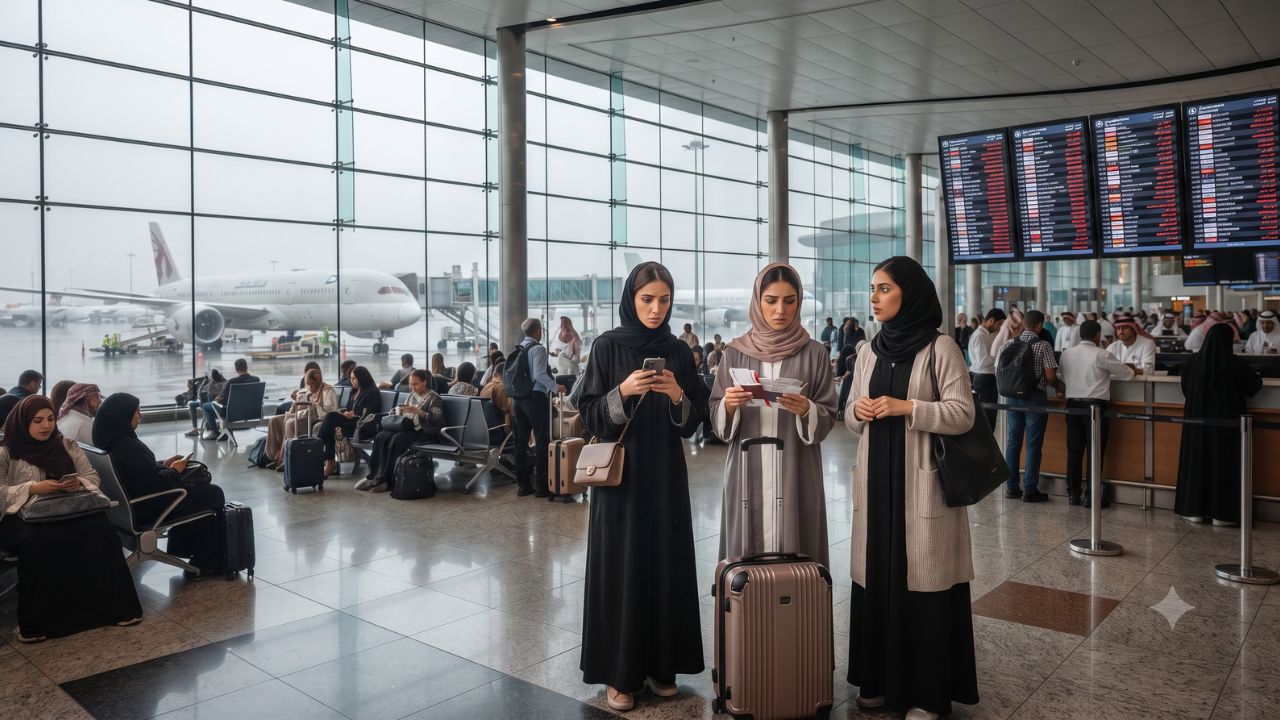
While long-haul passengers often view mega-hubs like Dubai and Doha as impregnable transit fortresses, a single wave of regional airspace detours triggered 1,692 flight delays and 131 cancellations across Middle Eastern air corridors in under 24 hours. The cascading disruption has forced commercial airliners onto extended circuitous routes, straining crew flight duty limitations and creating severe schedule drift across the Arabian Peninsula, the Levant, and North Africa.
Aviation operational data logged on 6 October 2026 at 6:08 pm ET (corresponding to 7 October at 2:08 am GST) confirms widespread schedule fracturing. Commercial carriers adjusting to airspace boundaries and recent security-related disruptions around Saudi gateways have had to re-sequence aircraft rotations across both intercontinental hubs and isolated domestic outposts.
Saudi Gateways and Gulf Arteries Under Operational Strain
The heaviest concentration of delayed traffic settled over Saudi Arabia's capital. Riyadh's King Khalid International Airport (RUH) recorded 354 delayed flights alongside 25 cancellations, representing a 2% origin and 3% destination cancellation rate. As the primary transfer nexus linking the Kingdom's interior provinces with international business routes, Riyadh's schedule drift reverberated across the entire Arabian Peninsula.
On the Red Sea coast, Jeddah's King Abdulaziz International Airport (JED)—the primary arrival terminal for religious and cultural tourism monitored by the Saudi Tourism Authority—logged 162 delays and 11 cancellations. In the Eastern Province, Dammam's King Fahd International Airport handled 47 delays and two cancellations.
Smaller domestic and regional airfields in Saudi Arabia absorbed severe proportional cancellations. Abha Regional Airport (AHB) logged 21 delays alongside 19 cancellations, producing an origin cancellation rate of 25% and a destination cancellation rate of 17%. Yanbu Domestic Airport (YNB) recorded four cancellations with zero delays, translating to an origin cancellation rate of 66%. Further south, Najran Domestic Airport (EAM) posted four cancellations and Gizan Regional Airport (GIZ) reported three cancellations, with both regional airports seeing their operational schedules virtually halted.
In the United Arab Emirates, Dubai International Airport (DXB) recorded the highest cancellation count among all listed regional facilities, with 27 cancellations and 197 delayed flights (3% origin and 2% destination cancellation rates). Abu Dhabi International Airport (AUH) logged 108 delays and four cancellations, while Sharjah International Airport (SHJ) recorded 101 delays and one cancellation.
| Airport Hub | IATA Code | Country / Region | Flight Delays | Flight Cancellations | Operational Impact |
|---|---|---|---|---|---|
| King Khalid International | RUH | Saudi Arabia | 354 | 25 | High-volume hub holding patterns and gate re-assignments |
| Ben Gurion International | TLV | Israel | 201 | 3 | Regional airway diversions and arrival sequencing holds |
| Dubai International | DXB | UAE | 197 | 27 | Long-haul rotation delays and intercontinental rebooking queues |
| Istanbul Airport | IST | Turkey | 163 | 8 | Cross-continental connecting schedule bottlenecks |
| King Abdulaziz International | JED | Saudi Arabia | 162 | 11 | Coastal weather holds and pilgrimage flight re-timing |
| Cairo International | CAI | Egypt | 133 | 4 | North African corridor congestion and apron delays |
| Hamad International | DOH | Qatar | 130 | 1 | Inbound transit flight delays and secondary baggage holds |
| Abu Dhabi International | AUH | UAE | 108 | 4 | Extended approach vectors and turnaround buffers |
| Sharjah International | SHJ | UAE | 101 | 1 | Low-cost carrier aircraft turnaround delays |
| King Fahd International | DMM | Saudi Arabia | 47 | 2 | Domestic connection slippage and slot holds |
| Queen Alia International | AMM | Jordan | 43 | 1 | Airway routing adjustments across Levant airspace |
| Bahrain International | BAH | Bahrain | 24 | 13 | High proportional cancellations on regional feeder flights |
| Abha Regional | AHB | Saudi Arabia | 21 | 19 | Mountain runway weather constraints and fleet cancellations |
| Damascus International | DAM | Syria | 6 | 4 | Restricted airspace navigation and scheduled service cuts |
| Yanbu Domestic | YNB | Saudi Arabia | 0 | 4 | Regional feeder cancellations to western industrial hubs |
| Najran Domestic | EAM | Saudi Arabia | 0 | 4 | Complete domestic flight suspension for the operational cycle |
| Gizan Regional | GIZ | Saudi Arabia | 0 | 3 | Full destination cancellation across short-haul routes |
| Erbil International | EBL | Iraq | 2 | 2 | Northern corridor holding patterns and aircraft delays |
Airline Schedule Fracturing Across Regional Fleets
The disruption split unevenly between major flag carriers and specialized regional operators. Saudia posted both the highest absolute delay tally and the highest cancellation volume across the entire Middle East dataset, recording 191 delayed flights (representing 36% of its operations) and 25 cancellations (4%).
Low-cost carriers across the Gulf also absorbed heavy operational shocks. In Saudi Arabia, flynas recorded 92 delayed flights (35%) and three cancellations (1%), while flyadeal logged 59 delays (36%) and six cancellations (3%). In the United Arab Emirates, Air Arabia saw 42% of its scheduled flights delayed (95 services) alongside one cancellation, while FlyDubai recorded 87 delays (27%) and eight cancellations (2%).
Qatar Airways demonstrated strong resilience against outright flight cancellations, recording only a single scrubbed service (0%), yet registered 113 delayed flights (18% of its schedule) at its Doha Hamad hub, documented through Visit Qatar. In Bahrain, Gulf Air recorded 15 delays (10%) and 13 cancellations, representing a cancellation rate of 9% across its network.
In Israel, Israir experienced delays on 49% of its listed flights (40 services) along with two cancellations (2%), while El Al reported 66 delays (38%) and one cancellation (0%). Royal Jordanian handled 19 delays (13%) and two cancellations (1%). Specialized carriers operating in high-risk zones saw complete operational halts: Iraq's Fly Baghdad recorded two cancellations (100% of tracked operations) with zero delays, and Libya's Crown Airlines recorded one cancellation (100%). In Iran, Mahan Air recorded three delays (16%) and one cancellation (5%), while Syrian Arab Airlines posted two cancellations (14%) and one delay (7%). Outside the core Middle East, Turkish Airlines logged 115 delays (7%) and two cancellations, while EgyptAir posted 45 delays (18%) and two cancellations.
Visitor Insider Tips
Navigating Middle Eastern airport transfers during widespread airspace detours requires tactical preparation and realistic buffer management:
- Avoid Sub-Two-Hour Connections in the Gulf: With long-haul flights from Europe and Asia routing around closed airspace zones, arrival times regularly slip by 45 to 90 minutes. Insist on minimum layovers of 2.5 to 3.5 hours at Dubai, Doha, or Riyadh to protect onward tickets.
- Confirm Point-to-Point Luggage Transfers: When booking mixed-carrier itineraries through regional hubs like Sharjah, Bahrain, or Abu Dhabi, verify whether your baggage is interlined. In periods of high schedule variance, re-checking luggage through immigration can cause you to miss tight gates.
- Keep Physical Boarding Passes and Lounge Vouchers: High digital traffic often slows airline app updates during mass delays. Pick up printed boarding documents at the transfer desk and request meal vouchers immediately if your scheduled delay exceeds three hours.
- Prioritize Morning Departures on Regional Feeders: Regional routes to secondary Saudi cities (Abha, Yanbu, Gizan) and Levant airports (Amman, Erbil) experience compounded afternoon cancellations as early delays exhaust operating crews. Book the first departure of the day whenever possible.
Cultural and Environmental Context
The Middle East's central geographic position makes its aviation infrastructure a linchpin of global connectivity. However, extended flight routings around conflict corridors force long-haul jetliners to burn thousands of tons of additional aviation fuel, elevating carbon emissions per passenger-kilometer and driving up operating expenditures across international fleets.
Beyond environmental considerations, reliable regional air transit is central to the cultural fabric of the Arabian Peninsula. Air routes connecting Riyadh and Jeddah with heritage provinces like Asir (Abha) and AlUla enable sustainable regional tourism, supporting local handicraft markets, historical preservation initiatives, and regional hospitality cooperatives. When domestic flights face rolling cancellations, regional economies that depend on visitor mobility feel immediate financial pressure.
FAQ: Visiting Middle East Transit Hubs 2026
What should I do if my flight through Dubai or Riyadh is delayed?
Check your airline mobile app immediately for rebooked connections. If you face an overnight layover caused by airline scheduling issues, proceed directly to the carrier's transfer service desk to claim hotel and meal vouchers.
Do Middle Eastern airlines compensate for delays caused by regional airspace closures?
Airspace restrictions and geopolitical rerouting are classified as extraordinary circumstances. While cash compensation is generally not mandatory under these conditions, full-service carriers remain obligated to provide food, drinks, and hotel accommodation.
How are regional flights within Saudi Arabia affected by hub delays?
Secondary airports like Abha and Yanbu often experience higher cancellation rates because airlines prioritize mainline international widebodies. Always confirm domestic flight statuses before heading to regional terminals.
In a region where air travel links global continents, building extra time into your itinerary transforms an unpredictable transit day into a manageable journey.
Related Travel Guides
Disclaimer
This article is for informational and educational purposes only. It does not constitute legal, financial, or professional advice. While we strive to provide accurate and up-to-date information, travel policies, regulations, and conditions change rapidly. Always verify information with official sources before making travel decisions. Nomad Lawyer makes no representations about the accuracy, reliability, completeness, or suitability of the information provided. Readers should consult qualified professionals for advice specific to their circumstances. The views expressed in this article are those of the author and do not necessarily reflect the views of Nomad Lawyer.
Raushan Kumar
Founder & Lead Developer
Full-stack developer with 11+ years of experience and a passionate traveller. Raushan built Nomad Lawyer from the ground up with a vision to create the best travel and law experience on the web.
Learn more about our team →