
Murals on the Prairie: How Oklahoma City's State Fair Challenge Is Driving a Public Art Boom

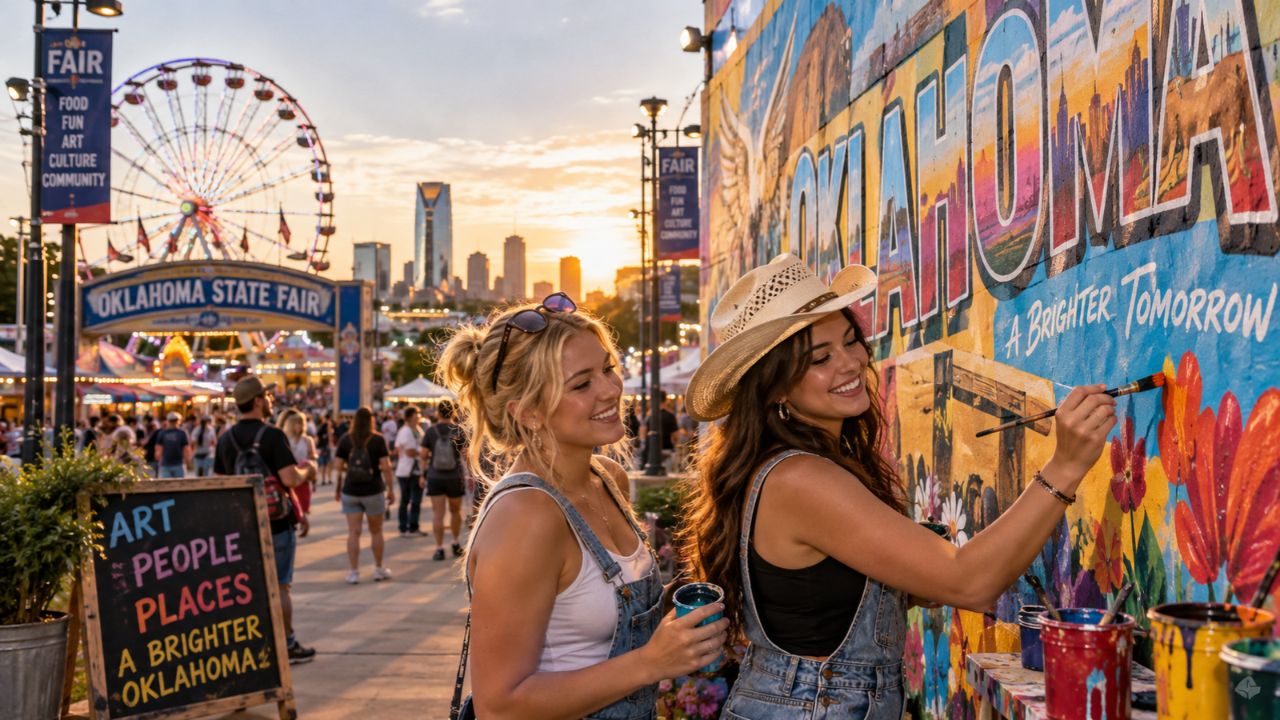
While state fairs across the American heartland are traditionally celebrated for carnival midways and prize livestock, the Oklahoma State Fair in Oklahoma City has turned giant industrial walls into live mural canvases, sparking a statewide renaissance in public art tourism. Anchored by the State Fair Mural Challenge—featuring celebrated regional creators like artist Dusty Gilpin—the fairgrounds have evolved into a vibrant open-air exhibition space. Rather than treating visual art as an elite indoor gallery pursuit, the initiative brings large-scale contemporary painting directly to hundreds of thousands of autumn visitors.
This creative evolution reflects a broader cultural renaissance unfolding across Oklahoma's capital. Promoted statewide by the Oklahoma Tourism and Recreation Department, Oklahoma City (OKC) is deliberately weaving street murals, historic brick architecture, Native American heritage, and Western storytelling into an accessible, walkable urban adventure. For travelers arriving in September, the fair serves as a dynamic launchpad to explore the city's emerging bohemian districts and world-class museums.
Transforming Fairground Walls into Civic Canvases
The State Fair Mural Challenge represents a major innovation in how traditional American agricultural expositions engage with modern audiences. Throughout the fair's run, regional muralists paint live before the public, translating Oklahoma's diverse cultural roots, agricultural history, and contemporary spirit into towering visual narratives.
The visibility of artists like Dusty Gilpin underscores a deliberate cultural strategy supported by Visit Oklahoma City. By providing local painters, indigenous artisans, and graffiti muralists with high-visibility platforms, the fair connects visitors with living regional artists. Once the carnival rides power down, these public artworks remain as lasting cultural monuments, encouraging tourists to extend their visits across the city's broader creative districts:
- The Plaza District & Plaza Walls: A former mid-century commercial strip revitalized into a pedestrian arts quarter, where the rotating outdoor gallery known as the Plaza Walls features dozens of newly curated street murals each season.
- The Paseo Arts District: A historic Spanish revival village founded in 1929, characterized by curved stucco buildings, clay tile roofs, and over twenty independent art galleries, ceramic studios, and patio cafes.
- Bricktown Entertainment District: A restored red-brick warehouse district along the Bricktown Canal, featuring water taxi cruises, historic freight terminals, and vibrant contemporary murals honoring Oklahoma sports and music icons.
- Automobile Alley: A historic 1920s car dealership row transformed into a bustling boulevard of creative ad agencies, indie craft breweries, and neon-lit mural alleys.
What Makes Oklahoma City's Creative Identity Different
Oklahoma City's cultural identity stands apart because it does not erase its Western and Indigenous roots in pursuit of modern trends; instead, it synthesizes them. The city is home to the world-renowned National Cowboy & Western Heritage Museum, holding the world's premier collection of Western fine art, Native American artifacts, and historic rodeo memorabilia.
Just minutes away, the First Americans Museum (FAM) presents the living histories, songs, and tribal lifeways of the 39 distinct Native Nations located in Oklahoma today. This coexistence of tribal sovereignty, frontier history, and next-generation street art creates an emotional depth that few other American destinations offer.
Urban revitalization has also preserved historic green spaces. At the center of downtown sits the 15-acre Myriad Botanical Gardens, featuring a sunken lake, public children's garden, and the iconic cylindrical Crystal Bridge Conservatory filled with exotic tropical palms and waterfalls. Nearby, the serene reflecting pools and bronze statues at the Oklahoma City National Memorial & Museum offer a place for quiet civic reflection.
Visitor Insider Tips
Experiencing Oklahoma City during the State Fair and autumn festival season requires savvy transit planning and neighborhood navigation:
- Ride the OKC Streetcar Across Downtown: Skip parking congestion around downtown cultural sites. The modern OKC Streetcar connects Bricktown, Downtown, Midtown, and Automobile Alley along a 4.8-mile track network for just $1 per ride or $3 for a full-day pass.
- Explore Plaza Walls on Second Fridays: If visiting in autumn, time your walk through the Plaza District for "Live on the Plaza" on the second Friday of each month. Alleys fill with live street musicians, food trucks, and artists painting new wall murals in real time.
- Taste Authentic Oklahoma Onion Burgers: Venture beyond fairground corn dogs to sample Oklahoma's native culinary staple: the smash onion burger. Visit historic diners like Tucker's Onion Burgers in Midtown or Bunny's Onion Burgers for thin beef patties smashed with mounds of paper-thin caramelized sweet onions.
- Visit the Cowboy Museum During Morning Hours: To view the colossal "End of the Trail" sculpture by James Earle Fraser and explore the outdoor Western town of Prosperity Junction without school crowds, arrive at the National Cowboy Museum right at 10:00 AM on weekday mornings.
- Base Yourself in Restored Historic Quarters: Choose boutique hotels with deep architectural character, such as the 1924 Ford Motor Assembly plant converted into the 21c Museum Hotel, or the historic Ambassador Hotel in Midtown.
Cultural and Environmental Context
The rise of public mural festivals and community arts districts plays an essential role in sustainable urban regeneration across Oklahoma City. By investing in adaptive reuse rather than demolition, the city has preserved historic 1920s automotive warehouses in Automobile Alley and 1930s Spanish revival facades in the Paseo, significantly reducing construction carbon footprints and landfill waste.
Public art initiatives also serve as powerful community equalizers. By placing world-class murals on public street corners and fairground exterior walls, OKC democratizes art access, ensuring that families from every socio-economic background can experience museum-quality creativity without paying admission fees.
Furthermore, tourism dollars spent at local artist cooperatives, indigenous-owned galleries, and independent neighborhood diners directly strengthen the local economy. Supporting community-driven art tourism ensures that Oklahoma City's cultural identity continues to evolve as an inclusive, vibrant, and resilient beacon of creative expression.
FAQ: Visiting Oklahoma City 2026
Where does the Oklahoma State Fair take place?
The fair is held annually at the OKC Fairgrounds (State Fair Park), located at 3001 General Pershing Boulevard, approximately 10 minutes west of Downtown OKC.
What is the best neighborhood for street art and murals in OKC?
The Plaza District (along NW 16th Street between Classen and Penn) hosts the famous Plaza Walls, featuring dozens of continuously rotating public murals.
How do I get around Oklahoma City without a car?
The OKC Streetcar seamlessly connects Bricktown, Midtown, Automobile Alley, and the Central Business District, with rideshare and rental bikes widely available.
What is the best season to visit Oklahoma City for cultural events?
September and October offer pleasant autumn temperatures (average 75°F / 24°C), the Oklahoma State Fair, outdoor mural festivals, and harvest events.
From spray-painted brick alleys to bronze frontier horizons, Oklahoma City proves that true art belongs to everyone, painted proudly beneath the wide open prairie sky.
Related Travel Guides
Disclaimer
This article is for informational and educational purposes only. It does not constitute legal, financial, or professional advice. While we strive to provide accurate and up-to-date information, travel policies, regulations, and conditions change rapidly. Always verify information with official sources before making travel decisions. Nomad Lawyer makes no representations about the accuracy, reliability, completeness, or suitability of the information provided. Readers should consult qualified professionals for advice specific to their circumstances. The views expressed in this article are those of the author and do not necessarily reflect the views of Nomad Lawyer.
Raushan Kumar
Founder & Lead Developer
Full-stack developer with 11+ years of experience and a passionate traveller. Raushan built Nomad Lawyer from the ground up with a vision to create the best travel and law experience on the web.
Learn more about our team →