
NYC Subway Thermal Energy Project: MTA to Convert Underground Heat into Winter Power in 2026
The MTA is launching a groundbreaking thermal energy system at Brooklyn Bridge-City Hall and Chambers Street stations to combat extreme subway heat and repurpose it for city heating.

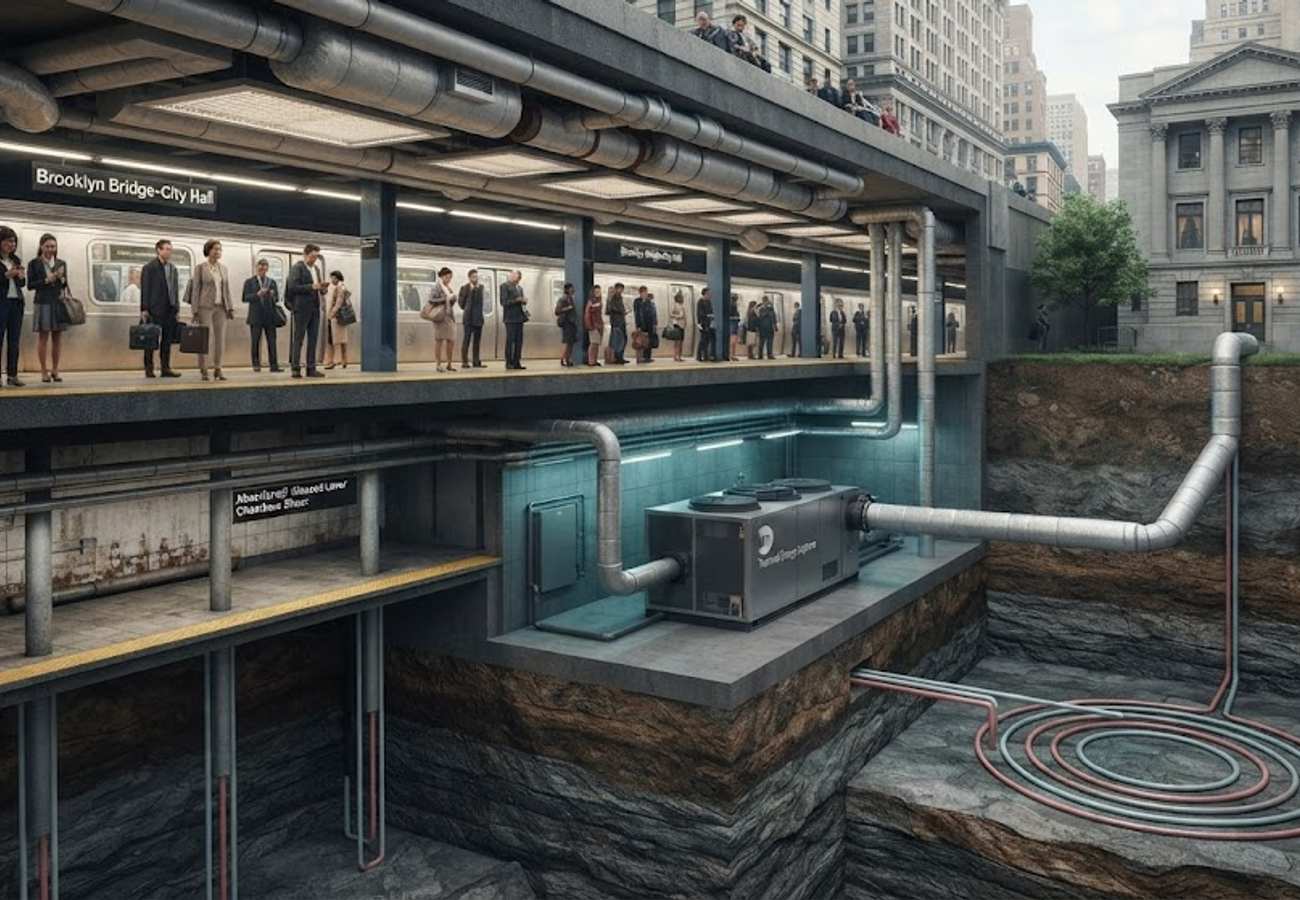
Image generated by AI
New York City is transforming one of its most notorious transit flaws—stifling underground heat—into a sustainable energy asset. Starting in 2026, a joint pilot program will test the capture of subway thermal energy to cool platforms and heat surface buildings.
The Metropolitan Transportation Authority (MTA), in coordination with city and state officials, is deploying a thermal energy system designed to mitigate the extreme temperatures that plague the New York City subway network. The initiative focuses on two critical hubs: the Brooklyn Bridge-City Hall and Chambers Street stations.
The urgency of the project was highlighted in 2025, when subway platforms recorded temperatures exceeding 96°F. Such extreme heat creates significant health risks and discomfort for millions of daily commuters, elderly passengers, and tourists navigating the city with luggage.
Solving the Underground Heat Trap
New York’s subway system was engineered over a century ago, long before the current era of escalating global temperatures. Today, stations act as thermal traps, accumulating heat from several sources:
- Train braking systems and electrical equipment.
- Ventilation inefficiencies.
- Air-conditioning units on subway cars that exhaust heat directly into the stations.
Because conventional air-conditioning is often impractical for these unique underground environments, the MTA is pivoting toward geothermal cooling technologies. The Brooklyn Bridge-City Hall and Chambers Street complex was selected for the pilot due to its history of extreme summer peaks and the availability of subsurface space.
A Circular Approach to Urban Energy
Unlike traditional cooling systems that simply move heat from one location to another, this proposal introduces a circular energy model. The system utilizes radiant cooling technology to extract heat from the platforms. This captured energy is then transported via pipes into geothermal boreholes.
During the winter months, this stored thermal energy can be recovered and redirected to warm nearby municipal buildings, reducing the city's overall reliance on traditional heating fuels.
The Thermal Energy Transition Model
| Existing Problem | Proposed Solution | Potential Benefit |
|---|---|---|
| Hot subway platforms | Capture underground heat | Improved passenger comfort |
| Waste heat from transit operations | Store heat underground | Reduced energy waste |
| Winter heating demand | Recover stored thermal energy | Lower building heating needs |
| Ageing infrastructure | Use existing underground space | Minimal passenger disruption |
Leveraging Abandoned Infrastructure at Chambers Street
A key strategic advantage of this project is the use of an abandoned center platform beneath the Chambers Street station. By utilizing this dormant space for geothermal boreholes, engineers can install deep-earth infrastructure—potentially extending hundreds of feet underground—without disrupting active passenger flows.
The current feasibility study is evaluating four primary metrics:
- The total cooling capacity the system can provide.
- The practical viability of geothermal drilling at these specific sites.
- Projected energy savings for the city.
- The requirements for construction and future network expansion.
Redefining Transit as Climate Infrastructure
This experiment shifts the paradigm of urban transport. While most global metros—including those in London, Paris, Tokyo, and Singapore—view underground heat as a waste product to be eliminated, New York is treating it as a resource.
By implementing a Thermal Energy Network (TEN), the MTA is attempting the first installation of its kind in a US transit network. This transition moves the subway from being a pure energy consumer (requiring massive amounts of electricity for lighting and ventilation) to becoming a functional part of the city's energy ecosystem.
Implications for Tourism and Urban Mobility
For the millions of international and domestic tourists who rely on the subway to reach Manhattan's landmarks, the project promises a significant upgrade in the visitor experience. Summer travel in Lower Manhattan is frequently marred by crowded, overheated platforms and poor airflow.
Impact on Travel and Accessibility
| Travel Impact Area | Current Challenge | Potential Future Benefit |
|---|---|---|
| Tourist Comfort | Extremely hot platforms | Cooler waiting environments |
| Visitor Confidence | Heat-related travel discomfort | More reliable urban mobility experience |
| Accessibility | Heat affects vulnerable passengers | Improved conditions for elderly and families |
| City Reputation | Climate challenges impact perception | Stronger sustainable city image |
| Transit Operations | Heat contributes to operational issues | Potential reduction in heat-related failures |
Turning the subway's greatest weakness into its most sustainable strength.
Related Travel Guides
Disclaimer
This article is for informational and educational purposes only. It does not constitute legal, financial, or professional advice. While we strive to provide accurate and up-to-date information, travel policies, regulations, and conditions change rapidly. Always verify information with official sources before making travel decisions. Nomad Lawyer makes no representations about the accuracy, reliability, completeness, or suitability of the information provided. Readers should consult qualified professionals for advice specific to their circumstances. The views expressed in this article are those of the author and do not necessarily reflect the views of Nomad Lawyer.
Kunal K Choudhary
Co-Founder & Contributor
A passionate traveller and tech enthusiast. Kunal contributes to the vision and growth of Nomad Lawyer, bringing fresh perspectives and driving the community forward.
Learn more about our team →