Cayman Islands Tourism Hits Record Highs: Stayover Arrivals Surge 11% as Luxury Replaces Mass Caribbean Cruise Traffic

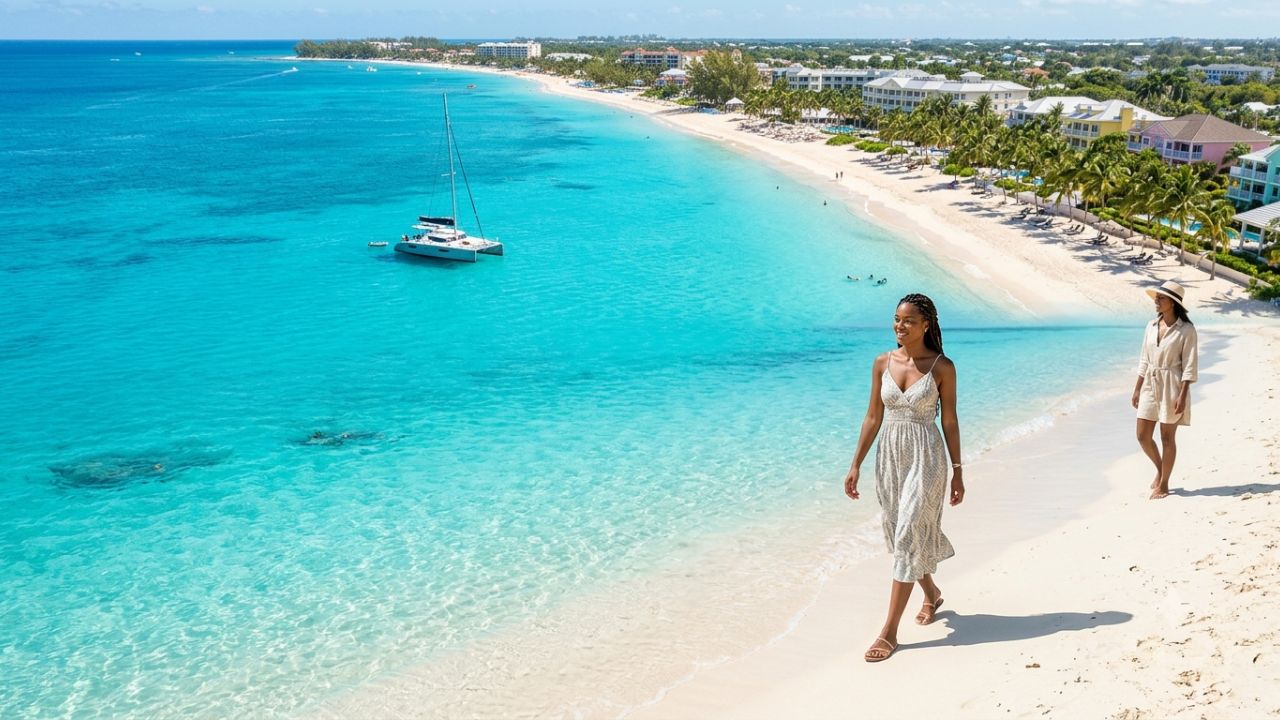
GEORGE TOWN, Grand Cayman — The Cayman Islands’ tourism economy is undergoing a profound structural evolution in 2026, demonstrating sustained double-digit growth in high-yield overnight stayover visitors while strategically recalibrating its relationship with mass cruise passenger volume. Official statistics released by the Cayman Islands Department of Tourism confirm that the British Overseas Territory welcomed 361,192 stayover arrivals between January and August 2026, representing an impressive 11.0 percent increase over the corresponding eight-month period in 2025. Supported by an expanding luxury room inventory along Seven Mile Beach, surging arrivals from North and Latin America, and exceptional gains in hotel revenue per available room (RevPAR), the tri-island archipelago is outperforming broader regional trends and establishing itself as a benchmark for high-value Caribbean destination management.
This sustained upward trajectory highlights a deliberate economic pivot. While overall Caribbean arrival tallies are frequently skewed by mass-market cruise ship day-trippers who spend only a few hours in port, the Cayman Islands has focused on attracting extended-stay vacationers whose spending directly supports local dive operators, fine-dining establishments, boutique luxury resorts, and cultural preservation initiatives. By comparing the territory’s audited performance against six regional Caribbean titans—the Dominican Republic, Jamaica, Cuba, The Bahamas, Aruba, and Puerto Rico—travelers and industry analysts gain an authentic perspective on how the Cayman Islands balances world-class marine conservation with premier luxury hospitality.
CAYMAN ISLANDS TOURISM SCORECARD: JANUARY–AUGUST 2026 METRICS
| PERFORMANCE BENCHMARK | OFFICIAL REPORTED METRIC | STRATEGIC IMPLICATION & ANALYSIS |
|---|---|---|
| Stayover Arrivals (YTD) | 361,192 Visitors | +11.0% YoY increase; high-spending tourists |
| August Stayover Total | 27,445 Visitors | +9.2% YoY gain during shoulder travel period |
| August Cruise Arrivals | 50,960 Cruise Passengers | Day-visitors; single-day port excursion spend |
| Combined Arrivals (YTD) | 1,137,186 Total Visitors | +6.1% YoY increase across air and cruise |
| United States Market | 21,967 Visitors (August) | +10.0% YoY increase; primary inbound anchor |
| Canadian Inbound Market | +18.2% YoY Surge (August) | Strong long-haul winter booking indicator |
| Latin America Market | +24.2% YoY Surge (August) | Emerging diversification via Panama hub |
| August Hotel Occupancy | 47.4% Island-Wide Average | +3.0 percentage point gain over August 2025 |
| Average Daily Rate (ADR) | +4.7% YoY Advance (August) | Resilient high-end room pricing power |
| Hotel RevPAR Performance | +11.8% YoY Surge (August) | Strongest indicator of hospitality yield |
Statistical Integrity: Stayover Vacationers vs. Cruise Day-Trippers
In evaluating Caribbean destination strength, travelers and economists must maintain an uncompromising distinction between overnight stayover visitors and cruise ship excursionists. Conflating these two distinct traveler classes produces a fundamentally distorted image of an island’s tourism economy.
The operational and financial differences between these cohorts are stark:
- Economic Spending Yield: A stayover tourist arriving at Owen Roberts International Airport (GCM) remains in the Cayman Islands for an average length of stay ranging between 5.8 and 7.2 nights. These visitors reserve accommodation in luxury resorts, private villas, or oceanfront condominiums, paying nightly room taxes, frequenting independent restaurants, chartering private dive boats, and renting vehicles. Industry estimates indicate that a stayover guest generates between $450 and $700 per day in direct local expenditure. In contrast, a cruise passenger ashore in George Town for six hours typically spends between $115 and $140, primarily on duty-free retail, chain port bars, and packaged bus excursions.
- Ecological and Community Footprint: While 50,000 stayover visitors spread across an entire month have a manageable environmental footprint distributed across hotels with advanced wastewater systems, 10,000 cruise passengers disembarking simultaneously from three mega-ships can congest George Town’s waterfront, overwhelm shallow reefs at Stingray City, and strain public transportation infrastructure without delivering equivalent economic value.
- The Cayman Trajectory: Through August 2026, the Cayman Islands handled 361,192 stayover arrivals (+11.0%) alongside 775,994 cruise arrivals, bringing total combined visitors to 1,137,186 (+6.1%). The outsized growth in the overnight segment demonstrates that the island is successfully expanding the high-margin, environmentally sustainable segment of its visitor portfolio.
OVERNIGHT STAYOVER VS. CRUISE PASSENGER EXPENDITURE DYNAMICS
| Entity / Route | Metrics | Operational Status |
|---|---|---|
| PERFORMANCE INDICATOR | STAYOVER OVERNIGHT VISITOR | CRUISE SHIP DAY PASSENGER |
| Average Length of Stay | 5.8 to 7.2 Nights | 5 to 8 Hours in Port |
| Estimated Daily Spend | $450 to $700+ Per Traveler | $115 to $140 Per Traveler |
| Local Accommodation Impact | Generates Room Taxes & Yield | Zero Direct Accommodation Spend |
| Restaurant & Culinary Impact | Multi-Course Dining, Fine Wine | Fast Casual or Pre-Paid Ship Meals |
| Dispersal Across Islands | High (Brac & Little Cayman) | Concentrated Exclusively at Port |
| Infrastructure Pressure | Evenly Distributed Daily Flow | Severe Peaking During Port Windows |
A Five-Year Historical Perspective: From Pandemic Freeze to Luxury Consolidation
The evolution of Cayman Islands visitor traffic over the past five years reflects one of the most remarkable post-pandemic transformations in the Western Hemisphere:
- 2021 (The Border Freeze): Operating under some of the most rigorous public health protocols in the Americas, the Cayman Islands recorded just 17,300 total visitors in 2021, keeping borders closed to commercial cruise ships and unquarantined air arrivals to safeguard public health.
- 2022 (The Reopening Surge): As borders progressively unlocked, total arrivals escalated rapidly to 1,027,700, driven by pent-up demand and the return of maritime itineraries.
- 2023 (Acceleration and Normalization): Total visitor volume reached 1,700,300, with stayover arrivals climbing to 429,284—recovering to approximately 85 percent of pre-pandemic 2019 levels.
- 2024 (The Structural Realignment): Total arrivals adjusted downward by 10.9 percent to 1,514,700. However, this top-line decline was caused entirely by a reduction in scheduled cruise ship port calls. Simultaneously, high-value stayover arrivals rose 2.0 percent to 437,842, representing the second-highest overnight visitor total in the nation’s history at that time.
- 2025 (Record-Setting Holiday Momentum): The year concluded with a record-shattering December, processing 54,830 stayover visitors (+5.3% YoY) and 148,489 cruise arrivals, setting the stage for the explosive double-digit gains recorded across 2026.
CAYMAN ISLANDS FIVE-YEAR ARRIVAL TRAJECTORY (2021–2026)
| Entity / Facility | Delays | Cancellations | Details |
|---|---|---|---|
| CALENDAR YEAR | TOTAL VISITORS | OVERNIGHT STAYOVERS | PRIMARY MACRO TREND |
| 2021 | 17,300 Total | Minimal Quarantine Stays | Border closure protocols |
| 2022 | 1,027,700 Total | Rapid Rebound Phase | Phased maritime reopening |
| 2023 | 1,700,300 Total | 429,284 Stayover Keys | 85% recovery of 2019 baseline |
| 2024 | 1,514,700 Total | 437,842 Stayover Keys | Cruise drops; stayover +2% |
| 2025 | High-Volume Baseline | Record Dec (54,830 keys) | Luxury inventory expansion |
| 2026 (Jan–Aug YTD) | 1,137,186 Combined | 361,192 Stayover Keys | +11.0% YoY stayover surge |
Six Major Caribbean Rivals: A Comparative Regional Analysis
To appreciate the distinctive holiday proposition of the Cayman Islands, travelers must evaluate it alongside the six leading Caribbean vacation destinations by overnight arrivals, as documented by the Caribbean Tourism Organization (CTO). Each destination delivers a fundamentally different holiday experience, catering to diverse budget tiers and travel styles.
SIX LEADING CARIBBEAN DESTINATIONS: COMPARATIVE HOLIDAY PROFILES
| Entity / Route | Metrics | Operational Status |
|---|---|---|
| DESTINATION | ANNUAL OVERNIGHT KEYS | SIGNATURE HOLIDAY IDENTITY & TRAVEL ADVANTAGES |
| Dominican Republic | ~8.5 Million Tourists | Massive all-inclusive resorts, Punta Cana beaches, |
| historic Santo Domingo, budget package holidays | ||
| Jamaica | ~2.9 Million Tourists | Reggae culture, Blue Mountain coffee, cascading |
| waterfalls, rich local gastronomy, luxury boutique stays | ||
| Cuba | ~2.2 Million Tourists | UNESCO architectural heritage, vintage Americana, |
| salsa rhythms, uncommercialized coastal diving | ||
| The Bahamas | ~1.9 Million Overnight | 700-island archipelago, mega-resort entertainment, |
| (11.2M Total Arrivals) | private island-hopping, Exumas marine wilderness | |
| Aruba | ~1.4 Million Tourists | Arid desert landscapes, outside hurricane belt, |
| reliable trade winds, Dutch-Caribbean fusion culture | ||
| Puerto Rico | ~1.0 Million Overnight | Historic Spanish fortifications, El Yunque rainforest |
| (Excluding US Domestic) | bioluminescent bays, no passport required for US |
1. Dominican Republic: The All-Inclusive Mega-Resort Leader
Welcoming approximately 8.5 million overnight visitors annually, the Dominican Republic is the undisputed volume leader of the Caribbean. Anchored by the extensive resort corridors of Punta Cana, Bávaro, and Cap Cana, the nation excels at delivering high-value, all-inclusive beach holidays with extensive amenities, championship golf courses, and organized excursions. Independent travelers can explore the cobblestone plazas of Santo Domingo's Ciudad Colonial—the oldest permanent European settlement in the Americas—or venture to the Samaná Peninsula for seasonal humpback whale watching. Compared to the Cayman Islands' boutique, intimate feel, the Dominican Republic offers expansive scale, multi-generational entertainment complexes, and accessible package pricing.
2. Jamaica: Cultural Powerhouse and Alpine Coastlines
Welcoming 2.9 million overnight tourists, Jamaica provides an extraordinary fusion of world-renowned musical heritage, culinary distinction, and dramatic tropical topography. Vacationers can choose between luxury beachfront enclaves in Montego Bay, dramatic clifftop boutique resorts in Negril's West End, adventure excursions in Ocho Rios, and cultural explorations in Kingston. Iconic local cuisine—including authentic jerk chicken smoked over allspice wood, ackee and saltfish, and Blue Mountain single-estate coffee—distinguishes the Jamaican experience. While the Cayman Islands prioritizes serene underwater discovery and culinary refinement, Jamaica offers a high-energy cultural vacation deeply immersed in indigenous art and music.
3. Cuba: Historic Preservation and Coastal Solitude
Recording 2.2 million overnight arrivals, Cuba stands as a fascinating living museum. Havana captivates travelers with its grand Spanish colonial palazzos, historic plazas, mid-century classic automobiles, and world-class jazz clubs. Beyond the capital, travelers seek out the pristine sands of Varadero, the preserved 16th-century architecture of Trinidad, and the tobacco fields of the Viñales Valley. Travel to Cuba requires careful advance planning regarding currency exchange, private guesthouse (casas particulares) bookings, and transport logistics. In contrast to Grand Cayman's ultra-modern financial and luxury infrastructure, Cuba offers deep historical immersion and unpolished authenticity.
4. The Bahamas: Archipelagic Splendor and Island-Hopping
Welcoming 1.9 million overnight guests and over 11.2 million total visitors, The Bahamas is an archipelagic giant comprising over 700 islands and cays. Nassau and Paradise Island feature colossal mega-resorts—such as Atlantis and Baha Mar—offering massive casino gaming, water parks, and international fine dining. Beyond New Providence, the Out Islands (Exumas, Abacos, Eleuthera, and Harbour Island) deliver secluded pink sand beaches, bonefishing flats, and private yacht anchorages. While The Bahamas shares the Cayman Islands' focus on crystal-clear water and marine life, its sprawling geographical footprint requires domestic flights or private charters to explore beyond the capital.
5. Aruba: Arid Microclimates and Predictable Sunshine
Processing 1.4 million overnight visitors, Aruba boasts one of the most reliable climates in the Caribbean. Situated in the southern Caribbean just off the coast of South America, Aruba lies safely outside the Atlantic hurricane belt, receiving minimal annual rainfall and continuous, cooling trade winds. Famous for Eagle Beach and Palm Beach, the island also features the rugged, cactus-strewn wilderness of Arikok National Park. Aruba appeals to holidaymakers seeking guaranteed sunshine, windsurfing, and reliable weather during the late summer and autumn months when northern Caribbean destinations face tropical weather systems.
6. Puerto Rico: Spanish Colonial Fortresses and Tropical Rainforests
Recording 1.0 million international overnight tourists (alongside millions of domestic US arrivals), Puerto Rico offers a diverse blend of American convenience and deep Hispanic cultural identity. San Juan features the towering masonry walls of Castillo San Felipe del Morro and celebrated culinary districts in Condado and Santurce. Natural wonders include El Yunque National Forest—the only tropical rainforest in the US National Forest System—and the world's brightest bioluminescent bay at Mosquito Pier in Vieques. Puerto Rico serves as a versatile destination combining historic architecture with outdoor rainforest adventure.
Discovering the Cayman Islands: Tri-Island Geography and Attractions
The Cayman Islands consists of three distinct limestone islands situated in the western Caribbean Sea, approximately 480 miles south of Miami. Each island offers a unique holiday rhythm, enabling travelers to tailor their journey across cosmopolitan luxury, rugged exploration, and complete castaway seclusion.
THE TRI-ISLAND CAYMAN DESTINATION MATRIX: ATTRACTIONS & EXPERIENCES
| Entity / Route | Metrics | Operational Status |
|---|---|---|
| ISLAND DESTINATION | SIGNATURE ATTRACTIONS | IDEAL HOLIDAY PROFILE & TIME ALLOCATION |
| Grand Cayman | - Seven Mile Beach | Cosmopolitan Luxury, World-Class Dining, |
| (Main Island) | - Stingray City Sandbar | Family Beach Holidays, Coral Reef Snorkeling |
| - George Town Waterfront | Suggested Allocation: 4 to 7 Days | |
| - Queen Elizabeth Botanic Park | ||
| - Cayman Crystal Caves | ||
| Cayman Brac | - The 140-Foot Limestone Bluff | Outdoor Hiking, Deep Caving Expeditions, |
| (The Rugged Island) | - MV Captain Keith Tibbetts | Wreck Diving, Seabird Birdwatching |
| - Peter's & Rebecca's Caves | Suggested Allocation: 2 to 3 Days | |
| Little Cayman | - Bloody Bay Wall Marine Park | World-Class Wall Diving, Total Seclusion, |
| (Boutique Hideaway) | - Jackson’s Bight Drop-Off | Kayaking to Owen Island, Wildlife Sanctuaries |
| - Booby Pond Nature Reserve | Suggested Allocation: 2 to 4 Days |
Grand Cayman: Cosmopolitan Luxury and Marine Encounters
Grand Cayman is the largest, most populous, and most commercially sophisticated island in the territory:
- Seven Mile Beach: Regularly celebrated as one of the world's most spectacular coastlines, this crescent of pristine coral-sand on the island's western shore features tranquil, crystal-clear turquoise waters free of disruptive currents. Lined with premier luxury resorts, beachside cocktail lounges, and private condos, it offers ideal swimming, paddleboarding, and sunset strolling.
- Stingray City and Sandbar: Located inside the protective barrier reef of North Sound, this world-famous submerged sandbar allows visitors to stand waist-deep in transparent ocean water while gentle Southern stingrays (Hypanus americanus) glide effortlessly around them.
- George Town: The capital city combines duty-free boutique shopping, historic Caymanian architecture, the Cayman Islands National Museum, and waterfront open-air dining.
- Queen Elizabeth II Botanic Park: A 65-acre conservation park showcasing endemic tropical flora, wild orchids, and the captive breeding facility for the endangered Grand Cayman Blue Iguana (Cyclura lewisi), one of the rarest reptiles on earth.
- Cayman Crystal Caves: Located in the lush interior forests of Old Man Bay, this geological wonder features millions-of-years-old underground caverns adorned with dramatic stalactites, stalagmites, and crystal-clear freshwater pools.
Cayman Brac: The Adventure and Hiking Frontier
Situated 89 miles northeast of Grand Cayman, Cayman Brac is defined by its dramatic topography. The island is dominated by The Bluff, a massive limestone plateau that rises steadily along the island's length, terminating in sheer 140-foot vertical cliffs that plunge directly into the pounding Atlantic surf.
- Caving and Hiking: Adventurers can explore extensive subterranean chambers, including Peter’s Cave and the historic Rebecca’s Cave, used as hurricane shelters for generations.
- Wreck Diving: Divers from around the globe visit to explore the MV Captain Keith Tibbetts, a 330-foot Russian-built naval frigate intentionally sunk in 1996 to create an artificial reef teeming with sponges, corals, and marine life.
Little Cayman: Pristine Sanctuary and World-Class Diving
With a resident population under 200 and a total length of just ten miles, Little Cayman is the ultimate Caribbean sanctuary for peace and pristine marine ecosystems:
- Bloody Bay Wall Marine Park: Regarded by legendary oceanographer Jacques Cousteau as one of the top dive sites on the planet. The coral reef begins in shallow water at 20 feet before dropping vertically into a dramatic 1,000-metre abyss. Divers drift past giant yellow tube sponges, sea fans, green sea turtles, reef sharks, and schools of permit.
- Booby Pond Nature Reserve: A Ramsar-designated international wetland sanctuary protecting the Caribbean's largest breeding colony of red-footed boobies and magnificent frigatebirds.
- Owen Island: An uninhabited islet located inside South Hole Sound, accessible by sea kayak, offering an untouched, Robinson Crusoe-style private beach experience.
The Culinary Capital of the Caribbean: Flavors and Traditions
The Cayman Islands has earned international acclaim as the culinary epicentre of the Caribbean, boasting over 200 dining venues on Grand Cayman alone. The islands' gastronomic landscape seamlessly blends authentic local maritime recipes with Michelin-calibre international fine dining.
Traditional Caymanian Specialties
Caymanian cuisine reflects maritime heritage, utilizing fresh catch, aromatic Caribbean spices, root vegetables, and slow cooking methods:
- Cayman-Style Fish: Freshly caught red snapper, wahoo, or mahi-mahi simmered in a delicate sauce of scotch bonnet peppers, sweet onions, tomatoes, celery, garlic, and fresh lime juice, traditionally paired with rice and peas and sweet fried plantains.
- Conch Preparations: Queen conch prepared in a variety of local styles: cracked conch (tenderized and flash-fried in light seasoned batter), hearty conch chowder with potatoes, and citrus-cured conch salad tossed with diced peppers, onions, and fresh cilantro.
- Traditional Turtle Stew: A historic cultural dish seasoned with pimento, onions, and scotch bonnet peppers. Travelers seeking to experience this culinary tradition should ensure they patronize licensed, legal establishments sourcing exclusively from regulated educational facilities.
- Cayman Cassava Heavy Cake: The national dessert, traditionally baked during celebrations. Prepared from grated cassava root, coconut milk, dark brown sugar, butter, vanilla, and ground spices, baked slowly until dense, chewy, and caramelized.
Fine Dining and Farm-to-Table Innovations
Grand Cayman hosts signature culinary events such as the annual Cayman Cookout, hosted by Chef Eric Ripert at The Ritz-Carlton Grand Cayman, attracting culinary luminaries worldwide. Restaurants along Seven Mile Beach and Camana Bay champion sustainable ocean-to-table dining, working directly with local fishermen and hydroponic organic farms to showcase local lionfish, spiny lobster (in season), and tropical fruits.
Accommodation Architecture: Boutique Luxury and Infrastructure Growth
The lodging landscape of the Cayman Islands is defined by high quality, low physical density, and robust financial performance. Unlike destinations dominated by massive budget all-inclusive compounds, Cayman accommodations emphasize upscale European Plan (room-only) resorts, boutique hotels, and luxury condominium residences.
ACCOMMODATION DISTRICTS ACROSS THE CAYMAN ISLANDS
| Entity / Route | Metrics | Operational Status |
|---|---|---|
| RESORT REGION | ACCOMMODATION PROFILE | STRATEGIC ADVANTAGES FOR TRAVELERS |
| Seven Mile Beach | Ultra-Luxury Flagships, Five- | Walk-out beach access, premier fine dining, |
| (Grand Cayman) | Star Condos, Full Spas | high liquidity; commands highest island ADR |
| George Town & | Modern Lifestyle Hotels, | Walkable urban access, corporate efficiency, |
| Seven Mile Corridor | Boutique Commercial Suites | excellent dining; easy transit to beaches |
| East End & | Oceanfront Dive Resorts, | Secluded tranquil shores, world-class wall |
| Rum Point (North) | Private Luxury Vacation Villas | diving, relaxed beach bars; rental car needed |
| Cayman Brac | Intimate Beachfront Lodges, | Tailored to divers, naturalists, and hikers; |
| & Little Cayman | Specialized Eco-Resorts | Limited room stock requires advance bookings |
Expanding Room Inventory and Strong Performance Metrics
- Inventory Milestones: Official Department of Tourism data shows that total accommodation inventory reached 8,475 bedrooms in 2025, representing an addition of 119 bedrooms primarily from luxury private villas and condos. During 2026, approximately 500 additional bedrooms are entering service, highlighted by the opening of new lifestyle and luxury properties like Hotel Indigo Grand Cayman and the development of the Grand Hyatt Grand Cayman.
- Financial Performance: August 2026 recorded an Average Daily Rate (ADR) increase of 4.7 percent alongside an 11.8 percent surge in RevPAR, demonstrating strong underlying pricing power and consumer willingness to pay premium rates for verified quality.
A Practical Five-Day Grand Cayman Travel Plan
For travelers visiting the Cayman Islands for the first time, a structured five-day itinerary provides a balanced introduction to the territory's finest beaches, marine encounters, and culinary wonders:
FIRST-TIMER'S FIVE-DAY GRAND CAYMAN ITINERARY
| Entity / Facility | Delays | Cancellations | Details |
|---|---|---|---|
| DAY | MORNING ACTIVITY | AFTERNOON EXCURSION | EVENING DINING & ENTERTAINMENT |
| Day 1 | Touchdown at GCM; | Afternoon unwinding on | Sunset dinner along Seven Mile Beach; |
| check-in to resort base | Seven Mile Beach sands | fresh grilled mahi-mahi at water's edge | |
| Day 2 | Chartered boat excursion | Coral Gardens snorkeling | Waterfront dinner in George Town; |
| to Stingray City Sandbar | and Starfish Point beach | sampling authentic conch fritters | |
| Day 3 | Cultural stroll through | Camana Bay shopping | Fine dining at a signature culinary |
| George Town museums | and observation tower | venue; tasting menu by renowned chefs | |
| Day 4 | Morning exploration of | Scenic drive to Rum | Casual beach BBQ at Kaibo Yacht Club |
| Cayman Crystal Caves | Point; coastal relaxing | under the stars by North Sound | |
| Day 5 | Early swim and paddle | Final duty-free souvenir | Smooth transfer to Owen Roberts |
| along Seven Mile Beach | shopping and packing | International Airport for departure |
Essential Traveler Advisory: Logistics, Currency, and Safety
To ensure an effortless, memorable holiday experience across the Cayman Islands, travelers should observe the following practical guidelines:
1. Border Regulations and Entry Requirements
All foreign visitors must hold a valid passport with a minimum validity of six months beyond the planned departure date, accompanied by confirmed onward or return travel tickets. Citizens of the United States, Canada, the United Kingdom, and the European Union do not require tourist visas for stays up to thirty days.
2. Currency, Exchange Rates, and Tipping
The official currency is the Cayman Islands Dollar (KYD), which is pegged to the US Dollar at a fixed rate of $1.00 KYD = $1.20 USD (or $1.00 USD = $0.833 KYD). US Dollars are universally accepted across all three islands. When paying in cash with USD, change is routinely returned in KYD. Major credit cards (Visa, Mastercard, American Express) are widely accepted. A standard service charge of 15 to 18 percent is automatically added to restaurant bills; patrons should review invoices carefully before adding additional gratuities.
3. Transportation and Road Safety
Driving is on the left side of the road, following British driving conventions. Rental cars are readily available at Owen Roberts International Airport and represent the most practical way to explore eastern Grand Cayman, Rum Point, and Cayman Brac. Licensed taxis and public mini-buses operate reliably along the Seven Mile Beach corridor.
4. Marine Protection and Reef Safety
The marine ecosystems of the Cayman Islands are protected by strictly enforced environmental legislation:
- Touching, standing upon, or collecting living coral heads, sea fans, or conch shells from marine parks is illegal.
- Swimmers and snorkelers must use mineral-based, reef-safe sunscreen (free of oxybenzone and octinoxate) to protect fragile coral reef structures.
- Inter-island transit between Grand Cayman, Cayman Brac, and Little Cayman is operated by Cayman Airways Express via daily short-hop flights; travelers should book early due to limited twin-otter aircraft seating.
The Cayman Islands stands at the apex of modern Caribbean travel. By pairing exceptional natural marine wonders with disciplined luxury investment and conservation foresight, the territory proves that prioritizing high-yield overnight tourism over mass-market volume delivers lasting prosperity for host communities and an unforgettable holiday experience for global travelers.
Related Travel Guides
This article is for informational purposes. Flight routes, passenger regulations, visa rules, and transit advisories are subject to change by airlines and aviation authorities. Readers are advised to verify schedules and travel documentation with relevant carriers and border agencies before departure.
Related Stories

Italy and Five European Nations Pivot to High-Yield Luxury Tourism, Replacing Mass Crowds With Ultra-High-Net-Worth Loyalty
Zen Awakening Festival 2026: Florida's Transformational Music, Mindfulness, and Arts Gathering in Fruitland Park