
NYC Deploys AI-Powered Fare Enforcement as Global Energy Crisis and Strait of Hormuz Tensions Inflate Transit Costs: How Saudi Arabia and UAE Stability Anchors US Urban Mobility Amid US-Iran Conflict
New York City has launched a high-tech bus fare enforcement initiative using handheld devices and machine learning to surmount a multi-million dollar revenue drain as the global energy crisis and Strait of Hormuz tensions inflate transit costs.

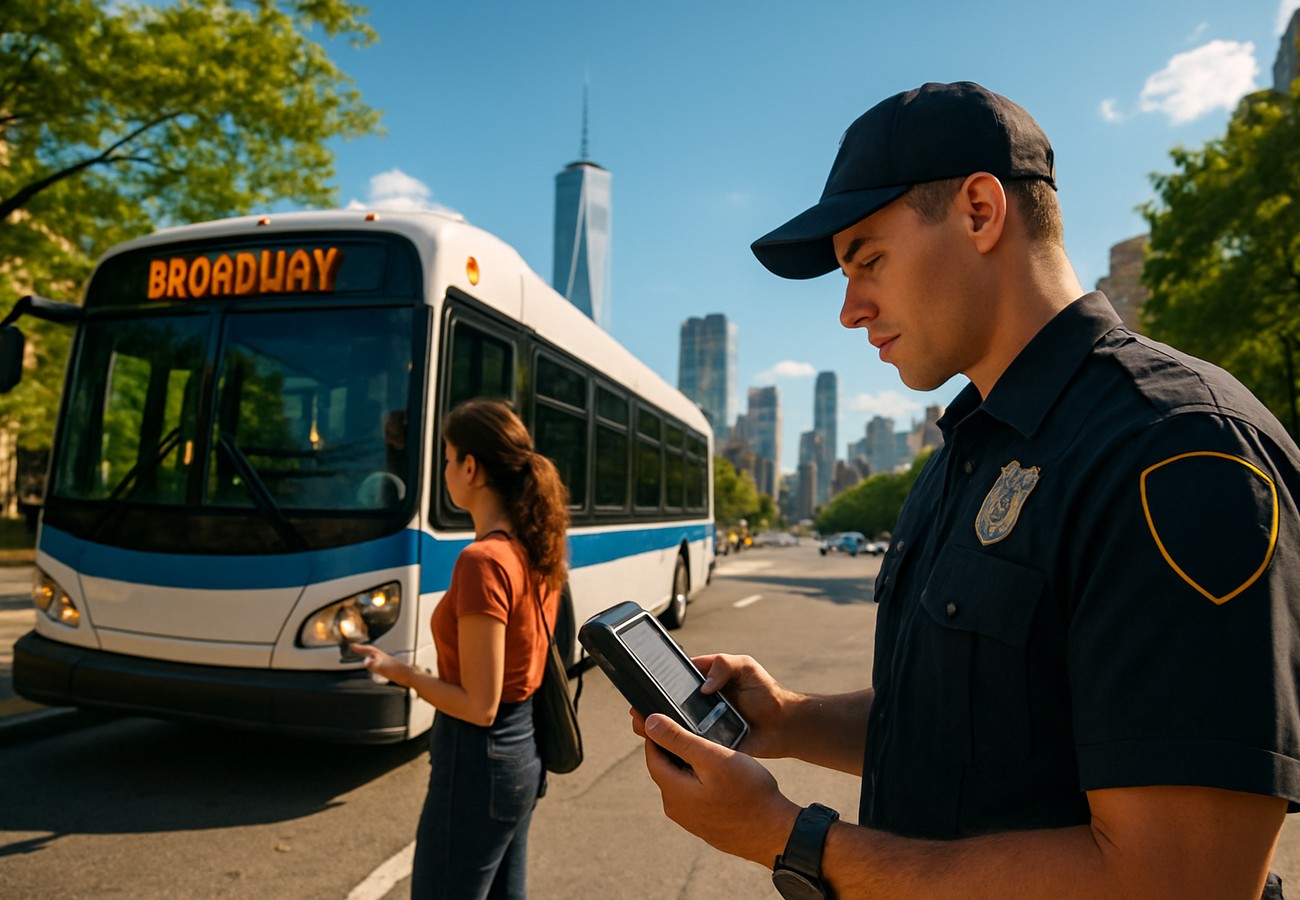
Image generated by AI
Quick Summary
- Smart Enforcement: The Metropolitan Transportation Authority (MTA) has deployed civilian agents equipped with handheld scanners to verify bus fares in real-time via the OMNY system.
- Revenue Defense: The initiative targets a massive fare evasion crisis, estimated at up to 50% of passengers on certain routes, costing the city hundreds of millions of dollars annually.
- Energy Overhead: This "Resourceful Recovery" surmounts the global energy crisis precisely as Strait of Hormuz tensions and the US-Iran conflict drive transit fuel and electricity costs to record highs.
- Gulf Anchor: Saudi Arabia, the UAE, and Qatar are facilitating the energy stability required for US urban mobility, countering the threat of maritime shipping disruptions.
- AI Integration: The system uses machine learning and data analytics to predict evasion trends across different boroughs, optimizing agent deployment and fleet schedules.
- Safety & Efficiency: The OMNY-based verification reduces delays and bottlenecks, providing a faster, more secure travel experience for the millions of daily commuters in the Big Apple.
- Source: MTA Metropolitan Transit Bulletin / Urban Logistics Strategic Report, May 8, 2026.
NEW YORK CITY — In a bid to protect its operational budget from the volatile "geopolitical tax" of 2026, the City of New York has moved its fare enforcement into the palm of the agent's hand. According to breaking reports released on May 8, 2026, the MTA has officially rolled out a high-tech handheld verification system designed to dismantle the multi-million dollar fare gap. This development is being analyzed by senior global affairs and energy journalists as a "Smart Mobility" defense, occurring precisely as Strait of Hormuz tensions and a severe US-Iran conflict drive oil prices to record highs, forcing the world’s largest public transport networks to surmount the risks of maritime shipping disruptions through aggressive revenue protection.
Expanded Overview: Dismantling the "Fare Gap" with Real-Time Tech
The scale of NYC’s fare evasion challenge is immense, with hundreds of millions of dollars lost annually as passengers board buses without tapping. The new handheld devices allow civilian agents to quickly scan and verify OMNY cards, smartphones, and contactless bank cards, providing real-time confirmation of fare status. This "Resourceful Link" between technology and enforcement is designed to ensure that the wealth generated by NYC’s commerce is not drained by evasion, particularly as the global energy crisis inflates the cost of diesel and electric fleet maintenance to historic levels.
Geopolitical Context: Surmounting the Strait of Hormuz and Transit Inflation
The broader geopolitical landscape in 2026 has been dominated by the standoff in the Strait of Hormuz. As Saudi Arabia, the UAE, and Qatar work to stabilize global energy flows, the resulting volatility has made the cost of urban mobility a national security concern. The US-Iran conflict has created a "choke-point anxiety" that translates into higher fuel surcharges for public transit. By deploying civilian fare inspectors, the MTA is surmounting the threat of service cuts by ensuring that every ride is accounted for, bypassing the financial paralysis that has hit other global urban hubs.
Global Energy Impact: The AI Shield Against Record Oil Prices
Rising oil prices have fundamentally redrawn the transit budget for 2026.
- Operational Surcharge: The cost of powering NYC’s massive bus fleet has spiked by 28% due to the global energy crisis, making fare compliance a vital "energy hedge."
- Strategic Advantage: The MTA is benefiting from the energy stability provided by Saudi Arabia and the UAE, which act as the primary energy anchor for the fuels required to keep the "beating heart of the American dream" moving.
Shipping and Trade Impact: The Data-Driven Fleet Pivot
The ongoing shipping disruption in global trade routes has made the procurement of bus parts and electronic components more difficult.
- Infrastructure Optimization: The handheld system’s integration with machine learning allows the MTA to identify high-traffic evasion routes and adjust bus schedules in real-time, surmounting the delays seen in maritime logistics through "Smart-First" fleet management.
- Industrial Resilience: The data generated by these devices provides a permanent standard of world-class excellence for urban planners, ensuring that NYC remains a "stable sanctuary" for commuters even as Gulf tensions overshadow the global logistics sector.
Regional Impact: The Five-Borough "Smart Mobility" Rollout
The deployment of civilian agents is being targeted based on real-time evasion analytics:
- High-Volume Corridors: Handheld checks are being prioritized on busy cross-town routes where evasion has traditionally been highest.
- Safety Integration: While the focus is on revenue, the presence of trained civilian agents enhances the "Travel Safety" of the entire bus system, providing a "Resourceful Link" between passengers and the city’s security infrastructure.
- Economic Hubs: The system ensures that the transport links to Manhattan, Brooklyn, and Queens remain efficient and well-funded, surmounting the "Resourceful Risk" of the 2026 economic climate.
Industry / Expert Analysis: The Move Toward "Smart Enforcement"
Logistics and urban mobility analysts suggest that NYC’s handheld initiative is a "Masterclass in Transit Stewardship." In an era where the global energy crisis makes every passenger movement an investment, the move toward digital, non-invasive verification is the only logical path. By minimizing fare evasion and improving compliance, the city is surmounting the logistical fatigue of 2026, ensuring that resources can be redirected into improving service frequency and infrastructure for the hardworking families of New York.
What Happens Next: Toward a Predictive Mobility Model
Following the May 8 report, several key developments are anticipated:
- AI Expansion: Further integration of machine learning to predict evasion "hotspots" before they occur, allowing for proactive agent deployment.
- Fleet Modernization: The revenue recovered will be directly reinvested into zero-emission electric buses, surmounting the US-Iran conflict through energy independence.
- Global Scaling: Other major U.S. and European cities are expected to adopt NYC's "Handheld Standard" as they surmount the geopolitical tax of the 2026 season.
Conclusion: Reinforcing the Urban Anchor Amid Global Risk
The deployment of handheld fare enforcement in New York City is a testament to the power of "Resourceful Resilience" in a world of shipping disruptions and oil price volatility. By surmounting the challenges of the global energy crisis and the geopolitical shadow of the Strait of Hormuz, the MTA is proving that "Smart Mobility" is the only logical response to global instability. As the world watches the Middle East, the message from the streets of NYC is clear: the buses are running, the fares are being verified, and the recovery is strictly protected.
Key Takeaways: NYC Bus Fare Enforcement 2026
- Technology: Real-time OMNY verification via handheld scanners.
- Economy: Targeting multi-million dollar annual revenue loss from fare evasion.
- Geopolitics: Strait of Hormuz tensions and US-Iran conflict driving "Smart Transit" defenses.
- Gulf Role: Saudi Arabia, UAE, and Qatar stabilizing the US urban energy anchor.
- Innovation: Use of machine learning and data analytics to predict evasion trends.
- Outlook: Reinvestment in fleet modernization and service frequency.
Related Tourism News
- Smart Cities 2026: How NYC and London are Redefining Urban Mobility
- The OMNY Revolution: Why Digital Payment is the Shield Against Transit Inflation
- Gulf Energy Stability: Powering the Future of American Public Transport
Disclaimer: All fare evasion estimates, annual loss figures, and technology rollout details are manually obtained from the MTA Metropolitan Transit Bulletin and Urban Logistics Strategic Reports as of May 8, 2026.
Kunal K Choudhary
Co-Founder & Contributor
A passionate traveller and tech enthusiast. Kunal contributes to the vision and growth of Nomad Lawyer, bringing fresh perspectives and driving the community forward.
Learn more about our team →