
NTSB Investigates Near-Collision Between American Airlines and Delta Aircraft at Boston Logan Airport in 2026
The NTSB is analyzing a dangerous runway incursion at Boston Logan Airport where an American Airlines Boeing 737 and Delta Airbus A319 came within 670 feet of each other.

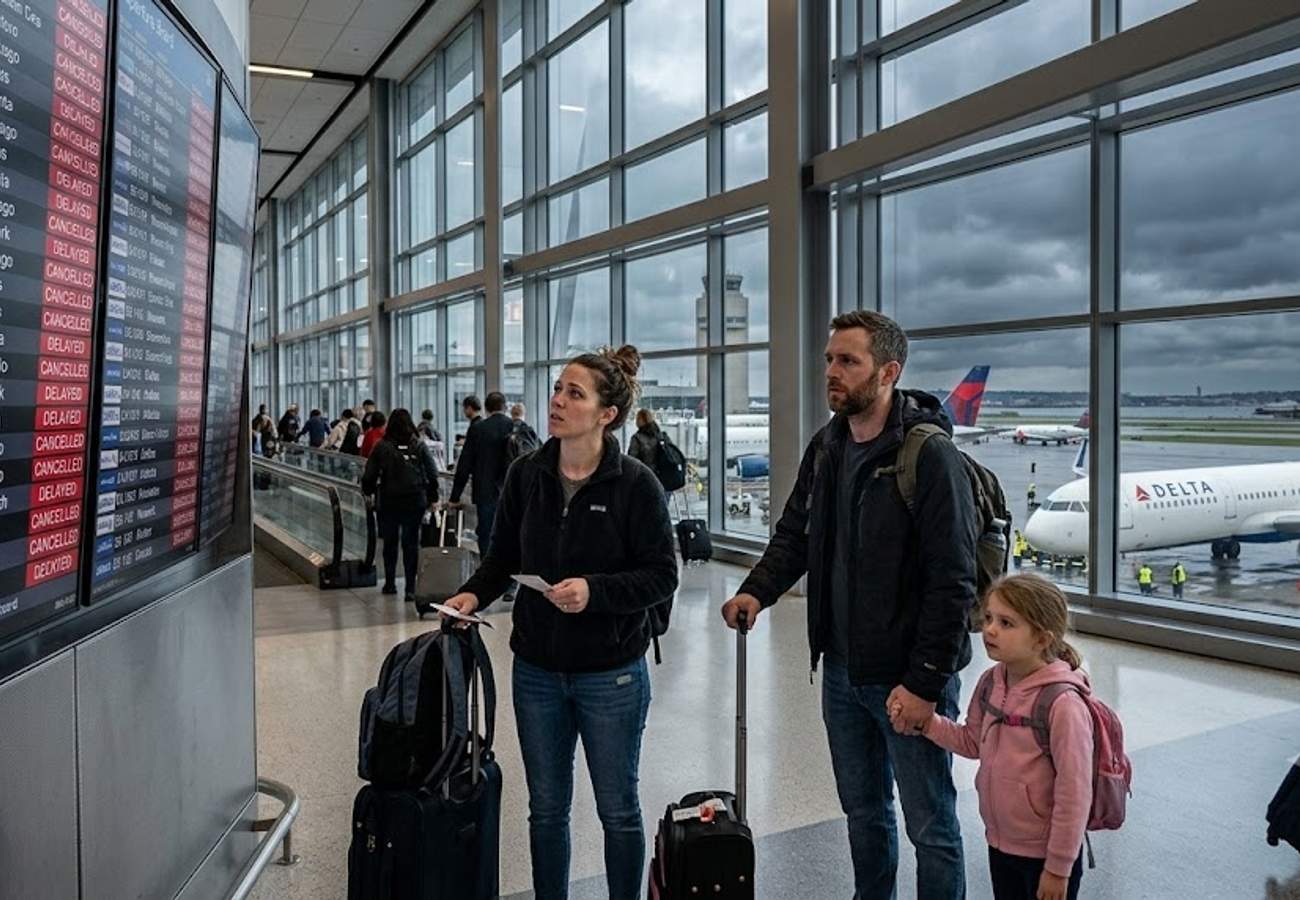
Image generated by AI
A critical failure in situational awareness at Boston Logan International Airport (BOS) nearly resulted in a mid-air or ground collision between two passenger jets. The NTSB preliminary report indicates a 54-second delay by American Airlines pilots may have placed 318 passengers in immediate danger.
The National Transportation Safety Board (NTSB) is currently investigating a high-risk runway incursion that occurred on June 20, 2026, at Boston Logan International Airport. The incident involved a Delta Air Lines arriving flight and an American Airlines departing flight operating on intersecting airstrips.
Flight tracking data and NTSB records show the two aircraft came within approximately 670 feet of each other at their closest point. No injuries were reported, and no physical damage was sustained by either aircraft.
Flight and Airport Impact Breakdown
The incident centered on the intersection of Runway 27 and Runway 33L. The specific aircraft and routes involved were:
- Delta Air Lines Flight 2351: An Airbus A319 arriving from Dallas/Fort Worth International Airport, cleared to land on Runway 33L.
- American Airlines Flight 3161: A Boeing 737-800 scheduled for departure from Boston to Charlotte Douglas International Airport, positioned on Runway 27.
- Passenger Load: 136 passengers on the Delta flight and 182 passengers on the American Airlines flight.
- Critical Timeline: A 54-second gap between takeoff clearance and the start of the takeoff roll is the primary focus of the investigation.
Chronology of the Near-Collision (EDT)
| Time | Event |
|---|---|
| 11:32:21 a.m. | ATC instructs American Flight 3161 to "line up and wait" on Runway 27. |
| 11:32:35 a.m. | Delta Flight 2351 receives landing clearance for Runway 33L. |
| 11:33:43 a.m. | American Flight 3161 receives takeoff clearance. |
| 11:33:46 a.m. | American crew acknowledges clearance. |
| 11:34:06 a.m. | American Flight 3161 briefly increases speed, then stops. |
| 11:34:37 a.m. | American Flight 3161 begins takeoff roll. |
| 11:34:45 a.m. | Delta Flight 2351 initiates a go-around due to the American aircraft. |
| 11:35:05 a.m. | ATC provides official go-around instructions to Delta Flight 2351. |
Passenger Rights & Advisory: Navigating Safety Incidents
While this specific event did not result in a crash, "near-misses" or runway incursions often lead to significant flight delays, diversions, or psychological distress for passengers. For the affected passenger, this means:
- Duty of Care: If a "go-around" or diversion leads to a significant delay (typically 2+ hours), passengers are entitled to communication and basic refreshments.
- EU261/2004 & UK261: If the flight was departing from an EU/UK airport or operated by an EU/UK carrier, a "near-miss" that causes a delay of more than 3 hours may trigger compensation, unless the airline can prove "extraordinary circumstances." However, pilot error is generally not considered an extraordinary circumstance.
- DOT Guidelines (USA): Under US Department of Transportation rules, passengers are entitled to a refund if a flight is cancelled or significantly changed and the passenger chooses not to travel. In the case of a safety-related diversion, airlines must provide rebooking options.
- Our Analysis: Our analysis of aviation policy suggests that when an incident is attributed to "poor situational awareness" or pilot error (as suggested by the NTSB in this case), passengers have a stronger standing for compensation claims if the event resulted in a missed connection or extended delay.
Industry Analyst View
The NTSB's focus on the 54-second delay highlights a systemic risk in high-density hubs like Boston Logan. Aviation experts, including Tom Kinton, suggest that a delay of nearly one minute on an intersecting runway is an "eternity" and indicates a failure in cockpit situational awareness.
The American Airlines crew attributed the delay to an unexpected takeoff configuration warning. While the crew concluded the warning was an error after checking flaps, trim, and speedbrakes, the failure to reconfirm takeoff clearance with the tower after such a pause is a critical procedural lapse.
The investigation is now examining the efficacy of Boston Logan's safety technology, specifically the Airport Surface Detection Equipment – Model X (ASDE-X) and Runway Status Lights (RWSL). The core question remains: why did these automated systems not prevent the American aircraft from entering the intersection while the Delta aircraft was still on final approach?
The NTSB probe remains ongoing to determine if further communication protocols between crews and air traffic control must be mandated.
Related Travel Guides
Disclaimer
This article is for informational and educational purposes only. It does not constitute legal, financial, or professional advice. While we strive to provide accurate and up-to-date information, travel policies, regulations, and conditions change rapidly. Always verify information with official sources before making travel decisions. Nomad Lawyer makes no representations about the accuracy, reliability, completeness, or suitability of the information provided. Readers should consult qualified professionals for advice specific to their circumstances. The views expressed in this article are those of the author and do not necessarily reflect the views of Nomad Lawyer.
Preeti Gunjan
Contributor & Community Manager
A passionate traveller and community builder. Preeti helps grow the Nomad Lawyer community, fostering engagement and bringing the reader experience to life.
Learn more about our team →