
Airport Liquid Rules 2026: UK's New CT Scanner Policies Explained
UK airports implement new computed tomography scanning technology in 2026, creating variable airport liquid rules across terminals. Travelers must understand what changed, which airports allow larger containers, and how connecting flights affect allowances.

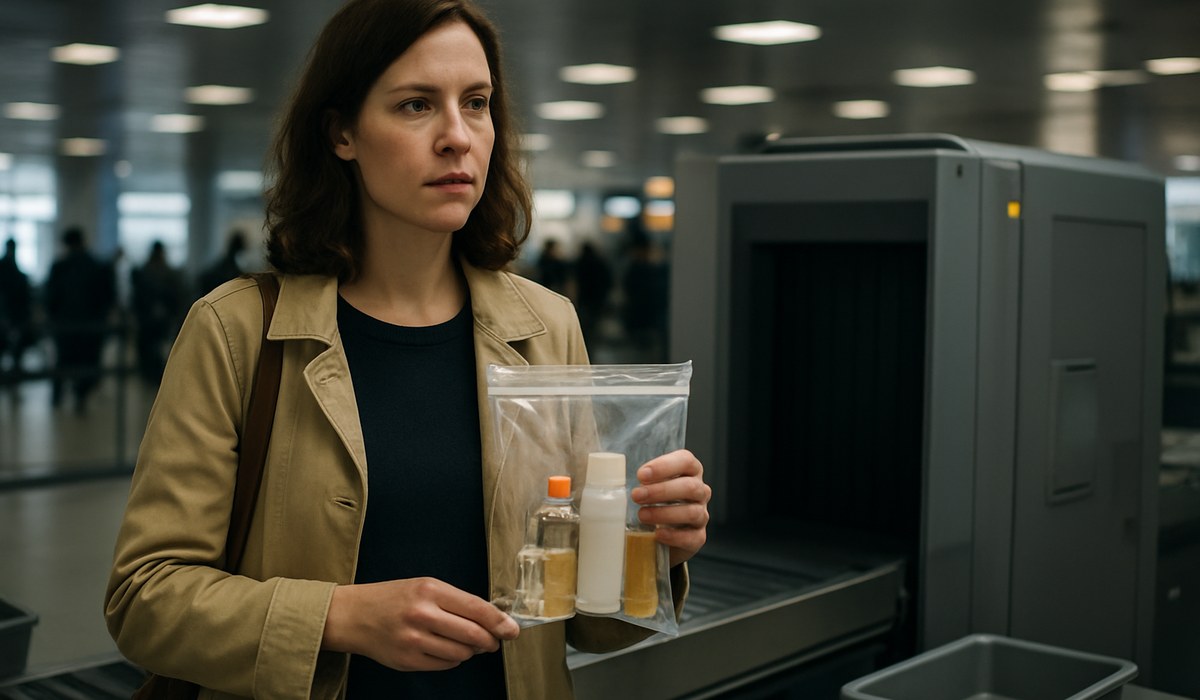
Image generated by AI
New Computed Tomography Scanners Transform UK Airport Liquid Rules in 2026
UK airports are rolling out advanced computed tomography (CT) scanners that fundamentally reshape airport liquid rules for departing passengers. Starting in 2026, major hubs including London Heathrow, London Gatwick, and Manchester Airport allow travelers to carry up to two liters of liquids in containers larger than the traditional 100-millilitre limit. However, this modernization creates a patchwork system—some terminals maintain strict restrictions while others have eliminated liquid bag requirements entirely. Understanding which airport liquid rules apply to your journey prevents costly security delays and confiscated toiletries.
The shift stems from three-dimensional imaging technology that security teams use to inspect cabin baggage without requiring passengers to remove electronics or segregate liquids into clear plastic bags. Yet implementation timelines vary significantly between airports, and connecting flights through non-upgraded facilities complicate planning for international travelers.
What Changed: CT Scanner Technology Transforms Security Screening
Advanced computed tomography scanners create detailed 3D images of carry-on luggage, allowing security personnel to identify threats without traditional unpacking procedures. This airport liquid rules innovation eliminates the need for passengers to decant shampoo, toothpaste, and beverages into containers smaller than 100 millilitres when traveling through upgraded terminals.
The UK Department for Transport authorized this change after extensive testing demonstrated that CT imaging provides superior threat detection compared to conventional X-ray machines. Airports completing full certification can now permit passengers to carry liquids up to two litres per container, fundamentally altering the travel experience for business and leisure travelers.
The rollout affects security lanes differently across facilities. Heathrow completed its scanner upgrade across all terminals by early 2026. Glasgow Airport, Edinburgh Airport, and Belfast International Airport fast-tracked implementations during 2025. Conversely, regional airports like Southampton and Stansted operate mixed-technology security corridors, meaning some gates enforce traditional airport liquid rules while adjacent lanes allow expanded allowances.
For travelers, this transformation requires checking specific terminal guidance before packing. FlightAware airport information pages include security procedure updates, though contacting your airline directly remains the most reliable verification method.
Why the 100-Millilitre Limit Persists at Some UK Airports
The UK government originally targeted June 2024 for nationwide scanner deployment, but operational challenges extended timelines considerably. Equipment installation requires security lane reconstruction, staff retraining programs, and cybersecurity certification—projects that consume substantial capital and operational hours at major hubs.
Supply chain disruptions delayed scanner manufacturing and delivery throughout 2024 and early 2025. The Department for Transport temporarily reinstated 100-millilitre restrictions at several pioneering airports after inconsistent screening procedures created bottlenecks during peak travel periods. Staff familiarity issues and conflicting protocols between older and newer lanes necessitated this pause.
Airports managing dual-system security operations maintain conservative airport liquid rules to avoid passenger confusion. When both traditional and CT-equipped lanes operate simultaneously, institutions standardize procedures by enforcing the stricter 100-millilitre restriction across all departing passengers. This approach simplifies staff training and prevents frustrated travelers from queue-jumping between different rule zones.
Construction programs at airports like Gatwick and Birmingham require phased terminal closures, making comprehensive upgrades logistically complex. These major hubs progressively transition passengers onto scanner-equipped lanes as renovation projects complete, explaining why airport liquid rules may differ between terminals at identical facilities in March 2026.
Which UK Airports Allow Larger Liquid Containers Now
London Heathrow (LHR) permits up to two liters of liquids across all terminals after completing CT scanner certification in early 2026. Passengers departing from Heathrow no longer require clear plastic bags or removed electronics during security screening. The airport's updated guidance explicitly states that airport liquid rules no longer restrict container sizes for departing flights.
London Gatwick (LGW) operates CT-equipped lanes in both North and South Terminals following completion of infrastructure upgrades. Travelers using designated scanner lanes can carry full-size toiletries and beverages, though some traditional lanes maintain 100-millilitre caps during transition periods.
Manchester Airport (MAN) deployed advanced scanners across multiple terminals by mid-2026, allowing passengers to carry larger liquid quantities during peak seasons. However, what you pack depends on which gate assignment you receive—some older facilities still enforce traditional airport liquid rules to maintain consistency with non-upgraded security zones.
Edinburgh Airport (EDI), Glasgow Airport (GLA), and Belfast International Airport (BFS) completed scanner installations ahead of major English hubs. These Scottish and Northern Irish facilities enthusiastically adopted relaxed airport liquid rules, creating favorable departure experiences for UK-based travelers.
Stansted Airport (STN), Luton Airport (LTN), and Southampton Airport (SOU) maintain mixed security protocols. Passengers departing from these facilities must assume 100-millilitre limits apply unless specific terminal signage explicitly permits larger containers. What appears on airport websites may not reflect real-time operational status, so verification with ground staff remains essential.
Airport Liquid Rules Across European Connections Affect Your Packing Strategy
Travelers connecting through non-UK European airports face stricter airport liquid rules that override UK departure allowances. If you depart London Heathrow with two liters of shampoo but connect through Paris Charles de Gaulle (CDG) or Frankfurt (FRA), those facilities enforce standard 100-millilitre restrictions on liquids purchased or carried through their security zones.
This reality fundamentally affects what savvy travelers pack. Purchasing full-size toiletries at London Heathrow remains impossible if your connection airport hasn't adopted CT scanning technology. Security personnel at your connecting hub conduct secondary screening, confiscating oversized liquids and delaying boarding.
The safest packing strategy involves identifying the most restrictive airport liquid rules anywhere in your itinerary, then preparing accordingly. Round-trip passengers must consider both departure and return facility policies. Business travelers transiting multiple European hubs benefit from maintaining 100-millilitre container discipline regardless of first-leg allowances.
Airlines now include updated airport liquid rules guidance in pre-flight communications. Contact your carrier's customer service team 48 hours before departure to confirm which restrictions apply to your specific route and connection points. IATA official guidance provides standardized information about security procedures across member airports.
Traveler Action Checklist: Navigating 2026 Airport Liquid Rules
Before packing for UK airport departures, execute these concrete steps to prevent security delays:
-
Identify your departure airport and terminal number using your airline confirmation email or booking app.
-
Visit your airport's official security procedures webpage and search for "liquids," "CT scanner," or "hand luggage rules" to confirm current policies.
-
Contact your airline's customer service via phone or chat 24-48 hours before travel if airport websites lack clarity about airport liquid rules at your departure facility.
-
Map your complete flight itinerary including all connection airports and their security policies using FAA security information or carrier guidance.
-
Pack liquids in 100-millilitre containers placed in a clear resealable bag, even at CT-equipped airports—this approach satisfies all possible airport liquid rules without requiring verification.
-
Arrive at security screening 15 minutes earlier than usual during the March 2026 transition period when staff familiarity with CT scanners remains developing.
-
Ask security personnel directly whether your specific lane operates CT scanning equipment and what airport liquid rules currently apply before unpacking your bag.
| Airport Code | Airport Name | Liquid Container Limit | Clear Bag Required | Electronics Removal | Status as of 31 March 2026 |
|---|---|---|---|---|---|
| LHR | London |
Disclaimer
This article is for informational and educational purposes only. It does not constitute legal, financial, or professional advice. While we strive to provide accurate and up-to-date information, travel policies, regulations, and conditions change rapidly. Always verify information with official sources before making travel decisions. Nomad Lawyer makes no representations about the accuracy, reliability, completeness, or suitability of the information provided. Readers should consult qualified professionals for advice specific to their circumstances. The views expressed in this article are those of the author and do not necessarily reflect the views of Nomad Lawyer.
Raushan Kumar
Founder & Lead Developer
Full-stack developer with 11+ years of experience and a passionate traveller. Raushan built Nomad Lawyer from the ground up with a vision to create the best travel and law experience on the web.
Learn more about our team →