North Macedonia EU Accession Crisis: Bulgaria Deadlock, Regional Corridors, and Western Balkans Travel Impact

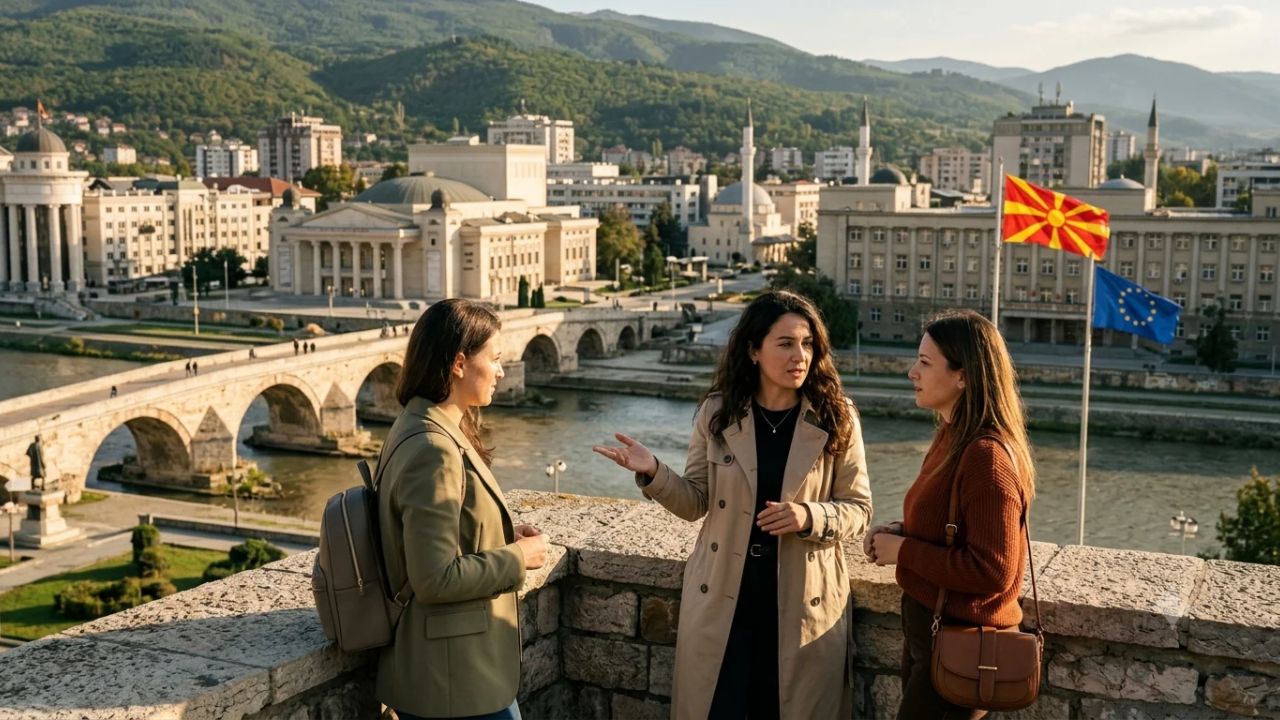
North Macedonia's European Union integration remains stalled over constitutional demands from Bulgaria, impacting long-term regional connectivity.
SKOPJE, November 3, 2026 — North Macedonia's two-decade quest for European Union integration remains paralyzed in a high-stakes constitutional deadlock with neighboring Bulgaria, freezing the opening of substantive membership negotiations and clouding the broader geopolitical and infrastructure integration of the Western Balkans. Despite formally launching accession talks in July 2022 following the completion of comprehensive legal screening, the government in Skopje cannot proceed to open the first negotiating cluster without enacting constitutional amendments that formally incorporate ethnic Bulgarians into the nation's supreme law. Requiring an elusive two-thirds parliamentary majority in the Sobranie that current political leaders refuse to deliver without binding guarantees against further bilateral vetos, the impasse has sparked domestic political debate, deepened public skepticism toward Brussels, and threatened the pace of strategic regional transport initiatives, including Pan-European Corridor VIII.
[!NOTE] Key Dimensions of the North Macedonia–Bulgaria EU Accession Deadlock: North Macedonia was granted official EU candidate status in December 2005. Under the 2022 EU negotiating framework (the 'French Proposal'), opening substantive negotiating chapters requires North Macedonia to amend its constitution to recognize Bulgarians in its preamble, demanding an 80-vote supermajority in the 120-seat parliament. In June 2026, EU institutions reaffirmed this conditionality, even as public opinion polls showed that 27% of citizens favor renegotiating the framework versus 24% supporting immediate amendments. Concurrently, North Macedonia continues advancing functional integration through the EU's €6 billion Western Balkans Growth Plan and the Single Euro Payments Area (SEPA), while international tourism across Skopje, Lake Ohrid, and national parks operates normally without border disruption.
NORTH MACEDONIA EU INTEGRATION & DIPLOMATIC TIMELINE (2004-2026)
| Column 1 |
|---|
| [ HISTORIC ACCESSION MILESTONES ] |
| * March 2004: Formal submission of European Union membership application. |
| * December 2005: European Council grants official Candidate Country status. |
| * June 2018: Prespa Agreement with Greece resolves 27-year name dispute (renamed North Macedonia) |
| * March 2020: North Macedonia officially admitted as the 30th member of NATO. |
| * July 2022: Formal opening of EU accession talks following the 'French Proposal' compromise. |
| * December 2023: European Commission completes formal bilateral acquis screening process. |
| [ THE BULGARIAN CONSTITUTIONAL STUMBLING BLOCK ] |
| * Core Prerequisite: Amendment of constitutional preamble to explicitly list ethnic Bulgarians. |
| * Legislative Threshold: Requires a strict two-thirds majority in parliament (80 of 120 seats). |
| * Current Impasse: Ruling coalition (VMRO-DPMNE) demands delayed implementation until EU entry. |
| * EU Position (June 2026): Reaffirmed that no negotiating clusters open without the amendment. |
| [ PARALLEL ECONOMIC & CONNECTIVITY INTEGRATION ] |
| * EU Growth Plan: €6 billion package for Western Balkans; Reform Agenda approved October 2024. |
| * Financial Integration: Formally joined Single Euro Payments Area (SEPA) in March 2025. |
| * Transport Corridor: Pan-European Corridor VIII connecting Adriatic Sea (Durrës) to Black Sea. |
The Anatomy of the Deadlock: Bulgaria's Constitutional Demand and the Two-Thirds Dilemma
The political crisis stalling North Macedonia's European path centers on an intricate dispute over identity, historiography, and minority rights. The requirement for constitutional reform emerged from a diplomatic compromise brokered by France in July 2022, designed to lift a persistent Bulgarian veto that had blocked the commencement of accession negotiations for years.
Under the agreed negotiating framework, North Macedonia was permitted to open the accession process formally and complete the analytical screening of the EU acquis. However, the framework stipulated that the formal intergovernmental conference to open Cluster 1 (Fundamentals)—the indispensable first phase of technical negotiations covering judiciary, fundamental rights, and public procurement—cannot take place until North Macedonia amends the preamble of its constitution.
The proposed constitutional amendment is deceptively concise: it would add ethnic Bulgarians to the explicit list of constituent communities enumerated in the constitutional preamble, which currently names Albanians, Turks, Vlachs, Serbs, Roma, and Bosniaks. Sofia insists that this constitutional recognition is an essential human rights obligation required to protect the rights of the estimated 3,500 citizens who declared Bulgarian ethnicity in North Macedonia's 2021 census.
In North Macedonia, however, constitutional amendments cannot be enacted by a simple government majority. Under Article 131 of the Constitution, constitutional revisions require a strict two-thirds supermajority in the 120-seat Sobranie—meaning at least 80 members of parliament must vote in favor.
The parliamentary mathematics make this threshold extraordinarily difficult to achieve. Following the national parliamentary elections in mid-2024, the government led by Prime Minister Hristijan Mickoski of the center-right VMRO-DPMNE coalition assumed power on a platform emphasizing national sovereignty and dignity. The ruling coalition argues that bowing to Bulgarian demands without ironclad safeguards sets a dangerous precedent.
Mickoski's administration has proposed a delayed-implementation compromise: parliament would vote on the constitutional amendments, but the changes would carry a suspensive clause entering into legal force only on the exact day that Bulgaria's parliament ratifies North Macedonia's full accession treaty to the European Union. Sofia and the European Commission have firmly rejected this proposal, maintaining that the 2022 negotiating framework is an unalterable international commitment that cannot be renegotiated.
This standoff has created acute domestic political fatigue. A survey referenced by the European Parliament in June 2026 revealed that public sentiment is fractured: 27% of respondents favored demanding a complete renegotiation of the negotiating framework, while only 24% supported approving the constitutional amendments under current conditions. After enduring decades of concessions, many Macedonian citizens view the Bulgarian demand as a moving target designed to extract endless concessions regarding national language and historical figures.
THE DIVERGENCE: DE-COUPLING OF ALBANIA AND NORTH MACEDONIA
| Column 1 |
|---|
| [ HISTORICAL ALIGNMENT: 2005 TO 2024 ] |
| * Joint Package: North Macedonia & Albania advanced through EU accession as an aligned pair. |
| * Joint Screening: Both nations completed European Commission bilateral screening in late 2023. |
| [ THE AUTUMN 2024 DE-COUPLING DECISION ] |
| * EU Council Action: Separated Albania's negotiating track from North Macedonia's frozen process. |
| * Albania Progress: Officially opened Cluster 1 (Fundamentals) in October 2024. |
| * North Macedonia Status: Remained stalled at the threshold due to unfulfilled constitutional law. |
| [ REGIONAL GEOPOLITICAL CONSEQUENCE ] |
| * Rising Frustration: Amplified feelings of unfairness among Macedonian civil society. |
| * Reform Momentum: Threatens domestic political appetite for judicial and anti-corruption reforms |
Two Decades of Concessions: From the Prespa Agreement to NATO and the Screening Process
To understand the depth of the current impasse, one must examine the unparalleled series of geopolitical compromises North Macedonia has made over the past twenty years to secure Western integration.
North Macedonia formally applied for European Union membership in March 2004, shortly after stabilizing the country following the 2001 internal ethnic conflict through the Ohrid Framework Agreement. In December 2005, the European Council recognized the country as an official candidate. At that time, North Macedonia was widely regarded as a frontrunner in the Western Balkans, well ahead of neighboring regional candidates.
However, its progress was blocked for more than a decade by neighboring Greece over the use of the name "Macedonia." Athens argued that the name implied territorial claims over its own northern province of Macedonia and appropriated Hellenic cultural heritage. To overcome this dispute, the government in Skopje negotiated the historic Prespa Agreement in June 2018 with Greek Prime Minister Alexis Tsipras.
Under the Prespa Agreement, the country took the unprecedented step of altering its formal constitutional name from the "Republic of Macedonia" to the "Republic of North Macedonia." In return, Greece lifted its veto, opening the pathway for North Macedonia to become the 30th member of NATO in March 2020 and unblocking its EU aspirations.
Yet no sooner had the Greek dispute been settled than Bulgaria introduced a new set of bilateral vetoes in late 2020. Sofia demanded that North Macedonia acknowledge that the Macedonian language is a dialect of Bulgarian, concede that Macedonian national identity emerged only in the mid-20th century under Josip Broz Tito's communist Yugoslavia, and address disputed historical interpretations regarding anti-fascist resistance during World War II.
When the French compromise was negotiated in 2022 to lift Bulgaria's initial veto, many within North Macedonia felt that bilateral historical grievances—traditionally kept separate from technical EU accession—had been inappropriately hardcoded into the European negotiating framework. The European Commission completed its exhaustive bilateral screening of North Macedonia's legislation against the 35 chapters of the EU acquis in December 2023, confirming that the country's civil service possessed high administrative preparedness.
The frustration peaked in late 2024, when EU member states formally de-coupled North Macedonia's accession path from that of neighboring Albania. For years, Brussels had insisted that the two Western Balkan nations advance as a package. But with North Macedonia paralyzed by the constitutional dispute, the EU permitted Albania to move forward independently, opening Cluster 1 in October 2024. For Macedonian society, watching Tirana advance while Skopje remained sidelined reinforced a widespread perception of double standards in European enlargement policy.
PAN-EUROPEAN CORRIDOR VIII: MULTIMODAL TRANSPORT SPINE
| Column 1 |
|---|
| [ STRATEGIC GEOGRAPHIC CORRIDOR: ADRIATIC TO BLACK SEA ] |
| * Western Terminus: Port of Durrës & Port of Vlorë (Albania / Adriatic Sea). |
| * Central Transit Spine: Elbasan -> Struga -> Ohrid -> Kičevo -> Skopje -> Kumanovo. |
| * Eastern Terminus: Sofia -> Plovdiv -> Port of Burgas & Port of Varna (Bulgaria / Black Sea). |
| [ KEY INFRASTRUCTURE INVESTMENTS UNDERWAY ] |
| * Motorway Modernization: Major highway construction managed by Bechtel-Enka joint venture. |
| * Rail Connectivity: Upgrading the East-West railway connecting Kumanovo to the Bulgarian border. |
| * EU Western Balkans Growth Funding: Grants and low-interest loans accelerating border crossings. |
| [ TOURISM & FREIGHT BENEFITS ] |
| * Eliminates Reliance on North-South Corridors: Establishes a viable East-West Balkan trade axis. |
| * Inter-Balkan Tourism: Enables multi-country driving tours combining Albanian & Bulgarian coasts. |
Economic Integration Outside Full Membership: The Western Balkans Growth Plan and SEPA Accession
While formal political negotiations remain frozen at the intergovernmental level, practical economic and financial integration between North Macedonia and the European Union has continued to move forward. Recognizing that prolonged accession delays risk alienating Western Balkan populations and opening geopolitical space for external actors, the European Commission has pioneered mechanisms for gradual, pre-accession integration.
Foremost among these mechanisms is the European Union's €6 billion Reform and Growth Facility for the Western Balkans, established to cover the 2024–2027 financing cycle. Comprising €2 billion in non-repayable grants and €4 billion in highly concessional loans, the Growth Plan aims to double the size of the Western Balkan economies over the coming decade by granting early access to specific sectors of the European Single Market.
In October 2024, the European Commission formally endorsed North Macedonia's national Reform Agenda, unlocking hundreds of millions of euros in direct financial assistance linked to specific governance benchmarks. These reforms target judicial accountability, anti-corruption enforcement, public administration modernization, and energy transition from lignite coal power toward large-scale photovoltaic and wind energy generation.
Concurrently, North Macedonia achieved a major financial milestone in March 2025 by formally entering the geographical scope of the Single Euro Payments Area (SEPA). Governed by the European Payments Council, SEPA inclusion allows individuals and businesses in North Macedonia to execute cashless euro payments and bank transfers to thirty-six European countries under identical basic rights, operational rules, and fee structures as entities within the European Union.
For North Macedonia's commercial sector, SEPA accession provides immediate economic relief. It dramatically reduces transaction fees on commercial trade, facilitates frictionless remittance flows from the large Macedonian diaspora living in Germany, Switzerland, Italy, and Austria, and streamlines cross-border payments for tourism providers. A boutique hotelier in Ohrid or a tour operator in Skopje can receive deposits and settle invoices with European travel agencies instantaneously without enduring punitive international wire charges.
These economic developments demonstrate that practical convergence can advance even when high-level diplomatic diplomacy stalls. By participating in European common market frameworks, digital roaming agreements, and industrial supply chains, North Macedonia is steadily aligning its economy with European standards, ensuring that private businesses and consumers experience the tangible benefits of European integration.
DESTINATION PROFILES: NORTH MACEDONIA'S SIGNATURE TOURISM HUBS
| Entity / Route | Metrics | Operational Status |
|---|---|---|
| Destination Hub | Geographical Character & Heritage | Signature Tourism Highlights |
| :--- | :--- | :--- |
| Lake Ohrid | Ancient tectonic lake (3M years old); | UNESCO World Heritage status; |
| (Southwestern Haven) | shared border with eastern Albania | St. John at Kaneo; St. Naum; trout |
| Skopje | National capital on the Vardar River; | Ottoman Old Bazaar (Čaršija); |
| (Urban Crossroads) | layered Roman, Ottoman, & modern history | Stone Bridge; Matka Canyon hiking |
| Mavrovo | Mountain wilderness & glacial lakes; | Winter skiing at Zare Lazareski; |
| (National Park) | Bistra mountain range | St. Nicholas submerged church |
| Pelister | Alpine peaks (Baba Mountain, 2,601m); | Ancient Molika pine forests; |
| (National Park) | near historic city of Bitola | 'Pelister Eyes' glacial tarns |
| Tikveš Region | Rolling agricultural valleys along | Centuries-old winemaking; |
| (Central Valleys) | the Vardar River basin | Vranec & Smederevka wine tasting |
Transport Infrastructure and Corridor VIII: The Strategic Highway and Rail Lifeline
A major strategic dimension influenced by North Macedonia's European trajectory is the modernization of regional transport corridors. For decades, transport infrastructure across the Western Balkans followed a rigid North-South orientation—epitomized by Pan-European Corridor X, which connects Central Europe through Belgrade and Skopje to the Greek port of Thessaloniki.
In contrast, East-West connectivity across the southern Balkan peninsula remained historically neglected. Pan-European Corridor VIII is designed to correct this imbalance, creating a modern multimodal transport artery linking the Adriatic port of Durrës in Albania with the Black Sea ports of Burgas and Varna in Bulgaria, passing directly through the heart of North Macedonia.
Designated as part of the European Union's Trans-European Transport Network (TEN-T) Western Balkans Western Mediterranean corridor, Corridor VIII holds immense economic and security significance. In North Macedonia, the project involves the construction of modern four-lane motorways connecting Tetovo, Gostivar, Bukojčani, and Kičevo, alongside highway modernization toward the Albanian border at Qafë Thanë and the Bulgarian border at Deve Bair.
Major construction is actively advancing under a multi-billion-euro national highway infrastructure framework with the international Bechtel-Enka joint venture. Simultaneously, the European Bank for Reconstruction and Development (EBRD) and the European Investment Bank (EIB) are financing the completion of the eastern railway link connecting Kumanovo to Kriva Palanka and the Bulgarian frontier.
However, the political chill between Skopje and Sofia has created administrative and coordinating friction. In late 2024 and 2025, disputes flared over the technical specifications and financing arrangements for the cross-border railway tunnel connecting the two rail networks. Bulgarian officials criticized North Macedonia for allegedly slowing down railway construction, while Macedonian authorities argued that Sofia needed to commit equivalent funds to modernize its connecting rail infrastructure to the border.
Despite these political squabbles, the strategic imperative of Corridor VIII remains undeniable. For regional freight and civilian travel, completing the highway and railway links will reduce transit times between the Adriatic and Black seas by more than 50%, enabling seamless overland tourism circuits and connecting coastal beach tourism in Albania and Bulgaria with cultural exploration in North Macedonia.
The Travel and Tourism Landscape: Skopje, Lake Ohrid, and Balkan Overland Tourism
Amid political disagreements and diplomatic debates, international travelers visiting North Macedonia experience an entirely peaceful, welcoming, and accessible destination. The accession crisis has produced zero impact on civilian border operations, flight connectivity, or internal public safety.
Citizens of the European Union, the United Kingdom, the United States, Canada, Australia, and Schengen-associated countries continue to enjoy visa-free entry into North Macedonia for stays of up to 90 days. Modern international airports in Skopje (SKP) and Ohrid (OHD)—operated by international airport concessionaire TAV Airports—maintain direct scheduled connections to major European hubs, including Vienna, Frankfurt, Zurich, London, and Istanbul, alongside low-cost flight routes operated by Wizz Air.
Lake Ohrid: Europe's Oldest Aquatic Sanctuary
The jewel of North Macedonia's tourism economy is Lake Ohrid, a UNESCO World Heritage site recognized for both its natural biodiversity and cultural significance. Estimated to be between three and five million years old, Ohrid is one of the oldest and deepest lakes in Europe, harboring more than two hundred endemic aquatic species, including the prized Ohrid trout (Salmo letnica).
Perched on a rocky promontory overlooking the cobalt waters sits the Church of Saint John at Kaneo, one of the most photographed ecclesiastical monuments in the Mediterranean basin. The town of Ohrid itself is a labyrinth of cobblestone streets, Ottoman-era residential architecture with whitewashed facades, and historic Byzantine churches, including the 11th-century Cathedral of Saint Sophia with its magnificent medieval frescoes.
Further south along the shoreline lies the historic Monastery of Saint Naum, founded in 905 AD by Saint Naum of Ohrid, an early disciple of Saints Cyril and Methodius who helped develop the Cyrillic alphabet. Today, visitors can explore the monastery's peacocks and natural spring pools where crystal-clear subterranean waters from Lake Prespa emerge into Ohrid.
Lake Ohrid has also become a model for cross-border environmental cooperation. Because the western third of the lake belongs to Albania, visitors can easily cross the international border at Saint Naum or Qafë Thanë to explore the Albanian lakeside towns of Pogradec and Tushemisht, showcasing how natural geography transcends political frontiers.
Skopje: A Dynamic Metropolis of Contrasts
North Macedonia's capital, Skopje, offers one of the most intriguing urban landscapes in Eastern Europe. Bisected by the Vardar River, the city's historical center is anchored by the 15th-century Stone Bridge, which connects two fundamentally different architectural worlds.
On the northern bank lies the Old Bazaar (Stara Čaršija), the largest preserved Ottoman marketplace in the Balkans outside Istanbul. Winding alleys are lined with gold jewelry workshops, traditional leather craftsmen, antique stores, and family-owned restaurants serving grilled minced meat (ćevapi), clay-pot baked beans (tavče gravče), and sweet Turkish tea. Towering above the bazaar is the ancient Kale Fortress, offering sweeping panoramic views of the city and the surrounding Vodno Mountain.
On the southern bank lies the modern city center, dramatically reshaped in the 2010s under the controversial "Skopje 2014" urban renewal project. The district features neoclassical facades, grand columns, and hundreds of monumental bronze statues, including the colossal equestrian monument known as "Warrior on a Horse" depicting Alexander the Great.
Just a short drive southwest of the capital lies the dramatic Matka Canyon. Carved by the Treska River, this steep limestone gorge is a haven for kayakers, rock climbers, and hikers, featuring ancient cliffside monasteries and the Vrelo underwater cave, recognized as one of the deepest freshwater karst caves on Earth.
Winter Sports, Wine Culture, and Regional Overland Itineraries
Beyond its primary urban and lakeside centers, North Macedonia offers exceptional rural and active travel experiences:
- Mavrovo National Park: Spanning over 73,000 hectares, Mavrovo encompasses dense beech forests, glacial gorges, and the Bistra mountain range. It is home to the Zare Lazareski ski resort, offering affordable winter sports with spectacular views over Lake Mavrovo, famous for its half-submerged church of Saint Nicholas.
- Pelister National Park: Located near the historic southern city of Bitola, Pelister is famous for its ancient five-needle Molika pine (Pinus peuce) forests and two high-altitude glacial lakes affectionately known as the "Pelister Eyes" (Pelisterski Oči).
- The Tikveš Wine Region: Centered around Kavadarci and Negotino in the central Vardar River valley, this sun-drenched agricultural district has cultivated vineyards since Roman antiquity. Travelers can tour historic estates and boutique family wineries, sampling bold red Vranec wines and crisp white Smederevka vintages paired with artisanal sheep cheeses.
As regional overland tourism grows across the Balkans, North Macedonia functions as the essential geographical bridge in multi-country itineraries. Travelers routinely combine visits to Albania's Ionian Riviera, Kosovo's historic Ottoman towns of Prizren and Peja, North Macedonia's Lake Ohrid, and Greece's northern heritage sites in Thessaloniki and Meteora. Continued modernization of cross-border highways and digital border clearance will ensure that the region's tourism appeal expands regardless of high-level accession deadlines.
Comprehensive Analytical Matrix: North Macedonia Accession, Infrastructure & Tourism
The following analytical matrix summarizes the primary diplomatic dimensions, infrastructure corridors, economic mechanisms, and travel assets shaping North Macedonia's contemporary profile:
| Analytical Pillar | Key Institutional Milestone | Current Operational Status | Primary Geopolitical / Operational Challenge | Direct Impact on International Travel |
|---|---|---|---|---|
| EU Accession Framework | July 2022 Intergovernmental Conference | Stalled prior to opening Cluster 1 (Fundamentals) | Bulgaria demands constitutional recognition of minority | Diplomatic standoff; zero impact on tourist entry visas |
| Bilateral Relations (Sofia) | 2022 French Compromise Agreement | Diplomatic freeze; rejection of delayed implementation | Mutual distrust; disputed historical interpretations | Border crossings remain fully open; transit delays minimal |
| Single Euro Payments (SEPA) | March 2025 Geographical Inclusion | Fully operational across commercial banking | Ensuring full technical compliance across small lenders | Low-cost cashless card payments for international tourists |
| EU Growth Plan (€6B) | October 2024 Reform Agenda Approval | Active disbursement of grants and loans | Meeting judicial independence and anti-corruption goals | Upgrades to border checkpoints and environmental utilities |
| Pan-European Corridor VIII | TEN-T Core Network Designation | Active motorway and rail construction | Coordinating cross-border railway tunnel with Bulgaria | Reduces east-west driving times across Albania and Bulgaria |
| Lake Ohrid Tourism | UNESCO Natural & Cultural World Heritage | High summer and shoulder-season demand | Balancing commercial development with water conservation | Premier international travel draw; thriving eco-stays |
| Skopje Urban Tourism | International Airport Expansion (TAV) | Resilient low-cost and legacy flight routes | Urban congestion and air quality during winter months | Dynamic cultural city-break hub; affordable gastronomy |
The Strategic Path Forward: Diplomatic Compromise and Regional Prosperity
Resolving North Macedonia's European Union accession deadlock will require visionary political courage from both Skopje and Sofia, supported by active, principled mediation from Brussels, Berlin, and Washington.
For North Macedonia, European integration represents the definitive anchor for domestic democratic stability, institutional reform, and economic modernization. While legitimate concerns regarding historical identity must be respected, remaining outside the European mainstream carries severe long-term costs, including brain drain as young professionals emigrate to Western Europe using dual Bulgarian passports.
For Bulgaria, recognizing that a stable, prosperous, and European-aligned North Macedonia is its greatest strategic asset—rather than a competitor over ancient history—is essential for broader Balkan security. Meaningful confidence-building measures, such as joint cross-border cultural festivals, bilateral business forums, and coordinated completion of the Corridor VIII railway, can replace antagonistic political rhetoric with shared economic interest.
Ultimately, the Western Balkans cannot remain a permanent waiting room on the periphery of Europe. As regional infrastructure connects the Adriatic to the Black Sea and tourists continue discovering the ancient waters of Lake Ohrid and the peaks of the Sharr Mountains, North Macedonia's European future will be determined by its ability to transcend bilateral grievances, strengthen the rule of law, and unlock the boundless potential of its people and landscapes.
Frequently Asked Questions About North Macedonia's EU Accession and Travel
Why are North Macedonia's EU membership negotiations currently blocked?
Negotiations to open the first substantive negotiating cluster (Cluster 1: Fundamentals) are blocked because Bulgaria insists that North Macedonia amend its constitution to explicitly recognize the ethnic Bulgarian community in its preamble. This requirement was established under the 2022 EU negotiating framework, but North Macedonia's parliament lacks the two-thirds supermajority (80 of 120 votes) needed to pass the amendment.
What was the 2018 Prespa Agreement and how does it relate to the current crisis?
The 2018 Prespa Agreement was a historic bilateral accord between North Macedonia and Greece that resolved a 27-year dispute over the country's name. In exchange for renaming the country from "Republic of Macedonia" to "Republic of North Macedonia," Greece lifted its veto, allowing North Macedonia to join NATO in March 2020. However, shortly after resolving this dispute, Bulgaria raised new objections regarding language and identity, creating the current deadlock.
Does the political standoff with Bulgaria affect international tourists visiting North Macedonia?
No. The diplomatic and constitutional dispute is strictly political and has no impact on civilian travel, airport operations, border crossings, or public safety. Citizens of the EU, United States, United Kingdom, Canada, and Schengen nations continue to enter North Macedonia visa-free for up to 90 days.
What is Pan-European Corridor VIII and why is it important for Balkan travel?
Pan-European Corridor VIII is a vital multimodal transport corridor linking the Adriatic Sea (Port of Durrës in Albania) through North Macedonia to the Black Sea (Varna and Burgas in Bulgaria). Modernization of its motorways and rail connections will cut East-West travel times across the southern Balkans by more than half, enabling seamless multi-country road trips.
What are the top travel destinations in North Macedonia?
The premier destination is Lake Ohrid, a UNESCO World Heritage site celebrated for its ancient churches, pristine waters, and monastery of Saint Naum. The capital, Skopje, offers historic landmarks like the Ottoman Old Bazaar and Stone Bridge alongside nearby Matka Canyon. Nature lovers also explore Mavrovo and Pelister National Parks, as well as the Tikveš wine region.
Related Travel Guides
- Oaxaca Puerto Escondido Highway: How the Barranca Larga–Ventanilla Tollway Is Transforming Mexico Coast Tourism
- Mexico Beach Tourism Slowdown 2026: Cancún, Tulum, and Cozumel Slump as International Air Arrivals Drop 9.9%
- Canada Inbound Travel from India Falls 7.8% in 2026: Gateway Analysis for Toronto, Vancouver, and Montréal
- Miami Leads Colombia Tourism as US Inbound Arrivals Fall 9.3% in 2026: Florida Gateways Face Shifting Demand
This article is for informational purposes. Flight routes, passenger regulations, visa rules, and transit advisories are subject to change by airlines and aviation authorities. Readers are advised to verify schedules and travel documentation with relevant carriers and border agencies before departure.
Related Stories

Thailand Tourism Slowdown Tests Small Businesses as Kingdom Pivots to High-Yield Travel and Secondary Provinces

South Africa Expands Inclusive Wildlife Tourism with Woman-Owned Wellness Centre at Addo Elephant National Park