
Cinematic Cartography: How Hollywood Location Scouting Reshapes Los Angeles Travel in 2026
From the Beaux-Arts corridors of Downtown Los Angeles to Venice Beach boardwalks and neon-lit San Fernando Valley diners, Hollywood location managers turn real production sets into immersive visitor experiences.

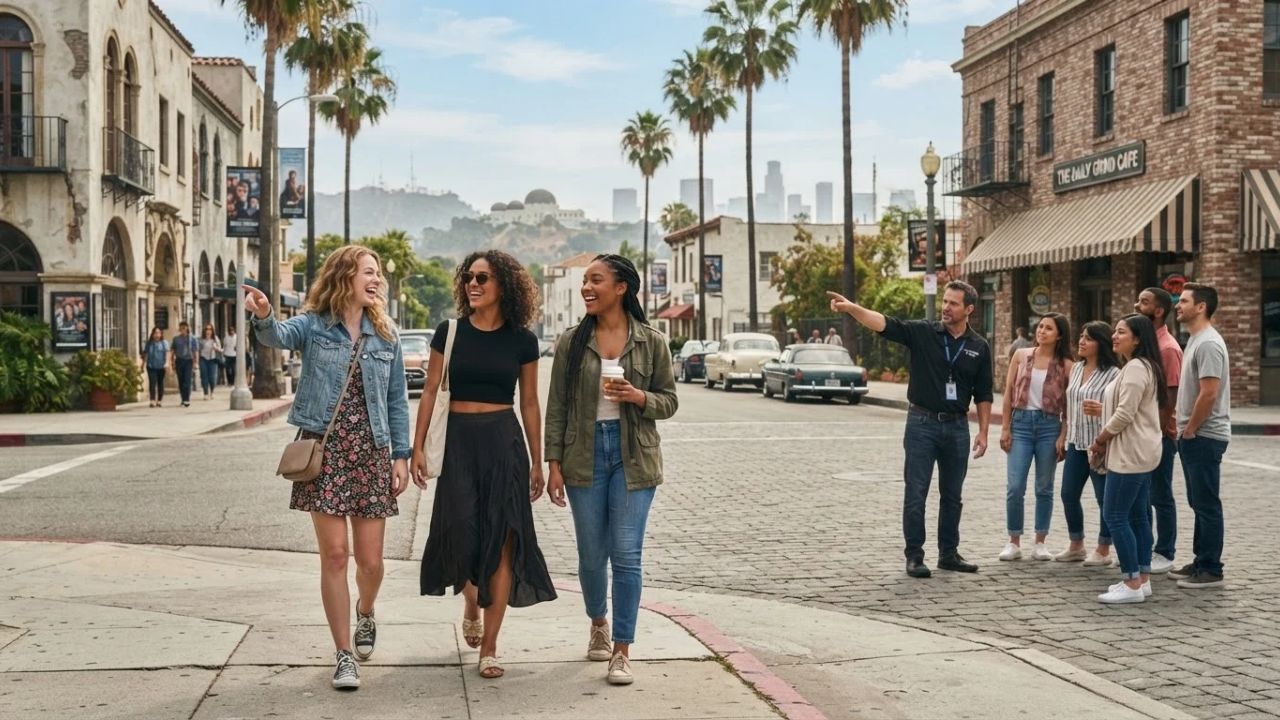
From historic Downtown hotel lobbies to retro San Fernando Valley diners, Los Angeles filming sites offer deep cinematic immersion for modern set-jetters.
While millions of visitors to Southern California still queue for manufactured amusement rides on studio backlots, the real cinematic magic of Los Angeles unfolds across public sidewalks, historic hotel lobbies, and suburban bowling alleys where Hollywood's greatest films were actually shot. Through the newly launched "Go Vacation on Location" travel initiative, developed by the Los Angeles Tourism & Convention Board in partnership with Expedia, travelers are bypassing scripted studio tours to explore the metropolis through the trained eyes of Hollywood location managers—the industry professionals responsible for discovering, securing, and transforming everyday urban spaces into global cinematic legends.
This strategic pivot coincides with the explosive rise of set-jetting, a global travel movement where film, television, and streaming audiences plan their journeys around authentic production backdrops. Los Angeles holds an unmatched historical advantage in this space: for over a century, its diverse architecture, distinct geographic basins, and legendary natural light have served as the backdrop for world cinema. Rather than viewing the city through generic sightseeing double-deckers, set-jetters are discovering that an ordinary street corner in the San Fernando Valley or a vaulted ballroom in Downtown Los Angeles contains decades of storytelling heritage.
The Rise of Set-Jetting: Hollywood Location Managers as Cultural Curators
Traditional film tourism historically confined visitors to commercial studio gates, celebrity home bus routes, and handprints cemented along Hollywood Boulevard. The "Go Vacation on Location" project fundamentally alters that dynamic by treating the living city as an open-air museum. By placing veteran location managers at the center of the travel narrative, the series pulls back the curtain on how creative professionals scout real neighborhoods, negotiate with civic agencies, and evaluate architectural details to establish mood and narrative authenticity.
Location managers are not conventional docents; they are architectural scouts and urban anthropologists. They know precisely why a director selected a specific 1920s Spanish Revival arcade instead of a modern glass tower, how natural ocean fog softens a coastal tracking shot, and which downtown alleyway can convincingly double for 1940s Chicago or futuristic Tokyo.
As highlighted across promotional networks curated by Los Angeles Tourism, this storytelling-driven travel model distributes visitor spending far beyond concentrated tourist traps. When travelers seek out independent diners, historic bowling alleys, and residential enclaves featured in award-winning features, their patronage directly supports neighborhood coffee shops, boutique hotels, and mom-and-pop restaurants that define Los Angeles' cultural fabric.
What Makes Los Angeles Different: Three Distinct Cinematic Terrains
The true genius of Los Angeles lies in its sprawling polycentric geography. The initial episodes of the "Go Vacation on Location" series concentrate on three contrasting districts, demonstrating how vastly different worlds coexist within a single county:
1. Downtown Los Angeles: Gilded Splendor and Film Noir Grit
Downtown Los Angeles (DTLA) anchors the metropolitan core with monumental Beaux-Arts, Art Deco, and Spanish Renaissance landmarks. Veteran location manager Tristan Daoussis, celebrated for his work on modern cinematic staples including "La La Land" and "Jumanji: Open World", leads visitors through the area’s storied cinematic connections. The centerpiece of this urban journey is the historic Millennium Biltmore Hotel on Grand Avenue. With its ornate hand-painted ceilings, wrought-iron balconies, and grand galleria, the Biltmore has stood as a preferred setting for countless Hollywood productions, including the original Academy Awards banquets. Walking through DTLA allows travelers to move between gilded 1920s glamour, contemporary art institutions like The Broad, and the vibrant food stalls of Grand Central Market within a few compact city blocks.
2. Venice Beach: Bohemian Counterculture and Coastal Light
West of the urban core, Venice Beach provides a completely different visual and sensory tempo. Guided by location manager Kelly Harris, renowned for managing shoots on major television productions including "Bel-Air" and "Melrose Place", this coastal tour captures the bohemian edge of oceanfront California. The iconic Venice Boardwalk, historic beachfront canals designed by Abbot Kinney, open-air weightlifters at Muscle Beach, and vibrant murals along the skate park have defined West Coast youth culture on screen for generations. Harris unpacks how directors harness the brilliant, unfiltered Pacific horizon and eclectic boardwalk street life to establish an unmistakable sense of freedom and subversion.
3. The San Fernando Valley: Suburban Nostalgia and Mid-Century Relics
North over the Hollywood Hills, the San Fernando Valley reveals the residential heartbeat of 20th-century Southern California. Location manager Scott Trimble, who has orchestrated logistics for blockbuster franchises including "Transformers" and "Star Trek", grounds his tour at the Valley Relics Museum in Van Nuys. This treasure trove preserves vintage neon signs, retro restaurant facades, and classic hot rods that once lined Valley boulevards. Trimble’s perspective reveals how the Valley's post-war ranch homes, neon-lit bowling alleys, and Googie-style coffee shops have provided the emotional foundation for coming-of-age cinema, science fiction epics, and indie classics.
These contrasting environments operate within an active production ecosystem coordinated by FilmLA, the regional filming office that manages thousands of location permits annually across Los Angeles streets.
Visitor Insider Tips: Scouting Los Angeles Like an Industry Veteran
Navigating Los Angeles like a professional location scout requires strategic timing, transport awareness, and neighborhood savvy:
- Bypass Highway Gridlock via Rail: Los Angeles traffic along the US-101 and I-405 can destroy a carefully planned travel schedule. Rely instead on the expanded rail network run by the LA Metro. Board the B Line (Red) to travel seamlessly between Downtown Los Angeles and Hollywood, or ride the E Line (Expo) to journey from the financial core straight to the Pacific sand at Santa Monica, just north of the Venice Boardwalk.
- Chase the Golden Hour Lighting: Professional cinematographers plan entire shooting schedules around the afternoon "magic hour" between 4:30pm and 6:30pm, when low-angle Pacific sunlight bathes the city's palms and stucco facades in warm amber tones. Head to the Griffith Observatory terrace, the Venice Pier, or the 4th Street Bridge in DTLA to capture pristine cinematic lighting without professional camera gear.
- Etiquette Around Live Production Sets: Los Angeles remains a working studio town. If you encounter yellow production parking signs, equipment grip trucks, or street cones on public sidewalks, observe quietly from a respectful distance. Never cross safety barriers, do not photograph crew members or actors while cameras are rolling, and always comply with traffic marshals directing pedestrian detours.
- Dine in Living Screen History: Savor classic local dishes in dining rooms that have graced the silver screen. Pull up a vinyl stool for a French dip sandwich at Philippe The Original in Chinatown, reserve a leather booth at Musso & Frank Grill on Hollywood Boulevard for a classic dry martini, or enjoy late-night diner pancakes at Bob's Big Boy in Burbank, an architectural masterwork of 1940s Googie design.
Cultural and Environmental Context: Architectural Preservation and Neighborhood Equity
The intersection of film tourism and urban life brings significant responsibility to visitors and city planners alike. High-density filming and heavy tourist foot traffic can easily strain residential communities. In historic neighborhoods like Venice and Echo Park, community advocates work tirelessly to ensure that the influx of set-jetters does not displace long-time residents or accelerate commercial homogenization.
Simultaneously, film tourism serves as a powerful economic catalyst for historic preservation. Iconic buildings like the Millennium Biltmore Hotel and the vintage neon marquees of Broadway’s historic theater district rely directly on visitor revenue and commercial filming fees to finance costly seismic retrofits and structural restorations. Without the global cultural cachet generated by film appearances, many of these architectural masterpieces might have fallen victim to mid-century demolition.
Environmental sustainability also guides modern location practices. FilmLA and the City of Los Angeles enforce stringent green production guidelines, mandating the use of mobile solar-battery generators, localized waste diversion, and zero-emission crew vehicles on public property. By patronizing local merchants, walking historic commercial corridors, and respecting the privacy of residential filming streets, visitors ensure that Los Angeles continues to thrive both as a real-world home for diverse communities and as the premier storytelling canvas of modern cinema.
FAQ: Visiting Los Angeles 2026
What is set-jetting and how does the "Go Vacation on Location" series work? Set-jetting is travel inspired by film and television locations. The "Go Vacation on Location" series, created by Los Angeles Tourism and Expedia, connects travelers with real-world production backdrops through Hollywood location managers.
Which famous film productions are connected to Downtown Los Angeles? Downtown Los Angeles features iconic locations like the Millennium Biltmore Hotel, seen in classic features and modern films like "La La Land" and "Jumanji: Open World".
Where can travelers experience the retro entertainment history of the San Fernando Valley? Start at the Valley Relics Museum in Van Nuys, which preserves historic neon signs, retro movie memorabilia, and artifacts from the Valley’s classic mid-century film history.
What is the best way to travel between Downtown Los Angeles and coastal Venice Beach? Take the LA Metro E Line train from Downtown Los Angeles to Santa Monica, then take a short coastal stroll or bike ride south along the oceanfront path to Venice Beach.
Behind every flickering screen image lies an authentic street corner waiting to be walked, remembered, and lived.
Related Travel Guides
- Ditch the Scorching Heat: Five High-Altitude and Coastal US Havens for Coolcation Travel in 2026
- The High-Value Horizon: Why Experience-Led Spending Is Redefining North American Travel in 2026
- Northern Hospitality at Scale: Why Minneapolis–Saint Paul (MSP) Leads North America's Mega Airports in 2026
Disclaimer
This article is for informational and educational purposes only. It does not constitute legal, financial, or professional advice. While we strive to provide accurate and up-to-date information, travel policies, regulations, and conditions change rapidly. Always verify information with official sources before making travel decisions. Nomad Lawyer makes no representations about the accuracy, reliability, completeness, or suitability of the information provided. Readers should consult qualified professionals for advice specific to their circumstances. The views expressed in this article are those of the author and do not necessarily reflect the views of Nomad Lawyer.
Raushan Kumar
Founder & Lead Developer
Full-stack developer with 11+ years of experience and a passionate traveller. Raushan built Nomad Lawyer from the ground up with a vision to create the best travel and law experience on the web.
Learn more about our team →