
Travel Chaos Paralyzes Norfolk Airport as American Airlines, Delta, and Southwest Suffer 36 Delays and 7 Flight Cancellations Disrupting New York and Atlanta Routes: Airline News
Upstream ATC congestion triggers massive airport disruptions at Norfolk International Airport, causing 36 delays and 7 cancellations across American Airlines, Delta, and Southwest networks.

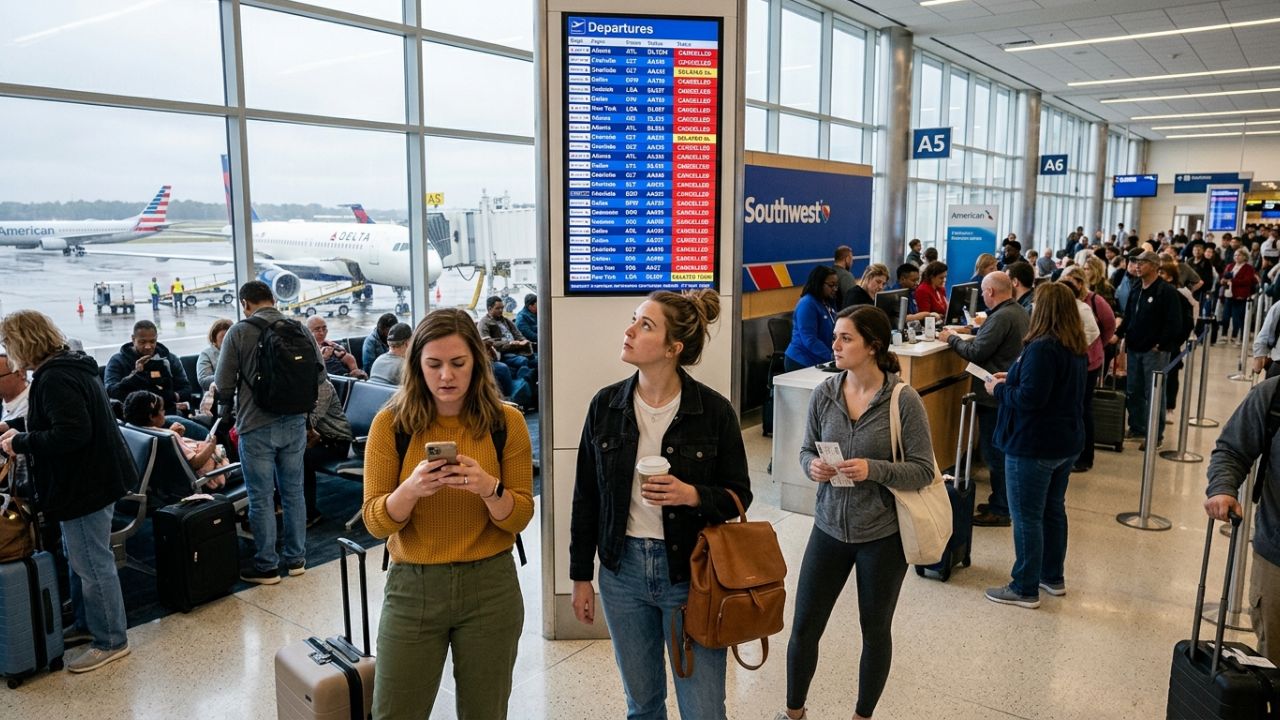
Image generated by AI
In a massive breakdown of Virginia's regional aviation mobility, severe upstream travel chaos has violently paralyzed standard operations at Norfolk International Airport. Reported on June 20, 2026, as stranded passengers desperately monitor the latest airline news for any sign of relief, severe air traffic control constraints along the Eastern seaboard have triggered a wave of devastating airport disruptions. Airport officials officially recorded a damaging logistical collapse consisting of 36 delayed flights and 7 outright flight cancellations, effectively isolating thousands of business travelers and vacationers inside the Norfolk terminals. This operational failure has inflicted severe logistical damage across multiple major carriers, heavily disrupting domestic routes operated by American Airlines, Delta Air Lines, Southwest, JetBlue, and vital regional affiliates. As the gridlock destroys critical connecting itineraries bound for Atlanta, Charlotte, Dallas, and New York, this meltdown in Virginia represents today's most crucial headline in breaking aviation updates and passenger survival strategy.
By introducing direct passenger coordination and dynamic scheduling backups, the regional aviation hubs target growing passenger demand across vital commerce sectors. The choice to coordinate flight departures in phases helps to manage gate capacity, supporting the country's broader regional transportation network.
Context: The Vulnerability of Mid-Tier Hubs
For the US aviation network, the massive disruption at Norfolk International Airport violently exposes the extreme sensitivity of mid-tier regional gateways to upstream hub congestion.
Norfolk serves as an absolutely vital access point for the entire Hampton Roads region, facilitating essential connections for coastal tourism, major military installations, and regional economic hubs. Crucially, the airport operates on a classic hub-and-spoke system, relying heavily on seamless inbound feeder flights from mega-hubs like Atlanta and Charlotte. When massive air traffic control (ATC) restrictions or weather events paralyze the broader Eastern U.S. flying routes, the operational damage violently cascades down to Norfolk. The current disruption pattern reveals that American Airlines and Delta are absorbing intense knock-on delays from their congested primary hubs. Because an aircraft scheduled to depart Norfolk is trapped hours away in New York or Dallas, the local schedule completely degrades. This creates a terrifying chain reaction that isolates Virginia travelers, proving that a localized failure at a massive connecting hub instantly guarantees flight cancellations at regional feeder airports.
To view live flight schedules, verify the active departure status of your specific Norfolk itinerary, or to track potential route restorations prior to heading to the airport, travelers must consult official aviation directories. For direct updates regarding how these massive operational failures might impact your current flight cancellations out of Virginia, travelers should aggressively utilize the official digital portals of their respective airlines. To explore live flight tracking and monitor the exact severity of the cascading bottlenecks paralyzing the broader East Coast airspace, passengers can consult the official FlightAware tracking service.
Section-Wise Breakdown: The Carrier Collapse
Legacy Network Strain (American & Delta)
The operational disruption at Norfolk is heavily concentrated among the legacy carriers and their vital regional subsidiaries. American Airlines and its American Eagle affiliates (PSA Airlines and Piedmont Airlines) collectively recorded the absolute highest number of affected services. Simultaneously, Delta Air Lines and its Endeavor Air connection partner suffered a combined total of 9 impacted flights. This specific distribution proves that the disruptions are driven by upstream hub congestion; aircraft rotations are being violently delayed earlier in the day at major connecting airports, resulting in cascading schedule adjustments by the time the aircraft is supposed to reach Virginia.
The Low-Cost Carrier Contagion
Crucially, the operational collapse did not just affect the legacy giants. Low-cost and hybrid carriers—including Southwest Airlines, JetBlue Airways, Frontier Airlines, and Breeze Airways—also recorded significant schedule instability. While these carriers avoided outright flight cancellations at Norfolk, Southwest absorbed 5 intense delays, while JetBlue absorbed 3. This spread across every tier of the aviation market proves that the Norfolk meltdown is driven by systemic network pressure and FAA flow management protocols, rather than a single isolated airline failure.
Impacted Mega-Hub Destinations
The 7 outright cancellations added devastating complexity for passengers on tight itineraries, particularly those attempting to connect through the nation's busiest mega-hubs. Routes bound for Atlanta, Charlotte, New York, and Dallas-Fort Worth were severely compromised, completely severing Norfolk's access to the broader domestic and international network.
Technical Roster: Norfolk Disruption Matrix
To ensure absolute factual accuracy regarding the exact volume of grounded flights and the specific operational damage inflicted upon American, Delta, Southwest, and the regional feeders, the following matrix details the strictly verified operational data:
Official Flight Cancellations and Delays at Norfolk Airport
| Airline | Cancelled (#) | Delayed (#) |
|---|---|---|
| American Airlines | 3 | 7 |
| PSA Airlines (American Eagle) | 2 | 5 |
| Delta Air Lines | 2 | 8 |
| Endeavor Air (Delta Connection) | 0 | 1 |
| Frontier Airlines | 0 | 2 |
| JetBlue Airways | 0 | 3 |
| Breeze Airways | 0 | 1 |
| Piedmont Airlines (American Eagle) | 0 | 2 |
| Republic Airways | 0 | 2 |
| Southwest Airlines | 0 | 5 |
Data accurately reflects the verified 36 total delays and 7 total cancellations recorded at Norfolk International Airport on June 20, 2026. Legacy carriers and regional feeder networks bore the absolute highest operational pressure.
Passenger Impact: The Chaos of Hampton Roads
For the passengers physically trapped inside the terminals of Norfolk International Airport, the immediate impact is severe logistical exhaustion and the massive financial threat of destroyed regional itineraries.
Families attempting to begin coastal vacations and military personnel racing to critical connections found themselves frantically refreshing departure boards as schedules degraded rapidly throughout the day. Because the 36 delays range from short tactical holds to massive multi-hour rescheduling windows, the terminals became intensely overcrowded. Passengers subjected to the 7 outright flight cancellations on American Airlines and Delta were forced into massive, agonizing lines, desperately attempting to secure rebookings on an airline network that was already operating at maximum capacity. For travelers trapped on delayed outbound flights, the cascading failure practically guarantees they will miss their crucial connections in Charlotte or Atlanta, forcing them to absorb the exorbitant costs of sudden overnight hotel accommodations.
Industry Analysis: The Economic Ripple Effect
Aviation analysts monitoring the localized collapse at Norfolk note that passengers must urgently execute a strict survival strategy to navigate this specific travel chaos, while local authorities brace for the economic fallout.
Analysts emphasize that although Norfolk is not a massive international gateway, these 43 disrupted flights inflict immediate, severe secondary effects on the Hampton Roads economy. Delayed arrivals instantly reduce same-day hotel check-ins and devastate local restaurant bookings. Missed connections entirely destroy highly sensitive cruise and coastal tourism itineraries originating in Virginia. Furthermore, regional ground transport systems—including rental car agencies and rideshare networks—face impossible surges in last-minute demand as stranded travelers attempt to drive to alternative airports like Richmond or Raleigh-Durham.
Actionable Advice for Surviving the Norfolk Meltdown
If you are currently trapped inside Norfolk International Airport, or attempting to fly out of Virginia during this operational breakdown, you must execute this strategic survival checklist immediately:
- Exploit Alternative Regional Airports: If your American or Delta flight is officially canceled and rebooking availability out of Norfolk is non-existent, immediately consider ground transport. Check flight availability out of Richmond International Airport (RIC) or Raleigh-Durham (RDU), rent a car, and completely bypass the isolated Norfolk gridlock.
- Audit Your Refund Eligibility: If your flight is part of the 7 officially canceled operations and you choose not to travel, the DOT strictly dictates that you are legally entitled to a prompt, full cash refund to your original form of payment. Do not let the airline pressure you into accepting a rapidly expiring digital travel voucher.
- Never Surrender Your Checked Baggage Early: Because 36 flights are suffering rolling, unpredictable delays due to upstream ATC congestion, gate changes will happen rapidly. Pack all critical medications, military documents, and electronic chargers in your carry-on. If you check your bag and your flight is delayed for eight hours, you will not be able to retrieve your luggage from the belly of the aircraft.
FAQ: Norfolk Airport Flight Cancellations
How many flights were delayed or canceled at Norfolk International Airport?
According to official tracking data, the airport recorded a massive operational failure consisting of 36 delayed flights and 7 outright flight cancellations.
Which airlines were most affected by the travel chaos in Norfolk?
Legacy carriers and their regional affiliates absorbed the heaviest damage. American Airlines, PSA Airlines, and Delta Air Lines recorded the highest combined totals of delays and cancellations, while Southwest and JetBlue also suffered significant delays.
What caused the massive flight disruptions in Virginia?
The travel chaos was triggered by a broader challenge with the air traffic control (ATC) system along the Eastern U.S. flying routes, causing severe upstream hub congestion that cascaded down to Norfolk.
The Reality of Regional Aviation Dependency
The catastrophic breakdown at Norfolk International Airport proves definitively that mid-tier regional airports possess a terrifying operational fragility when mega-hubs fail. By effectively grounding 7 flights and delaying 36 operations, upstream ATC congestion quickly stranded Virginia passengers bound for Atlanta, Dallas, and New York. Yet, as exhausted travelers frantically attempt to rebook their flights or secure rental cars, they must accept a critical new reality: a single delayed aircraft in Charlotte can destroy a vital business itinerary originating in Norfolk. Surviving this level of interconnected travel chaos now demands extreme adaptability, a complete refusal to panic in long customer service lines, and the tactical discipline to instantly rent a car and drive to a competing regional airport the exact second a cancellation is announced.
Key Takeaways
- Localized Operational Collapse: Norfolk International Airport suffered severe travel chaos, recording 36 flight delays and 7 outright cancellations.
- Widespread Carrier Impact: The disruptions heavily paralyzed operations for American Airlines, Delta Air Lines, Southwest, JetBlue, and multiple regional affiliates.
- The Root Cause: Severe air traffic control (ATC) issues along the Eastern U.S. routes caused massive upstream hub congestion that cascaded into Virginia.
- Disrupted Mega-Hub Routes: The delays severely infected high-value connecting routes bound for Atlanta, Charlotte, Dallas, and New York.
- Economic Fallout: The disruptions inflict severe secondary economic damage on the Hampton Roads region, threatening hotel bookings, cruise itineraries, and coastal tourism.
Related Travel Guides
Massive Travel Chaos Paralyzes Chicago O'Hare with 1,425 Disruptions
Disclaimer
This article is for informational and educational purposes only. It does not constitute legal, financial, or professional advice. While we strive to provide accurate and up-to-date information, travel policies, regulations, and conditions change rapidly. Always verify information with official sources before making travel decisions. Nomad Lawyer makes no representations about the accuracy, reliability, completeness, or suitability of the information provided. Readers should consult qualified professionals for advice specific to their circumstances. The views expressed in this article are those of the author and do not necessarily reflect the views of Nomad Lawyer.
Kunal K Choudhary
Co-Founder & Contributor
A passionate traveller and tech enthusiast. Kunal contributes to the vision and growth of Nomad Lawyer, bringing fresh perspectives and driving the community forward.
Learn more about our team →