Gulf Air Air-Rail Single-Ticket Frontier: Saudi Arabia–Bahrain Rail Link, Dammam Feeder Corridor, and the 2030 GCC Railway Vision

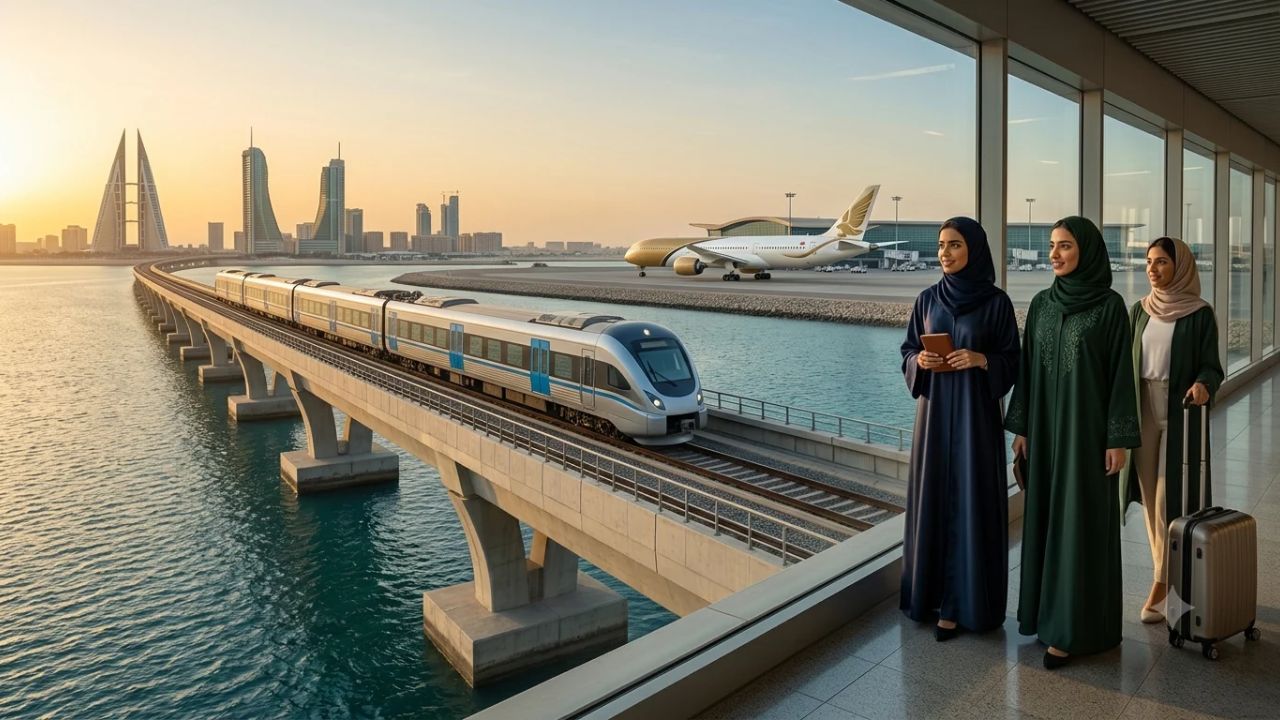
MANAMA, Bahrain — In a regulatory milestone that accelerates the cross-border integration of the Arabian Gulf's transport infrastructure, Bahrain’s Cabinet has officially approved a draft law to ratify the Gulf Cooperation Council regional railway agreement.
Sanctioned during an executive session on November 2, 2026, chaired by Crown Prince and Prime Minister Prince Salman bin Hamad Al Khalifa, the legislative endorsement advances a transformative civil engineering initiative: a 57-kilometer passenger and freight railway linking Dammam in the Eastern Province of Saudi Arabia directly with the Kingdom of Bahrain.
Operating across the planned King Hamad Causeway—a multi-billion-dollar transit bridge designed to run parallel to the existing King Fahd Causeway—the railway will terminate at the proposed King Hamad International Railway Station in Ramli.
From this central transit junction, an eight-kilometer extension of the planned Bahrain Metro network will link cross-border rail passengers directly with the terminal gates of Bahrain International Airport (BAH).
The advancement of the railway framework unlocks a compelling commercial prospect for Bahrain’s national carrier, Gulf Air: the introduction of an integrated "air-rail" single-ticket booking. Under such an arrangement, international travelers originating in eastern Saudi Arabia could purchase a single reservation combining a high-speed train departure from Dammam with a long-haul flight departing Bahrain to destinations across Europe, Asia, and Africa.
While Gulf Air has yet to formally publish combined commercial air-rail tariffs, the structural progress of the railway brings into focus the operational tests—ranging from baggage through-checking and bi-national immigration pre-clearance to missed-connection protections—that will determine whether seamless multi-modal transit can redefine Arabian Gulf mobility.
+----------------------------------------------------------------------------------------------------+ | SAUDI ARABIA–BAHRAIN RAIL LINK & AIR-RAIL INTEGRATION SCORECARD | +----------------------------------------------------------------------------------------------------+ | Primary Regulatory Milestone | Bahrain Cabinet Approves Draft Law Ratifying GCC Railway Agreement | | Approval Date | November 2, 2026 (Chaired by Crown Prince & Prime Minister) | | Total Rail Corridor Length | 57 Kilometers (Dammam Railway Station to Ramli International Hub) | | Maritime Bridge Crossing | Proposed King Hamad Causeway (Parallel to 1986 King Fahd Causeway) | | Airport Connector Link | 8-Kilometer Bahrain Metro Phase 1 Extension (Ramli to BAH Airport) | | Regional Railway Target Date | December 2030 (GCC Railways Authority Regional Target) | | Existing Causeway Volume | 13.43 Million Inbound Visitors via King Fahd Causeway (2025) | | Bahrain Airport Throughput | 9.74 Million Passengers Handled in 2025 (+4.2% Growth) | | Bahrain Tourism Expenditure | BHD 2.03 Billion (~$5.38 Billion USD) Total Visitor Spend | | Potential Operating Airline | Gulf Air (40 Global Destinations across 24 Countries) | | Operational Precedent | March 2026 Cross-Border Coach Transfer via DMM during Airspace Halt | +----------------------------------------------------------------------------------------------------+
The 57-Kilometer Cross-Border Rail Corridor: Dammam to Ramli
The proposed Saudi Arabia–Bahrain railway represents one of the most strategically vital segments of the wider 2,177-kilometer Gulf Cooperation Council (GCC) Railway network.
According to project engineering plans published by the Bahrain Ministry of Transportation and Telecommunications (MTT) and the Saudi Arabia Railways (SAR), the cross-border alignment spans approximately 57 kilometers from Dammam’s existing passenger railway station to the planned King Hamad International Railway Station in the Ramli district of Bahrain.
                    SAUDI–BAHRAIN CROSS-BORDER RAIL TRACK

  [DAMMAM RAILWAY STATION] (Eastern Province, Saudi Arabia)
            |
            v (Mainland Rail Corridor - ~25 km)
            |
  [SAUDI SHORELINE LANDING]
            |
            v [KING HAMAD CAUSEWAY - 25 km Double-Track Bridge]
            |
  [BAHRAIN SHORELINE LANDING] (Northern Coastline)
            |
            v (Bahrain Overland Corridor - ~7 km)
            |
  [RAMLI INTERNATIONAL STATION] (Central Multi-Modal Hub)
            |
            v [8-Kilometer Bahrain Metro Phase 1 Extension]
            |
  [BAHRAIN INTERNATIONAL AIRPORT (BAH)] (Terminal Departure Gates)
The engineering centerpiece of the corridor is the King Hamad Causeway. Built to supplement the aging King Fahd Causeway—a four-lane highway opened in 1986 that processes over 13 million passenger journeys annually—the new 25-kilometer structure is designed as a multimodal infrastructure asset.
Financed through a public-private partnership (PPP) structure with an estimated construction budget exceeding $3.5 billion, the causeway will accommodate four highway vehicular lanes alongside a double-track, electrified railway capable of handling passenger trains traveling at speeds up to 200 km/h (125 mph) and freight convoys moving at 120 km/h (75 mph).
At the eastern terminus of the bridge, the railway enters Bahrain's northern governorate, terminating at Ramli. Designed as a regional multi-modal transportation interchange, the King Hamad International Railway Station will serve as the physical interface where long-distance trains from Saudi Arabia interface with Bahrain’s planned urban mass transit network.
The Last-Mile Connection: Bahrain Metro’s Eight-Kilometer Airport Spur
A rail passenger arriving from Saudi Arabia cannot reach boarding gates without an efficient urban connector. While Dammam station will connect directly to Ramli across the causeway, Ramli is situated in central Bahrain, approximately eight kilometers southwest of Bahrain International Airport in Muharraq.
To bridge this geographic gap, the Bahrain Ministry of Transportation and Telecommunications integrated an eight-kilometer dedicated spur into Phase 1 of the Bahrain Metro Project.
                  BAHRAIN METRO & AIRPORT CONNECTOR INTEGRATION

  [KING HAMAD INTERNATIONAL STATION (RAMLI)]
  - GCC High-Speed Rail Terminus
  - Customs & Passport Border Facility
  - Baggage Transfer Conveyors
                     |
                     v [Automated Driverless Light Rail Transit]
                     |
  [BAHRAIN METRO CORRIDOR]
  - 8-Kilometer Dedicated Elevated Track
  - 10-Minute High-Frequency Headways
  - Air-Conditioned Rolling Stock
                     |
                     v
  [BAHRAIN INTERNATIONAL AIRPORT TERMINAL (BAH)]
  - Direct Enclosed Pedestrian Skybridge
  - Airline Check-In Island 1 (Gulf Air Flagship Counters)
  - Security Screening & Departure Gates
The metro connection will operate as a fully automated, driverless light-rail system running along an elevated viaduct. Traveling at operational speeds of 80 km/h, the metro transit between Ramli Station and the airport terminal will take approximately ten to twelve minutes, providing continuous high-frequency shuttle service.
Upon arriving at the airport metro station, passengers will access the modern passenger terminal via an enclosed, air-conditioned moving walkway directly into the departures hall, eliminating exposure to outdoor summer heat.
The Air-Rail Single-Ticket Frontier: Gulf Air’s Strategic Proposition
The concept of integrating railway journeys into international airline reservations—known as "air-rail intermodal ticketing"—is an established commercial practice in Europe and East Asia. Programs like Lufthansa Express Rail (partnering with Deutsche Bahn in Germany), Air France Train + Air (partnering with SNCF), and Swiss Air-Rail (with SBB) allow travelers to substitute short-haul domestic flights with scheduled train services booked under a single airline ticket code.
In the Middle East, Gulf Air has an opportunity to pioneer this model by treating the Dammam railway station as a virtual airport within its global distribution network:
                    THE AIR-RAIL SINGLE-TICKET TRANSACTION

    TRADITIONAL INDEPENDENT BOOKINGS             INTEGRATED AIR-RAIL SINGLE TICKET
+--------------------------------------+      +--------------------------------------+
| 1. Book train/car Dammam to Bahrain  |      | ONE TRANSACTION VIA GULF AIR:        |
| 2. Face border delays independently  | ===> | Dammam Station (DMM) to London (LHR) |
| 3. Unprotected missed-flight risk    |      | - Rail sector issued under GF code   |
| 4. Separate baggage handling at port |      | - Guaranteed missed-flight protection|
| 5. Multiple tickets and receipts     |      | - Integrated baggage through-check   |
+--------------------------------------+      +--------------------------------------+
Under this commercial model, an international traveler based in Al Khobar or Dhahran booking a flight from the Eastern Province to London Heathrow, Paris Charles de Gaulle, or Bangkok would book a ticket departing from "Dammam Railway Station" (which would be assigned an official IATA railway code).
The traveler boards a high-speed train in Dammam, crosses the King Hamad Causeway, transfers via metro to Bahrain International Airport, and boards their Gulf Air widebody flight.
This air-rail synergy provides significant commercial advantages:
- Market Expansion into Eastern Saudi Arabia: The Eastern Province is home to Saudi Aramco headquarters, major petrochemical industrial complexes in Jubail, and an affluent population exceeding five million residents. By offering a 30-minute train ride directly to Bahrain Airport, Gulf Air captures high-yield corporate travelers who currently face congested road journeys or inconvenient flight schedules.
- Network Rationalization: Eliminating short-hop flights between Dammam (DMM) and Bahrain (BAH)—a 50-mile flight sector where aircraft spend more time taxiing and climbing than cruising—allows Gulf Air to reallocate narrowbody aircraft to higher-yielding medium-haul routes across South Asia and the Middle East.
- Environmental Decarbonization: High-speed electric rail produces up to 90 percent fewer carbon emissions per passenger-kilometer than short-haul feeder flights, directly supporting Bahrain's Economic Vision 2030 and Saudi Arabia's Vision 2030 sustainability mandates.
Operational Precedent: The March 2026 Airspace Disruption Response
While an integrated air-rail ticket remains in planning stages, Gulf Air has demonstrated the operational capability to manage cross-border passenger transfers between Saudi Arabia and Bahrain during periods of crisis.
In March 2026, temporary geopolitical airspace closures across the central Arabian Gulf led to the sudden suspension of scheduled flight departures from Bahrain International Airport. Rather than canceling intercontinental flights, Gulf Air executed an emergency contingency plan, temporarily relocating selected flight operations to King Fahd International Airport (DMM) in Dammam, Saudi Arabia.
+----------------------------------------------------------------------------------------------------+ | GULF AIR CROSS-BORDER EMERGENCY MOBILIZATION (MARCH 2026) | +----------------------------------------------------------------------------------------------------+ | Disruption Event | Temporary Middle Eastern Airspace Closure (March 2026) | | Operating Airline Response | Relocated Selected Long-Haul Departures to Dammam Airport (DMM) | | Ground Logistics Deployed | Dedicated Fleets of Air-Conditioned Cross-Border Passenger Shuttles | | Transit Corridor Utilized | King Fahd Causeway (Direct Manama to Dammam Overland Highway) | | Visa Facilitation Executed | Partnered with Saudi Authorities to Issue Rapid Saudi Transit Visas | | Network Recovery Benchmark | By June 2026, Gulf Air Restored 75% of Network (40 Cities / 24 Ctr) | +----------------------------------------------------------------------------------------------------+
During this operational mobilization, the Saudi Press Agency reported that Gulf Air organized dedicated fleets of luxury highway motorcoaches to transport confirmed passengers across the King Fahd Causeway.
Critically, the airline collaborated closely with the Saudi Ministry of Foreign Affairs and the General Directorate of Passports (Jawazat) to expedite emergency Saudi transit visas for international travelers who did not otherwise hold Saudi entry privileges.
This real-world operation proved that bi-national governmental agencies, border control authorities, and airline operations centers can coordinate cross-border passenger movements under tight deadlines.
The structural challenge now is transforming an ad-hoc emergency shuttle into an everyday, automated commercial rail product.
Four Critical Obstacles to Seamless Air-Rail Travel
For Gulf Air, Saudi Arabia Railways, and the Bahrain Ministry of Transportation to successfully launch a single-ticket air-rail product, four operational challenges must be resolved through inter-governmental agreements.
                    THE FOUR AIR-RAIL INTEGRATION HURDLES

         +-------------------------------------------------------+
         | 1. MISSED-CONNECTION PROTECTION & REBOOKING POLICIES  |
         +-------------------------------------------------------+
         | 2. REMOTE BAGGAGE CHECK-IN & THROUGH-CHECKED TRANSIT  |
         +-------------------------------------------------------+
         | 3. BI-NATIONAL BORDER CLEARANCE & CUSTOMS INSPECTION  |
         +-------------------------------------------------------+
         | 4. METRO LUGGAGE TRANSFER & LAST-MILE CONVEYANCES     |
         +-------------------------------------------------------+
1. Guaranteed Missed-Connection Rebooking Terms
The foundational requirement of any airline-rail partnership is legal passenger protection. In commercial aviation, if a passenger’s feeder flight is delayed due to weather or mechanical trouble, the operating airline is legally obligated under IATA interline rules to rebook the passenger onto the next available flight at zero additional charge, providing hotel lodging and meal vouchers if an overnight delay occurs.
For an air-rail ticket, published terms must define liability:
- If a Saudi Arabia Railways train is delayed by thirty minutes due to track maintenance on the causeway, causing a passenger to miss Gulf Air's morning flight to London Heathrow, will Gulf Air rebook the passenger without change fees?
- Will travel insurance policies recognize a railway delay on a foreign national rail network as a valid trigger for flight-delay compensation?
Without transparent, published legal protections, corporate travel managers will refuse to book the product, preferring independent private cars or direct flights.
2. Remote Baggage Check-in at Dammam Railway Station
The true test of seamless travel is whether a passenger must carry heavy luggage across the border. Under a basic transfer, a traveler departing Dammam would have to load suitcases onto the train, wheel them through border control at the causeway, transfer them onto the Bahrain Metro at Ramli, and check them in at the airport terminal.
To deliver true luxury convenience, Gulf Air and SAR must implement Remote Baggage Check-in (City Check-in) at Dammam Railway Station:
- The passenger arrives at Dammam station, checks their bags at a dedicated Gulf Air counter, and receives their boarding passes and bag tags showing their final destination (e.g., LHR or CDG).
- Luggage is loaded into a secure, bonded baggage container on the train.
- The baggage container clears customs in a sealed bonded truck or dedicated railcar, traveling directly to the airport baggage sorting facility without the passenger ever touching it again until arriving at their final international destination.
3. Integrated Bi-National Border Control
Crossing the existing King Fahd Causeway requires passing through two separate border control complexes: exiting Saudi Arabia through Saudi Jawazat immigration and customs, and entering Bahrain through the Nationality, Passports and Residence Affairs (NPRA) booths. During peak weekend traffic, vehicular wait times at these border checkpoints frequently exceed two to three hours.
A high-speed train cannot afford two-hour border delays. The project requires:
- Onboard Border Clearance: Border control officers boarding the train to scan passports electronically while the train is in motion across the 25-kilometer causeway, utilizing mobile biometric terminals.
- Unified GCC One-Stop Clearance: Establishing a single juxtaposed border control facility where Saudi and Bahraini immigration officers operate side-by-side, processing passengers through a single passport scan.
- The Unified GCC Tourist Visa: The planned rollout of the unified GCC tourist visa (the "GCC Grand Tours" visa) will facilitate frictionless border crossings for international tourists holding visas for multiple Gulf states.
4. The Metro Baggage Transfer Bottleneck at Ramli
Even if remote baggage check-in is implemented, independent travelers carrying carry-on luggage or traveling on standard tickets must transfer between the heavy-rail King Hamad Station and the light-rail Bahrain Metro at Ramli.
The physical station design must incorporate level platform boarding, high-capacity luggage-friendly elevators, and wide fare gates to prevent bottleneck congestion during morning rush-hour transfers.
The 13.4-Million-Visitor Causeway Market: Eastern Saudi Arabia as an Economic Engine
The economic justification for the Saudi Arabia–Bahrain rail link is anchored by the immense passenger volumes already moving across the maritime border. According to official data published by the Bahrain Open Data Portal and the Bahrain Tourism and Exhibitions Authority (BTEA), the King Fahd Causeway represents the most active overland border crossing in the Middle East:
+----------------------------------------------------------------------------------------------------+ | BAHRAIN TOURISM & CAUSEWAY INFLOW METRICS (2025) | +----------------------------------------------------------------------------------------------------+ | King Fahd Causeway Inbound Visitors | 13.43 Million Crossings (Accounting for ~85% of All Arrivals)| | Bahrain International Airport Volume| 9.74 Million Passenger Movements (+4.2% Growth in 2025) | | Total National Tourism Expenditure | BHD 2.03 Billion (Approximately $5.38 Billion USD) | | Hospitality Sector Economic Growth | 6.4% Expansion in Accommodation and Food Services (2025) | | Average Causeway Crossing Wait Time | 45 Minutes (Off-Peak) to 180+ Minutes (Peak Weekend Surges) | | Target Rail Transit Time (DMM - BAH)| 30 to 40 Minutes Total Elapsed Travel Time (Station to Gates)| +----------------------------------------------------------------------------------------------------+
For decades, the Eastern Province of Saudi Arabia has functioned as Bahrain’s primary economic lifeline. Affluent Saudi citizens, expatriate petroleum engineers, and multinational executives cross the causeway weekly to patronize Bahrain’s five-star luxury resorts, fine dining restaurants, shopping malls, and cultural events.
                    CROSS-BORDER TRAVEL MODE COMPARISON

  EXISTING HIGHWAY (King Fahd Causeway)         PROPOSED HIGH-SPEED RAIL LINK
+--------------------------------------+      +--------------------------------------+
| - Mode: Private Car, Taxi, Bus       |      | - Mode: Electric High-Speed Train    |
| - Transit Time: 60 to 180+ Minutes   |      | - Transit Time: 30 to 40 Minutes     |
| - Reliability: Poor (Severe Traffic) | ===> | - Reliability: High (Fixed Timetable)|
| - Border Clearance: Vehicle Queues   |      | - Border Clearance: Integrated Rail  |
| - Environmental Footprint: High CO2  |      | - Environmental Footprint: Low Carbon|
+--------------------------------------+      +--------------------------------------+
However, highway capacity has reached saturation. On Thursday afternoons (the commencement of the Gulf weekend) and during Eid holidays, vehicular traffic backs up for miles on the approaches to the causeway toll plazas, causing severe delays and missed flights at Bahrain Airport.
The high-speed rail corridor eliminates highway uncertainty entirely. Operating on a dedicated grade-separated right-of-way, trains will cross the Gulf in less than twenty minutes, providing corporate executives and holidaymakers with guaranteed arrival times that make flight connections completely reliable.
The GCC Railway Master Plan: Decarbonization and Regional Connectivity
The Saudi Arabia–Bahrain rail link is not an isolated bilateral project; it forms a primary artery of the broader GCC Railway network. Managed under the oversight of the GCC Railways Authority, the planned 2,177-kilometer network will establish continuous rail connectivity from Kuwait City in the north, traversing Saudi Arabia, connecting Bahrain via the King Hamad Causeway, crossing into Qatar via an independent causeway, extending across the United Arab Emirates through the Etihad Rail network, and terminating in Muscat, Oman.
                    GCC REGIONAL RAILWAY NETWORK CORRIDOR

  [KUWAIT CITY] ===> [SAUDI ARABIA (Dammam Junction)] ===> [UAE (Etihad Rail)] ===> [OMAN]
                                   |
                     (King Hamad Causeway Rail)
                                   |
                                   v
                             [BAHRAIN (Ramli)]
                                   |
                     (Proposed Qatar-Bahrain Causeway)
                                   |
                                   v
                             [QATAR (Doha)]
The GCC Railways Authority has established December 2030 as the target completion date for full commercial operations across the integrated six-nation network. However, the regulatory charter explicitly permits member states to complete and inaugurate bilateral cross-border links earlier as individual infrastructure phases are finished.
Because the Dammam–Bahrain link represents one of the shortest and highest-demand sectors on the entire regional network, transportation analysts anticipate that this corridor could commence initial passenger operations ahead of the broader 2030 regional deadline, serving as the operational proving ground for GCC-wide air-rail integration.
Competitive Aviation Dynamics: Gulf Air vs. Regional Super-Connectors
The introduction of an air-rail product carries profound competitive implications for Gulf Air in its ongoing battle with regional aviation powerhouses.
Bahrain’s national carrier operates in a hyper-competitive aviation market surrounded by some of the largest global mega-carriers in commercial aviation history:
- Emirates (Dubai International - DXB): Operates hundreds of Airbus A380 and Boeing 777 aircraft, connecting over 140 destinations worldwide.
- Qatar Airways (Hamad International - DOH): World-class transit hub operating ultra-modern fleets to Europe, the Americas, and Australasia.
- Saudia and Riyadh Air (Saudi Arabia): Under Saudi Vision 2030, Saudi Arabia is investing tens of billions of dollars to establish Riyadh Air as a global super-carrier while transforming Saudia into a major Islamic and regional hub operator.
                    GULF AIR "BOUTIQUE CARRIER" STRATEGY

  MASS-MARKET MEGA-CONNECTORS (DXB / DOH)        GULF AIR BOUTIQUE STRATEGY (BAH)
+-----------------------------------------+   +---------------------------------------+
| - Massive 80-Million-Passenger Terminals|   | - Intimate 14-Million-Capacity Hub    |
| - 20 to 30 Minute Gate Walking Distances|   | - 15-Minute Minimum Connection Times  |
| - Impersonal High-Throughput Processing |   | - Personalized Falcon Gold Hospitality|
| - Relies on Air Feeder Connections     |   | - Direct Land-Rail Infiltration into  |
|                                         |   |   Saudi Arabia's Richest Province     |
+-----------------------------------------+   +---------------------------------------+
Rather than attempting to match the sheer fleet size of Emirates or Qatar Airways, Gulf Air has adopted a "boutique carrier" strategy. The airline operates a focused fleet of modern Boeing 787-9 Dreamliners and Airbus A321neo aircraft, delivering personalized Falcon Gold business-class service and leveraging Bahrain International Airport’s newly expanded terminal, which opened in 2021 with a capacity of 14 million passengers.
The terminal's compact layout allows for exceptionally rapid gate-to-gate connections, with minimum connection times (MCT) as low as 35 minutes. By integrating a direct high-speed rail line from Dammam, Gulf Air effectively turns the Eastern Province of Saudi Arabia into its own local domestic market, capturing premium business travelers who wish to avoid the stress of massive mega-hub terminals.
Strategic Guide for Cross-Border Gulf Travelers: Visas, Transit, and Schedules
For business travelers, expatriates, and regional tourists planning travel between Saudi Arabia and Bahrain in late 2026 and 2027, following structured transit guidelines ensures smooth travel across the causeway corridor.
                      CROSS-BORDER TRANSIT DECISION MATRIX

  PASSENGER CATEGORY       OPTIMAL TRAVEL STRATEGY       KEY DOCUMENTATION REQUIREMENT
+------------------------+-----------------------------+------------------------------------+
| GCC National           | Direct Causeway Driving /   | National Identity Card (Smart ID)  |
| (Saudi / Bahraini)     | High-Speed Rail (Post-2028) | Biometric border lane access       |
+------------------------+-----------------------------+------------------------------------+
| Expatriate Resident    | Licensed Cross-Border Taxi  | Multiple-Entry Exit/Re-Entry Visa  |
| in Saudi Arabia        | (Pre-Booked Bridge Permit)  | Bahrain eVisa or On-Arrival Visa   |
+------------------------+-----------------------------+------------------------------------+
| International Tourist  | Chauffeured VIP Airport Van | Valid Passports (6 Mos Validity)   |
| Connecting to BAH      | / Flight from DMM           | Approved Saudi and Bahrain eVisas  |
+------------------------+-----------------------------+------------------------------------+
Essential Entry and Visa Regulations
- Saudi Arabia Exit/Re-Entry Visas: Foreign expatriates living in Saudi Arabia holding an Iqama (residency permit) must possess an active, valid exit/re-entry visa issued through the Absher platform before attempting to cross the causeway into Bahrain. Attempting to cross without an active exit permit results in immediate denial of exit at the Saudi border plaza.
- Bahrain Visa Formalities: Citizens of GCC nations (Saudi Arabia, UAE, Kuwait, Oman, Qatar) enter Bahrain using their national Smart ID cards without requiring visas. Citizens of over 60 eligible nations (including the US, Canada, the UK, the European Union, Australia, and New Zealand) can obtain a tourist visa on arrival at the causeway border or apply online via the Bahrain eVisa portal (evisa.gov.bh).
- The King Fahd Causeway "Jesr" Mobile App: Travelers driving across the existing King Fahd Causeway should download the official "Jesr" mobile application. The app provides real-time live video feeds of the border inspection plazas, estimated wait times, and electronic toll payment integration, allowing travelers to avoid peak congestion hours.
Flight Connection Buffer Times
If traveling between Dammam and Bahrain International Airport by road to catch an outbound long-haul flight on Gulf Air:
- Off-Peak Travel (Sunday to Wednesday): Allow a minimum buffer of 3.5 hours between departing your residence in Dammam/Khobar and your scheduled flight departure time at Bahrain Airport.
- Peak Travel (Thursday afternoon, Friday evening, and holidays): Expand your travel buffer to a minimum of 5.0 to 6.0 hours. Unexpected traffic bottlenecks at the causeway customs inspection points can easily consume two hours, jeopardizing flight boarding cutoffs.
Related Travel Guides
- Bahrain International Airport Terminal Guide: Falcon Gold Lounges and Fast Transit
- King Fahd Causeway Travel Guide: Border Procedures, Tolls, and Congestion Tips
- GCC High-Speed Rail Network Progress: Routes, Stations, and 2030 Milestones
- Gulf Air Boeing 787-9 Falcon Gold Review: Boutique Luxury Across the Middle East
This article is for informational purposes. Flight routes, passenger regulations, visa rules, and transit advisories are subject to change by airlines and aviation authorities. Readers are advised to verify schedules and travel documentation with relevant carriers and border agencies before departure.
Related Stories
Germany and France Lead Ten-Nation European Coalition Expanding Sustainable High-Speed and Sleeper Rail to Replace Short-Haul Flights