
Whittier Alaska Cruise Terminal Fire: $80 Million Facility Declared Total Loss in 2026
A devastating fire at the Chugach Glacier Gateway Terminal in Whittier, Alaska, has resulted in a total loss of the dock structure, raising serious questions about safety infrastructure in high-cap cruise ports.

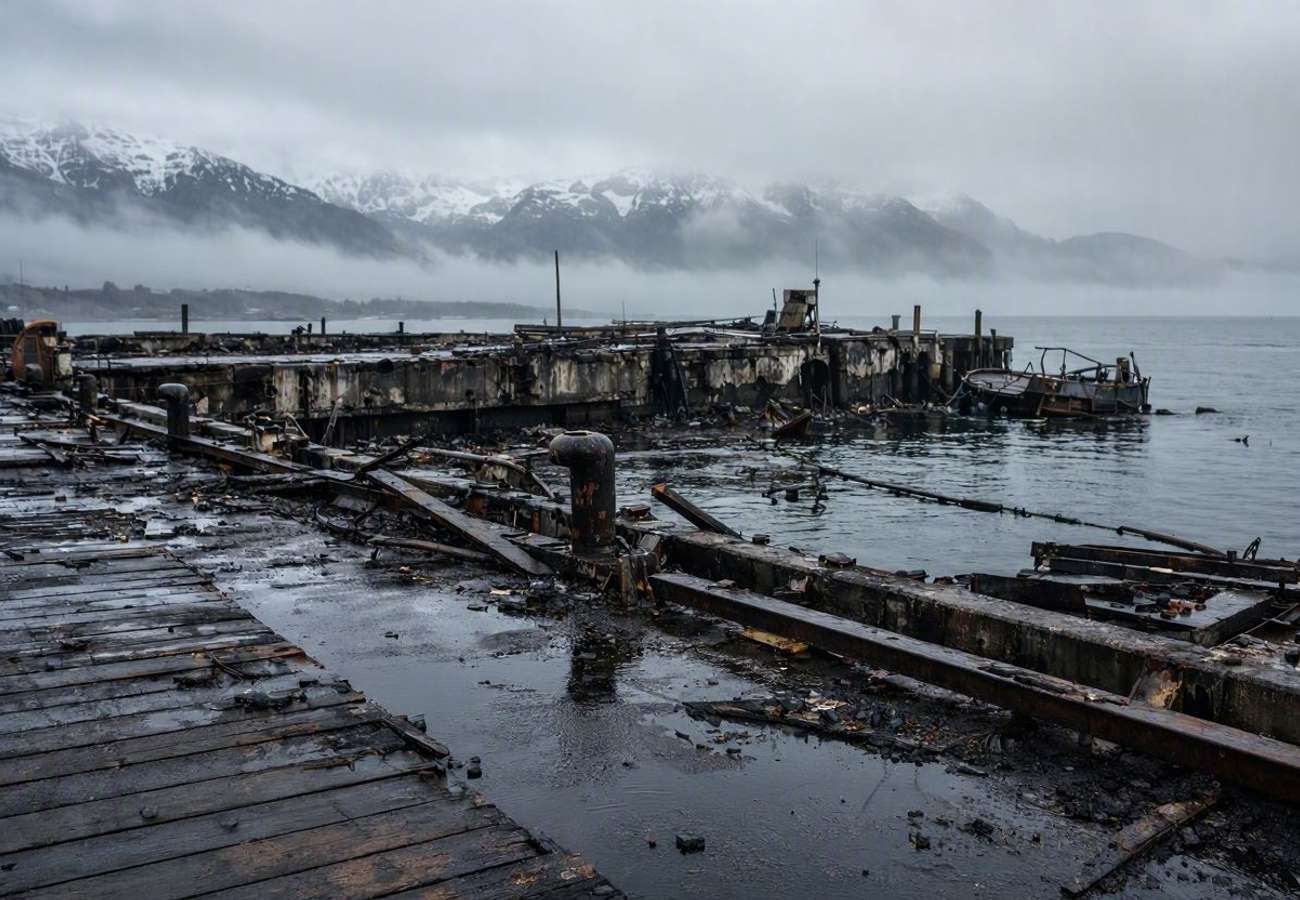
Image generated by AI
The Chugach Glacier Gateway Terminal was constructed to expand Whittier's capacity for the booming Alaska cruise market, yet only two years into operation, a significant portion of the $80 million investment has been declared a total loss. This failure highlights a critical gap between infrastructure investment and operational safety readiness, as a 12-hour blaze on September 14, 2026, exposed systemic vulnerabilities in the port's emergency response capabilities.
The Infrastructure Failure in Numbers
The scale of the disaster is defined by a stark contradiction between the facility's design and the reality of the emergency response. The fire ignited at approximately 11:00 a.m. on Monday, September 14, and required a relentless effort lasting until 12:30 a.m. the following Tuesday. While the terminal building remains standing, the Alaska State Fire Marshal's Office has officially designated the dock structure as a total loss.
The operational failure during the blaze centered on water access. According to the Anchorage Fire Department, first responders found no working fire hydrants in the immediate vicinity of the dock. This forced a desperate logistical workaround: crews positioned a fire engine further into the town of Whittier and utilized three water tenders to shuttle water to the scene.
Data from the responding agencies reveals the inefficiency of this "shuttle" system:
- Round Trip Duration: 10 minutes per tender.
- Total Water Volume Moved: 112,000 gallons.
- Resource Coordination: Combined efforts from the Anchorage Fire Department, Girdwood Fire and Rescue, and the U.S. Coast Guard.
Conversely, the facility operator, Huna Totem Corporation, claims the infrastructure was sound. The company asserts that the terminal features a 200,000-gallon onsite water tank that refills automatically via a well and maintains that the hydrants are fully operational. This discrepancy between the fire department's experience and the operator's claims suggests a catastrophic failure in either the maintenance or the accessibility of the safety systems.
Comparative Infrastructure Analysis: Whittier vs. Regional Standards
When comparing the Whittier incident to broader maritime safety benchmarks, the lack of immediate water access is an anomaly for a modern, high-cost terminal. Most Tier-1 cruise ports are required to meet stringent International Association of IAPH guidelines regarding fire suppression and emergency access.
The financial impact of this "total loss" is significant when viewed against the initial $80 million capital expenditure. The loss of the dock effectively nullifies the capacity expansion goals the terminal was designed to achieve.
| Metric | Pre-Fire Status (2024-2026) | Post-Fire Status (Sept 2026) | Variance/Impact |
|---|---|---|---|
| Dock Status | Fully Operational | Total Loss | 100% Structural Failure |
| Water Access | Claimed 200k Gallon Tank | Manual Tender Shuttle | Critical Response Delay |
| Vessel Capacity | Expanded for Large Ships | Limited/Redirected | Reduced Port Throughput |
| Asset Value | $80 Million Investment | Partial Asset Loss | Significant Capital Write-down |
The incident also highlights the varying degrees of risk based on vessel size. The Norwegian Jade, a 93,558 GT vessel with a 2,352 double-occupancy capacity, was able to safely maneuver away from the pier without damage. However, smaller vessels lacked this agility. The 137-foot Klondike Express, operated by Philips Cruises & Tours, sustained fire damage before it could be relocated. This demonstrates a clear pattern: larger, more powerful cruise ships can mitigate port-side disasters through rapid egress, while smaller tour operators remain tethered to the failing infrastructure.
What This Means for Travelers
For passengers with upcoming Alaska itineraries, this event transforms Whittier from a seamless transit point into a logistical variable. The immediate impact is already visible: the USS Ted Stevens, originally scheduled for an October 3 commissioning ceremony at this dock, has been diverted to the Princess Cruises terminal across the bay.
If you are booking an Alaska cruise for the 2027 season, consider the following data-driven advice:
- Monitor Port Changes: Huna Totem Corporation has not yet determined the timeline for repairs or the impact on 2027 operations. Check your itinerary for any shift from Whittier to alternative ports like Seward or Vancouver.
- Verify Shore Excursion Logistics: Since the dock is a total loss, the physical boarding and disembarking process may be altered. This could lead to longer wait times or changes in where shore excursion buses pick up passengers.
- Insurance Review: Ensure your travel insurance covers "itinerary changes" or "port diversions." While the Norwegian Jade escaped unscathed, the total loss of the dock means the cruise line may change the port of call entirely to avoid congestion at the remaining Princess Cruises terminal.
Projecting the 2027 Recovery Trajectory
Based on the current trajectory, Whittier faces a significant bottleneck in 2027. The destruction of the dock removes a primary artery for cruise traffic, forcing all arrivals into a smaller number of available berths. According to data trends from the World Travel & Tourism Council (WTTC), Alaska continues to see growth in cruise demand, meaning the loss of the Chugach Glacier Gateway dock occurs at the worst possible time for regional capacity.
The recovery will likely follow a three-phase pattern:
- Phase 1 (Q4 2026): Forensic audit of the fire hydrant failure and legal disputes between Huna Totem Corporation and the responding fire agencies.
- Phase 2 (Q1-Q2 2027): Emergency procurement of temporary docking solutions or expedited rebuilding of the pier structure.
- Phase 3 (Q3 2027): Potential partial reopening, though full capacity will likely remain capped until a complete structural replacement is certified.
The long-term implication is a shift in how cruise lines view "new" infrastructure. The $80 million price tag provided a veneer of safety, but the 112,000 gallons of water moved by hand proves that capital expenditure does not always equal operational resilience.
FAQ: Whittier Cruise Terminal Fire 2026
Will my 2027 Alaska cruise be canceled? Cancellations are unlikely, but port diversions are possible. Cruise lines typically reroute ships to other available docks in Whittier or alternative ports like Seward. Monitor your cruise line's official app for updates.
Are there safety risks for passengers at other Whittier docks? The fire was localized to the Chugach Glacier Gateway Terminal dock. Other facilities, such as the Princess Cruises terminal, remain operational and are not affected by the structural loss of the Gateway dock.
Which cruise lines used the affected dock? The Norwegian Jade was docked during the fire, and the facility was designed to accommodate various large cruise ships. Check your specific itinerary to see if the Chugach Glacier Gateway Terminal was your scheduled stop.
When $80 million in concrete meets a failure in basic plumbing, the cost of the lesson is measured in total loss.
Related Travel Guides
Disclaimer
This article is for informational and educational purposes only. It does not constitute legal, financial, or professional advice. While we strive to provide accurate and up-to-date information, travel policies, regulations, and conditions change rapidly. Always verify information with official sources before making travel decisions. Nomad Lawyer makes no representations about the accuracy, reliability, completeness, or suitability of the information provided. Readers should consult qualified professionals for advice specific to their circumstances. The views expressed in this article are those of the author and do not necessarily reflect the views of Nomad Lawyer.
Raushan Kumar
Founder & Lead Developer
Full-stack developer with 11+ years of experience and a passionate traveller. Raushan built Nomad Lawyer from the ground up with a vision to create the best travel and law experience on the web.
Learn more about our team →