
Nevada Establishes Seven-Town Dark Sky Celestial Corridor to Boost High-Desert Astrotourism Across Great Basin and Black Rock Desert
Seven rural Nevada communities unite to form a Bortle Class 1 dark sky corridor, driving high-value astrotourism, eco-lodging, and night-economy growth.

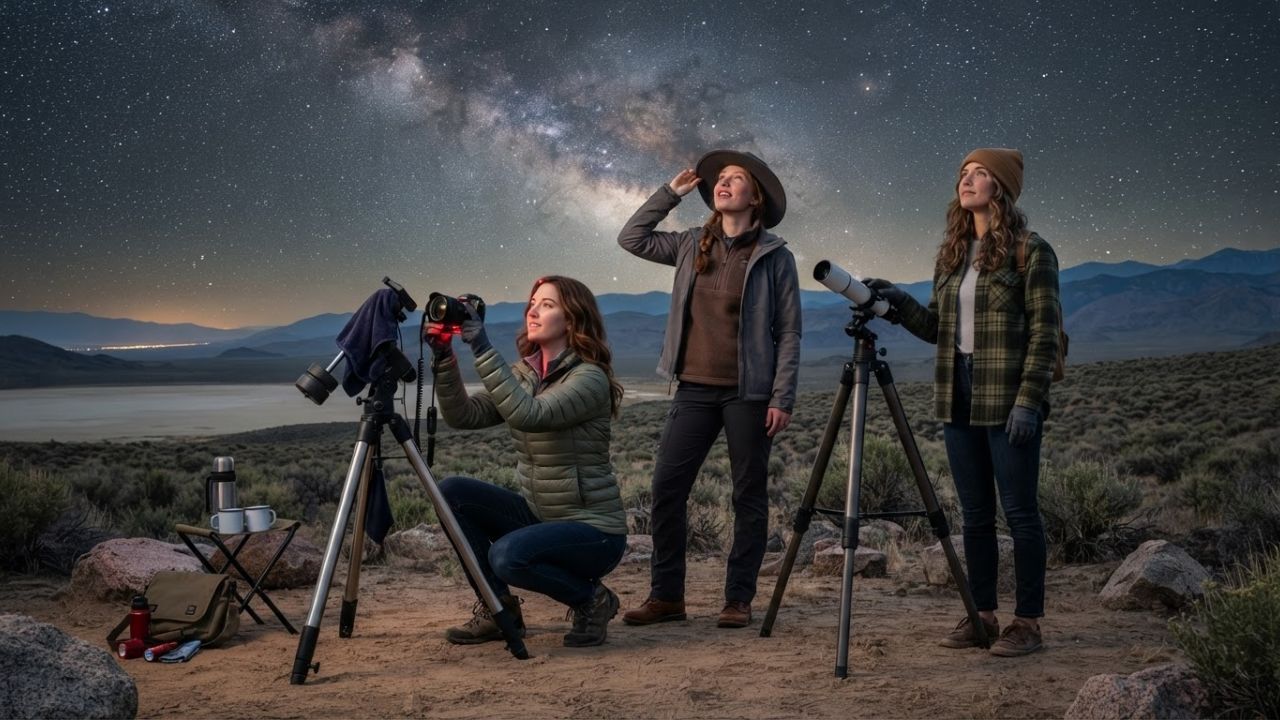
Image generated by AI
Seven rural Nevada municipalities have aligned to establish a regional celestial corridor, shielding isolated high-desert outposts against light pollution and delivering access to pristine Bortle Class 1 night skies. The coordinated conservation effort spans Caliente, Austin, Gerlach, Tonopah, Ely, Baker, and Boulder City, transforming the Great Basin and Black Rock Desert into premier destinations for astronomical research, long-exposure astrophotography, and night-sky travel.
Rural Nevada Municipalities Unify Isolated Outposts into a Cosmic Travel Sanctuary
As artificial illumination intensifies across major urban centers, pristine night skies have become a sought-after natural asset in North America. In response, seven Nevada municipalities—Tonopah, Ely, Baker, Gerlach, Austin, Caliente, and Boulder City—have enacted coordinated dark-sky preservation policies. Supported by Travel Nevada, these high-elevation communities leverage the region's natural Basin-and-Range geography to form an unpolluted celestial corridor across the Great Basin and Black Rock Desert.
The regional initiative marks a shift in Nevada's rural tourism strategy, expanding beyond casino gaming and traditional highway transit toward non-consumptive eco-tourism. Situated at elevations ranging from 5,000 to over 6,600 feet, these isolated outposts provide high atmospheric clarity, low relative humidity (frequently below 15%), and mountain shielding that obstructs 75% to 95% of light glare from Las Vegas, Reno, and Salt Lake City.
Technical Infrastructure and Astronomical Assets Across the Celestial Corridor
Each participating municipality contributes specialized facilities and topographical features to support deep-space visual observation and scientific research.
- Tonopah (Nye County): Sitting at an elevation above 6,000 feet, Tonopah features the Clair Blackburn Memorial Stargazing Park. The site is equipped with vibration-free concrete pads engineered specifically to isolate optical sensors during long-exposure astrophotography.
- Ely (White Pine County): Home to the historic Nevada Northern Railway, Ely operates the Star Train. The excursion carries travelers into pitch-black valleys while National Park Service rangers deliver cosmic narration and deploy mobile telescopes under unpolluted desert skies.
- Baker (White Pine County): Located at the entrance to Great Basin National Park, Baker is an International Dark Sky Community. It houses the Great Basin Observatory, home to the first research-grade robotic telescope located inside a U.S. National Park.
- Gerlach (Washoe County): Bordering the Black Rock Desert, Gerlach serves as the gateway to the Massacre Rim International Dark Sky Sanctuary, one of the darkest locations on Earth, where ambient starlight casts visible shadows across the desert terrain.
- Austin (Lander County): Perched at 6,600 feet in the Toiyabe Range along Highway US-50 ("The Loneliest Road in America"), Austin provides access to the Hickison Petroglyph Recreation Area, managed by the Bureau of Land Management, where 3,000- to 10,000-year-old rock art aligns with solar equinoxes and constellations.
- Caliente (Lincoln County): Surrounded by Cathedral Gorge State Park's bentonite spires and Kershaw-Ryan State Park's canyon walls, Caliente uses natural rock barriers to host nocturnal wildlife tours and night photography workshops.
- Boulder City (Clark County): Situated 30 miles from the Las Vegas Strip, Boulder City enforces strict municipal shielding ordinances to protect dark-sky activities, including night kayaking on Lake Mead and guided hikes through Sloan Canyon National Conservation Area.
| Municipality | Elevation & Topography | Primary Astronomical Feature / Attraction | Dark Sky Status |
|---|---|---|---|
| Tonopah | 6,000+ ft Alpine Plateau | Clair Blackburn Stargazing Park (Concrete Pads) | Municipal Dark Sky Ordinance |
| Ely | 6,400 ft High Valley | Nevada Northern Railway "Star Train" & NPS Rangers | Heritage Astro-Transit Hub |
| Baker | 5,300 ft Basin Edge | Great Basin Observatory (Research Robotic Telescope) | International Dark Sky Community |
| Gerlach | 3,900 ft Black Rock Playa | Gateway to Massacre Rim Dark Sky Sanctuary | Bortle Class 1 Sanctuary |
| Austin | 6,600 ft Toiyabe Range | Hickison Petroglyph Site (US-50 Celestial Corridor) | High-Elevation Transit Hub |
| Caliente | 4,400 ft Canyon Basin | Cathedral Gorge State Park & Amphitheaters | Protected Canyon Corridor |
| Boulder City | 2,500 ft Colorado Basin | Lake Mead Night Kayaking & Sloan Canyon Hikes | Fully Shielded Urban Oasis |
Municipal Lighting Engineering and Skyglow Control Blueprint
Maintaining a Bortle Scale Class 1 rating requires strict legal frameworks and light-footprint engineering across municipal boundaries. Participating Nevada towns enforce technical lighting ordinances to curb skyglow and atmospheric light scattering.
Regulations cap residential and commercial outdoor lighting at under 3,000 lumens per plot, mandating fully shielded, full cut-off fixtures that direct illumination downward. Municipalities are replacing traditional 4,000K white LEDs with warm amber LEDs rated at or below 2,200K Correlated Color Temperature. This transition limits short-wavelength blue light, which causes Rayleigh scattering in the atmosphere. Municipalities report grid energy reductions of 25% to 40% within 24 months of adopting these lighting standards.
| Technical Parameter | Engineering Standard | Operational & Environmental Impact |
|---|---|---|
| Max Lumen Output | <3,000 Lumens per residential plot | Controls total outdoor light emission |
| Fixture Shielding | 100% Full Cut-Off downward fixtures | Prevents upward light spill and skyglow |
| Color Temperature | ≤2,200K Amber LED (Replacing 4,000K) | Reduces blue-wave Rayleigh atmospheric scattering |
| Energy Efficiency | 25%–40% municipal power savings | Lowers utility overhead within 24 months |
| Night Sky Rating | Bortle Class 1 (Primal Dark Sky) | Preserves Milky Way visibility to the naked eye |
Economic Metrics of Nevada's Nocturnal Travel Economy
Dark-sky conservation has introduced a sustainable economic model for rural Nevada, diversifying local revenue beyond traditional mining, timber, and ranching sectors. Financial data indicates that nocturnal travelers generate higher per-day expenditures than daytime pass-through motorists.
Standard highway pass-through visitors generate an Average Daily Rate (ADR) of $75 to $90, primarily spent on fuel and quick convenience items. Nocturnal travelers generate an ADR of $185 to $240, reflecting increased spending on specialized lodging, local dining, and guided tours. Certified communities such as Baker and Tonopah report year-over-year lodging tax collection increases between 18% and 32%. Over 65% of overnight visitors carry specialized astrophotography equipment, investing $1,200 to $3,500 in camera sensors, star trackers, and thermal optics.
| Travel Segment | Average Daily Spend (ADR) | Lodging & Tax Impact | Primary Expenditure Categories |
|---|---|---|---|
| Standard Pass-Through | $75 – $90 / day | Baseline hotel occupancy | Fuel, quick-serve food, convenience items |
| Noctourist / Stargazer | $185 – $240 / day | +18% to +32% lodging tax | Boutique inns, regional dining, guided tours |
| Astrophotographer | $1,200 – $3,500 gear investment | Extended 3.8-night stays | Optics, camera outfitters, workshop tuition |
| Overland RV Traveler | $310 transit spend / vehicle | +42% campsite bookings | Private RV hookups, fuel, dining along US-50 |
Practical Traveler Logistics: Navigating Nevada's Dark Sky Routes
Navigating central Nevada's high-desert stargazing corridors requires planning around lunar cycles, vehicle preparation, and advance lodging bookings.
- Optimal Viewing Windows: Schedule dark-sky trips during the new-moon phase or within three days before and after. Check local weather for high-pressure atmospheric windows that bring low cloud cover and humidity below 15%.
- Self-Drive Overland Routes: Follow connected dark-sky circuits along Highway US-50 ("The Loneliest Road in America") and State Route 375 ("The Extraterrestrial Highway"). Self-drive RV travelers average 5 to 7 days on these loops, generating $310 in transit spend per vehicle across Lander and White Pine counties.
- Lodging & Glamping Booking Buffers: Demand for specialized accommodations—such as clear geodesic domes, mirrored cabins, and astro-lodging retreats near Baker and Caliente ($450 to $850 per night)—requires booking 4 to 8 months in advance, especially during meteor showers.
- Essential Gear: Carry red-lens headlamps or flashlights to preserve night vision (which takes 20 to 30 minutes to adapt). Pack heavy thermal outerwear for high-elevation night drops, sturdy camera tripods, and motorized star-trackers for long-exposure photography.
- Nocturnal Safaris & Extended Stays: Participate in expanding night activities, such as UV black-light scorpion safaris in Lincoln County (+35% tour growth) or night kayaking on Lake Mead. Participating in these tours extends average visitor stays from 1.5 nights to 3.8 nights.
Scotobiology, Indigenous Astro-Heritage, and Ecological Preservation
The establishment of dark-sky corridors supports scotobiology, the study of how darkness affects living systems. Protecting dark corridors safeguards native fauna biological cycles across the Great Basin. Unlit nocturnal environments have produced a 15% to 22% increase in native flora reproduction due to restored nocturnal pollination by moths, desert beetles, and bats. Dark corridors also protect hunting grounds for more than 18 native desert bat species, Barn Owls, and Great Horned Owls.
The celestial corridor also preserves cultural heritage. For thousands of years, the Western Shoshone (Newe) and Southern Paiute (Nuwuvi) tracked celestial movements to navigate seasonal migrations and agricultural cycles. At the Hickison Petroglyph Recreation Area near Austin, rock art dating back 3,000 to 10,000 years aligns with solstices and sol-equinox markers. Tribal councils collaborate with state and federal park authorities to host indigenous-led astro-heritage tours, connecting modern visitors to ancestral sky lore.
Frequently Asked Questions: Nevada Dark Sky Stargazing Corridor
What is the Bortle Dark-Sky Scale and why does it matter for Nevada travel?
The Bortle Scale measures night-sky brightness from Class 9 (inner-city glare) to Class 1 (pristine dark sky). Nevada’s celestial corridor preserves Class 1 environments, allowing travelers to see the Milky Way, zodiacal light, and distant celestial bodies with the naked eye.
Which towns make up Nevada's Dark Sky Celestial Corridor?
The seven unified municipalities are Tonopah, Ely, Baker, Gerlach, Austin, Caliente, and Boulder City. Together, they enforce dark-sky lighting ordinances and preserve dark transit corridors across the Great Basin and Black Rock Desert.
How far in advance should stargazers book lodging in rural Nevada?
Specialized stargazing lodging—including clear geodesic domes, historic inns, and dark-sky campsites near Baker and Caliente—should be booked 4 to 8 months in advance, particularly during new-moon weekends and peak meteor shower events.
What equipment is recommended for night-sky viewing in the high desert?
Travelers should bring red-lens headlamps to maintain night vision, thermal layers for cold high-altitude desert nights, sturdy tripods, wide-angle camera lenses, and motorized star-tracking mounts for long-exposure astrophotography.
Related Travel Guides
Disclaimer
This article is for informational and educational purposes only. It does not constitute legal, financial, or professional advice. While we strive to provide accurate and up-to-date information, travel policies, regulations, and conditions change rapidly. Always verify information with official sources before making travel decisions. Nomad Lawyer makes no representations about the accuracy, reliability, completeness, or suitability of the information provided. Readers should consult qualified professionals for advice specific to their circumstances. The views expressed in this article are those of the author and do not necessarily reflect the views of Nomad Lawyer.
Kunal K Choudhary
Co-Founder & Contributor
A passionate traveller and tech enthusiast. Kunal contributes to the vision and growth of Nomad Lawyer, bringing fresh perspectives and driving the community forward.
Learn more about our team →