
Netherlands Rail Disruption: Suspected Sabotage Paralyses Key Routes Serving Amsterdam and Schiphol
Netherlands Rail Disruption: Suspected Sabotage Paralyses Key Routes Serving Amsterdam and Schiphol

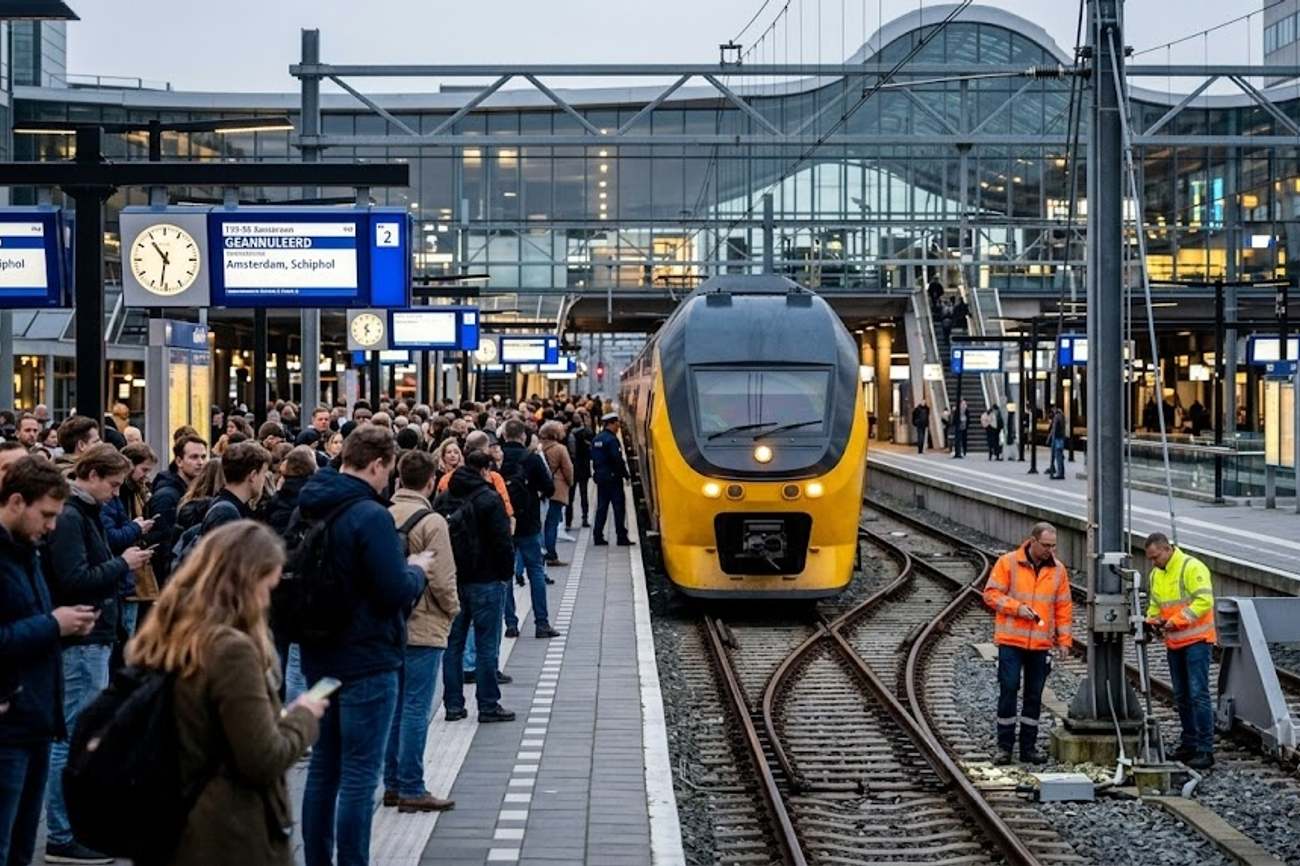
Image generated by AI
Dutch rail network reliability is already under systemic pressure, with ProRail projecting 508 to 573 impactful disruptions for 2026—a figure that threatens to breach the official stability threshold of 520. This baseline of instability transforms a single day of suspected sabotage into a symptom of a more volatile infrastructure environment. When 15 simultaneous disruptions hit key hubs like Amsterdam, Schiphol, Utrecht, Zwolle, Deventer, and Amersfoort, the system lacks the redundancy to absorb the shock, leaving thousands of passengers stranded without the usual replacement bus contingencies.
The Sabotage Metric: Infrastructure Vulnerability in Numbers
The recent disruption was not a localized failure but a coordinated strike against the network's physical integrity. Investigators discovered metal pipes, approximately 1.5 metres in length, deliberately attached to tracks at multiple locations. This specific method of interference targeted signaling and track-section functionality, which are the primary safety mechanisms of the Dutch rail system.
The scale of the impact is best understood through the volume of traffic these corridors support. Amsterdam Centraal currently processes roughly 200,000 travellers daily, a figure that is on a steep trajectory to reach 275,000 by 2030. When sabotage occurs at critical interchange points, the ripple effect is immediate. For example, an international Eurostar service from Amsterdam to Paris experienced delays due to operational restrictions at Amsterdam Centraal, illustrating how domestic infrastructure failures bleed into international transit corridors.
The vulnerability is compounded by the sheer density of the network. In 2025, NS recorded 16.5 billion passenger kilometres, representing a 2.9% year-over-year increase. This high utilization rate means that any removal of capacity—whether through a train striking an object near Steenwijk or the closure of level crossings—creates an immediate bottleneck that disrupts rolling stock and crew positioning across the entire national timetable.
Comparative Network Stability: 2025 vs. 2026
To understand if this event is an anomaly or part of a decline, we must compare current performance against historical benchmarks. ProRail has explicitly warned that it is likely to miss its 2026 reliability targets. An "impactful disruption" is defined by the operator as an event affecting a significant passenger volume or lasting for a prolonged duration.
The data shows a worrying trend of increasing instability. In 2025, the network exceeded its agreed disruption threshold for the first time in recent history. By September 1, 2026, the network had already logged 391 impactful disruptions.
| Metric | 2025 Data | 2026 Projections/Current | Variance/Trend |
|---|---|---|---|
| Impactful Disruptions | Exceeded Threshold | 508 - 573 (Projected) | Increasing Volatility |
| NS Passenger Kilometres | 16.5 Billion | +2.9% YoY Growth | Higher Load Stress |
| Schiphol Passenger Volume | 68.8 Million | 2.9% Annual Increase | Increased Gateway Pressure |
| Amsterdam Centraal Daily Volume | ~200,000 | 275,000 (by 2030) | 37.5% Projected Growth |
| Disruption Threshold | < 520 | Projected 508 - 573 | High Risk of Breach |
This data suggests that the Dutch rail system is operating at near-maximum capacity while simultaneously facing a decline in structural reliability. According to IATA, the integration of air and rail is essential for sustainable aviation, but this dependency creates a single point of failure for the 68.8 million passengers passing through Schiphol.
What This Means for Travelers
For the individual traveler, the data indicates that the "seamless" Dutch transit experience is currently high-risk. The failure of NS to provide replacement buses during the recent sabotage event signals a lack of surge capacity in the backup transport network.
If you are planning travel through the Netherlands in the coming quarters, apply the following data-driven strategies:
- Diversify Transit Options: Do not rely solely on rail for airport-to-city transfers. With Schiphol serving 300 destinations across five continents, a rail outage can trap tens of thousands of passengers. Pre-book private transfers or verify ride-share availability as a primary backup.
- Buffer International Connections: For those using the Eurostar or inter-city rail to reach Paris or Brussels, add a minimum 3-hour buffer to your itinerary. The current trend of "impactful disruptions" means that operational restrictions at Amsterdam Centraal can occur without warning.
- Monitor Real-Time Infrastructure Alerts: Because ProRail is projecting a breach of its stability threshold, daily checks of the NS app are no longer optional—they are essential.
- Avoid Peak Volume Hubs: Where possible, use regional stations rather than Amsterdam Centraal to avoid the congestion associated with its 200,000-passenger daily load.
Projecting the Risk Trajectory
The trajectory of the Dutch rail network is moving toward a "fragile" state. The intersection of ageing infrastructure and rising geopolitical tensions is creating a new risk profile. ProRail’s 2025 annual report explicitly identified sabotage and demonstrations as growing security threats. This shift suggests that future disruptions may not be the result of technical failure (maintenance) but of intentional interference (security).
When we correlate the 2.9% increase in passenger kilometres with the projected increase in impactful disruptions, we see a narrowing margin for error. The system is carrying more people on a network that is becoming less reliable. If the projected 573 disruptions for 2026 materialize, we can expect a permanent shift in traveler behavior, with a move toward decentralized transport and a decrease in the perceived reliability of the Schiphol-Amsterdam rail corridor.
For a broader view of how infrastructure instability affects European tourism, data from the World Travel & Tourism Council (WTTC) suggests that transport reliability is a primary driver of destination competitiveness. If the Netherlands cannot stabilize its rail network, it risks a decline in its efficiency rating compared to other European hubs.
FAQ: Dutch Rail Stability 2026
Will train ticket prices increase due to these disruptions? While disruptions themselves don't typically raise fares, the cost of infrastructure repair and increased security measures often leads to long-term tariff adjustments to cover operational deficits.
Is it still safe to travel by train in the Netherlands? Yes. ProRail confirmed that despite the sabotage attempts and one train striking an object in Steenwijk, no injuries were reported. The issues are related to delays and reliability, not passenger safety.
Which routes are most susceptible to these trends? High-traffic corridors connecting Schiphol Airport, Amsterdam Centraal, and Utrecht are the most vulnerable due to their role as critical interchange points for both domestic and international traffic.
Should I book my Eurostar tickets in advance? Yes, but ensure you have flexible insurance. While booking early secures your seat, the current trend of operational restrictions at Amsterdam Centraal makes travel insurance essential for potential delays.
The Dutch rail network is a masterclass in efficiency operating on the edge of exhaustion.
#NetherlandsRailSabotage2026 #ProRailReliabilityMetrics #SchipholTransitVolatility #NSPassengerKilometreGrowth #DutchInfrastructureRisk
Related Travel Guides
Disclaimer
This article is for informational and educational purposes only. It does not constitute legal, financial, or professional advice. While we strive to provide accurate and up-to-date information, travel policies, regulations, and conditions change rapidly. Always verify information with official sources before making travel decisions. Nomad Lawyer makes no representations about the accuracy, reliability, completeness, or suitability of the information provided. Readers should consult qualified professionals for advice specific to their circumstances. The views expressed in this article are those of the author and do not necessarily reflect the views of Nomad Lawyer.
Raushan Kumar
Founder & Lead Developer
Full-stack developer with 11+ years of experience and a passionate traveller. Raushan built Nomad Lawyer from the ground up with a vision to create the best travel and law experience on the web.
Learn more about our team →