
Netherlands Is Now a Gateway for Riverside Cruises and More River Tourism Across Other European Countries
Netherlands Is Now a Gateway for Riverside Cruises and More River Tourism Across Other European Countries

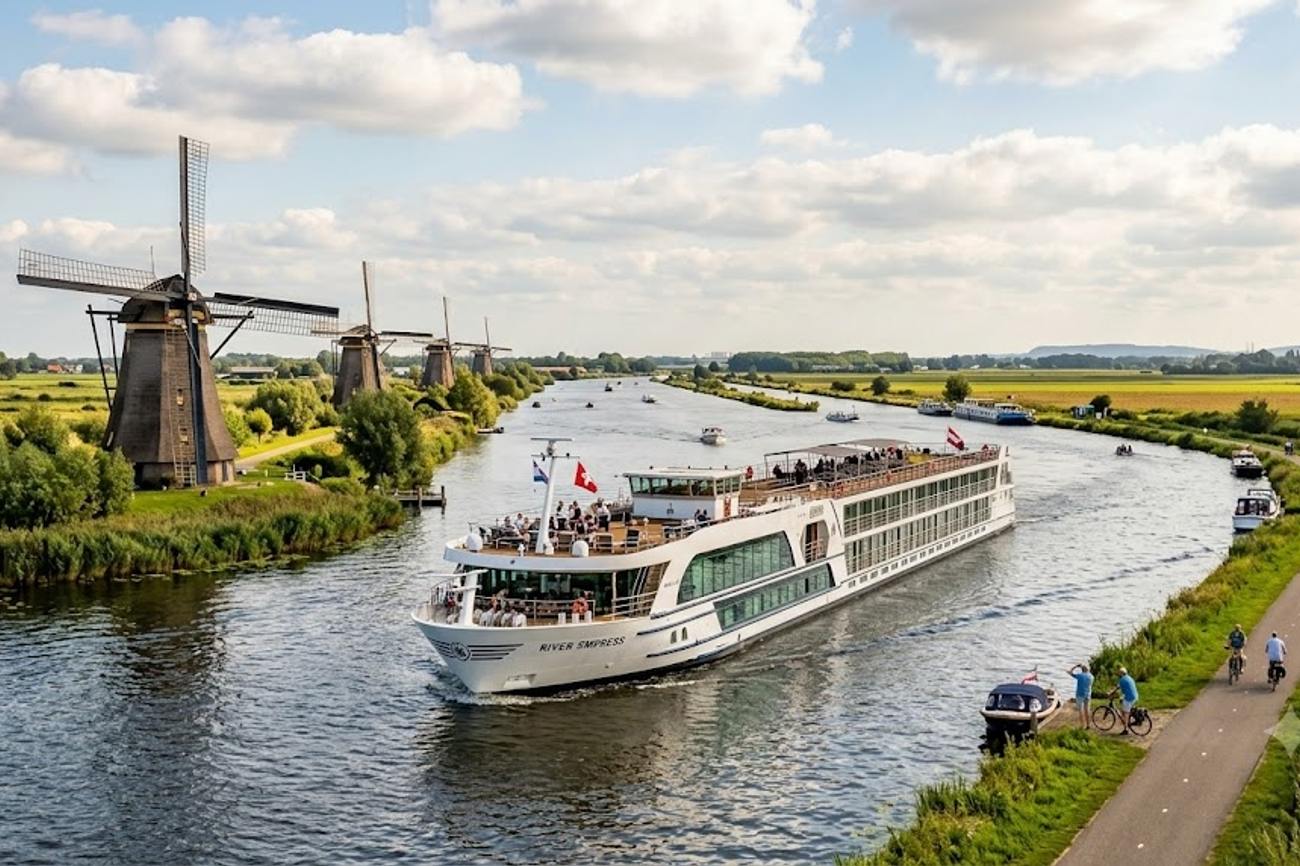
Image generated by AI
[Amsterdam, September 17, 2026] — A high-capacity luxury river tourism itinerary is currently operational, linking the Netherlands, Germany, France, and Switzerland via a 12-day voyage from Amsterdam to Basel. The route utilizes a fleet of three all-suite vessels operating across the Rhine, Moselle, Danube, Rhône, and Saône river systems.
The program provides a streamlined multi-country transit for premium travelers, with a confirmed departure scheduled from October 28 to November 8, 2026. While the itinerary is an established commercial product rather than a new government initiative, it operates within a surging European tourism market that saw 747 million international arrivals in 2024—a 5% increase over 2023 and 1% above 2019 levels.
The Logistics of the Amsterdam-Basel Route
The itinerary is structured to maximize exposure to German river ports, which comprise the largest portion of the journey. The voyage begins with a two-day embarkation period in Amsterdam before moving into a dense sequence of German stops.
The verified itinerary includes the following calls:
- Netherlands: Amsterdam (Days 1 and 2)
- Germany: Cologne, Koblenz (repeated calls), Bernkastel, Trier, Cochem, Rüdesheim, Mannheim, Speyer, and Breisach
- France: Strasbourg (Day 10)
- Switzerland: Basel or Huningue (Day 12 endpoint)
This specific geographic concentration emphasizes the Rhine and Moselle rivers as the primary corridors for the luxury segment. The journey concludes in Basel, serving as the primary disembarkation gateway for passengers transitioning to Swiss rail networks or local hotel extensions.
Market Drivers and Accommodation Data
The availability of this itinerary aligns with a broader upward trend in European Union hospitality. According to official reporting, EU accommodation recorded 3.08 billion nights in 2025, representing a 2% increase over 2024. This growth is heavily driven by international demand; foreign guests accounted for 46.1 million of the 61.5 million additional nights recorded in 2025, roughly 75% of the total increase.
Data from the first half of 2026 indicates continued momentum, with 1.321 billion nights recorded, a 1.7% increase. International visitors specifically represented 48.9% of nights in H1 2026, with their stay frequency rising 2.5% compared to a 0.9% increase for domestic travelers. Hotels continue to dominate the sector, providing 1.9 billion nights, or 63% of the total EU accommodation supply.
Practical Traveler Advisory and Strategic Insights
For passengers booking this or similar river cruises, the primary advantage is the consolidation of four national destinations into a single booking. However, the "all-inclusive" nature of the cruise does not exempt travelers from strict regulatory requirements.
Passport and Visa Compliance Non-EU citizens must adhere to European Union (EU) entry regulations. Passports must have been issued within the last ten years and remain valid for at least three months beyond the intended date of departure from the Schengen Area. Travelers must also ensure they do not exceed the 90-day limit within any 180-day rolling period.
Passenger Rights and Protections While these cruises fall under general EU passenger rules, there are critical distinctions regarding remedies. Unlike ferry passengers, river cruise guests may not have the same automatic rights to reimbursement or rerouting in the event of certain operational disruptions. Travelers are advised to verify their specific insurance coverage for itinerary changes.
The Netherlands serves as a primary hub for European river tourism, leveraging its strategic waterways to connect passengers to the Rhine and Danube. Travelers can coordinate their arrivals and local transit through the Netherlands Board of Tourism & Conventions, ensuring seamless transitions from international airports to cruise terminals.
Border and Transit Realities Although the route traverses Schengen countries, passengers should remain aware that temporary internal border controls can be implemented. Valid travel documents must be carried at all times. Furthermore, those booking wider itineraries that include the Danube may encounter non-Schengen states, necessitating separate visa checks and documentation.
Operational Risks and Future Planning
The stability of the Amsterdam-to-Basel route remains subject to environmental variables. Water levels and weather conditions in the Rhine and Moselle systems can force operators to alter ports of call on short notice. This can create a ripple effect for passengers who have booked independent onward connections, such as flights from Basel or rail transfers in Strasbourg.
Travelers are urged to maintain flexible arrangements for their final disembarkation. Because the itinerary relies on specific river depths and navigational safety, the "official" port list is subject to real-time operational adjustments.
FAQ: European River Tourism 2026
Do I need a special visa for the Amsterdam-to-Basel cruise? No new visa rules have been implemented for this route. However, non-EU citizens must follow standard Schengen Area requirements, including passport validity of three months post-departure and a maximum stay of 90 days per 180-day period.
What happens if the ship cannot reach a scheduled port like Strasbourg? River cruises are subject to water levels and weather. If a port is bypassed, passengers should refer to their contract for disruption remedies. Note that river cruise passengers have fewer reimbursement rights than those on traditional ferries.
Are there specific requirements for non-EU passports? Yes. Passports must be issued within the last 10 years and be valid for at least three months after your planned exit from the EU. You may also be asked to provide proof of sufficient funds and onward travel.
Can I extend my stay in Basel after the 12-day trip? Yes, Basel serves as the scheduled endpoint on day 12. Travelers can use this gateway to transition to Swiss hotels or the national rail system, provided their Schengen visa/entry permit allows for the additional days.
Operational status remains subject to river conditions and vessel availability.
Related Travel Guides
- Paraguay Catalyses Alongside Brazil and More South American Countries as Strong Passports Rewrite Travel Rules Worldwide
- Bahamas Joins Panama and Others as Croatia Cruise Tourism Sector Posts 13.8% Passenger Growth in 2026
- Bangkok Transport Ministry Launches 15-Pier Electric Boat Route to Boost Canal Tourism
Disclaimer
This article is for informational and educational purposes only. It does not constitute legal, financial, or professional advice. While we strive to provide accurate and up-to-date information, travel policies, regulations, and conditions change rapidly. Always verify information with official sources before making travel decisions. Nomad Lawyer makes no representations about the accuracy, reliability, completeness, or suitability of the information provided. Readers should consult qualified professionals for advice specific to their circumstances. The views expressed in this article are those of the author and do not necessarily reflect the views of Nomad Lawyer.
Kunal K Choudhary
Co-Founder & Contributor
A passionate traveller and tech enthusiast. Kunal contributes to the vision and growth of Nomad Lawyer, bringing fresh perspectives and driving the community forward.
Learn more about our team →