
Macao Expands Heritage Tourism Beyond Its Casino Districts
Macao Expands Heritage Tourism Beyond Its Casino Districts

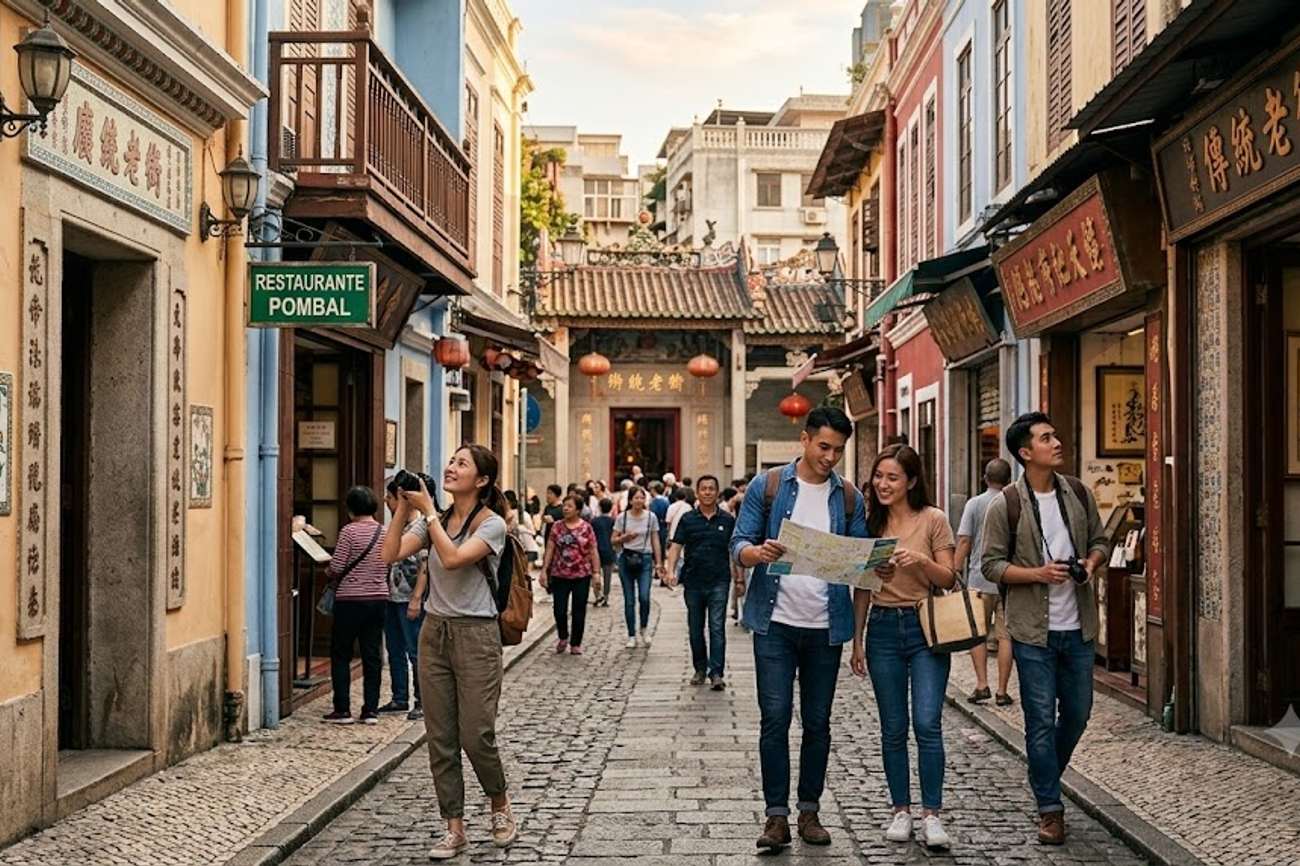
Image generated by AI
12 designated shipyards, classified as official cultural heritage in 2018, now serve as the anchor for a strategic pivot in Macao’s tourism economy. This shift represents a calculated effort by the Macao Government Tourism Office to diversify the territory's appeal beyond the high-density gaming corridors of the Cotai Strip, moving toward a model of community-based, maritime heritage tourism. By transforming industrial relics into active cultural hubs, Macao is attempting to solve a long-standing logistical problem: the extreme concentration of visitors in integrated resorts, which leaves vast swathes of the territory's authentic history underutilized.
The Strategic Pivot to Maritime Heritage
The revitalization of the Lai Chi Vun Shipyards is not merely a preservation project; it is a spatial strategy to redistribute tourist traffic. For decades, Macao’s identity was bifurcated between the UNESCO-protected historic center and the neon-lit luxury of Cotai. Coloane Village, historically a secluded fishing community, provides a third, lower-density alternative that balances the visitor experience.
The shipyards, which saw their peak expansion during the latter half of the 20th century, were once the engine of Macao's maritime industry. The government's approach to these sites avoids the "museum effect"—where buildings are preserved as static, empty shells. Instead, the 3,000 square meters of revitalized plots opened in 2023 have been engineered as multipurpose spaces. These areas now host rotating exhibitions, artisan markets, and workshops, ensuring that the site remains a living part of the local economy rather than a dormant monument.
This transition is supported by the broader Macao Government Tourism Office, which is actively promoting the village's narrow lanes, waterfront settings, and traditional eateries as a necessary counterbalance to the artificial environments of the integrated resorts.
Mapping the Coloane Cultural Corridor
The current tourism layout in Coloane is designed as a compact, walkable circuit that links maritime industry with spiritual and culinary traditions. The proximity of these sites allows for a high-density cultural experience within a low-density physical environment.
| Heritage Category | Key Site/Asset | Primary Function/Significance |
|---|---|---|
| Industrial | Lai Chi Vun Shipyards | 12 heritage-classified plots; 3,000sqm of active cultural space |
| Religious | Chapel of St Francis Xavier | Portuguese colonial ecclesiastical history |
| Spiritual | Tin Hau & Tam Kong Temples | Chinese maritime faith and community protection |
| Infrastructure | Coloane Pier | Historical gateway for the fishing economy |
| Gastronomic | Traditional Local Eateries | Preservation of fishing-community culinary identity |
The integration of these sites creates a narrative arc for the traveler: starting with the industrial scale of the shipyards, moving through the spiritual centers of the temples, and concluding with the sensory experience of the village's traditional noodle shops and seafood eateries.
Expert Analysis: The "Contrast Economy" of Macao
From a logistical and market perspective, the development of Coloane is an exercise in creating a "contrast economy." The travel industry recognizes that luxury travelers staying in the massive resorts of Cotai often experience "resort fatigue"—a psychological saturation caused by over-stimulating, controlled environments. By aggressively promoting the "quieter" experience of Coloane, Macao is extending the average length of stay for international visitors.
For travelers booking a trip to Macao, the direct consequence is a shift in how the itinerary is structured. The government's 2026 policy direction specifically emphasizes "immersive cultural experience routes." This means the transition from a luxury hotel in Cotai to the Lai Chi Vun Shipyards is being framed as a curated journey between two extremes of Macao's identity: the hyper-modern and the ancestral.
To diversify its economy, the Macao government is promoting the Historic Centre of Macao, a UNESCO World Heritage site that showcases a unique blend of Portuguese and Chinese architecture. Visitors can explore these cultural landmarks through curated itineraries provided by the Macao Government Tourism Office.
The pricing pressure this creates is subtle but significant. As the government reconverts historical venues into "immersive" sites, we can expect a rise in boutique, heritage-led tourism services. This diversifies the revenue stream away from gaming taxes and toward sustainable, community-based commerce. By linking the UNESCO World Heritage status of the city center with the maritime heritage of Coloane, Macao is positioning itself as a comprehensive cultural destination rather than a gambling hub. This is a defensive move against regional competition, ensuring that Macao remains relevant to the "cultural traveler" demographic who typically avoids casino-centric destinations.
Key Takeaways
- Industrial Transformation: 3,000 square meters of the Lai Chi Vun Shipyards were reopened in 2023, converting 12 heritage-classified shipyards into active exhibition and market spaces.
- Diversification Strategy: The Macao government's 2026 policy focuses on reconverting historical venues into immersive routes to reduce reliance on the gaming sector.
- Logistical Synergy: Coloane Village serves as a low-density atmospheric counterbalance to the high-density integrated resorts of Cotai.
- Integrated Circuit: The visitor experience is designed as a walkable loop connecting the shipyards, Coloane Pier, and traditional temples (Tin Hau and Tam Kong).
- Cultural Anchors: The strategy leverages the 2005 UNESCO recognition of the historic center to validate the maritime heritage of the southern islands.
FAQ: Coloane Maritime Tourism 2026
How do I get to the Lai Chi Vun Shipyards from Cotai? Coloane is easily accessible from the Cotai Strip via local transport or taxis. While the village center is highly walkable, visitors are encouraged to use the shipyards as a starting point before exploring the surrounding temples and pier.
Is Coloane Village different from the main Macao city center? Yes. While the city center focuses on the interaction between Portuguese and Chinese urban architecture, Coloane is centered on maritime heritage, fishing village traditions, and a slower, nature-oriented pace.
What are the must-visit sites in Coloane besides the shipyards? The Chapel of St Francis Xavier, Tin Hau Temple, and Tam Kong Temple are primary landmarks. Visitors should also explore the local traditional eateries that specialize in dishes tied to the area's fishing history.
When is the best time to visit the revitalized shipyards? Since the 3,000 square meter area hosts rotating exhibitions and markets, visitors should check the latest schedules from the Macao Government Tourism Office to align their visit with specific cultural performances or workshops.
The transition from the baccarat table to the shipyard dock is the new blueprint for the Macao experience.
Tags: Lai Chi Vun Shipyards, Coloane Village, Cotai Strip, Macao Tourism Policy 2026, Macao Government Tourism Office
Related Travel Guides
- Trinidad And Tobago Aligns With Jamaica And More Countries As Aruba Tourism Surges 11% Through Strong Branding And Sustainable Growth
- Saudi Arabia Entry Rules Update is Now a Thing for Better Travel as E-Visa Checks Arrive and KSA Tourist Permit Comes Next
- South Moravia Brings Vineyard Stays Into Czechia’s Wine Country
Disclaimer
This article is for informational and educational purposes only. It does not constitute legal, financial, or professional advice. While we strive to provide accurate and up-to-date information, travel policies, regulations, and conditions change rapidly. Always verify information with official sources before making travel decisions. Nomad Lawyer makes no representations about the accuracy, reliability, completeness, or suitability of the information provided. Readers should consult qualified professionals for advice specific to their circumstances. The views expressed in this article are those of the author and do not necessarily reflect the views of Nomad Lawyer.
Preeti Gunjan
Contributor & Community Manager
A passionate traveller and community builder. Preeti helps grow the Nomad Lawyer community, fostering engagement and bringing the reader experience to life.
Learn more about our team →