
Nepal Travel Alert 2026: Rasuwa Flash Floods Cut Off Langtang Trek and Tibet Border Route
Severe flash floods in Nepal's Rasuwa district have disrupted access to Langtang National Park and the Tibet border, leaving 384 tourists out of contact.

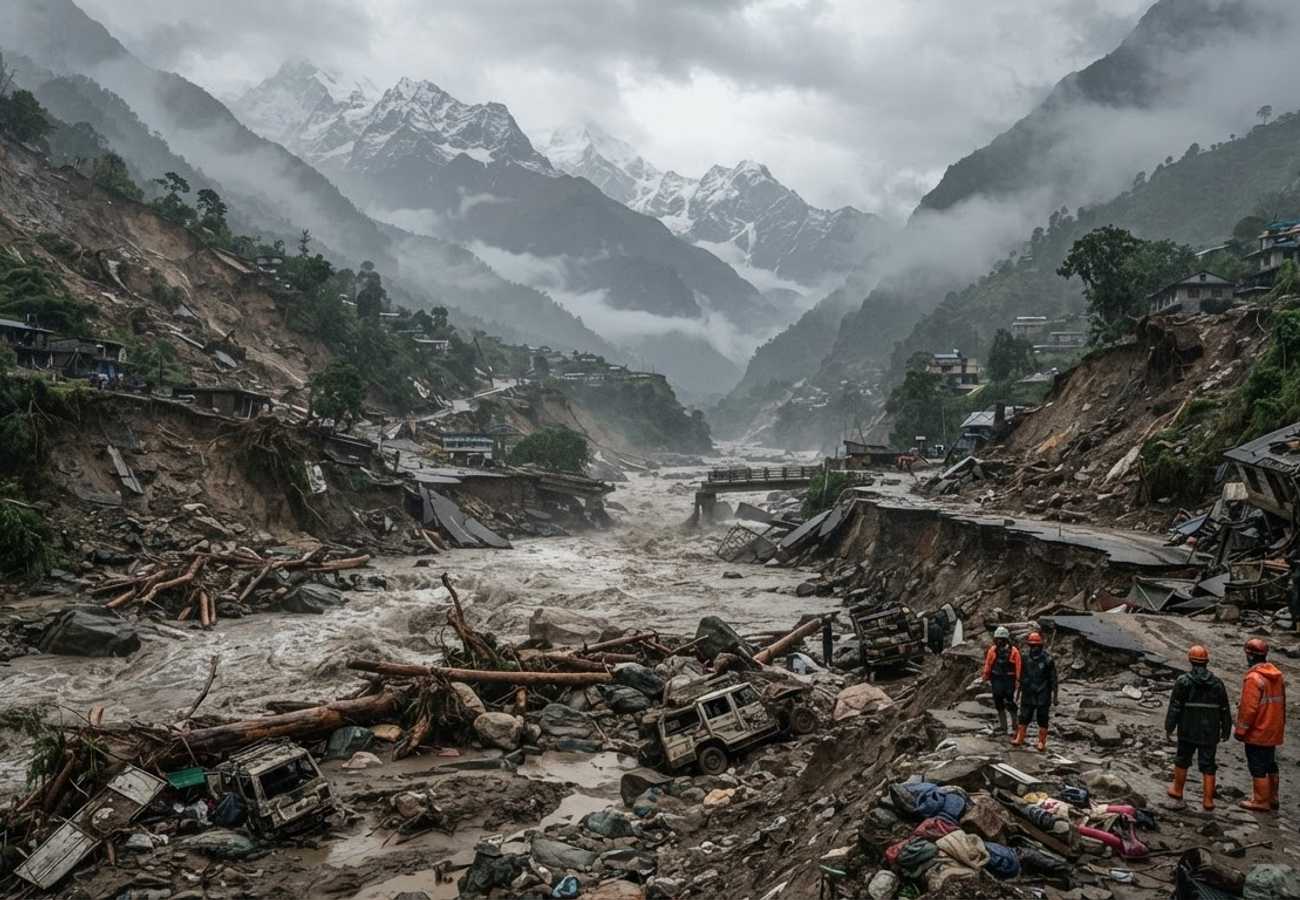
Image generated by AI
A catastrophic surge of water and debris in Nepal’s northern Rasuwa district on August 26, 2026, has severed critical Himalayan transport arteries, leaving 384 international and domestic tourists out of contact and halting overland travel to Tibet.
The disaster struck the Rasuwa region with sudden intensity, impacting the primary corridors used for high-altitude trekking and cross-border pilgrimage. As rescue operations struggle against unstable terrain and ongoing monsoon rains, the region faces a logistical crisis that threatens the upcoming autumn tourism peak.
Bhote Koshi River Surge Devastates Rasuwa Border Zone
Reports indicate that a massive volume of water entered Nepal from the Tibetan plateau on August 26, triggering a flash flood within the Bhote Koshi river system. This surge tore through the Rasuwa district, specifically targeting the area surrounding the Rasuwagadhi Kerung border crossing. Local footage and social media reports depict torrents of mud and debris smashing into roadside settlements and commercial hubs located within the narrow valley.
The impact was most severe in the gateway towns of Syabrubesi and Timure. These settlements serve as the primary staging points for adventurers entering Langtang National Park and pilgrims embarking on overland journeys to Mount Kailash in Tibet. The sheer force of the flood undermined significant sections of the road network, swept away vehicles, and completely severed power and telecommunications infrastructure across large portions of the corridor.
Casualty figures compiled on August 26 show that the death toll in Rasuwa and adjacent districts has already reached dozens, with a significant number of individuals still listed as missing. Emergency response teams are currently hampered by blocked roadways and precarious slopes, while the persistence of the monsoon season continues to impede aerial and ground search efforts.
Geological observers suggest the event may have been caused by a Glacial Lake Outburst Flood (GLOF) or a similar high-altitude water release in the Himalayas. While formal scientific confirmation is pending, satellite imagery and the rapid behavior of the river suggest a sudden release of water from a higher elevation, a pattern seen in previous disasters affecting this specific border zone.
384 Travelers Reported Out of Contact
The timing of the flood has created a significant humanitarian and diplomatic concern, as the Rasuwa corridor is a primary seasonal artery for tourism. According to data provided by tourism agencies, at least 384 tourists are currently classified as "out of contact." This group includes both foreign nationals and Nepali citizens who were traveling toward Gosainkunda or utilizing the Kerung road to reach the Tibetan plateau.
Most of these uncontactable individuals were traveling with organized trekking or pilgrimage groups. Reports indicate they were in transit between Kathmandu, Syabrubesi, and the high-altitude lakes of Gosainkunda when the communications blackout occurred.
Several governments have issued consular notices citing the 384-person figure and advising their citizens to avoid all non-essential travel to the affected districts. Those already present in the region are being instructed to shelter in place where safe and maintain contact with their tour operators via any available means.
Industry experts clarify that "out of contact" status does not automatically imply injury or death. Many lodges in the Langtang region operate with minimal power and sporadic mobile signals even during peak conditions; the total collapse of local infrastructure has simply rendered these travelers unreachable.
Langtang Trekking Access and Infrastructure Collapse
The flood has caused severe disruptions to the Pasang Lhamu Highway, the only road access to Syabrubesi and the starting point for the Langtang Valley trek. As of August 26, the road is largely impassable due to a combination of landslides, washed-out pavement, and destroyed bridges.
Professional trekking operators are now advising that all planned expeditions to the Langtang region be postponed. While the high-altitude trails within the interior of Langtang National Park may remain intact, the inability to safely reach the trailhead from Kathmandu makes the trek currently impossible for most.
This setback is particularly significant given that Langtang had successfully rebuilt its infrastructure and lodge network following the 2015 earthquake, returning to its status as one of Nepal's top three trekking destinations. The 2026 floods have reintroduced critical concerns regarding bridge stability and the safety of river-adjacent trails in the lower valley.
Recurrent Failures of the Tibet Trade and Pilgrimage Route
The Rasuwagadhi Kerung crossing is one of only three major overland links between Nepal and China, and it has become a site of repeated climate-driven failure. This is not an isolated event; in July 2025, a similar flood destroyed the Miteri Bridge at Rasuwagadhi, causing a prolonged closure.
Although the border had returned to limited operational capacity by early 2026, the latest surge in the Bhote Koshi system has once again compromised the corridor. Logistics experts note that as of late July 2026, none of the three main China-Nepal trade points were functioning at full capacity due to previous landslides. This new disaster is expected to lead to further trade delays and the total suspension of overland tourist traffic to Tibet.
Pilgrimages to Mount Kailash are the most heavily impacted tourism product. Operators are now forced to either postpone these trips or divert clients to alternative international gateways, pending a full structural assessment of the roads and bridges on both sides of the border.
Guidance for Autumn 2026 Travelers to Nepal
For those planning to visit Nepal during the autumn season, official advisories updated on August 26 suggest avoiding the highways leading to the Rasuwa corridor. Travelers are urged to review their itineraries and prepare for significant rerouting or destination changes.
Experts recommend that anyone planning trips to Langtang, Gosainkunda, or Manaslu maintain daily contact with reputable local agencies. For those already in the country, contingency planning is essential. This includes:
- Adding buffer days to itineraries to account for road closures.
- Maintaining flexible flight and hotel bookings.
- Considering alternative regions, such as the Annapurna circuit, which can be accessed via Pokhara rather than the damaged Rasuwa roads.
- Ensuring travel insurance explicitly covers "natural hazards," emergency evacuation, and trip interruption in high-mountain zones.
The vulnerability of the Rasuwa corridor serves as a stark reminder of the increasing volatility of Himalayan travel during the monsoon transition.
Related Travel Guides
Disclaimer
This article is for informational and educational purposes only. It does not constitute legal, financial, or professional advice. While we strive to provide accurate and up-to-date information, travel policies, regulations, and conditions change rapidly. Always verify information with official sources before making travel decisions. Nomad Lawyer makes no representations about the accuracy, reliability, completeness, or suitability of the information provided. Readers should consult qualified professionals for advice specific to their circumstances. The views expressed in this article are those of the author and do not necessarily reflect the views of Nomad Lawyer.
Preeti Gunjan
Contributor & Community Manager
A passionate traveller and community builder. Preeti helps grow the Nomad Lawyer community, fostering engagement and bringing the reader experience to life.
Learn more about our team →