
Navy Aircraft Carriers Face Critical Readiness Crisis in 2026
Three U.S. Navy aircraft carriers are simultaneously unavailable in 2026, including the USS Gerald R. Ford, straining global deterrence operations during heightened Iran tensions and limiting deployment capacity.

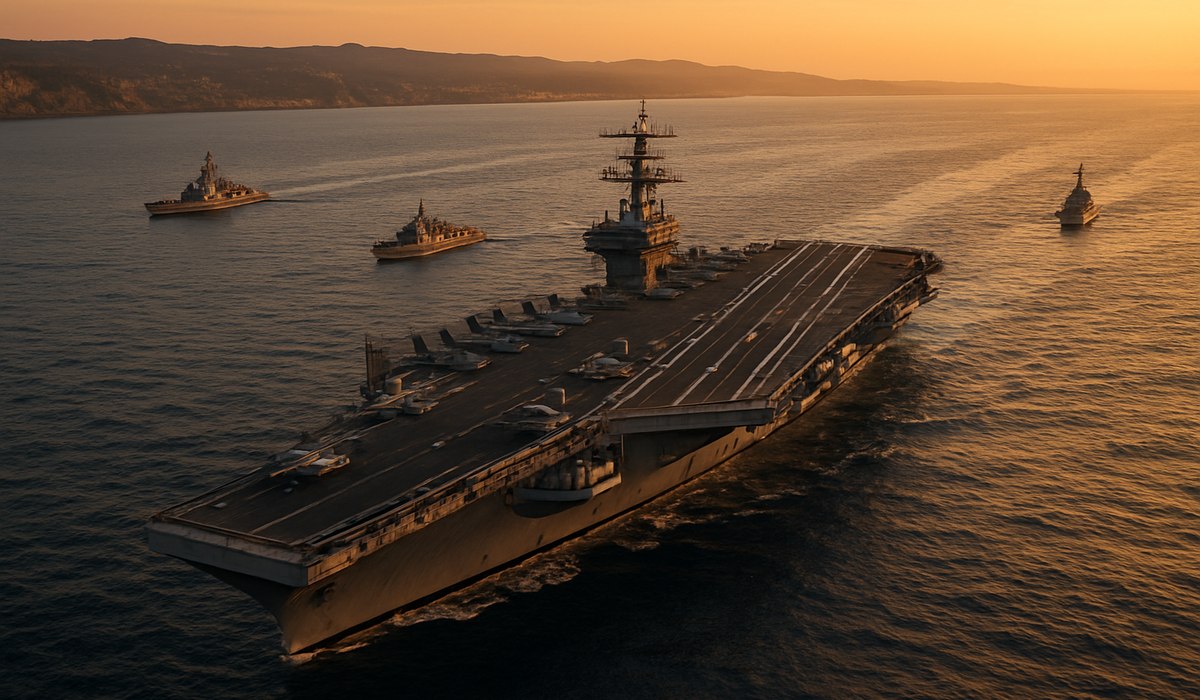
Image generated by AI
U.S. Navy Aircraft Carriers Face Unprecedented Operational Strain
The U.S. Navy confronts a critical readiness crisis as three aircraft carriers—including its most advanced—face simultaneous unavailability in 2026. The USS Gerald R. Ford sustained fire damage during combat deployment in the Middle East, the USS Harry S. Truman is entering a multi-year refueling overhaul, and the USS John C. Stennis remains deep in maintenance. This convergence directly limits American global deterrence capabilities during escalating Iran tensions and reduces the Navy's ability to respond rapidly to emerging crises.
The situation underscores the strain on naval readiness when maintenance cycles overlap unpredictably. With only eight carriers operationally available from the Navy's eleven-carrier fleet, deployment schedules have compressed significantly, forcing extended operational cycles that accelerate wear on remaining assets.
Three Carriers Out of Commission
The USS Gerald R. Ford, the Navy's newest and most technologically advanced aircraft carrier, arrived in Split, Croatia on April 1, 2026, following a March 12 fire in its laundry spaces during combat deployment. The incident injured sailors and forced immediate operational withdrawal despite the carrier having completed only nine months of an originally planned six-to-seven-month deployment cycle. The Ford-class carrier had already experienced persistent systems failures, including plumbing malfunctions and cumulative wear from extended Mediterranean and Middle Eastern operations.
The USS Harry S. Truman, a Nimitz-class carrier commissioned in 1998, is scheduled to enter its Refueling and Complex Overhaul (RCOH) in June 2026—a multi-year maintenance period extending until at least 2029. This comprehensive overhaul refuels the ship's nuclear reactors and modernizes combat systems, a necessity for carriers designed for 50-year service lives requiring mid-cycle refueling at the 25-year mark.
The USS John C. Stennis has remained offline since entering RCOH in May 2021 at Newport News Shipbuilding, the only U.S. facility capable of nuclear carrier refueling operations. The carrier continues undergoing the complex modernization process necessary to extend its operational lifespan.
Learn more about U.S. Navy operations and global presence from official defense sources.
Impact on U.S. Naval Readiness
The simultaneous unavailability of three navy aircraft carriers creates cascading operational consequences across the entire fleet. With approximately 11 carriers on paper and only eight available for deployment, the Navy faces compressed scheduling that extends operational cycles beyond sustainable levels. Commanders are forced to maintain carrier strike groups at sea longer than planned, accelerating wear on remaining ships and increasing crew fatigue.
This readiness gap directly impacts deterrence operations in contested regions. During the ongoing campaign against Iran, reduced carrier availability limits the Navy's forward presence and response flexibility. The delay in planned maintenance for other vessels waiting in the overhaul queue compounds systemic strain. Ships operating beyond their maintenance windows accumulate unaddressed technical issues, risking unexpected failures during critical operations.
The RCOH process itself, spanning four to five years per carrier, represents one of the most complex industrial undertakings in the U.S. defense system. Each overhaul involves nuclear reactor refueling, structural repairs, combat systems modernization, and extensive testing before returning to active duty.
The USS Gerald R. Ford's Advanced Capabilities
The USS Gerald R. Ford represents a generational leap in carrier design and operational capacity. Commissioned in 2017, this Ford-class carrier generates significantly higher sortie rates than older Nimitz-class predecessors while requiring several hundred fewer crew members—reducing operational costs and logistics burden.
The carrier operates an air wing of approximately 75 aircraft, including F/A-18E/F Super Hornets, EA-18G Growlers, E-2D Hawkeyes, and MH-60 helicopters. Its strike group supports more than 5,000 personnel during deployment, projecting substantial power projection capabilities globally. The Ford-class design incorporates advanced electromagnetic systems, improved damage control mechanisms, and enhanced sustainability features designed for longer deployment cycles without crew rotation.
The March 2026 fire, while contained, exposed vulnerabilities in extended deployment scenarios. The incident occurred after nine months at sea during an operations schedule that had already pushed beyond optimal maintenance windows, highlighting the risks of sustaining force commitments without adequate downtime.
Timeline for Fleet Recovery
The navy aircraft carriers' recovery timeline extends across multiple years, with staggered readiness timelines creating persistent gaps in available capacity. The USS Gerald R. Ford's repairs in Split are expected to require several weeks minimum, though the full extent of fire damage assessment continues. Return to active operations likely requires additional training and systems certification.
The USS Harry S. Truman's entry into RCOH in June 2026 initiates a three-to-four year overhaul extending well into 2029 or beyond. This timeline reflects the comprehensive nature of nuclear refueling and modernization required for mid-life carrier maintenance.
The USS John C. Stennis, already five years into RCOH since May 2021, faces an indefinite completion date pending the complexity of structural and systems work. Newport News Shipbuilding must balance the Stennis overhaul with the Truman's incoming maintenance needs, potentially extending both timelines given limited facility capacity.
Other carriers will require planned maintenance as they complete operational cycles, likely creating additional availability gaps through 2027-2028. This forecast suggests sustained pressure on fleet readiness for the next two years minimum.
Key Data Table: U.S. Navy Aircraft Carrier Status 2026
| Carrier | Class | Commissioned | Current Status | Expected Return |
|---|---|---|---|---|
| USS Gerald R. Ford | Ford | 2017 | Fire damage/repairs (Split, Croatia) | Q2/Q3 2026 |
| USS Harry S. Truman | Nimitz | 1998 | Entering RCOH June 2026 | 2029+ |
| USS John C. Stennis | Nimitz | 1995 | In RCOH since May 2021 | TBD 2027-2028 |
| USS Dwight D. Eisenhower | Nimitz | 1985 | Operationally available | Currently deployed |
| USS Carl Vinson | Nimitz | 1982 | Operationally available | Currently available |
| USS Abraham Lincoln | Nimitz | 1989 | Operationally available | Currently deployed |
| USS George Washington | Nimitz | 1992 | Operationally available | Currently available |
| USS John C. Stennis (alt) | Nimitz | 1995 | Maintenance period | Post-2027 |
| Fleet Total | 11 carriers | Various | 8 available maximum | Improves 2029+ |
| Global Coverage | — | — | Strained | Improves 2029+ |
What This Means for Travelers
Though aircraft carrier operations occur primarily in military and government contexts, carrier readiness affects broader geopolitical stability that influences travel security and international operations:
-
Regional Travel Advisories: Reduced naval presence in contested regions like the Persian Gulf may shift State Department travel advisories. Monitor your destination's current threat level if traveling to Middle Eastern countries or regional maritime zones.
-
Commercial Shipping Routes: Navy carrier strike groups protect critical commercial shipping corridors. Reduced carrier availability could theoretically impact maritime commerce, though private security escorts mitigate most risks for commercial shipping.
-
Military-Related Tourism: Port visits by carrier strike groups drive significant tourism revenue in international ports. Expect fewer scheduled carrier port calls through 2027, reducing military heritage tour opportunities and port-side military exhibitions.
-
Government and Military Personnel Travel: Active-duty military members, defense contractors, and
Disclaimer
This article is for informational and educational purposes only. It does not constitute legal, financial, or professional advice. While we strive to provide accurate and up-to-date information, travel policies, regulations, and conditions change rapidly. Always verify information with official sources before making travel decisions. Nomad Lawyer makes no representations about the accuracy, reliability, completeness, or suitability of the information provided. Readers should consult qualified professionals for advice specific to their circumstances. The views expressed in this article are those of the author and do not necessarily reflect the views of Nomad Lawyer.
Preeti Gunjan
Contributor & Community Manager
A passionate traveller and community builder. Preeti helps grow the Nomad Lawyer community, fostering engagement and bringing the reader experience to life.
Learn more about our team →