
Napa Valley E-Bike Adventure Opens Sustainable Path Through Wine Country
Glidesdale Adventures launches eco-friendly e-bike tours along the 47-mile Napa Valley Vine Trail, offering a fresh way to explore wine estates.

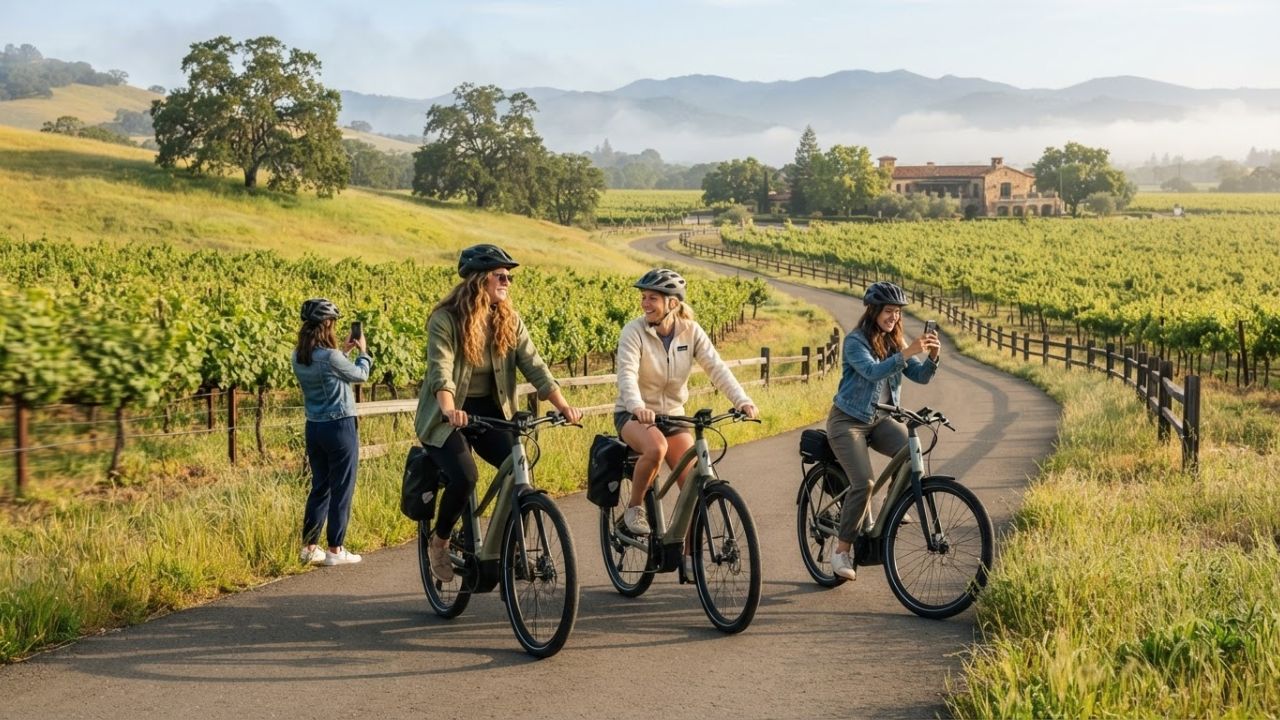
Image generated by AI
Glidesdale Adventures has introduced premium electric bicycle tours along Napa Valley's protected cycling network, allowing travelers to bypass highway traffic and connect with local estates. Launching daily from the Solano Avenue corridor at 9:45 a.m., the six-hour round-trip excursion utilizes the paved Class 1 Napa Valley Vine Trail, a planned 47-mile non-motorized pathway stretching from Vallejo to Calistoga.
Restructuring Napa's Transportation Ecosystem: The E-Bike Shift
The travel sector in California is experiencing a transition as planners build regional destinations to diversify visitor experiences. In August 2026, the introduction of e-bike tours by Glidesdale Adventures is offering travelers a sustainable option that avoids heavy traffic on the region's primary highways.
By establishing these seasonal travel corridors, the airline's management aims to support both business and leisure travel flows. Corporate travelers and travel agencies, which maintain strong relationships with global destination management organizations, benefit from direct seat capacity. This economic integration supports the travel sector, providing service providers with a reliable channel for high-value bookings.
By establishing these seasonal travel corridors, the airline's management aims to support both business and leisure travel flows. Canadian corporate travelers and travel agencies, which maintain strong relationships with European and Asian destination management organizations, would benefit from direct seat capacity. This economic integration supports the travel sector, providing service providers with a reliable channel for high-value bookings.
By establishing these seasonal travel corridors, the airline's management aims to support both business and leisure travel flows. Canadian corporate travelers and travel agencies, which maintain strong relationships with European and Asian destination management organizations, would benefit from direct seat capacity. This economic integration supports the travel sector, providing service providers with a reliable channel for high-value bookings.
By establishing these seasonal travel corridors, the airline's management aims to support both business and leisure travel flows. Canadian corporate travelers and travel agencies, which maintain strong relationships with European and Asian destination management organizations, would benefit from direct seat capacity. This economic integration supports the travel sector, providing service providers with a reliable channel for high-value bookings.
By establishing these seasonal travel corridors, the airline's management aims to support both business and leisure travel flows. Canadian corporate travelers and travel agencies, which maintain strong relationships with European and Asian destination management organizations, would benefit from direct seat capacity. This economic integration supports the travel sector, providing service providers with a reliable channel for high-value bookings.
Renting an electric bicycle provides a direct sensory connection to the terroir.
The pedal-assist motor minimizes fatigue on rolling hills, allowing riders of different fitness levels to comfortably complete long-distance routes. This shift in traveler behavior reflects a wider movement toward slow-paced, active vacation itineraries in high-end farming regions.
The Route Logistics: Departure Points and Tour Schedules
Planning a cycle trip through the valley involves coordinating departure times and selecting trail routes.
This localized disruption also offers a unique opportunity for duty-free retailers and terminal operators to design services suited for stranded passengers. By monitoring passenger comfort levels during long delays, airport customer teams can provide complimentary amenities to ensure guest satisfaction. This proactive approach helps build traveler confidence, ensuring that regional transit routes remain competitive with global hub standards.
This localized disruption also offers a unique opportunity for duty-free retailers and terminal operators to design services suited for stranded passengers. By monitoring passenger comfort levels during long delays, airport customer teams can provide complimentary amenities to ensure guest satisfaction. This proactive approach helps build traveler confidence, ensuring that regional transit routes remain competitive with global hub standards.
The six-hour round-trip tour departs daily at 9:45 a.m.
The primary departure point is the Napa Valley Marriott Hotel & Spa on Solano Avenue, allowing guests to transition from their accommodation directly to the bike trail. Secondary itineraries operate out of Calistoga, offering routes closer to the Mayacamas Mountains and northern hot springs.
By organizing regular departure times, the tour operators can ensure riders arrive at estates during quieter morning periods, maximizing interactions with hosts.
Human-Scale Transit: The 47-Mile Napa Valley Vine Trail
Operating tours on paved paths separates riders from commercial road traffic, improving safety.
This environmental focus is supported by regional climatologists and conservationists who monitor ecosystem health. By tracking tourist footprint signals, managers can ensure that natural areas remain protected. The integration of carrying-capacity policies with wilderness trails demonstrates how tourism planning can protect biodiversity while offering high-quality educational hikes.
This localized culinary focus also offers a unique opportunity for restaurant associations and culinary schools to design programs suited for premium travelers. By monitoring traveler culinary preferences during long stays, local chefs can provide customized dishes to ensure guest satisfaction. This proactive approach helps build traveler confidence, ensuring that Goan coastal dining remains competitive with global culinary standards.
This localized culinary focus also offers a unique opportunity for restaurant associations and culinary schools to design programs suited for premium travelers. By monitoring traveler culinary preferences during long stays, local chefs can provide customized dishes to ensure guest satisfaction. This proactive approach helps build traveler confidence, ensuring that Goan coastal dining remains competitive with global culinary standards.
The Napa Valley Vine Trail is a planned 47-mile continuous, non-motorized, multi-use paved path.
Stretching from the Vallejo Ferry Terminal to Calistoga, the paved Class 1 trail runs along the valley floor. Using this protected corridor allows operators to provide scenic, vehicle-free travel paths.
Community Support and Sustainable Wine Tourism
Promoting e-bike travel helps reduce greenhouse gas emissions and supports local agricultural preservation.
For the visitor, the real impact is visiting a destination where tour spending directly supports local family-owned vineyards, independent farm-to-table restaurants, and community-led conservation groups.
Sustainable practices include utilizing solar chargers for bicycle batteries, managing trail waste, and supporting county open space preserves.
Visitor Guide: Local Specialties, Cycle Etiquette, and Safety Rules
Traveling through the Napa Valley Vine Trail involves choosing transit links, practicing path safety, and trying local delicacies.
Sample traditional culinary specialties during your stay. Savor farm-to-table lunches featuring fresh organic heirloom tomato salad dressed with local olive oil. Try wood-fired flatbreads topped with fresh goat cheese, figs, and honey, paired with artisanal bread from local bakeries.
Coordinate your local transport. Access the Solano Avenue departure point in south Napa by driving via Highway 29 or taking regional airport shuttles from San Francisco. For northern itineraries, access Calistoga via local county transit links.
Observe trail guidelines and cycle safety. Keep to the right side of the paved path, and announce your presence with a bell or a verbal call when passing pedestrians on the left. Wear a helmet at all times, carry water to stay hydrated during the six-hour tour, and respect estate rules.
Future Outlook: Rebuilding a Resilient Wine Country Corridor
The long-term development of Napa County's travel sector depends on integrating transport corridors with regional planning. Visit Napa Valley and the Vine Trail Coalition are collaborating to support regional travel pipelines.
Sustainable initiatives include building low-emission shuttle links, promoting eco-friendly guesthouses, and introducing cultural heritage guides. By combining smart visitor management with traditional agricultural preservation, the region aims to support travel innovation, securing a resilient and connected future for Central Europe's mountain communities.
Related Travel Guides
Disclaimer
This article is for informational and educational purposes only. It does not constitute legal, financial, or professional advice. While we strive to provide accurate and up-to-date information, travel policies, regulations, and conditions change rapidly. Always verify information with official sources before making travel decisions. Nomad Lawyer makes no representations about the accuracy, reliability, completeness, or suitability of the information provided. Readers should consult qualified professionals for advice specific to their circumstances. The views expressed in this article are those of the author and do not necessarily reflect the views of Nomad Lawyer.
Naina Thakur
Contributor & Travel Specialist
Travel enthusiast and legal writer covering visa regulations, responsible tourism, and cultural journeys across global destinations.
Learn more about our team →