Munich Airport Deploys 540 Workers and 175 Vehicles for Winter Flight Safety

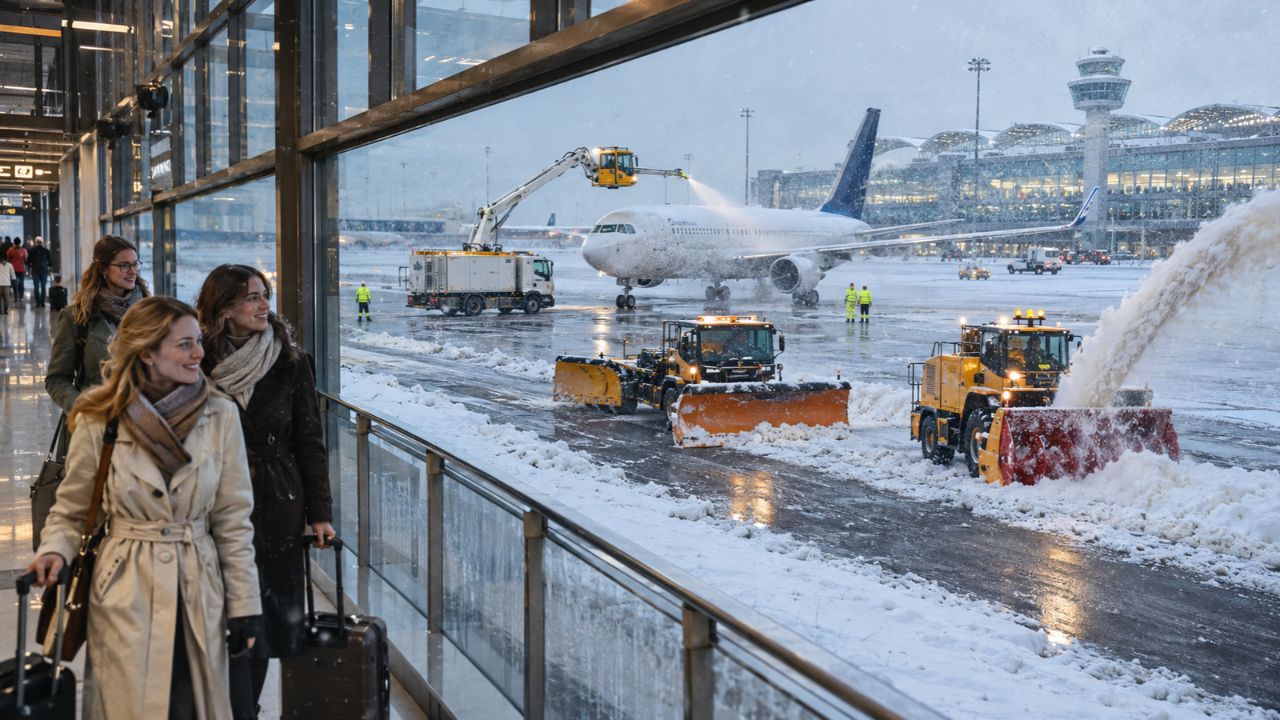
Munich Airport has activated its comprehensive winter flight safety operation for the 2026–2027 winter season, mobilizing a specialized workforce of 540 personnel and a heavy machinery fleet of 175 vehicles to safeguard scheduled airline operations across 5.6 million square meters of movement area. Operating 24 hours a day from early November through mid-April, the multi-tiered winter service combines rapid mechanical snow clearing across the Bavarian hub's dual parallel runway system—capable of sweeping and chemically treating a 4,000-meter runway in approximately 30 minutes—with the specialized "Polar Bears" aircraft de-icing fleet operated jointly with Lufthansa to guarantee uninterrupted international and domestic connectivity.
The logistical deployment at Germany’s second-largest aviation hub illustrates the complex operational choreography required to protect hub integrity against extreme Alpine winter weather systems. Encompassing an airfield surface area equivalent to more than 780 international football fields, Munich Airport’s winter defense program relies on a unique public-private partnership model: approximately 450 of the 540 deployed crew members are contracted from regional agricultural enterprises and heavy transport logistics firms across Upper Bavaria, bringing heavy tractors equipped with hydraulic snowplows to reinforce airport engineering teams during severe blizzards. Supported by runway sensor networks embedded in the asphalt and high-resolution thermal radar feeds, airport ground control coordinates clearing maneuvers with Deutsche Flugsicherung (DFS) air traffic controllers to preserve arrival and departure banks without compromising flight safety.
As European aviation enters a demanding winter schedule characterized by peak holiday passenger loads, sub-zero temperature inversions, and freezing precipitation, Munich Airport’s integrated snow-and-ice management architecture serves as a global benchmark for runway maintenance efficiency, environmental glycol recycling, and aircraft turnaround reliability.
| Operational Parameter | Munich Airport Winter Baseline | Technical Specification / Capacity | Strategic & Flight Safety Value |
|---|---|---|---|
| Operational Period | Early November to mid-April | 24/7 continuous standby readiness | Comprehensive seasonal coverage across Bavarian winter |
| Total Deployed Workforce | 540 specialized personnel | Up to 180+ crew deployed per single shift | Rapid surge capacity during heavy snowfall events |
| Regional Agricultural Support | ~450 local farmers & truck drivers | Upper Bavarian rural contracting network | Flexible heavy equipment and operator mobilization |
| Winter Maintenance Fleet | 175 specialized vehicles | 21 snow blowers, 5 loaders, 1 groomer | High-speed clearing, loading, and chemical spreading |
| Airfield Clearing Surface Area | 5.6 million square meters | Equivalent to >780 football pitches | Dual parallel runways, taxiways, and apron stands |
| Runway Clearance Benchmark | ~30 minutes per runway | 4,000m x 60m runway dimensions | Synchronized clearing minimizing holding patterns |
| Aircraft De-icing Operations | EFM "Polar Bears" Joint Venture | Dedicated fleet with Lufthansa | Pre-takeoff removal of snow, frost, and glazed ice |
| De-icing Chemical Technology | Type I & Type IV glycol fluids | Heated application & anti-icing holdover | Aerodynamic cleanliness conforming to Clean Aircraft Concept |
| Surface Ice Detection | Embedded runway sensors & thermal radar | Real-time friction and freezing points | Predictive de-icing application prior to frost formation |
| Environmental Protection | Closed-loop glycol recovery drainage | Underground collection channels | Prevention of chemical runoff into local watersheds |
The Scale of the Challenge: Protecting 5.6 Million Square Meters
Maintaining operational continuity at an intercontinental hub handling over 400,000 annual aircraft movements requires industrial-scale snow clearance. Munich Airport’s operational footprint encompasses two parallel 4,000-meter runways (Runway 08L/26R and Runway 08R/26L), separated by 2,300 meters, alongside complex high-speed exit taxiways, perimeter roadways, and vast aircraft parking aprons serving Terminals 1 and 2.
In total, the paved surfaces that must be kept free of snow, slush, and ice cover 5.6 million square meters. A layer of just five centimeters of wet snow across this expanse represents nearly 280,000 metric tons of frozen precipitation that must be displaced, melted, or removed without interrupting aircraft taxiing schedules.
Airfield Surface Infrastructure at Munich Airport:
┌─────────────────────────────────────────────────────────────┐
│ NORTH RUNWAY (08L / 26R):  4,000m x 60m Asphalt Surface     │
│ - Category IIIb Instrument Landing System (Zero-Visibility) │
├─────────────────────────────────────────────────────────────┤
│ APRON & TAXIWAY NETWORK:   ~4.8 Million Square Meters       │
│ - High-speed taxiways, de-icing pads, and Terminal 1/2 gates│
├─────────────────────────────────────────────────────────────┤
│ SOUTH RUNWAY (08R / 26L):  4,000m x 60m Concrete Surface    │
│ - Independent parallel operations synchronized with DFS     │
└─────────────────────────────────────────────────────────────┘
Total Continuous Movement Area Maintained: 5,600,000 Square Meters
The clearance protocol requires extreme speed. When an active snowfall begins, air traffic control cannot permit aircraft to touch down on surfaces where friction coefficients drop below international civil aviation standards. Under international regulations established by the International Civil Aviation Organization (ICAO) and the European Union Aviation Safety Agency (EASA), wet snow, slush, or ice layers exceeding three millimeters trigger restrictive braking action advisories, potentially requiring diversion of incoming widebody jets to alternative airports.
By maintaining high-speed mechanized clearance teams capable of sweeping a full 4,000-meter runway in approximately 30 minutes, Munich Airport ensures that while one runway is closed for clearing, the parallel runway absorbs arrival and departure traffic, maintaining overall airport throughput.
The Regional Coalition: Mobilizing Upper Bavaria’s Farmers
One of the most remarkable and cost-effective aspects of Munich Airport’s winter defense is its collaborative workforce model. Rather than maintaining a permanent year-round staff of 540 municipal snow-clearance workers—which would impose unsustainable operating overhead during temperate summer months—the airport operates a seasonal contracting alliance with the local rural economy.
Around 450 of the 540 winter workers are independent agricultural producers, farmers, and heavy commercial vehicle drivers drawn from surrounding Upper Bavarian districts, including Freising, Erding, Landshut, and Dachau.
Workforce Mobilization Architecture:
┌─────────────────────────────────────────────────────────────┐
│ TOTAL WINTER CONTINGENT: 540 Personnel                      │
└──────────────────────────────┬──────────────────────────────┘
                               │
               ┌───────────────┴───────────────┐
               ▼                               ▼
┌──────────────────────────────┐ ┌────────────────────────────┐
│ AIRPORT TECHNICAL CREW       │ │ REGIONAL AGRICULTURAL BASE │
│ ~90 Permanent Specialists    │ │ ~450 Farmers & Drivers     │
│ - High-speed sweepers        │ │ - Heavy-duty farm tractors │
│ - Chemical spray operators   │ │ - Hydraulic snowplow units │
│ - Airfield duty managers     │ │ - Apron & stand clearance  │
│ - Weather radar coordinators │ │ - Rapid on-call dispatch   │
└──────────────────────────────┘ └────────────────────────────┘
The Strategic Value of the Farmer Partnership
This seasonal coalition provides three decisive operational advantages:
- Mastery of Heavy Agricultural Machinery: Local farmers possess decades of experience maneuvering high-horsepower tractors, heavy diesel engines, and hydraulic implements across difficult, low-traction terrain. Their mechanical fluency allows them to operate heavy snow-removal equipment safely in close proximity to billion-dollar commercial jetliners.
- Economic Synergy for the Agricultural Sector: For Bavarian farmers, the winter months represent a period of dormant field activity. Contracting with the airport provides rural families with steady, high-wage employment between November and April, injecting airport revenues directly into the regional agricultural economy.
- Massive Surge Deployment: When meteorological stations forecast heavy overnight blizzards, Munich Airport activates on-call escalation rosters, mobilizing more than 180 personnel during a single shift. Crews arrive at specialized staging depots, conduct vehicle safety audits, and form synchronized clearing convoys within minutes of an alert.
The 175-Vehicle Armada: Engineering and Clearing Mechanics
Clearing 5.6 million square meters of frozen tarmac in freezing temperatures requires specialized aviation ground support machinery. Munich Airport maintains an arsenal of 175 winter service machines, engineered specifically to remove snow without gouging asphalt surfaces, damaging embedded runway center line lighting, or blowing debris toward parked aircraft engines.
Primary Machinery Profile across the 175-Vehicle Fleet:
┌─────────────────────────────────────────────────────────────┐
│ 21 HIGH-CAPACITY SNOW BLOWERS:                              │
│ - Turbine-driven rotary units casting snow 40+ meters       │
│ - Displaces deep snowbanks along outer runway perimeters    │
├─────────────────────────────────────────────────────────────┤
│ 5 LOADING SNOW BLOWERS & APRON GROOMERS:                    │
│ - Collects snow in confined gate stands and transfers to    │
│   high-sided tipper trucks for transport to melting basins  │
├─────────────────────────────────────────────────────────────┤
│ HIGH-SPEED RUNWAY SWEEPERS & JET BROOMS (CJS Series):       │
│ - Towed units featuring front plow, mid-body steel brush,   │
│   and rear high-velocity air blast nozzles                  │
├─────────────────────────────────────────────────────────────┤
│ CHEMICAL SPREADERS & SPRAY TRUCKS:                          │
│ - Distributes biodegradable liquid and solid de-icers       │
│   (potassium formate and sodium acetate) across runways     │
└─────────────────────────────────────────────────────────────┘
The 30-Minute Synchronized Sweep: The V-Formation
When air traffic control allocates a 30-minute maintenance window on an active runway, the clearing operation unfolds like a synchronized military exercise.
A convoy of up to 16 high-speed sweeper-blowers enters the runway threshold in an angled V-formation (echelon formation). Traveling at speeds up to 45 kilometers per hour, the lead vehicle's front plow shifts the snow diagonally toward the adjacent lane, where the following sweeper picks it up and pushes it further toward the runway edge.
Behind the plows, high-speed rotating steel-wire brushes sweep residual slush from the pavement pores, while powerful rear turbine blowers blast air at 400 km/h to evaporate surface moisture. Bringing up the rear of the convoy, specialized chemical spraying trucks distribute eco-friendly liquid anti-icing agents to lower the freezing point of the asphalt, preventing black ice from forming before aircraft resume landings.
Runway Clearing Choreography (The Echelon Formation Sweep):
[Runway Threshold]
       │
       ├──> Unit 1 (Lead Plow): Pushes snow from center line to Lane 1
       ├──> Unit 2 (Follow Plow): Collects Lane 1 snow and throws to Lane 2
       ├──> Units 3–8: Successive sweepers clear outer margins toward grass
       ├──> Unit 9 (Snow Blower): Catapults outer snowbank deep into safety strip
       └──> Units 10–12 (Spray Rigs): Applies liquid anti-icing layer across surface
[Runway Cleared, Tested, and Re-opened within 30 Minutes]
The "Polar Bears": EFM and Aircraft De-Icing Science
Clearing the runway is useless if an aircraft cannot safely take off. When an aircraft sits on an apron stand during freezing rain, sleet, or snowfall, ice crystals accumulate along the wings, horizontal stabilizers, and control flaps.
Even a minute frost layer as thin as coarse sandpaper disrupts airflow over the wing foil, reducing aerodynamic lift by up to 30 percent and increasing drag by 40 percent. In addition, ice dislodging from the wings during takeoff can be ingested by rear-mounted jet engines, causing catastrophic compressor stalls.
To eliminate this hazard, Munich Airport relies on its specialized de-icing division: the "Polar Bears" (Eisfüchse).
Aircraft De-Icing Operational Architecture (EFM Joint Venture):
┌─────────────────────────────────────────────────────────────┐
│ EFM (Gesellschaft für Enteisen und Flugzeugschleppen mbH)   │
│ - Joint Venture: 51% Lufthansa / 49% Munich Airport         │
│ - Specialized Fleet of High-Reach "Polar Bear" De-Icing Rigs│
└──────────────────────────────┬──────────────────────────────┘
                               │
               ┌───────────────┴───────────────┐
               ▼                               ▼
┌──────────────────────────────┐ ┌────────────────────────────┐
│ STEP 1: DE-ICING (TYPE I)    │ │ STEP 2: ANTI-ICING (TYPE IV│
│ - Heated Glycol/Water (60°C) │ │ - Unheated Thickened Fluid │
│ - High-pressure blast nozzle │ │ - Creates protective barrier│
│ - Melts and washes off snow, │ │ - Prevents refreezing on   │
│   frost, and ice sheets      │ │   wings during taxiing     │
└──────────────┬───────────────┘ └─────────────┬──────────────┘
               │                               │
               └───────────────┬───────────────┘
                               ▼
┌─────────────────────────────────────────────────────────────┐
│ CLEAN AIRCRAFT CONCEPT VALIDATED: Safe Takeoff Clearance    │
│ - Holdover Time (HOT) monitored by flight crew in cockpit   │
└─────────────────────────────────────────────────────────────┘
The Clean Aircraft Concept and De-Icing Fluids
Operating through EFM (Gesellschaft für Enteisen und Flugzeugschleppen am Flughafen München mbH)—a specialized joint venture owned 51 percent by Lufthansa and 49 percent by Munich Airport—the Polar Bears operate from dedicated de-icing pads positioned adjacent to the runway thresholds. This layout minimizes taxiing time after de-icing, ensuring aircraft depart before protective anti-icing fluids expire.
The de-icing process follows the strict two-step Clean Aircraft Concept:
- Step 1: De-Icing with Type I Fluid: A specialized cherry-picker rig with an enclosed operator cabin sprays a heated mixture (approximately 60°C to 80°C) of water and propylene glycol at high pressure. This thermal blast melts and physically flushes all snow, frost, and glazed ice from the wings, fuselage, and tail surfaces.
- Step 2: Anti-Icing with Type IV Fluid: Once the aircraft surfaces are clean, the Polar Bears apply an unheated layer of Type IV anti-icing fluid. Type IV fluid contains specialized polymeric thickening agents that form a gelatinous protective shield over the wing. This barrier absorbs falling snow and freezing precipitation during taxiing, preventing it from bonding to the metal skin.
- The Aerodynamic Shear-Off: When the aircraft accelerates down the runway toward takeoff speed (approximately 100 to 140 knots), the airflow shears the thickened Type IV fluid off the wings, leaving a clean, aerodynamically perfect wing surface as the jet becomes airborne.
The duration this protective fluid remains effective is known as the Holdover Time (HOT). Flight crews use computerized cockpit tables to track holdover times based on ambient temperature, precipitation intensity, and fluid concentration, ensuring the aircraft takes off within the safety window.
Meteorological Early Warning and Runway Sensor Networks
Munich Airport’s winter maintenance teams do not wait for snow to accumulate before responding. The entire operation is governed by predictive early-warning meteorology that detects icing risks hours before freezing precipitation touches the ground.
Predictive Weather and Surface Monitoring Network:
[German Weather Service (DWD) Radar Feeds] ──> [Munich Airport Meteorology Hub]
                                                         │
         ┌───────────────────────────────────────────────┴───────────────────────────────┐
         ▼                                               ▼                               ▼
[Embedded Runway Probes]                    [Thermal Infrared Scanners]     [Ice Early Warning System]
- Real-time asphalt temperature             - Measures surface heat across  - Detects chemical dilution
- Sub-surface geothermal flux               - Identifies freezing gradients - Forecasts black ice 2 hrs out
         │                                               │                               │
         └───────────────────────────────────────────────┼───────────────────────────────┘
                                                         ▼
                                   [Automated Tactical Alert Dispatched]
                                   (Anti-icing spray trucks deployed before freezing)
Advanced Sensor Integration
Dozens of electronic measurement sensors are embedded directly into the runway pavement at strategic intervals. These sensors measure:
- Surface Temperature and Sub-base Temperature: Tracking how geothermal heat dissipates from the concrete base.
- Surface Moisture Levels: Detecting thin films of condensation or rainwater.
- Residual Chemical Concentration: Measuring the salinity and freezing point of residual anti-icing chemicals from prior applications.
If atmospheric sensors detect falling humidity and pavement temperatures dropping toward the dew point, the automated system triggers a pre-wetting alert. Specialized chemical distribution trucks immediately spray liquid potassium formate across the runways before ice crystals can adhere to the asphalt, preventing the formation of invisible "black ice" and preserving safe braking friction.
Environmental Stewardship: Glycol Recovery and Ecological Recycling
A major operational challenge associated with winter aviation is environmental impact. Aircraft de-icing fluids consist primarily of propylene glycol, an organic alcohol that can deplete oxygen levels in natural waterways if allowed to escape into local rivers and groundwater aquifers.
Munich Airport operates one of the most advanced environmental water protection and glycol recycling systems in the global aviation sector.
Closed-Loop Glycol Recovery and Water Protection Cycle:
[De-Icing Pads & Runway Runoff] ──> [Slotted Drainage Channels & Surface Slits]
                                                   │
                                                   ▼
                                    [Underground Collection Mains]
                                                   │
         ┌─────────────────────────────────────────┴─────────────────────────────────────────┐
         ▼                                                                                   ▼
[High-Concentration Glycol Stream]                                  [Low-Concentration Runoff Stream]
- Captured by specialized sweeping vacuum trucks                    - Directed to retention sedimentation basins
- Delivered to on-site distillation recycling plant                 - Biological soil degradation filter beds
- Reprocessed into 99% pure industrial glycol                       - Discharged safely into municipal treatment
The Closed-Loop Recycling Process
- Dedicated De-Icing Pads: Aircraft de-icing takes place predominantly on specialized remote pads equipped with sealed perimeter drainage gutters. Used fluid running off the aircraft wings drops directly into dedicated underground collection tanks.
- High-Concentration Recovery: Specialized vacuum recovery trucks sweep active apron stands, sucking up surplus de-icing fluid directly from the concrete.
- On-Site Distillation: Collected high-concentration glycol mixtures are transported to an industrial recycling plant located on the airport perimeter. Through thermal distillation and filtration, water and impurities are removed, yielding recycled propylene glycol with over 99 percent purity, which is reused in industrial cooling systems and chemical applications.
- Biological Retention Basins: Diluted runoff from runways—where snowmelt contains trace amounts of chemical anti-icers—is channeled through underground retention basins and expansive soil filter beds, where naturally occurring soil bacteria metabolize the organic compounds into harmless water and carbon dioxide before the water reaches local streams.
Synchronized Hub Flow: Protecting Lufthansa’s Transatlantic Gateway
Munich Airport serves as the southern primary intercontinental hub for the Lufthansa Group, connecting millions of transfer passengers between transatlantic, Asian, and European regional networks.
Winter operations are intricately tied to Lufthansa's flight bank system. In hub operations, waves of feeder flights arrive from European regional cities (such as Vienna, Zurich, Milan, and Berlin) within a compressed 60-minute arrival bank, disembarking passengers who must connect to widebody departures (Airbus A350s flying to New York, Tokyo, and Singapore) departing in the subsequent 90-minute wave.
Hub Operational Integrity During Winter Conditions:
[Incoming European Inbound Wave] ──> [Scheduled Arrivals: Runway 08L]
                                               │
                                 ┌─────────────┴─────────────┐
                                 ▼                           ▼
                     [Terminal 2 Transfer Bank]  [Snow Sweeping Cycle: Runway 08R]
                                 │                           │
                                 └─────────────┬─────────────┘
                                               ▼
[Outbound Transatlantic Wave]    ──> [Dedicated EFM De-Icing Pad Clearance]
                                               │
                                               ▼
                                 [Departure Acceleration: Runway 08R Re-opened]
If runway clearance or aircraft de-icing falls behind schedule by even 20 minutes, transfer passengers miss their connecting long-haul flights, triggering expensive re-accommodation costs, missed luggage handovers, and European passenger compensation liabilities under EU261.
By closely integrating winter maintenance schedules with Deutsche Flugsicherung (DFS) tower controllers and Lufthansa hub coordinators, Munich Airport dynamically shifts operations:
- Rolling Maintenance Windows: Runways are closed sequentially during natural lulls between inbound and outbound flight banks, ensuring maximum runway capacity is available when heavy traffic waves hit the airfield.
- Remote Pad Staging: Positioning de-icing pads near runway heads allows aircraft to complete engine warm-up, receive their anti-icing spray, and roll directly onto the active runway within three to four minutes, maximizing the valid Holdover Time of the protective fluid.
Practical Passenger Advice: Navigating Winter Flights via Munich
For travelers booked on winter itineraries transiting or originating at Munich Airport between November and April, understanding airport winter operations can minimize travel anxiety:
PASSENGER WINTER TRAVEL ACTION PLAN:
┌─────────────────────────────────────────────────────────────┐
│ 1. EARLY AIRPORT ARRIVAL:                                   │
│    - Allow 2.5 to 3 hours for check-in and security         │
│    - Factor in winter road and S-Bahn (S1/S8) delays        │
├─────────────────────────────────────────────────────────────┤
│ 2. DIGITAL FLIGHT MONITORING:                               │
│    - Download Lufthansa / Munich Airport apps for gate updates│
│    - Enable push notifications for schedule modifications   │
├─────────────────────────────────────────────────────────────┤
│ 3. UNDERSTANDING DE-ICING DELAYS:                           │
│    - A 15–20 minute delay on the tarmac during de-icing is a │
│      mandatory safety procedure, not a mechanical failure   │
├─────────────────────────────────────────────────────────────┤
│ 4. TRANSFER BUFFER PLANNING:                                │
│    - Book connection windows of at least 60–90 minutes      │
│    - Keep warm clothing and medications in carry-on bag     │
└─────────────────────────────────────────────────────────────┘
- Anticipate Tarmac De-Icing Time: When an aircraft pushes back from the gate on time, it may taxi to a remote de-icing pad and hold for 10 to 20 minutes while the Polar Bears wash the wings. Passengers should understand that this procedure is a mandatory safety regulation that ensures the flight crew has a clean aerodynamic wing for takeoff.
- Buffer Connecting Itineraries: When booking winter flight itineraries connecting through Munich, select connections with at least 60 to 90 minutes of transit time. This buffer easily absorbs minor runway clearing holds or de-icing queues without risking a missed connection.
- Monitor Regional Rail and Road Feeds: Severe winter snowstorms that affect the airport also impact regional transportation. If traveling to the airport via the Munich S-Bahn (lines S1 and S8) or the A92 motorway, allow an additional 45 to 60 minutes for regional ground transit delays.
Munich Airport’s comprehensive deployment of 540 workers, 175 vehicles, and dedicated Polar Bear de-icing crews demonstrates that winter weather does not have to paralyze modern aviation. Through meticulous Bavarian engineering, regional agricultural cooperation, and advanced early-warning technology, Germany’s premier southern gateway keeps international travelers moving safely throughout the coldest months of the year.
Frequently Asked Questions
How many workers and vehicles are deployed for winter operations at Munich Airport?
Munich Airport deploys 540 specialized personnel and a fleet of 175 winter service vehicles to maintain operational safety throughout the winter season. Up to 180 workers can be mobilized simultaneously during a single shift during severe snowfall events.
What is the operational duration of Munich Airport's winter service?
Winter flight safety operations run continuously 24 hours a day from early November until mid-April, monitoring weather forecasts and maintaining immediate dispatch readiness.
How large is the area that needs to be cleared of snow and ice?
The movement area encompasses 5.6 million square meters, equivalent to more than 780 football fields. This includes Munich Airport's two parallel 4,000-meter runways, high-speed taxiways, aircraft parking aprons, and perimeter service roads.
How fast can Munich Airport clear a runway?
A specialized convoy of sweepers, plows, blowers, and chemical sprayers can fully clear and anti-ice a 4,000-meter runway in approximately 30 minutes.
Why are local farmers involved in Munich Airport's snow removal?
Approximately 450 of the 540 winter workers are local farmers and transport drivers from surrounding Upper Bavarian communities. Contracting regional agricultural producers provides experienced heavy-machinery operators during their agricultural off-season, offering massive surge manpower without burdening the airport with permanent year-round staffing costs.
What are the "Polar Bears" at Munich Airport?
The "Polar Bears" (Eisfüchse) are specialized high-reach aircraft de-icing vehicles operated by EFM (Gesellschaft für Enteisen und Flugzeugschleppen am Flughafen München mbH), a joint venture between Lufthansa (51%) and Munich Airport (49%). They apply heated de-icing and anti-icing fluids to remove ice, snow, and frost from aircraft wings and fuselages prior to takeoff.
What chemicals are used to de-ice aircraft, and how do they work?
Aircraft de-icing follows the two-step Clean Aircraft Concept:
- Type I Fluid: A heated mixture of water and propylene glycol (applied at ~60°C) sprayed at high pressure to melt and wash away ice, frost, and snow.
- Type IV Fluid: A thickened, unheated anti-icing fluid applied immediately afterward that forms a protective gel barrier preventing snow or freezing rain from adhering to the wings while the plane taxies. It shears off harmlessly as the aircraft reaches takeoff speed.
How does Munich Airport detect icy conditions in advance?
The airport utilizes an ice early-warning system powered by real-time meteorological radar and electronic sensors embedded in runway pavement. These sensors measure asphalt temperature, surface moisture, and residual chemical concentration, allowing teams to apply preventive liquid de-icers before ice can bond to the pavement.
What happens to used de-icing fluids to protect the environment?
Used de-icing runoff is collected through slotted drainage channels and vacuum recovery trucks. High-concentration glycol is transferred to an on-site recycling plant that distills and reprocesses the fluid to over 99 percent purity for industrial reuse. Diluted runway runoff is directed into underground retention basins and biological soil filter beds where natural bacteria safely break down the glycol.
Do flights get delayed during de-icing operations?
De-icing typically takes between 5 and 15 minutes per aircraft depending on aircraft size and weather severity. Because de-icing takes place after the aircraft leaves the gate, passengers may notice a short pause on the taxiway or de-icing pad, which is accounted for in airline winter operational planning to ensure takeoff safety.
Related Travel Guides
- airBaltic Faces a Major Financial Setback Despite Strong Revenue Growth - Learn how rising jet fuel prices, currency shocks, and airspace restrictions triggered a Chapter 11 restructuring.
- Frontier Airlines Unlocks Unlimited Flights and Elite Silver Status in Black Friday Deal - Explore how airline subscription passes and instant loyalty tiers are reshaping ultra-low-cost travel.
- Britain Ignites Global Travel Interest as Screen Tourism Fuels Regional Growth - Discover how film tourism generated £376 million and drove international visitors across the UK regions.
- Belarus Renews Visa Waiver for 38 European States Across Land and Air - Learn about the extended European visa-free program, border crossing rules, and travel advisories.
This article is for informational purposes. Flight routes, passenger regulations, visa rules, and transit advisories are subject to change by airlines and aviation authorities. Readers are advised to verify schedules and travel documentation with relevant carriers and border agencies before departure.
Related Stories
UAE Elevates Aviation Safety as Serco Secures First GCAA Aerodrome Training Certification
South Africa Travel Restores OR Tambo Domestic Terminal Power After Substation Fault