
Munich Airport Terminal 1 vs Terminal 2 Guide: Airlines, Gates, and Transfer Logistics for 2026
A comprehensive breakdown of Munich Airport's layout, comparing Terminal 1 and Terminal 2, including airline allocations, Schengen zone logistics, and the T2 satellite shuttle.
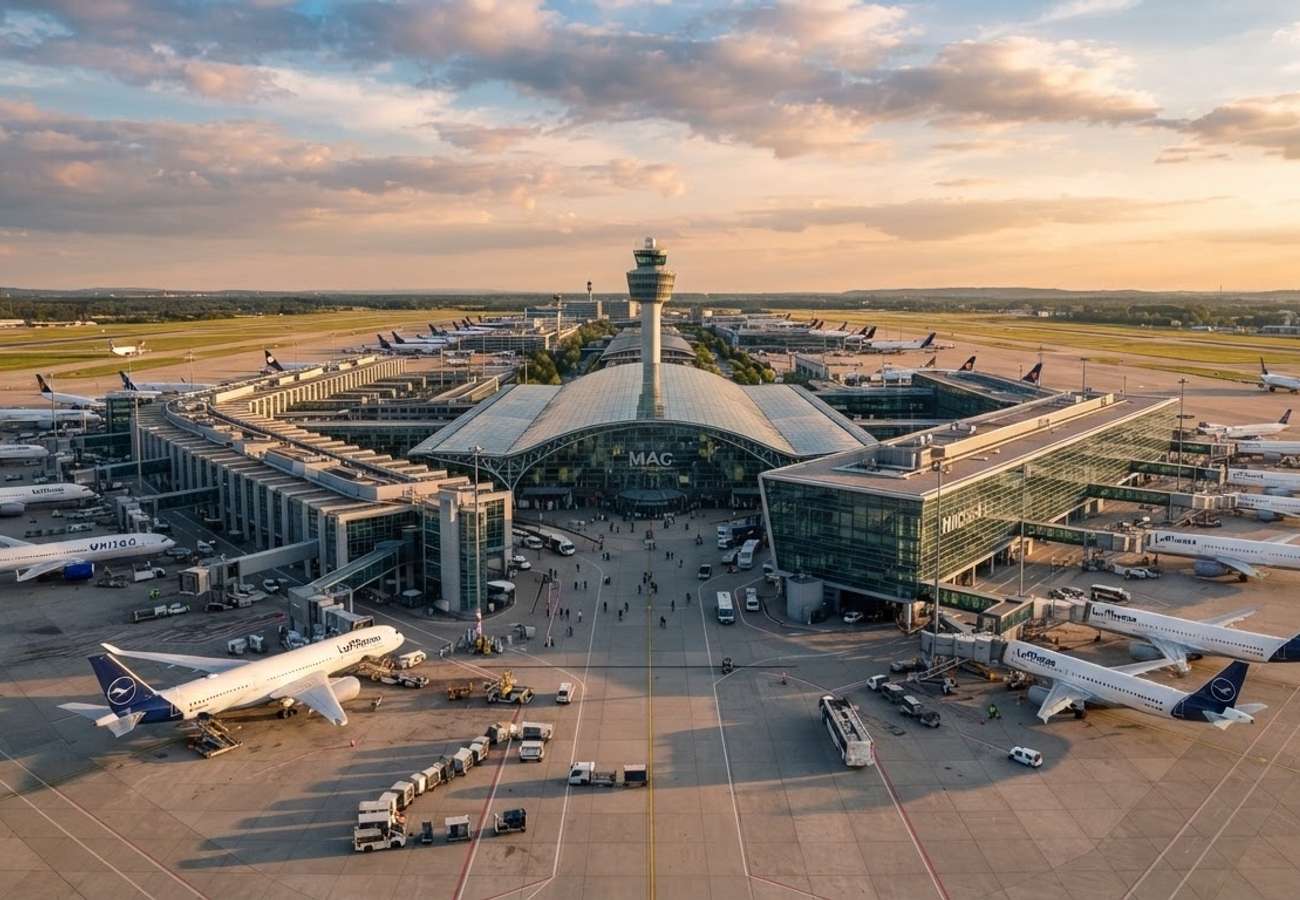
Image generated by AI
Navigating Munich Airport (MUC) requires understanding a distinct split between its two primary hubs, where a single wrong turn can lead to a 15-minute detour across the Munich Airport Center (MAC) plaza. For passengers arriving in 2026, the layout remains a tale of two different operational philosophies: one a fragmented multi-module system and the other a streamlined, alliance-driven powerhouse.
The Geography of Munich Airport Layout
At its most basic level, Munich Airport is designed as two mirrored structures separated by the Munich Airport Center (MAC), an open-air pedestrian plaza. However, the internal architecture of each terminal differs significantly, which directly impacts how passengers decode their boarding passes.
Terminal 1 operates as a segmented facility. It is partitioned into several distinct modules—labeled A, B, C, D, and E—along with a specialized check-in zone known as "Z" located within the MAC. Most non-Star Alliance carriers and leisure airlines operate out of these modules. For example, charter services heading to Turkey or Egypt frequently utilize modules B or C.
Terminal 2 is a more integrated, modern facility. It features a centralized check-in hall and two primary gate levels, G and H. Beyond the main building lies the satellite terminal, which houses gates J, K, and L. This satellite is accessed via an automated underground shuttle train. A boarding pass listing "MUC T2, Gate G23" places the traveler in the main Schengen area, while a "K16" or "L24" designation confirms the flight departs from the satellite concourse.
The Munich Airport Center (MAC) serves as the connective tissue between the two. This covered plaza functions as a transit village, offering supermarkets, dining options, and seasonal events, such as the December Christmas markets, providing a neutral zone for travelers to regroup before entering their respective terminals.
Airline Allocations: Who Operates Where
The distribution of airlines at MUC follows a strict logic based on corporate partnerships. Terminal 2 is the exclusive domain of the Lufthansa Group and its Star Alliance partners. This arrangement is a joint operation between the airport authority and Lufthansa, ensuring a seamless experience for their frequent flyers.
Passengers flying with the following carriers will almost exclusively use Terminal 2:
- Lufthansa Group: Lufthansa, Swiss, Austrian, Brussels Airlines, Eurowings, and Air Dolomiti.
- Star Alliance Partners: United Airlines, Air Canada, ANA, Singapore Airlines, and Turkish Airlines.
- Close Partners: Carriers like ITA Airways, which migrated to T2 following its integration into the Lufthansa Group to streamline connections from Rome.
This alliance-centric model means a passenger flying from Denver to Munich on United and connecting to Rome via Lufthansa can typically complete their entire transit without leaving the Terminal 2 ecosystem.
Conversely, Terminal 1 serves as the hub for all other global carriers. This includes the majority of oneworld and SkyTeam members, as well as independent airlines. Long-haul operations for Delta Air Lines and American Airlines utilize the expanded non-Schengen pier of Terminal 1. Similarly, major Gulf carriers, including Emirates, Etihad, and Qatar Airways, are grouped within the Terminal 1 non-Schengen zones. Low-cost and seasonal leisure carriers, such as SunExpress, also operate from the T1 modules.
Decoding Check-In Zones and Boarding Pass Codes
Boarding passes at Munich Airport often use shorthand that can be confusing for first-time visitors. Understanding these codes is the key to avoiding unnecessary walking.
| Ticket Code | Location | Practical Meaning |
|---|---|---|
| T1A, T1B, T1C, T1D, T1E | Terminal 1 Modules | Go directly to the corresponding lettered module for check-in. |
| T1Z | Munich Airport Center | Use the "Z" counters located in the central MAC plaza. |
| T1 | Terminal 1 (General) | Follow on-site digital screens to find your specific module. |
| T2 | Terminal 2 Main Hall | Proceed to the central departure hall for Lufthansa/Star Alliance. |
For those using Terminal 2, the process is more centralized. Passengers arriving via the S-Bahn or bus are directed into a single, light-filled hall containing rows of check-in desks and automated bag-drop kiosks. Lufthansa passengers often benefit from "evening before" check-in services, allowing them to drop luggage 24 hours early for early morning departures.
Navigating Schengen and Non-Schengen Zones
As a major European gateway, Munich strictly separates flights based on the Schengen Agreement. This determines whether a passenger must pass through passport control.
In Terminal 2, gates G and K are generally reserved for Schengen flights (intra-EU and associated nations). Gates H and L are primarily used for non-Schengen destinations. The transition between these zones requires passing through immigration. The T2 satellite is a critical component here; the underground shuttle connects the main building to gates J, K, and L. Industry reports indicate that the transit time from an H gate (main building) to an L gate (satellite) is approximately 10 to 15 minutes, provided no additional security screenings are required.
Terminal 1 follows a similar logic but utilizes its modules and the new pier to separate traffic. For instance, a flight from Munich to Athens might depart from a Schengen-equipped module, whereas a flight to New York or Doha will be routed through the non-Schengen pier.
The atmosphere differs wildly between the two. Terminal 2 feels like a cohesive, branded corporate hub with uniform signage and high-density lounge access. Terminal 1 is more eclectic and utilitarian, blending older architectural styles with the modern upgrades of the new pier.
Why This Matters: The Traveler's Perspective
For the modern traveler, the distinction between T1 and T2 isn't just about signage—it's about time management and legal requirements. If you are booking a "self-transfer" (buying two separate tickets on different airlines), you may be required to move from Terminal 1 to Terminal 2. This involves exiting the secure area, crossing the MAC plaza, and re-clearing security. From a logistical standpoint, this adds a minimum of 45 to 60 minutes to your connection time.
Furthermore, the reliance on the T2 satellite means passengers must be vigilant about "Gate K" or "Gate L" designations. Missing the shuttle train can lead to a stressful sprint across the apron. For those flying non-Star Alliance long-haul, the Terminal 1 pier is an upgrade in efficiency, but the fragmented nature of the modules means you should arrive at the airport earlier than you would for a centralized T2 flight.
Ensure you verify your terminal on the MUC digital boards immediately upon arrival, as airline assignments can shift based on operational needs.
Related Travel Guides
Disclaimer
This article is for informational and educational purposes only. It does not constitute legal, financial, or professional advice. While we strive to provide accurate and up-to-date information, travel policies, regulations, and conditions change rapidly. Always verify information with official sources before making travel decisions. Nomad Lawyer makes no representations about the accuracy, reliability, completeness, or suitability of the information provided. Readers should consult qualified professionals for advice specific to their circumstances. The views expressed in this article are those of the author and do not necessarily reflect the views of Nomad Lawyer.