
India Bullet Train Project Prepares for May-June Trial Runs as Mumbai-Ahmedabad High-Speed Rail Corridor Nears Completion

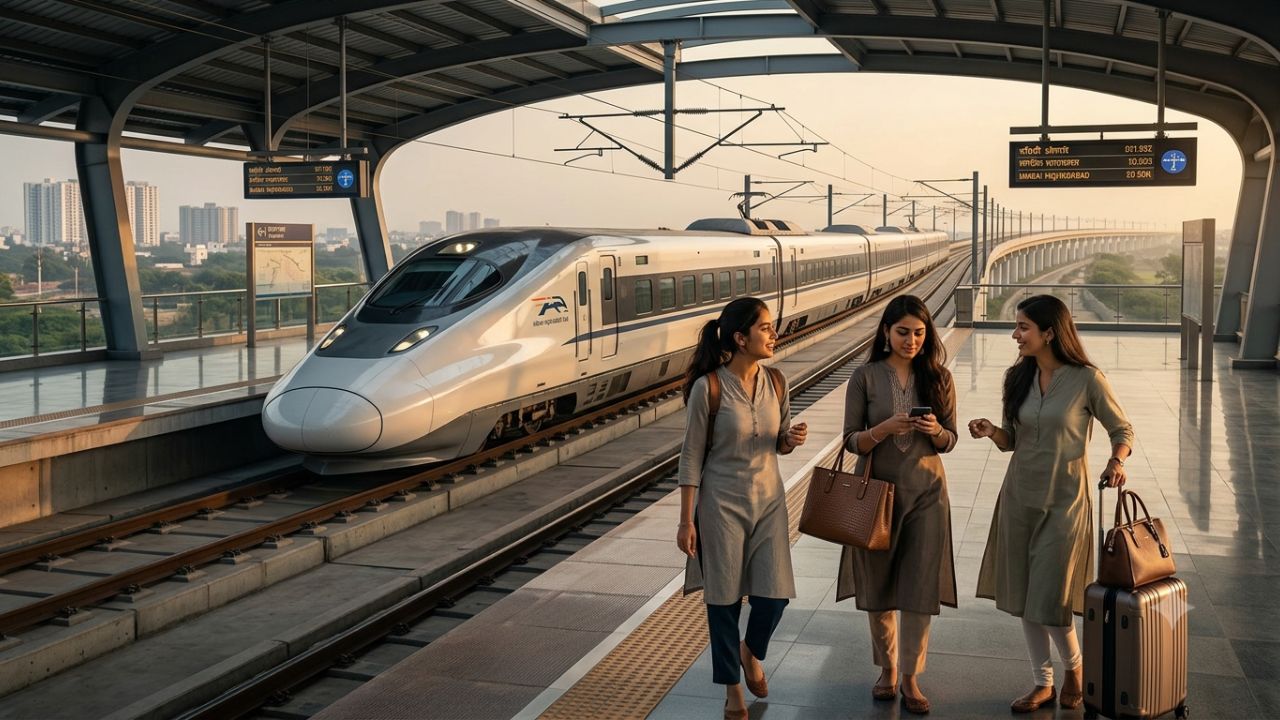
Testing for India’s flagship Mumbai–Ahmedabad high-speed rail corridor will commence by May or June, marking the transition of the nation’s first bullet train project into its final trial and commissioning phase. Manufacturing teams have completed the initial train body frame and initiated mandatory structural squeeze tests to evaluate crashworthiness and high-speed stability.
The comprehensive trial phase will run for two to four months, allowing railway safety commissioners and technical engineers to validate signaling protocols, track alignments, and overhead traction systems prior to commercial inauguration. Once operational, the high-speed rail link will slash transit times between Vadodara and Mumbai to approximately 90 minutes, establishing a rapid transit backbone for regional commerce and intercity travel across western India.
Mumbai-Ahmedabad High-Speed Corridor Testing Timeline and Engineering Progress
The Mumbai–Ahmedabad High-Speed Rail (MAHSR) project, managed by the National High Speed Rail Corporation Limited, represents a technological shift in Indian transport infrastructure. Construction teams are finalizing civil works along key segments, with the crucial Surat–Vapi section scheduled for structural completion by December this year.
MUMBAI-AHMEDABAD HIGH-SPEED RAIL (MAHSR) PROJECT SPECIFICATIONS
| Category / Entity | Details / Impact |
|---|---|
| Project Name | Mumbai–Ahmedabad High-Speed Rail Corridor (Bullet Train) |
| Primary Route | Mumbai (Maharashtra) to Ahmedabad (Gujarat) via Vadodara |
| Testing Schedule | May to June trial commencement (2 to 4 months duration) |
| Key Construction Benchmark | Surat–Vapi section structural completion by December |
| Rolling Stock Milestone | First train body frame completed & squeeze test initiated |
| Vadodara–Mumbai Transit Time | Reduced to approximately 1.5 hours (90 minutes) |
| Governing Authority | National High Speed Rail Corporation Limited (NHSRCL) |
The upcoming May–June testing phase will deploy specialized inspection trains to conduct rigorous dynamic trials across newly laid high-speed ballastless track slabs. Engineers will evaluate vehicle oscillation, braking distance efficiency, and aerodynamic stability at operational speeds exceeding 300 km/h.
BULLET TRAIN TESTING & LAUNCH PHASES
| Column 1 |
|---|
| December Milestone: |
| Civil Completion of Surat–Vapi Section --> Overhead Electrical Cable Energization |
| May–June Phase: |
| Rolling Stock Arrival --> Dynamic Squeeze & Track Testing (2 to 4 Months) |
| Final Commissioning: |
| Safety Commissioner Clearance --> Commercial Passenger Operations Inauguration |
Broader Modernization of Indian Railways Infrastructure
The high-speed rail initiative is integrated into a multi-billion-dollar overhaul of Indian Railways, designed to enhance passenger capacity, speed up freight movement, and modernize passenger facilities across the national network.
INDIAN RAILWAYS NATIONWIDE MODERNIZATION METRICS
| Category / Entity | Details / Impact |
|---|---|
| New Track Expansion | 36,000 kilometres of new railway tracks constructed |
| Station Redevelopment Program | 280 stations fully redeveloped with modern passenger amenities |
| Major Engineering Structures | Chenab Rail Bridge completed; rail grid extended to Mizoram |
| Specialized Freight Innovations | Dedicated salt transport wagons & Vande Bharat cargo trains |
| System Digitalization | Automated reservation upgrades & real-time traffic management |
Track Expansion and Engineering Engineering Milestones
National track expansion programs have delivered approximately 36,000 kilometres of new railway tracks, expanding network capacity and permitting higher average speeds for passenger and freight express trains. Iconic engineering feats, such as the completion of the record-height Chenab Rail Bridge in Jammu and Kashmir and the extension of broad-gauge rail connectivity into Mizoram, demonstrate the scale of ongoing infrastructure expansion.
Station Redevelopment and Freight Innovations
Under the Amrit Bharat Station Scheme, 280 railway stations have undergone complete redevelopment, transforming traditional passenger stops into modern transit hubs featuring multi-modal integration, wide concourses, and upgraded accessibility. On the freight side, Indian Railways has introduced specialized rolling stock, including customized wagons for bulk salt transportation and high-speed freight trains built on Vande Bharat platforms to accelerate express cargo transit between industrial centers.
Strategic Economic and Regional Connectivity Impact
Connecting Mumbai—India’s financial capital—with the commercial and industrial hubs of Surat, Vadodara, and Ahmedabad will alter regional economic dynamics.
- Intercity Commuter Efficiency: Business travelers moving between Mumbai and Vadodara will see transit times reduced to 90 minutes, offering a competitive alternative to regional air travel and congested highway routes.
- Industrial Corridor Synergies: The high-speed line directly connects major textile, diamond, chemical, and manufacturing clusters across Maharashtra and Gujarat, facilitating same-day business travel.
- Multi-Modal Integration: High-speed stations are designed to link directly with existing Indian Railways mainlines, city metro systems, and international airports, providing seamless transfer options for long-distance passengers.
Traveler Logistics Guide for High-Speed Rail Services
Passengers preparing to utilize India's upcoming high-speed rail corridor should consider the following operational logistics:
- Station Access & Gateways: Primary high-speed terminals including Mumbai (Bandra-Kurla Complex / BKC), Surat, Vadodara, and Sabarmati (Ahmedabad) will feature automated ticket gates, dedicated security screening zones, and direct metro connections.
- Ticketing & Booking Systems: High-speed train bookings will be integrated into updated Indian Railways digital portals and mobile applications, offering advance seat selection, dynamic pricing options, and digital boarding passes.
- Connecting Transit from Airports: Travelers arriving at Mumbai’s Chhatrapati Shivaji Maharaj International Airport (BOM) or Ahmedabad’s Sardar Vallabhbhai Patel International Airport (AMD) can utilize dedicated feeder transport and metro links to access bullet train terminals within 20 to 30 minutes.
- Baggage Allowance & Regulations: High-speed trains will enforce standardized luggage dimensions and weight thresholds to maintain quick station dwell times and onboard safety. Travelers carrying oversized luggage should utilize designated luggage storage racks located near carriage entry doors.
Frequently Asked Questions
When will testing begin for India's first bullet train?
Testing for the Mumbai–Ahmedabad high-speed rail corridor is scheduled to begin in May or June, with trials expected to last two to four months before commercial commissioning.
What is the travel time between Vadodara and Mumbai on the bullet train?
Once operational, the bullet train will reduce the travel time between Vadodara and Mumbai to approximately 1.5 hours (90 minutes).
Which section of the bullet train corridor will be completed first?
The Surat–Vapi section of the high-speed rail corridor is scheduled for civil construction completion by December this year.
How many railway stations have been modernized across India?
As part of the nationwide railway transformation, 280 railway stations have been fully redeveloped with modern passenger amenities and multi-modal facilities.
Related Travel Guides
Disclaimer
This article is for informational and educational purposes only. It does not constitute legal, financial, or professional advice. While we strive to provide accurate and up-to-date information, travel policies, regulations, and conditions change rapidly. Always verify information with official sources before making travel decisions. Nomad Lawyer makes no representations about the accuracy, reliability, completeness, or suitability of the information provided. Readers should consult qualified professionals for advice specific to their circumstances. The views expressed in this article are those of the author and do not necessarily reflect the views of Nomad Lawyer.
Raushan Kumar
Founder & Lead Developer
Full-stack developer with 11+ years of experience and a passionate traveller. Raushan built Nomad Lawyer from the ground up with a vision to create the best travel and law experience on the web.
Learn more about our team →