
Mozambique Travel Alert 2026: Terror Risks in Cabo Delgado Clash with Luxury Tourism Growth
New 2026 security data reveals a stark divide in Mozambique, where high-end resort investment in the north faces persistent terror threats while southern hubs thrive.

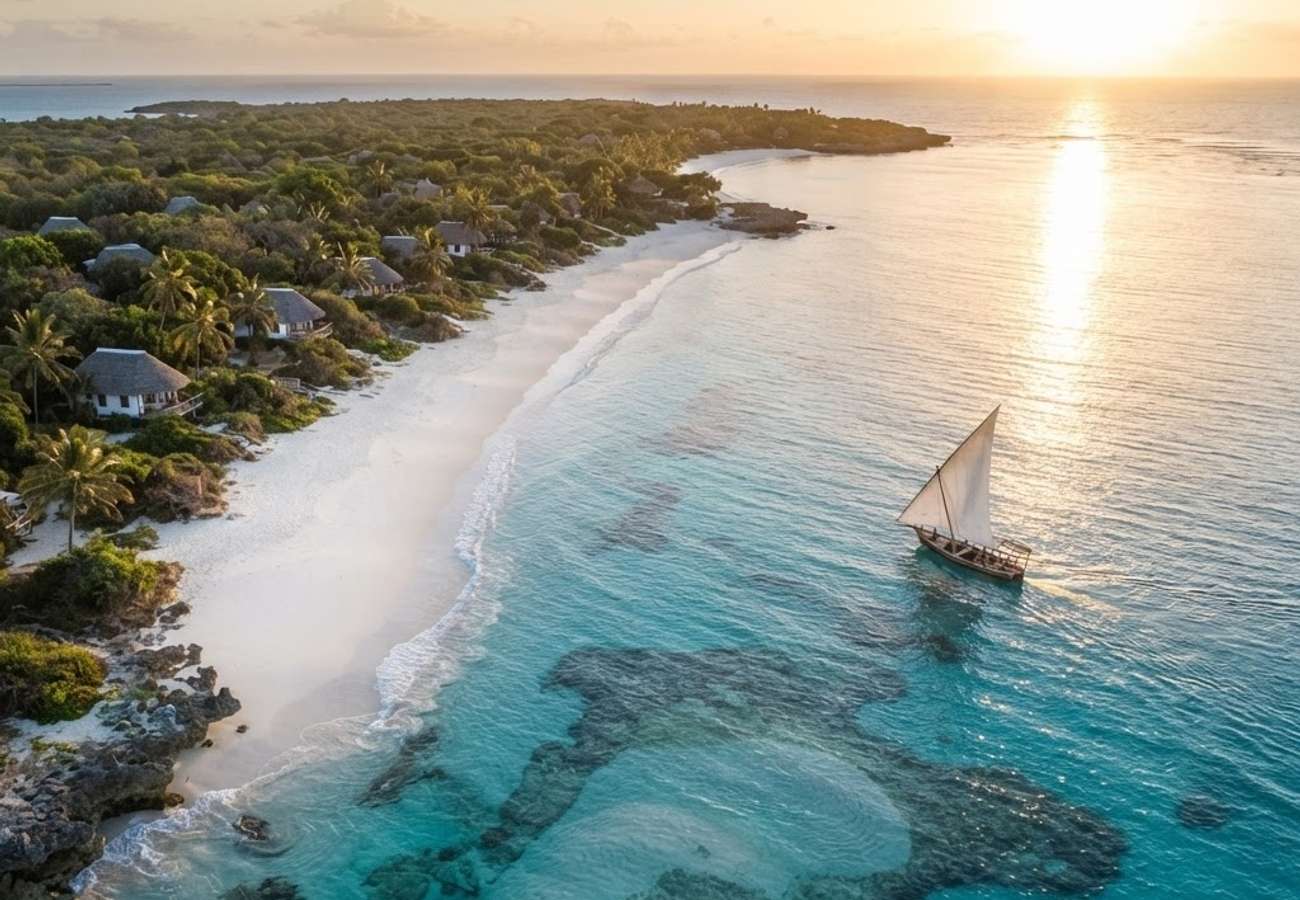
Image generated by AI
The United States currently rates Mozambique at Level 2, advising increased caution nationwide, while explicitly warning against all travel to Cabo Delgado Province, the Niassa Special Reserve, and parts of Nampula due to kidnapping and terrorism.
The Great Divide: Luxury vs. Liability
Mozambique is currently experiencing a paradoxical tourism evolution. On one hand, the country is being marketed as a premier destination for "barefoot luxury" and remote Indian Ocean escapes. On the other, a persistent insurgency in the north is creating a sharply divided map for international travelers.
The security situation is most volatile in Cabo Delgado. This province, home to the stunning Quirimbas Archipelago and ultra-remote retreats like Medjumbe and Vamizi, is the epicenter of an Islamic State-linked insurgency. While these islands offer high-end villas and protected marine areas, they exist within a region where foreign governments—including Australia—advise against all travel due to a high threat of terrorism and unpredictable attacks on villages, roads, and remote lodges.
High-Stakes Hospitality in the North
The tension between investment and insecurity is most evident in the development of nature-based luxury. Architects and developers have pushed a vision of low-impact, high-value tourism in Cabo Delgado, focusing on coral reefs and whale migration routes. Projects like Guludo were designed to be frontiers of eco-tourism.
However, the reality on the ground has been interrupted by violence. Reports from 2025 and 2026 confirm that jihadist fighters have targeted infrastructure near luxury coastal sites and hunting lodges within the Niassa Special Reserve. This has fundamentally altered the risk calculus for operators, impacting insurance premiums, occupancy forecasts, and long-term capital investment.
Energy, Insurgency, and Economic Recovery
The conflict in Cabo Delgado, which began in 2017, is inextricably linked to the region's massive liquefied natural gas (LNG) deposits. The 2021 attacks on Palma forced multinational energy firms to suspend multi-billion-dollar projects on the Afungi peninsula.
By late 2025 and early 2026, security around Afungi improved sufficiently for TotalEnergies to lift force majeure and begin restarting operations, supported by Rwandan and Southern African Development Community (SADC) forces. While this suggests a reduction in the insurgents' operational capacity, conflict-monitoring bulletins throughout 2025 recorded hundreds of violent events, with activity spilling into Niassa and Nampula provinces.
Conversely, the south is booming. Visitor arrivals and air passenger numbers rose through 2024 and 2025, with significant growth in the Bazaruto Archipelago and new hotel developments in Maputo. These areas remain largely insulated from the terror risks affecting the north.
Cultural & Environmental Value: The Human Cost
For the visitor, the real impact of this conflict is the erosion of sustainable development. Before the insurgency, tourism and conservation were primary drivers of local employment in Cabo Delgado, providing an alternative to subsistence fishing and agriculture.
The current insecurity has not only curtailed visitor flows but has disrupted essential supply chains and caused mass displacement. The failure to stabilize the region prevents luxury tourism from functioning as a tool for social stability, leaving local communities caught between the ambitions of high-end developers and the volatility of armed conflict.
Visitor Insider Tips
For those planning a trip to Mozambique in 2026, the distinction between "safe" and "high-risk" zones is critical.
- The Safe Zone: Focus your itinerary on Maputo, the southern beach hubs, and the Bazaruto Archipelago. These areas are generally accessible with standard urban crime precautions.
- The Red Zone: Avoid Cabo Delgado, the Niassa Special Reserve, and specific districts of Nampula unless you are traveling with professional security support.
- Logistics: Limit all road movements after dark and avoid large public demonstrations.
- Verification: If booking a "remote" resort, cross-reference its exact coordinates with official government "do not travel" maps. Do not rely solely on the resort's own security claims.
- Dining Specialty: In the south, seek out Matapa (cassava leaves, coconut milk, and prawns), a regional staple that supports local coastal markets.
Tourism Outlook
Mozambique's long-term trajectory depends on its ability to reconcile these two identities. The country is successfully positioning itself as a luxury powerhouse in the south, but the north remains a liability. The recovery of the luxury sector in Cabo Delgado will only occur if regional forces can maintain permanent stability around strategic sites and if the government provides transparent, real-time risk communication. Until then, the "divided map" will remain the defining characteristic of Mozambican travel.
A destination of unmatched beauty, currently balanced on a knife-edge of security.
Related Travel Guides
Disclaimer
This article is for informational and educational purposes only. It does not constitute legal, financial, or professional advice. While we strive to provide accurate and up-to-date information, travel policies, regulations, and conditions change rapidly. Always verify information with official sources before making travel decisions. Nomad Lawyer makes no representations about the accuracy, reliability, completeness, or suitability of the information provided. Readers should consult qualified professionals for advice specific to their circumstances. The views expressed in this article are those of the author and do not necessarily reflect the views of Nomad Lawyer.
Raushan Kumar
Founder & Lead Developer
Full-stack developer with 11+ years of experience and a passionate traveller. Raushan built Nomad Lawyer from the ground up with a vision to create the best travel and law experience on the web.
Learn more about our team →