
Morocco Tourism Boom 2026: easyJet and Ryanair Expand Routes Across Marrakech, Rabat, Agadir, and Fez

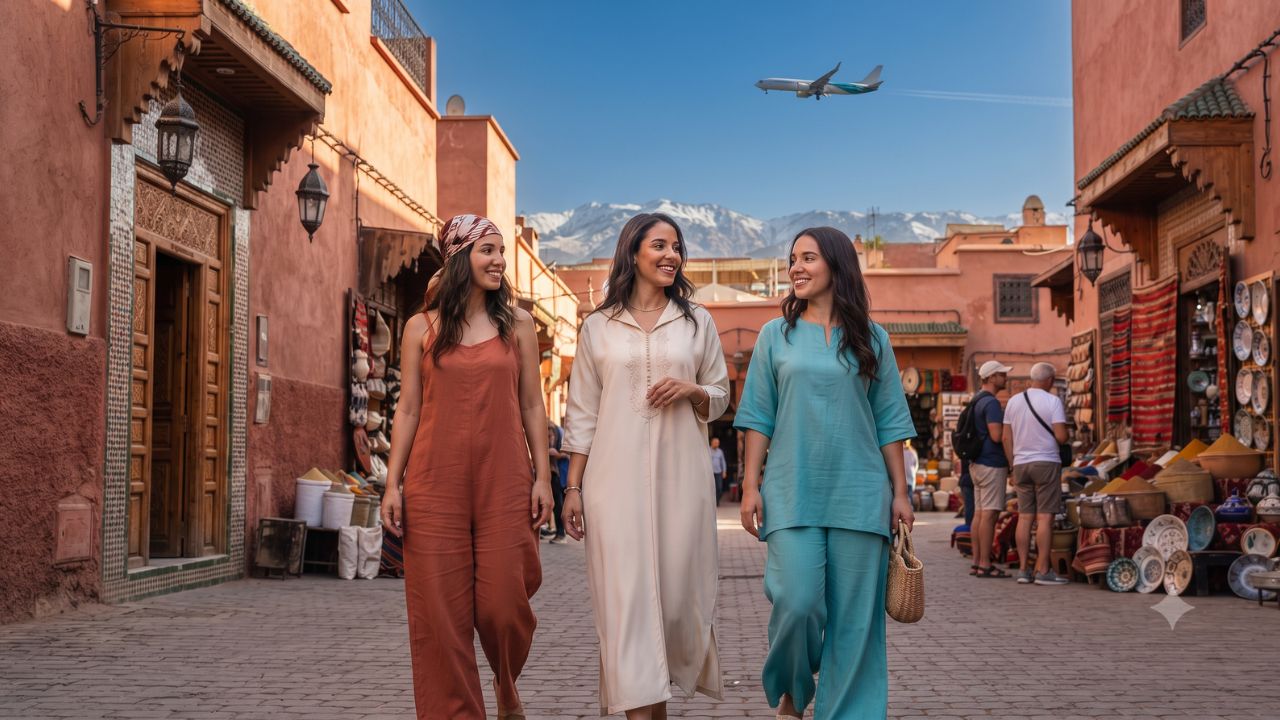
Between January and September 2026 alone, Morocco welcomed an astonishing 15.7 million tourists—a 5% jump that injected 717,000 additional travelers into the national economy—surpassing all historical benchmarks as September alone surged by 8% to draw over 1.5 million international visitors. Fueled by 52 newly established international flight corridors and a record summer capacity of 7.74 million contracted seats (a 13% annual climb), the kingdom has evolved into a true year-round global travel powerhouse. This rapid ascent builds directly on the 19.8 million total arrivals logged in 2025, accelerating national progress toward welcoming 26 million annual visitors by 2030, when Morocco will co-host the FIFA World Cup alongside Spain and Portugal.
The Aviation Gold Rush: New Bases, Nonstop Links, and Transatlantic Access
A coordinated multi-airline expansion is transforming how global travelers access North Africa, decentralizing visitor traffic away from traditional gateways into specialized provincial regions promoted through Visit Morocco.
British low-cost carrier easyJet marked a historic milestone on 15 April 2026 by opening its first African operating base at Marrakech Menara Airport, permanently stationing three aircraft. In partnership with the Moroccan National Tourist Office, this Marrakech base is projected to support approximately four million passenger seats during its inaugural year. easyJet launched seasonal European links connecting Geneva to Tangier on 30 March, Hamburg to Marrakech on 1 May, and both Lille and Strasbourg to Marrakech on 3 May. Moving into the winter schedule, the carrier introduced routes connecting Prague to Marrakech on 25 October, Zurich to Marrakech on 28 October, and Newcastle to Marrakech on 3 November. Simultaneously, easyJet unlocked direct access to the administrative capital with flights from London Luton to Rabat on 5 November and London Southend on 3 December, alongside coastal links connecting Nantes to Essaouira, Bordeaux to Agadir, and Birmingham to Agadir.
Concurrently, Ryanair unveiled its largest Moroccan winter program in August 2026, comprising 156 routes across 14 European nations and providing 5.3 million seasonal seats with 17 brand-new routes. The Irish carrier opened a $200 million operating base in Rabat in April 2026, stationing two aircraft across 20 routes, including seven direct international links to Milan Bergamo, Baden-Baden, Frankfurt-Hahn, Nuremberg, Porto, Pisa, and Valencia. Additional routes bridge emerging traveler markets, including Stockholm to Rabat, Kraków to Rabat, and Wrocław to Marrakech. For beachgoers, Ryanair linked Agadir directly with Milan, Nuremberg, Bratislava, and Gdańsk, expanding its Moroccan-based fleet to 16 aircraft.
Flag carrier Royal Air Maroc (RAM) pioneered intercontinental connectivity on 7 June 2026 by launching a thrice-weekly nonstop route linking Casablanca with Los Angeles—the first scheduled nonstop flight between Africa and the American Pacific Coast. RAM also expanded its northern perimeter, connecting Tangier and Tétouan with Madrid, Barcelona, Málaga, Bilbao, and Alicante, providing over 8.2 million seats across 86 international destinations in summer 2026.
Complementing this, Canadian carrier Air Transat launched an exclusive weekly Friday service on 12 June 2026 linking Montreal directly with Agadir through 23 October, providing the only nonstop scheduled passenger link between North America and Morocco's Atlantic beach capital. Meanwhile, Lufthansa Group's Discover Airlines debuted a weekly Sunday link in late October 2026 connecting Munich with the imperial city of Fez, alongside twice-weekly flights (Mondays and Fridays) linking Frankfurt to Agadir. British operator Jet2 bolstered the UK market starting 22 October with twice-weekly direct package services from London Gatwick to Agadir and new flights from the East Midlands. Finally, Transavia France reinforced Morocco's primary source market—which supplied 3.62 million French visitors between January and July 2026 alone—by adding 611,000 winter seats (an 8% capacity increase) across 160 weekly flights spanning 25 routes.
Flight Expansion and Regional Tourism Matrix: The 2026 Airline Surge
The breadth of new air links connecting European and North American hubs to Morocco's regional airports is detailed below:
| Airline Operator | 2026 Key Route Additions & Fleet Commitments | Primary Moroccan Gateways | Strategic Traveler Benefit |
|---|---|---|---|
| easyJet | First African base in Marrakech (3 aircraft); ~4M seats; new routes from UK, Germany, France, Switzerland, Czechia. | Marrakech, Rabat, Agadir, Tangier, Essaouira | Direct access to historic medinas, Atlantic windsurfing hubs, and winter sun breaks. |
| Ryanair | $200M Rabat base (2 aircraft); 156 winter routes; 5.3M seats; 17 new links across 14 European nations; 16 total based planes. | Rabat, Marrakech, Agadir, regional hubs | Low-cost links connecting Scandinavian, Polish, German, and Italian travelers directly to Rabat and Agadir. |
| Royal Air Maroc | Inaugural Casablanca–Los Angeles nonstop service (3x weekly); major northern Spain route expansion. | Casablanca, Tangier, Tétouan | Nonstop Pacific Coast access for North Americans and dense links into Andalusia and Catalonia. |
| Air Transat | Nonstop weekly Montreal–Agadir service (operating June to October). | Agadir (alongside existing Marrakech service) | Exclusive scheduled North American connection into southern coastal resort destinations. |
| Discover Airlines | Exclusive Munich–Fez nonstop route (Sundays); Frankfurt–Agadir flights (Mondays and Fridays). | Fez, Agadir | German travelers access ancient craftsmanship in Fez and temperate Atlantic beaches. |
| Jet2 | London Gatwick–Agadir (from 22 Oct); East Midlands–Agadir package routes. | Agadir | Bundled resort accommodation and flights tailored for British family winter holidays. |
| Transavia France | 611,000+ winter seats (+8% capacity); up to 160 weekly flights across 25 routes connecting 9 French airports. | Casablanca, Rabat, Fez, Tangier, and 7 others | Schedule density supporting short weekend city escapes and family heritage visits. |
What Makes Morocco Different: Beyond the Marrakech Medina
While Marrakech captivates travelers with the street performances of Jemaa el-Fnaa and the quiet courtyards of the Bahia Palace, the arrival of direct regional flights allows visitors to explore distinct historical and coastal civilizations.
In the north, Fez preserves the world's oldest continuously operating university, the University of al-Qarawiyyin, situated within the car-free Medina of Fez, inscribed on the World Heritage List through the UNESCO World Heritage Centre. Navigating the narrow stone alleys of Fes el-Bali reveals centuries-old leather tanneries at Chouara, where artisans dye goat and sheep hides in natural vats of saffron, indigo, and poppy, entirely unchanged since medieval times.
In Rabat, the Atlantic coastline meets modern political elegance. Broad palm-lined avenues frame the Hassan Tower, the Mausoleum of Mohammed V, and the fortified blue-and-white Kasbah of the Udayas. To the south, Agadir provides a coastal contrast: rebuilt as a modern beach city after a devastating 1960 earthquake, its crescent-shaped bay offers 300 days of annual sunshine, broad ocean promenades, and world-class surfing points at nearby Taghazout.
Visitor Insider Tips for Traveling in Morocco
- High-Speed Rail Corridor: Do not waste hours on highway buses between northern cities. Board the Al Boraq high-speed train operated by the Moroccan National Railways. Operating at speeds up to 320 km/h, the service connects Tangier to Casablanca in just 2 hours and 10 minutes, with convenient intermediate stops in Kenitra and Rabat.
- Medina Orientation and Touting: In dense historical districts like Fez and Marrakech, turn off phone screen navigation in covered souk corridors where GPS signals frequently drift. Download offline maps and navigate by major city gates (babs). If lost, ask shopkeepers sitting inside fixed retail stalls for directions rather than walking guides in the street.
- Currency and Cash Traditions: While upscale riads and modern restaurants in Casablanca and Rabat accept foreign cards, rural markets, petit taxis, and traditional artisans operate strictly in cash Moroccan Dirham (MAD). Keep small denominations (20, 50, and 100 dirham notes) ready for tips, artisanal crafts, and fresh orange juice vendors.
- Authentic Culinary Flavors: Beyond street tagines, sample regional delicacies: pastilla in Fez (a delicate, flaky pastry stuffed with slow-cooked pigeon or chicken, toasted almonds, cinnamon, and powdered sugar); freshly grilled sardines seasoned with chermoula herb sauce at the port in Essaouira; and slow-cooked tanjia marrakchia, prepared in sealed clay urns buried in the hot ash pits beneath public bathhouses (hammams).
Cultural and Environmental Context: Modern Infrastructure and Sustainable Craft
To accommodate surging visitor arrivals without overwhelming historic quarters, Morocco is executing a MAD 38 billion airport infrastructure master plan running through 2030. The strategy aims to expand nationwide airport passenger-handling capacity from 34 million to 80 million travelers. On 29 September 2026, the government formalized a €270 million financing facility with the African Development Bank to modernize terminal facilities, baggage-handling operations, and runway aircraft parking across Casablanca Mohammed V, Marrakech, Agadir, Tangier, and Fez.
Simultaneously, the hospitality sector is constructing 60,000 new hotel beds across the country to prepare for the 2030 World Cup. Through the government's Go Siyaha enterprise program, support is being directed to 1,700 local tourism businesses by the end of 2026, channeling capital into independent craft workshops and eco-tourism initiatives in emerging regions like Oujda, Nador, Saïdia, and Marchica. By distributing visitor footfall across lesser-known Atlantic and Mediterranean coastal regions, Morocco ensures that rapid aviation growth enriches local craft communities while safeguarding ancient architectural monuments.
FAQ: Visiting Morocco 2026
What is the best season to explore Morocco?
Spring (mid-March to May) and autumn (September to November) provide ideal temperatures, with daytime highs around 22°C to 26°C, clear skies for Atlas trekking, and comfortable conditions for walking through ancient stone medinas.
Do international travelers need a visa to enter Morocco?
Citizens of the European Union, United States, Canada, and the United Kingdom can enter Morocco visa-free for tourism stays up to 90 days. Passports must maintain validity for the duration of the intended stay.
How do I travel efficiently between Marrakech, Casablanca, and Fez?
The national rail network (ONCF) provides comfortable air-conditioned passenger trains connecting Marrakech, Casablanca, Rabat, and Fez. High-speed Al Boraq trains serve the northern Tangier–Casablanca corridor.
Is Morocco safe for independent and solo travelers?
Morocco is a hospitable destination with a dedicated tourist police force (Brigade Touristique) operating across historical medinas. Practice standard awareness: avoid unlit alleys late at night, agree on taxi fares before departure, and dress modestly in historic religious quarters.
[From the amber desert gateways of Marrakech to the ocean winds of Agadir, Morocco's open skies invite travelers to witness an ancient civilization stepping confidently into the future.]
Related Travel Guides
Disclaimer
This article is for informational and educational purposes only. It does not constitute legal, financial, or professional advice. While we strive to provide accurate and up-to-date information, travel policies, regulations, and conditions change rapidly. Always verify information with official sources before making travel decisions. Nomad Lawyer makes no representations about the accuracy, reliability, completeness, or suitability of the information provided. Readers should consult qualified professionals for advice specific to their circumstances. The views expressed in this article are those of the author and do not necessarily reflect the views of Nomad Lawyer.
Kunal K Choudhary
Co-Founder & Contributor
A passionate traveller and tech enthusiast. Kunal contributes to the vision and growth of Nomad Lawyer, bringing fresh perspectives and driving the community forward.
Learn more about our team →