
Brazil Tourism Hits Record R$25.5 Billion: Bahia Leads with 18.7% Surge, São Paulo Tops Revenue in 2026

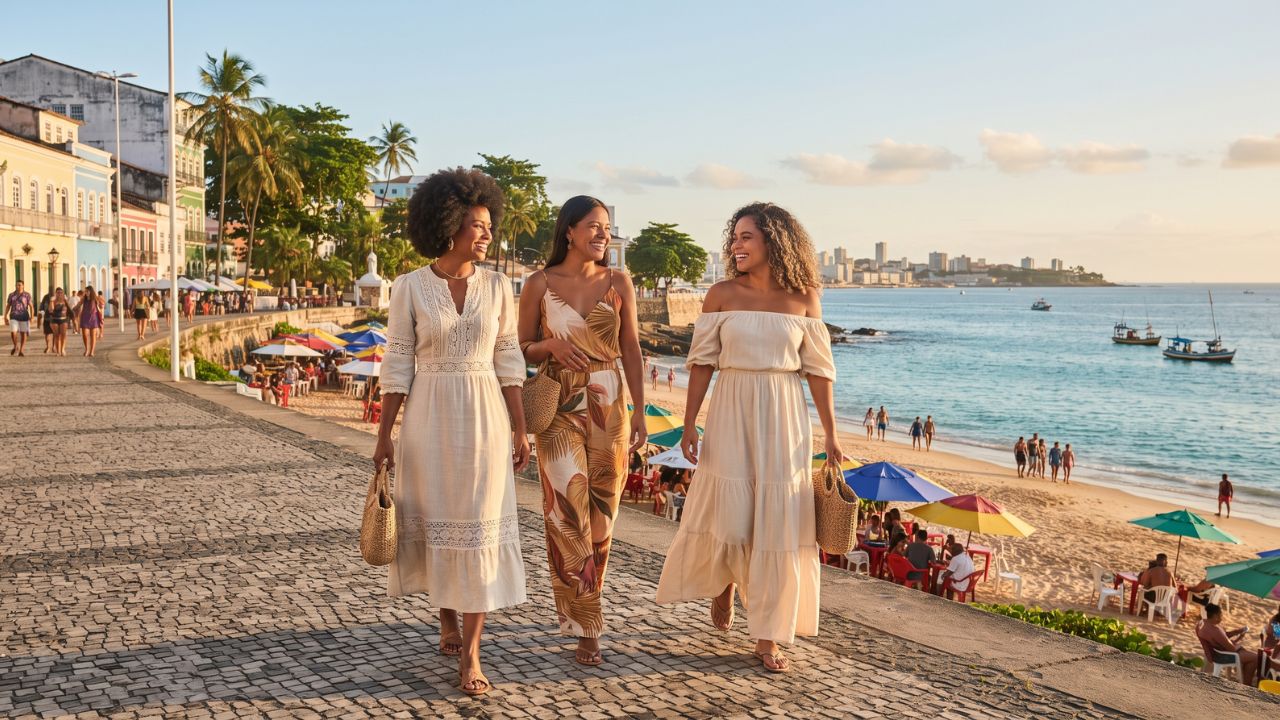
Even as hotel occupancy within the historic colonial capital of Salvador slipped from 65.2% to 61.7%, the state of Bahia powered Brazil's travel economy with an extraordinary 18.7% revenue jump in July 2026, generating approximately R$759 million. Propelled by mid-year school holidays and extended festivities honoring the June São João traditions, travelers moved far beyond urban hotels to explore coastal archipelagos and inland towns, contributing to an all-time national monthly record of R$25.5 billion—the highest July figure recorded since official tracking began in 2012.
The July Revenue Benchmark: National Records and Regional Divergence
Official data released by the Federation of Commerce of Goods, Services and Tourism of the State of São Paulo (FecomercioSP), utilizing statistics from the Brazilian Institute of Geography and Statistics (IBGE), illustrates a rapidly maturing travel economy. Across the first seven months of 2026 (January to July), nationwide tourism revenue climbed 3.4% year-on-year to reach R$168.8 billion. Supported by corporate travel demand and leisure getaways, FecomercioSP projects that annual tourism earnings across Brazil will approach R$300 billion by the end of 2026, expanding at an annual clip of roughly 4%. Micro and small enterprises remain the backbone of this expansion, accounting for approximately 97% of all registered tourism businesses nationwide according to Sebrae.
Commercial aviation served as the primary financial driver in July, generating roughly R$8.1 billion as domestic flight demand grew 4% and passenger volume rose 2.4%. Accommodation services ranked second, generating R$5.6 billion despite a slight 1.4% decline compared with July 2025. Food and dining services generated R$3.9 billion, while vehicle rentals contributed R$2.9 billion.
Geographically, the results reflect two contrasting economic stories:
- São Paulo: The National Revenue Heavyweight: The state of São Paulo maintained its uncontested position as Brazil's tourism financial anchor, generating approximately R$7 billion in July alone. Driven by international business conventions, corporate travel, culinary tourism, and world-class arts institutions, São Paulo accounts for more than a quarter of the country's entire monthly travel revenue.
- Bahia: The Regional Growth Champion: While São Paulo generated the greatest absolute revenue, Bahia delivered the country's highest percentage increase. Bahia's 18.7% July jump generated roughly R$759 million—far outpacing the national state-level average growth of 2.4%. Cumulatively, Bahia pulled in R$5.4 billion between January and July, achieving a 10.2% annual increase.
Transport Dynamics: Dispersal Beyond Salvador
Transport data compiled by Fecomércio Bahia explains why statewide revenue skyrocketed while Salvador's city hotels recorded a slight occupancy dip. Vacationers used diverse transit networks to bypass conventional city packages:
- Aviation Growth: Bahia's regional airports handled over 1.07 million commercial passengers in July (a 6.6% increase, excluding Porto Seguro where data was pending).
- Bus Terminal Movement: Salvador's central bus terminal (Rodoviária) handled approximately 483,000 intercity passengers, climbing 13% as travelers boarded coaches toward inland cultural centers and southern beach corridors.
- Highway Toll Road Volumes: Toll plazas recorded more than 3.2 million vehicle crossings, rising 5.2% as families drove rented cars along the Linha Verde coastal highway.
Beyond Bahia, northern and northeastern states registered solid cumulative gains from January to July: Roraima expanded 8.1%, Amapá grew 8.0%, Alagoas posted 7.9%, and Rio Grande do Norte advanced 7.7%. Conversely, ten states experienced cumulative contractions, including Tocantins, Mato Grosso do Sul, Goiás, Ceará, Minas Gerais, and Paraná.
Brazil Tourism Revenue and Regional Growth Matrix: July 2026
The national revenue breakdown and regional growth trajectories are detailed in the comparison matrix below:
| Economic Sector / State | July 2026 Metric | Cumulative Performance (Jan–Jul 2026) | National Market Trend |
|---|---|---|---|
| National Tourism Total | R$25.5 billion (Record July) | R$168.8 billion (+3.4% YoY) | Highest July on record since 2012; targeting R$300B. |
| Aviation Sector | R$8.1 billion | Domestic demand up 4.0% | Domestic passengers up 2.4%; largest revenue contributor. |
| Accommodation Sector | R$5.6 billion (-1.4% YoY) | Shifting toward holiday rentals | Second-largest sector; minor drop in capital city occupancy. |
| Food & Beverage Services | R$3.9 billion | Supported by regional dining | Reflects high domestic dining spend during school breaks. |
| Vehicle Rental Sector | R$2.9 billion | Strong highway road trips | Enabled self-drive regional exploration across coastal states. |
| State of São Paulo | ~R$7.0 billion (July leader) | Dominant corporate revenue hub | Generates over 27% of Brazil's total monthly tourism spend. |
| State of Bahia | R$759 million (+18.7% YoY) | R$5.4 billion (+10.2% YoY) | Strongest state percentage growth; school holiday & festival surge. |
| Frontier Growth States | Roraima (+8.1%), Amapá (+8.0%) | Alagoas (+7.9%), RN (+7.7%) | Northern and northeastern states expanding beyond traditional circuits. |
What Makes Bahia Different: Afro-Brazilian Soul and Coastal Escapes
Promoted internationally through Visit Brasil, Bahia offers a profound cultural identity shaped by its Afro-descendant history. The upper city of Salvador shelters the Historic Centre of Salvador de Bahia, recognized on the World Heritage List through the UNESCO World Heritage Centre.
In the Pelourinho quarter, pastel-colored 17th-century Portuguese colonial baroque mansions frame cobblestone squares where the thunderous drumming of the Olodum percussion troupe echoes between historic church facades like the gold-leafed Church of São Francisco.
Yet the real driver behind Bahia's July surge is the state's extraordinary geographic diversity. Traveling south reveals the Palm Coast (Costa dos Dendê) and the Cocoa Coast (Costa do Cacau), where car-free barrier islands like Morro de São Paulo and Boipeba offer tranquil sand trails, crystal-clear tidal pools, and zero motor traffic. Further inland, the dramatic flat-topped sandstone plateaus, crystalline river caves, and sheer waterfall cascades of Chapada Diamantina National Park attract trekkers seeking high-altitude adventure far from crowded beaches.
Visitor Insider Tips for Exploring Bahia and São Paulo
- Navigating the Salvador Airport Transfer: Salvador-Deputado Luís Eduardo Magalhães International Airport (SSA) is connected directly to the city's modern metro system via a dedicated free shuttle bus from the arrivals curb to the Aeroporto Metro Station. The subway bypasses notorious coastal road bottlenecks, reaching the downtown Campo da Pólvora station near the Pelourinho in roughly 35 minutes for under R$5.00.
- The Pelourinho Safety Code: While the historic Pelourinho quarter is well-patrolled by specialized tourist police (BPTur), avoid walking down unlit side alleys leading toward the lower city (Cidade Baixa) after dark. Take registered yellow taxis or app-based rideshares when transiting between your hotel in Rio Vermelho or Barra and nighttime restaurants in the historic center.
- Culinary Etiquette with Dendê Oil: Bahian cuisine relies heavily on unrefined red palm oil (azeite de dendê). When ordering an authentic acarajé—a deep-fried black-eyed pea fritter stuffed with dried shrimp, vatapá paste, and green tomato vinaigrette—from traditional baianas dressed in white lace gowns, always answer "quente" only if you tolerate fiery malagueta chili peppers; otherwise, request "frio" for a mild serving.
- São Paulo Weekend Cultural Routing: If transiting through São Paulo, base yourself in Jardins or Pinheiros. On Sundays, Paulista Avenue is closed entirely to vehicular traffic, transforming the broad boulevard into a pedestrian recreation zone with open-air music, food stalls, and free access to the São Paulo Museum of Art (MASP).
Cultural and Environmental Context: Community Heritage and Coastal Conservation
The tension between booming visitor numbers and community well-being is felt acutely across Bahia's coastline. With 97% of tourism businesses operating as small and micro enterprises, visitor expenditures on artisanal fishing tours, indigenous Pataxó handicraft cooperatives, and regional family-owned inns (pousadas) directly support coastal communities.
However, unchecked coastal real estate expansion poses severe threats to fragile restinga scrub forests, sea turtle nesting beaches in Praia do Forte, and Atlantic rainforest reserves. Sustainable tourism programs run by local non-governmental initiatives, including the Tamar Project (Projeto Tamar) for sea turtle conservation, integrate local fishing families into marine guiding, providing alternative economic livelihoods that protect endangered loggerhead and hawksbill turtles during peak holiday seasons.
FAQ: Visiting Brazil 2026
What is the ideal time of year to visit Bahia and São Paulo?
Bahia enjoys warm tropical weather year-round; the dry period from September to March offers pristine beach conditions, while June and July feature lively São João cultural celebrations. São Paulo is a year-round metropolitan destination, with mild winters from June to August.
Do international travelers need a visa for Brazil?
Citizens of the European Union, United Kingdom, and many South American nations enter Brazil visa-free for tourism stays up to 90 days. Travelers from the United States, Canada, and Australia should check current electronic visa (e-Visa) regulations prior to departure.
How do I travel between São Paulo and Bahia?
Frequent domestic flights operate daily from São Paulo's Guarulhos (GRU) and Congonhas (CGH) airports to Salvador (SSA), Ilhéus (IOS), and Porto Seguro (BPS), with flight durations averaging roughly two to two-and-a-half hours aboard LATAM, Gol, or Azul.
Is Brazil safe for independent road trips and coastal travel?
Renting a car along Bahia's coastal toll roads (such as the BA-099 Linha Verde) is straightforward and well-paved. Stick to daylight driving on major toll highways, avoid leaving personal belongings visible inside parked vehicles, and utilize registered parking attendants.
[From the rhythmic percussion echoing off Pelourinho's historic cobblestones to the endless palm groves of the southern coast, Bahia demonstrates that Brazil's greatest wealth is its living cultural pulse.]
Related Travel Guides
Disclaimer
This article is for informational and educational purposes only. It does not constitute legal, financial, or professional advice. While we strive to provide accurate and up-to-date information, travel policies, regulations, and conditions change rapidly. Always verify information with official sources before making travel decisions. Nomad Lawyer makes no representations about the accuracy, reliability, completeness, or suitability of the information provided. Readers should consult qualified professionals for advice specific to their circumstances. The views expressed in this article are those of the author and do not necessarily reflect the views of Nomad Lawyer.
Preeti Gunjan
Contributor & Community Manager
A passionate traveller and community builder. Preeti helps grow the Nomad Lawyer community, fostering engagement and bringing the reader experience to life.
Learn more about our team →