
European Christmas Markets Put Overnight Tourism to the Test: Germany, Austria, Czechia, and Poland Travel Guide 2026

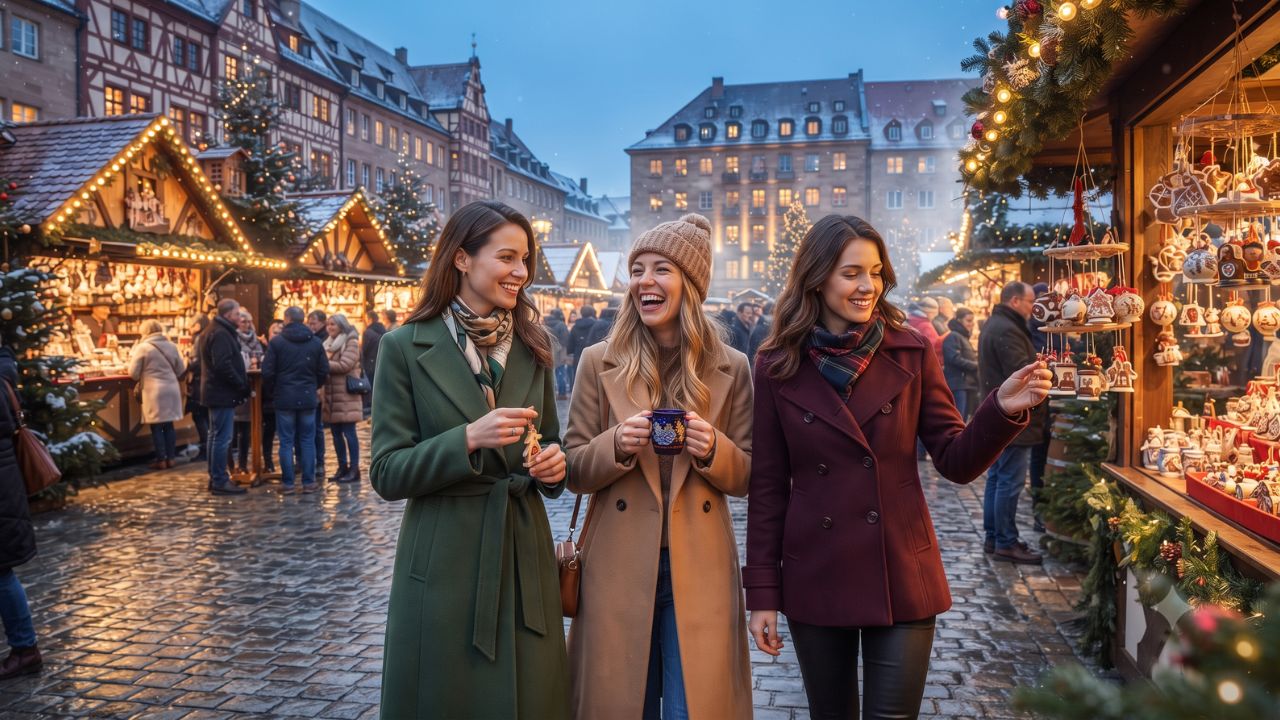
While Nuremberg's storied Christkindlesmarkt attracts more than two million visitors into its medieval Hauptmarkt across four winter weeks, approximately 60% of all December hotel overnight stays in the city belong to domestic German travelers rather than foreign tourists. Across Germany, Austria, Czechia, and Poland, glittering wooden chalets and spiced glühwein generate massive foot traffic, but tourism economists and urban planners are now interrogating whether holiday crowds genuinely translate into longer multi-night stays, foreign currency injection, and regional dispersal beyond packed historic centers.
The Overnight Reality Behind Europe's Winter Markets
The holiday market economy represents one of Europe's most visible seasonal drivers, yet overall economic yield depends heavily on whether visitors sleep in local hotels or simply commute in for an afternoon snack. Official hospitality data from 2025 highlights the sheer size of the four destination markets. Germany recorded an all-time record of 497.5 million accommodation overnight stays in 2025, climbing 0.3% from 2024. In December alone, German establishments registered 32.0 million overnight stays—a 3.6% year-on-year increase. Foreign visitors generated 6.7 million of those December nights (up 4% year-on-year), while domestic guests accounted for the lion's share at 25.4 million.
City-level records from Nuremberg illuminate how seasonal demand concentrates on the ground. During December 2024, the Franconian capital logged 387,682 overnight stays, with international travelers representing roughly 40% of the total and domestic travelers making up 60%. While the market's 2025 staging ran from 28 November to 24 December, high hotel occupancy focused heavily around Advent weekends, underscoring that raw attendance figures cannot simply be equated with commercial lodging nights.
Neighboring countries exhibit contrasting hospitality structures. Austria registered 48.17 million tourist arrivals and 157.29 million overnight stays in 2025, boasting a national average stay of 3.3 nights. Czechia recorded 23.54 million accommodated guests and 59.10 million total overnight stays, divided between 26.74 million foreign guest nights and 32.36 million domestic guest nights, with an average duration of 2.5 nights. Prague dominated national figures, capturing approximately 18.99 million overnight stays in 2025—including 16.36 million foreign guest nights. Meanwhile, Poland reported strong hospitality expansion during the first half of 2025, welcoming 18.9 million accommodated tourists (+11.6% year-on-year) and 44.9 million overnight stays (+8.5% year-on-year), even as national occupancy dipped slightly from 37.0% to 36.9%.
National Accommodation and Festive Tourism Metrics
The verified baseline figures across all four central European markets demonstrate differing guest volumes, stay durations, and international exposure:
| Country & Key Gateway | Total Overnight Stays (2025 / Baseline) | December / Seasonal Nights | Average Stay Length | International Guest Share | Key Festive Hubs & Rail Links |
|---|---|---|---|---|---|
| Germany (Nuremberg, Munich, Cologne) | 497.5 million (+0.3% y-o-y) | 32.0 million (Dec 2025; +3.6%) | ~2.2 nights | 6.7M foreign Dec nights (21%) | Nuremberg (387,682 Dec nights; 40% foreign); ICE rail hubs |
| Austria (Vienna, Salzburg, Innsbruck) | 157.29 million (48.17M arrivals) | Winter peak driven by ski/cities | 3.3 nights | Dominant foreign alpine & city share | Rathausplatz, Belvedere; Railjet high-speed connections |
| Czechia (Prague, Olomouc, Brno) | 59.10 million (23.54M guests) | December urban concentration | 2.5 nights | 26.74M foreign nights (45.2% national) | Prague (18.99M total stays; 16.36M foreign); EuroCity to Dresden |
| Poland (Kraków, Wrocław, Gdańsk) | 44.9 million (H1 2025; +8.5%) | First-half benchmark: 18.9M guests | ~2.4 nights | Rising European short-break demand | Rynek Główny, Wrocław Market Square; PKP Intercity lines |
What Makes Central Europe's Festive Regions Distinct
Each of these four nations approaches holiday tourism through a distinct cultural and urban identity. In Germany, the market experience is deeply regional. Walking through the stalls promoted by Germany Travel, travelers encounter strict guild traditions: Nuremberg requires all gingerbread sold under the Nürnberger Lebkuchen label to meet protected geographical indications, while wood-carved toys from the Erzgebirge mountains fill stalls in nearby Dresden.
In Austria, holiday celebrations merge imperial elegance with alpine traditions. Vienna positions its festive villages directly in front of baroque architectural monuments like Schönbrunn Palace and the Belvedere, detailed by Austria Tourism. Musical performances, classical choral concerts, and copper kettles of steaming Punsch create an atmosphere that feels sophisticated and deliberate.
Cross into Czechia, and Prague's Old Town Square (Staroměstské náměstí) transforms into a gothic wonderland framed by the Church of Our Lady before Týn, recognized within the UNESCO World Heritage Centre listing for the historic capital. Here, spit-roasted hams (Pražská šunka) and warm spiced medovina (honey wine) provide sustenance on chilly Bohemian evenings. In Poland, Kraków's vast Rynek Główny—Europe's largest medieval town square—offers handcrafted amber jewelry, wooden nativity scenes (szopki krakowskie), and smoky grilled oscypek sheep cheese served with tart mountain cranberries.
Evaluating Overnight Stays: The Multi-City Cross-Border Corridor
To determine the true economic benefit of festive tourism, researchers propose an analytical model: $$\text{Incremental Guest Nights per 1,000 Residents} = \left(\frac{\text{Estimated Additional Guest Nights}}{\text{Resident Population}}\right) \times 1,000$$
Under this analytical framework, seasonal overnight growth carries a 30% weighting, overnight impact per 1,000 residents carries 25%, international overnight demand accounts for 20%, length of stay and itinerary conversion holds 15%, and verified local economic value contributes 10%.
The practical value of this approach lies in cross-border rail travel. Rather than spending four nights solely in Prague or Nuremberg, travelers increasingly exploit Central Europe's dense railway grid. The EuroCity line connecting Prague and Dresden takes just two hours and 15 minutes, allowing travelers to combine Saxon stollen bakeries with Bohemian crystal workshops in a single journey. Similarly, Austria's Railjet trains link Vienna to Salzburg in two hours and 22 minutes, enabling visitors to pair classical Viennese markets with snowy alpine choirs.
Visitor Insider Tips: Timing, Stalls, and Transit Tactics
Having navigated Central Europe's winter crowds for seasons, here are essential rules for making the most of your festive journey:
- Master the Tassenpfand System: When ordering Glühwein or Kinderpunsch in Germany and Austria, you pay a mug deposit (Pfand) of €3 to €5 alongside the beverage price. Return the distinctive commemorative mug to the stall counter to retrieve your cash, or keep it as an authentic, low-cost souvenir.
- Arrive at Stalls Between 11:30 AM and 3:00 PM: Nightfall brings peak local crowds, particularly from 5:30 PM onward when offices empty out. Visiting stalls in early afternoon gives you uncrowded access to artisans, open seating near fire pits, and zero queues for hot food.
- Carry Local Cash in Central Europe: While German and Austrian vendors increasingly accept contactless cards, Polish stalls and traditional Czech craft woodworkers often remain cash-only. Keep small denominations of Euros, Czech koruna (CZK), and Polish złoty (PLN) on hand.
- Stay in Neighborhood Quarters, Not Main Squares: Avoid paying inflated rates for hotels overlooking Nuremberg's Hauptmarkt or Prague's Old Town. Base yourself in Nuremberg's Gostenhof or Prague's Vinohrady, which offer indie bakeries, lower room prices, and five-minute tram connections to the center.
- Reserve Cross-Border Train Seats in Advance: Winter rail routes between Munich, Salzburg, Vienna, and Prague experience heavy holiday patronage. Booking seat reservations through Deutsche Bahn or ÖBB prevents having to stand in train corridors with heavy winter luggage.
Cultural and Environmental Context: Regional Craft Heritage vs Mass Day-Tripping
The commercial expansion of festive markets has triggered serious discussions regarding overtourism, local displacement, and environmental sustainability. In medieval centers like Nuremberg and Kraków, holiday crowds can strain pedestrian thoroughfares, challenge municipal waste management, and inflate seasonal residential rents.
To combat commercialization, municipal councils now enforce strict artisan quotas. In Nuremberg, market authorities mandate that stalls showcase locally crafted pewter, regional prune people (Zwetschgenmännla), and certified Franconian wines, rejecting imported plastic goods. Cities across Germany and Austria have also eliminated disposable cups, requiring uniform reusable ceramics cleaned in high-efficiency industrial mobile dishwashers.
By distributing tourist footfall across lesser-known regional markets—such as Olomouc in Moravia, Regensburg in Bavaria, or Wrocław in Lower Silesia—travelers directly support municipal heritage conservation while experiencing intimate seasonal rituals that mass coach excursions rarely encounter.
FAQ: Visiting Central European Christmas Markets 2026
When do Central European Christmas markets open and close?
Most markets open during the final weekend of November (around 27–28 November) and conclude on 23 or 24 December. Selected markets in Prague, Vienna, and Kraków stay open until Epiphany on 6 January.
Which city offers the easiest cross-border Christmas market combination?
Prague and Dresden offer the most practical pairing. Fast EuroCity trains run every two hours along the Elbe River, linking both historic market squares in roughly two hours and 15 minutes.
Do I need to book accommodation months in advance?
Yes. For primary hubs like Nuremberg and Vienna, hotels within walking distance of historic centers fill up by September for Friday and Saturday stays. Midweek visits offer substantially better rates.
What is the typical daily budget for eating at the market stalls?
Expect to spend €25 to €40 per person per day for a substantial lunch, snacks, roasted chestnuts, and two hot mulled beverages with mug deposits included.
[Under the soft glow of hand-blown lantern glass and the scent of clove-steeped wine, Central Europe's winter squares remind us that the greatest journeys are measured in human warmth, not seasonal statistics.]
Related Travel Guides
Disclaimer
This article is for informational and educational purposes only. It does not constitute legal, financial, or professional advice. While we strive to provide accurate and up-to-date information, travel policies, regulations, and conditions change rapidly. Always verify information with official sources before making travel decisions. Nomad Lawyer makes no representations about the accuracy, reliability, completeness, or suitability of the information provided. Readers should consult qualified professionals for advice specific to their circumstances. The views expressed in this article are those of the author and do not necessarily reflect the views of Nomad Lawyer.
Kunal K Choudhary
Co-Founder & Contributor
A passionate traveller and tech enthusiast. Kunal contributes to the vision and growth of Nomad Lawyer, bringing fresh perspectives and driving the community forward.
Learn more about our team →