
Uzbekistan and Silk Road Travel in 2026: Navigating Global Energy Inflation, Debt Pressures, and Budget Realities

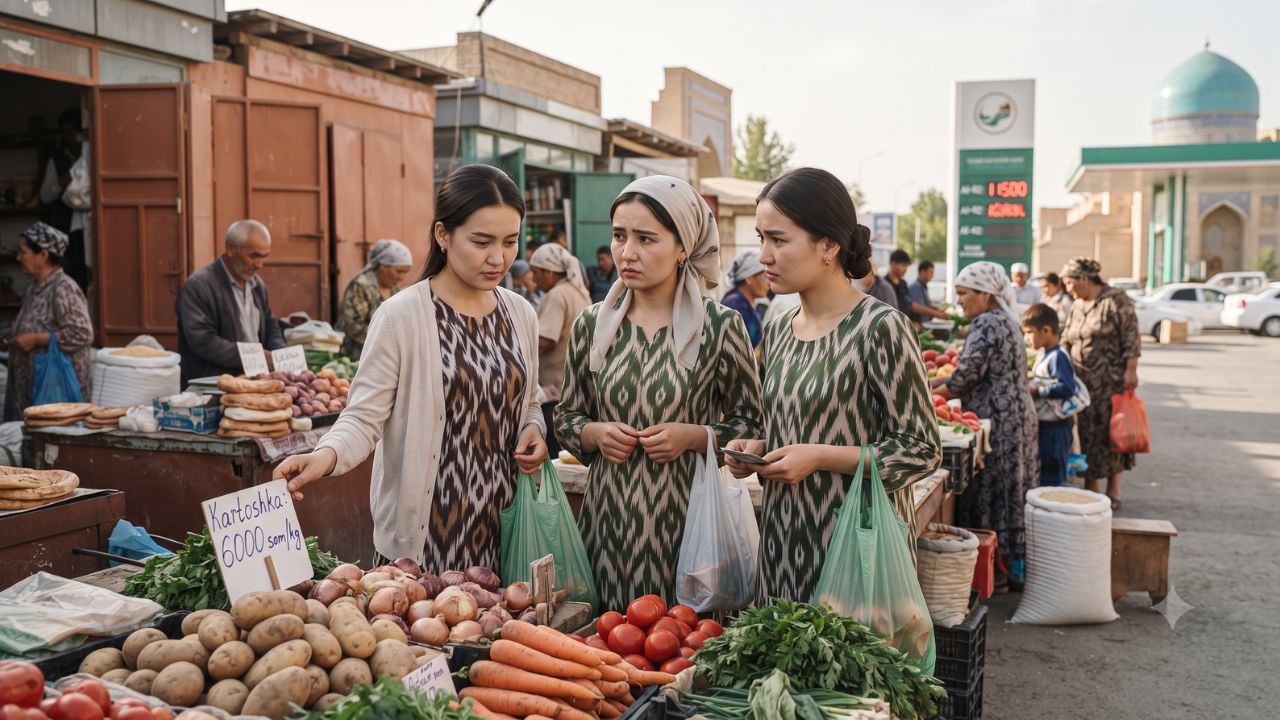
With the median developing nation now spending a staggering 9.5% of total government revenue simply to service foreign debt interest—the highest level recorded in 25 years—economic shocks from Middle East conflicts are driving global fuel and food costs into dangerous territory. A landmark assessment published on 11 October 2026 by the United Nations Development Programme, titled No Time to Recover: Compounding Crises, Depleted Fiscal Buffers and What It Means for Developing Economies, reveals that crude oil climbing past US$100 per barrel and average diesel price increases of 38% across 130 nations threaten to push up to 130 million more people below the US$6.85-a-day poverty line. While emerging destinations like Uzbekistan, Kenya, and Haiti navigate these external headwinds, cultural travelers heading along Central Asia's historic Silk Road must understand how energy costs and shifting fiscal realities affect regional journeys.
Compounding Crises: Oil Above $100, Debt Burdens, and El Niño Pressure
The UNDP findings describe an interconnected macroeconomic storm buffeting developing economies. For the second time since regional hostilities escalated in the Middle East, crude oil has surged past the US$100-per-barrel threshold. Between June and September 2026, fuel price inflation accelerated across global markets, with UNDP's analysis of 130 countries documenting average retail increases of 26% for petrol and 38% for diesel.
Compounding this transport inflation is a severe sovereign debt liquidity squeeze. The median developing nation now allocates 9.5% of its fiscal revenue to interest payments—more than triple the proportion spent by high-income countries. With benchmark US 10-year Treasury yields reaching 5.3% (their highest point since 2002) and bond yields for weak-credit sovereigns hovering near 9%, governments face exorbitant refinancing costs.
Simultaneously, the global agricultural sector confronts what meteorologists warn could be the strongest El Niño weather event on record, disrupting crop cycles and food supplies across Sub-Saharan Africa, South Asia, East Asia, and Latin America.
The human dimension of these compounding shocks is severe. UNDP modeling indicates that if governments fully pass rising energy and grocery prices directly to households without subsidies, up to 130 million additional people could fall below the US$6.85-a-day poverty threshold. At the lower US$3.65 daily threshold, the vulnerable population reaches 121 million people, while 66 million face extreme poverty below US$2.15 per day.
Ahead of the International Monetary Fund and World Bank Annual Meetings in Bangkok, Thailand, running from 12 to 18 October 2026, UNDP Administrator Alexander De Croo called for urgent multilateral liquidity support. While universal fossil fuel subsidies could exceed US$1 trillion worldwide in 2026—costing roughly 1.1% of developing-country GDP—targeted income protections focused strictly on households below the US$6.85 line require only 0.3% of national output.
Global Macro Indicators & Developing Economy Matrix 2026
The macroeconomic data points, debt metrics, and poverty scenarios documented in the October 2026 UNDP analysis are detailed below:
| Economic Indicator | Verified UNDP Metric (October 2026) | Historical or Global Benchmark | Strategic Impact on Travel & Destinations |
|---|---|---|---|
| Crude Oil Price Level | Exceeded US$100 per barrel | Second breach since conflict began | Directly elevates aviation jet fuel and long-haul ticket pricing. |
| Average Petrol Inflation | +26% average increase (130 nations) | June–September 2026 widening phase | Raises highway taxi and overland tour transfer expenses. |
| Average Diesel Inflation | +38% average increase (130 nations) | Outpaces refined petrol price surges | Increases freight transport costs for local agricultural produce. |
| Median Debt Interest Burden | 9.5% of total government revenue | Highest level in 25 years (3x wealthy nations) | Compresses public funding for municipal transit and heritage sites. |
| US 10-Year Treasury Yield | 5.3% benchmark rate | Highest interest yield since 2002 | Drives global borrowing costs for weaker-credit nations to ~9%. |
| Poverty Risk at US$6.85/Day | Up to 130 million people at risk | Unprotected scenario without subsidies | Pressures household purchasing power in emerging tourism markets. |
| Poverty Risk at US$3.65/Day | Up to 121 million people at risk | Intermediate developing-country threshold | Increases domestic reliance on informal tourism employment. |
| Extreme Poverty at US$2.15 | Up to 66 million people at risk | Global extreme poverty definition | Demands targeted social assistance rather than broad subsidies. |
| Global Fossil Fuel Subsidies | Projected to exceed US$1.0 trillion | Equivalent to ~1.1% of developing GDP | Targeted relief below $6.85/day costs only ~0.3% of national GDP. |
What Makes Uzbekistan Different: Silk Road Heritage and Insulated Travel
While the UNDP report highlights Uzbekistan, Kenya, and Haiti as examples of diverse developing economies facing import costs and financial volatility, Uzbekistan possesses distinct structural buffers that keep it uniquely accessible for international travelers, supported by official initiatives from Uzbekistan Travel.
Unlike nations wholly reliant on imported petroleum, Uzbekistan produces substantial domestic natural gas and mineral reserves. This domestic resource base powers the electrified Afrosiyob high-speed rail line (operated by Spanish Talgo 250 trainsets), which connects Tashkent, Samarkand, and Bukhara without reliance on volatile international diesel imports.
Culturally, Uzbekistan stands as the architectural apex of Islamic civilization along the ancient Silk Road. Samarkand—inscribed as a Crossroads of Cultures through the UNESCO World Heritage Centre—mesmerizes visitors with Registan Square, where three soaring 15th- and 17th-century madrasas display azure tilework, turquoise domes, and intricate calligraphy. Nearby, the Shah-i Zinda necropolis features a street of royal mausoleums lined with cobalt mosaics that glow brilliantly under Central Asian desert sunlight.
In Bukhara, the ancient mud-brick urban core surrounds the 45-meter-tall Kalyan Minaret, which has stood since 1127 AD. Further west across the Kyzylkum Desert, the walled desert citadel of Itchan Kala in Khiva functions as an open-air museum, enclosed by 10-meter-high earthen battlements that transport visitors directly into the Middle Ages.
Visitor Insider Tips for Exploring Uzbekistan on a Budget
- High-Speed Rail Over Desert Taxis: Avoid hiring private long-distance drivers whose fuel rates fluctuate with global energy prices. Book the high-speed Afrosiyob train between Tashkent, Samarkand, and Bukhara. Tickets open for booking exactly 45 days in advance via the official Uzbekistan Railways mobile application. Second-class tickets cost approximately $12 to $18, covering the 300-kilometer sprint between Tashkent and Samarkand in just 2 hours and 15 minutes.
- Managing Currency and Cash Logistics: The official currency is the Uzbek Som (UZS). While modern hotels and upscale restaurants in Tashkent accept international Visa and Mastercard, historic bazaars and craft workshops operate exclusively in cash. Bring pristine, uncreased US Dollar bills ($50 and $100 denominations, printed after 2013) to exchange at official bank kiosks, as torn or marked bills are routinely rejected.
- Lunchtime Plov Rituals: Central Asian dining is both economical and deeply traditional. The national dish, osh (plov)—rice simmered with yellow carrots, tender beef or lamb, chickpeas, raisins, and aromatic cumin—is cooked in gigantic cast-iron cauldrons (kazans) exclusively for lunch. Visit the famous Central Asian Plov Center (Besh Qozon) in Tashkent between 11:30 and 13:00 to enjoy a hearty, authentic platter with quail eggs and horse meat sausage (kazy) for under $4.00.
- Shoulder Season Travel: Visit during autumn (mid-September to early November) or spring (April to May). These months avoid the extreme summer heat (chilla) that exceeds 42°C (108°F), as well as sub-zero winter winds that sweep off the Siberian steppe.
Cultural and Environmental Context: Water Scarcity and Heritage Stewardship
While global headlines focus on fuel inflation, Central Asia confronts ongoing environmental challenges centered on water scarcity. The legacy of Soviet-era cotton monoculture drained the Aral Sea, transforming a body of water once larger than Lake Michigan into the toxic Aralkum Desert.
Modern climate patterns associated with El Niño threaten agricultural yields along the vital Amu Darya and Syr Darya river basins, where mountain glacial runoff feeds municipal drinking systems.
Tourism provides an important mechanism for economic diversification away from water-intensive cash crops. Tourist spending directly funds master craftsmen restoring centuries-old majolica ceramics, woodcarvers producing walnut bookstands, and silk weavers operating historic looms in the Fergana Valley. By supporting family-run guesthouses (choyxonas) and registered local guides, travelers contribute directly to preserving cultural heritage amid a shifting global economy.
FAQ: Visiting Uzbekistan 2026
Do international travelers need a visa for Uzbekistan?
Citizens from over 90 countries—including the European Union, United Kingdom, Canada, and Australia—enjoy visa-free entry for tourist stays up to 30 days. United States citizens can obtain an electronic visa (e-Visa) online for approximately $20 prior to arrival.
How do I travel between Tashkent, Samarkand, and Bukhara?
The electrified Afrosiyob high-speed train is the fastest and most comfortable method, linking Tashkent to Samarkand in 2 hours and 15 minutes, and Samarkand to Bukhara in 1 hour and 30 minutes.
Is Uzbekistan safe for independent and solo travelers?
Uzbekistan is one of the safest travel destinations globally, featuring dedicated tourist police stations (Xavfsiz Turizm) across historical sites and very low rates of petty street crime.
How has global energy inflation impacted travel costs in Uzbekistan?
While international airfares have increased due to jet fuel costs, domestic ground travel remains remarkably affordable due to domestic natural gas reserves, state-regulated electric high-speed trains, and inexpensive local dining.
[Across the turquoise domes and mud-brick ramparts of the ancient Silk Road, Uzbekistan proves that the enduring beauty of human craftsmanship outlasts every temporary economic storm.]
Related Travel Guides
Disclaimer
This article is for informational and educational purposes only. It does not constitute legal, financial, or professional advice. While we strive to provide accurate and up-to-date information, travel policies, regulations, and conditions change rapidly. Always verify information with official sources before making travel decisions. Nomad Lawyer makes no representations about the accuracy, reliability, completeness, or suitability of the information provided. Readers should consult qualified professionals for advice specific to their circumstances. The views expressed in this article are those of the author and do not necessarily reflect the views of Nomad Lawyer.
Raushan Kumar
Founder & Lead Developer
Full-stack developer with 11+ years of experience and a passionate traveller. Raushan built Nomad Lawyer from the ground up with a vision to create the best travel and law experience on the web.
Learn more about our team →