Morocco Unleashes Tourism Revolution with Massive Investments Ahead of FIFA World Cup 2030

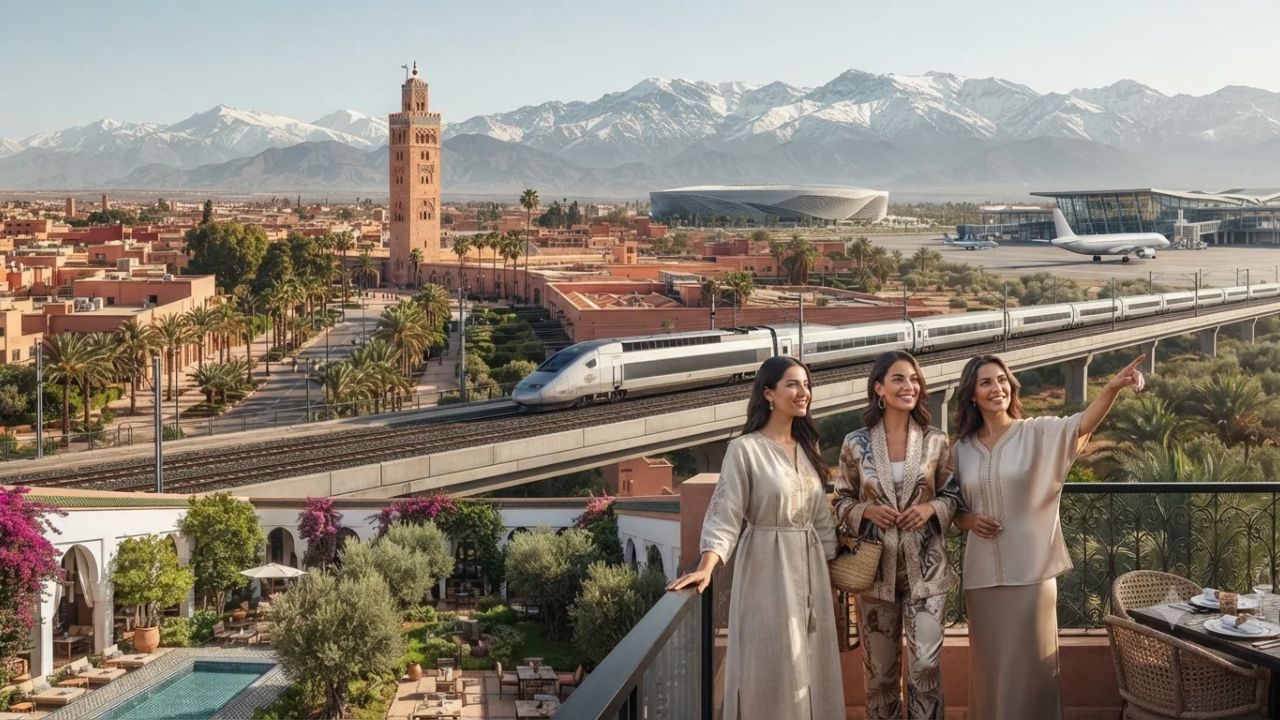
Morocco has accelerated a transformative nationwide tourism and infrastructure revolution, deploying a MAD 380 billion ($38 billion) public investment program in 2026 to modernize airports, expand high-speed rail, upgrade stadiums, and construct luxury hospitality assets ahead of co-hosting the 2030 FIFA World Cup. Building on an unprecedented milestone in 2025—when the Kingdom welcomed 19.8 million international visitors and generated MAD 138.1 billion ($13.8 billion) in foreign exchange travel receipts—the North African nation is outpacing its initial growth targets. As Morocco prepares to stage the world’s largest sporting spectacle alongside Spain and Portugal, national authorities are converting athletic momentum into a permanent economic catalyst that connects Casablanca, Marrakech, Rabat, Tangier, Fez, and Agadir with world-class connectivity.
The scale of Morocco's investment mobilization extends far beyond temporary tournament logistics. Under the direction of the Ministry of Tourism, Handicrafts and Social and Solidarity Economy, the National Airports Office (ONDA), the National Railways Office (ONCF), and the Moroccan Agency for Tourism Development (SMIT), the Kingdom is executing a multi-tiered development framework designed to achieve 26 million annual visitors by 2030. Driven by record foreign direct investment inflows, extensive airport expansions, a MAD 96 billion railway corridor reaching Marrakech, and aggressive private hotel construction by groups like RISMA, Accor, and Hilton, Morocco is establishing itself as an intercontinental tourism, aviation, and commercial gateway connecting Africa, Europe, and the Americas.
MOROCCO TOURISM & INFRASTRUCTURE EXPANSION SCORECARD
| Core Metric or Project | 2024 Benchmark | 2025 Actual | 2026 Target / Status |
|---|---|---|---|
| Annual Inbound Tourist Arrivals | 17.4 Million | 19.8 Million (+14%) | Approaching 21M+ |
| Foreign Exchange Travel Receipts | MAD 114.5 Billion | MAD 138.1 B (+21%) | Projected MAD 150B+ |
| Gross Foreign Direct Investment | MAD 43.80 Billion | MAD 56.05 B (+28%) | Robust Inflow Growth |
| Net Foreign Direct Investment | MAD 16.29 Billion | MAD 28.39 B (+74%) | Accelerated Capital |
| 2026 National Public Investment | N/A | N/A | MAD 380 Billion |
| Casablanca Airport Planned Capacity | 15 Million / Yr | 15 Million / Yr | 35 Million by 2029 |
| ONCF Rail Investment Program | Operating Base | Planning Framework | MAD 96 Billion (2030) |
| Direct Tourism Employment (OECD) | ~810,000 Jobs | 894,000 Jobs | Projected 950,000+ |
| Long-Term 2030 Tourism Target | Baseline Plan | Revision Target | 26 Million Visitors |
Surpassing National Targets: The 2025–2026 Tourism Surge
The foundation of Morocco’s current capital investment drive is the extraordinary surge in tourist arrival figures recorded over the past twenty-four months. In 2025, Morocco welcomed 19.8 million international visitors, marking a 14% year-over-year expansion compared to 2024. This performance decisively outperformed the government's earlier forecast in its 2023–2026 Tourism Strategic Roadmap, which had conservatively targeted 17.5 million visitors for the end of 2026.
This arrival growth translated into substantial macroeconomic gains. Travel receipts climbed to approximately MAD 138.1 billion ($13.8 billion) in 2025, representing a 20.6% increase over the MAD 114.5 billion generated in 2024. According to official data published by the Organisation for Economic Co-operation and Development (OECD) in its 2026 tourism assessment, direct tourism employment in Morocco reached 894,000 jobs in 2025, underscoring the sector's vital role as a primary engine of domestic employment, foreign exchange liquidity, and regional socioeconomic stability.
TOP INTERNATIONAL INBOUND SOURCE MARKETS TO MOROCCO
| Entity / Facility | Delays | Cancellations | Details |
|---|---|---|---|
| Source Market | Market Share (%) | Dominant Modality | Primary Regional Attractions |
| France | ~33.5% of Arrivals | Air (Direct Hubs) | Marrakech, Agadir, Fez, Casablanca |
| Spain | ~14.2% of Arrivals | Air & Maritime Ferry | Tangier, Tetouan, Rabat, Casablanca |
| United Kingdom | ~11.8% of Arrivals | Low-Cost Scheduled | Marrakech, Taghazout, Agadir Resorts |
| Germany | ~6.5% of Arrivals | Scheduled & Charter | Agadir Beach, Atlantic Surfing, Dades |
| Italy | ~5.2% of Arrivals | Air Transit | Cultural Imperial Cities, Sahara |
| Moroccan Diaspora | ~31.0% of Volume | Maritime & Seasonal | Nationwide Regional Family Visits |
European outbound travelers continue to represent the primary pillar of Morocco’s foreign tourism receipts. France remains the undisputed leading source market, generating over one-third of all international arrivals, followed by Spain and the United Kingdom. Direct low-cost aviation networks, cultural familiarity, and short flying times (between two and three hours from most Western European hubs) have solidified Morocco's status as a top-tier winter sun, cultural, and weekend leisure destination.
Additionally, the Moroccan diaspora residing abroad (Marocains Résidant à l’Étranger - MRE) provides consistent passenger volume throughout the summer Marhaba transit operation and major religious holidays, diffusing foreign currency directly into rural provinces and secondary cities.
The MAD 380 Billion Public Investment Framework
To sustain this growth trajectory and ensure that municipal infrastructure can accommodate the 26 million visitors projected for 2030, the Moroccan government codified an unprecedented MAD 380 billion ($38 billion) public investment program within its 2026 national budget framework.
Rather than functioning as a narrow fund dedicated exclusively to sporting infrastructure, this MAD 380 billion allocation represents an economy-wide modernization program. The capital envelope is distributed across integrated strategic pillars:
- Multimodal Transport Systems: Expanding motorways, upgrading regional expressways (voies expresses), constructing high-speed rail lines, and modernizing commercial maritime ports.
- Aviation Capacity and Hub Development: Upgrading international air terminals, installing next-generation air traffic management technology, and expanding regional runway infrastructure.
- Clean Energy and Water Security: Constructing seawater desalination plants (such as the mega-facility in Casablanca), modernizing irrigation systems, and expanding utility-scale solar and wind installations to power urban growth sustainably.
- Urban Renewal and Civic Services: Rehabilitating historic medinas, building modern healthcare centers, updating emergency response infrastructure, and upgrading municipal utility grids in designated host cities.
This public expenditure acts as an investment multiplier, providing the certainty required for domestic and multinational commercial developers to commit billions of dirhams in private hotel, retail, and entertainment ventures.
ALLOCATION OF 2026 PUBLIC INVESTMENT INITIATIVES
| Entity / Route | Metrics | Operational Status |
|---|---|---|
| Development Sector | Capital Focus | Strategic Objective for 2030 |
| ONCF Rail Corridor Expansion | MAD 96 Billion | High-speed link Kénitra-Marrakech-Agadir |
| Casablanca Airport Terminal Build | MAD 15 Billion | Expand capacity to 35M passengers/year |
| Regional Airport Upgrades (ONDA) | MAD 12 Billion | Modernize Marrakech, Tangier, Rabat, Agadir |
| Stadium & Sports Infrastructure | MAD 20+ Billion | Grand Stade Hassan II & 5 host arenas |
| Water Security & Desalination | MAD 30+ Billion | Coastal desalination plants to secure H2O |
| Tourism SME Incubation & Roadmaps | MAD 156 Million | Fund 414 innovative regional startups |
Casablanca’s MAD 15 Billion Airport Transformation
Aviation connectivity is the primary enabler of Morocco’s international tourism strategy. Recognizing that current air terminal capacity would become a critical bottleneck ahead of the 2030 World Cup, the National Airports Office (ONDA) launched its ambitious Airports 2030 Strategy.
The flagship centerpiece of this initiative is the MAD 15 billion ($1.5 billion) expansion of Casablanca Mohammed V International Airport (CMN). Under this project, ONDA is constructing a massive, next-generation terminal complex equipped with advanced baggage-handling logistics, biometric passenger processing gates, and expanded widebody aircraft gates.
CASABLANCA MOHAMMED V AIRPORT EXPANSION (TERMINAL 2029)
| Category / Entity | Details / Impact |
|---|---|
| Project Feature | Operational Specification & Capacity |
| Current Passenger Capacity | Approximately 15 Million Passengers Annually |
| New Terminal Additional Capacity | +20 Million Passengers Annually |
| Total Target Capacity by 2029 | 35 Million Passengers Annually |
| Estimated Project Investment | MAD 15 Billion ($1.5 Billion USD) |
| Target Commissioning Date | First Quarter 2029 (Ahead of 2030 FIFA World Cup) |
| Anchor Flagship Carrier | Royal Air Maroc (RAM Fleet Modernization to 200 Aircraft) |
| Intermodal Transit Connectivity | Direct High-Speed Rail & RER Suburban Integration to Terminal |
The new terminal is designed to handle an additional 20 million passengers per year, elevating Casablanca’s total operational throughput to 35 million travelers annually upon completion in 2029. This expansion is timed to support national carrier Royal Air Maroc’s strategic roadmap, which aims to expand its commercial fleet from 50 aircraft to 200 airliners by 2037.
By scaling up widebody capacity, Casablanca will consolidate its position as Africa’s preeminent intercontinental aviation mega-hub, funneling transit traffic between West Africa, Europe, North America, and South America while funneling high-yield tourists directly into Moroccan regional centers.
Simultaneously, ONDA is executing major terminal renovations across regional airports:
- Marrakech Menara Airport: Expanding terminal footprint to process 12 million passengers annually.
- Rabat-Salé Airport: Commissioning a new MAD 1.6 billion terminal raising capacity to 4 million passengers.
- Tangier Ibn Battuta Airport: Expanding facilities to accommodate 3.5 million visitors.
- Agadir Al Massira Airport: Upgrading infrastructure to handle 3 million passengers, serving the southern beach and surfing belts.
The MAD 96 Billion Rail Expansion: Extending High-Speed Al Boraq
On the ground, Morocco’s transportation network is undergoing an unprecedented modernization directed by the National Railways Office (ONCF). Building upon the success of Al Boraq—Africa’s first high-speed rail line, which commenced operations between Tangier and Casablanca in 2018—ONCF has committed to a comprehensive MAD 96 billion ($9.6 billion) development master plan running through 2030.
The primary engineering achievement of this program is the 430-kilometer high-speed rail extension from Kénitra through Rabat and Casablanca down to Marrakech. Once completed, high-speed trains traveling at speeds up to 320 km/h will reduce the journey time between Tangier and Marrakech from over five hours to approximately two hours and forty minutes. Travel time between Casablanca and Marrakech will be reduced to just one hour.
ONCF HIGH-SPEED RAIL TRAVEL TIME REDUCTIONS (AL BORAQ)
| Entity / Facility | Delays | Cancellations | Details |
|---|---|---|---|
| City Pair Route | Conventional Travel | Al Boraq High-Speed | Strategic Tourism Benefit |
| Tangier to Rabat | 3 Hours 45 Minutes | 1 Hour 20 Minutes | Single-day business/tourism |
| Tangier to Casablanca | 4 Hours 45 Minutes | 2 Hours 10 Minutes | Connects Med to Commercial Hub |
| Casablanca to Marrak. | 2 Hours 45 Minutes | 1 Hour 00 Minute | Effortless day trips to South |
| Tangier to Marrakech | 5 Hours 30 Minutes | 2 Hours 40 Minutes | Unites Northern & Southern Hub |
| Marrakech to Agadir | 3 Hours 30 Min (Road) | 1 Hour 15 Min (Plan) | Future Atlantic connection |
The rail investment program also incorporates:
- Acquisition of 168 Next-Generation Trains: Valued at over MAD 16 billion, including high-speed trainsets, intercity express trains, and suburban regional commuter units (Réseau Express Régional - RER).
- Airport Rail Link: Direct rail integration connecting Casablanca Mohammed V Airport to downtown Casablanca, Rabat, and the high-speed main line.
- Stadium Transport Corridors: Dedicated high-capacity rail spurs serving the future Grand Stade Hassan II in Benslimane.
The passenger data demonstrates that this railway expansion is grounded in solid domestic demand. In the first half of 2025 alone, ONCF transported more than 27 million passengers across its network, with high-speed Al Boraq services carrying 2.5 million travelers. This robust baseline ensures that post-2030 rail operations will remain economically viable without relying solely on tournament demand.
Host Cities and Stadium Mega-Projects: Six Urban Showcases
Morocco’s co-hosting of the 2030 FIFA World Cup has brought six historic cities into the global spotlight. FIFA’s technical inspection delegations are conducting exhaustive venue-readiness audits across Morocco, Spain, and Portugal to assess stadium specifications, transport logistics, hospitality capacity, and safety readiness.
MOROCCO CANDIDATE HOST CITIES & STADIUM VENUES
| Entity / Facility | Delays | Cancellations | Details |
|---|---|---|---|
| Host City | Stadium Venue | Target Capacity | Architectural Focus |
| Casablanca | Grand Stade Hassan II (Benslimane) | 115,000 Seats | World's largest arena |
| Tangier | Grand Stade de Tanger (Ibn Battuta | 87,000 Seats | Fully covered revamp |
| Rabat | Complexe Moulay Abdellah | 68,700 Seats | Modernized capital |
| Marrakech | Grand Stade de Marrakech | 45,800 Seats | Southern tourism hub |
| Agadir | Grand Stade d’Agadir (Adrar) | 45,400 Seats | Atlantic resort zone |
| Fez | Complexe Sportif de Fès | 45,000 Seats | Imperial heritage |
The flagship architectural endeavor is the Grand Stade Hassan II, situated in Benslimane approximately 38 kilometers north of Casablanca. Designed by renowned architectural firms Oualalou + Choi and Populous, the stadium features an iconic design inspired by traditional Moroccan nomadic gatherings (moussem), set beneath a monumental tented roof structure.
With a planned capacity of 115,000 spectators, it will rank as the largest football stadium on earth upon completion in 2028. Morocco has formally proposed the Grand Stade Hassan II as the venue for the 2030 World Cup Final, competing with Madrid’s Santiago Bernabéu and Barcelona’s Camp Nou for the honor.
Beyond Casablanca, comprehensive reconstruction programs are underway:
- Tangier: The Grand Stade de Tanger is undergoing an expansion to 87,000 seats, removing its athletics track to create an intimate European-style football atmosphere.
- Rabat: The Complexe Sportif Prince Moulay Abdellah has been completely demolished and rebuilt into a state-of-the-art 68,700-seat arena.
- Marrakech, Fez, and Agadir: Undergoing major infrastructure upgrades, hospitality beautification, and stadium renovations to ensure unified operational readiness.
Foreign Direct Investment and Private Hospitality Expansion
The unprecedented public expenditure has catalyzed a dramatic surge in private capital deployment across Morocco's hospitality, real estate, and tourism sectors. According to official data from the Office des Changes, gross foreign direct investment (FDI) receipts climbed to MAD 56.05 billion in 2025, marking a 28% increase over 2024. Net FDI inflows experienced a staggering 74.3% surge, reaching MAD 28.39 billion compared to MAD 16.29 billion the previous year.
MOROCCO FOREIGN DIRECT INVESTMENT INFLOWS (2024 vs 2025)
| Entity / Facility | Delays | Cancellations | Details |
|---|---|---|---|
| FDI Indicator | 2024 Actual | 2025 Actual | Year-over-Year Growth |
| Gross FDI Receipts | MAD 43.80 Billion | MAD 56.05 Billion | +28.0% Expansion |
| Net FDI Inflows | MAD 16.29 Billion | MAD 28.39 Billion | +74.3% Surge |
| Capital Sourcing Regions | France, UAE, USA | France, Spain, Gulf | Diversified Sources |
| Primary Investment Targets | Automotive, Real | Hospitality, Green | Infrastructure Focus |
Domestic Hospitality Leadership: RISMA’s Strategic Growth
Domestic hotel operators are playing a leading role in expanding accommodation capacity. Casablanca-listed hotel management and investment company RISMA secured regulatory approval from the Moroccan Capital Markets Authority (AMMC) in January 2026 for a MAD 450 million ($45 million) equity capital increase, issuing 1.5 million shares at MAD 300 per share.
RISMA has deployed this capital into its published Horizon 2030 Strategy, targeting an operational portfolio of 28 hotels comprising more than 5,000 rooms by 2030. Working in close alliance with multinational operator Accor, RISMA is developing new properties under the Sofitel, Novotel, Mercure, and Ibis banners, while simultaneously renovating existing beachfront and urban business hotels in Casablanca, Rabat, Tangier, and Marrakech.
GLOBAL HOSPITALITY BRANDS EXPANDING IN MOROCCO
| Entity / Route | Metrics | Operational Status |
|---|---|---|
| Hospitality Group | Key Operating Brands | Development Focus & Locations |
| Accor | Sofitel, Fairmont, Raffles | Luxury resorts in Rabat, Taghazout, Tangier |
| Hilton Worldwide | Waldorf Astoria, Conrad | Luxury openings in Casablanca, Rabat, Taghaz. |
| Marriott Internat. | The Ritz-Carlton, St. Regis | Ultra-luxury golf resorts & Tamuda Bay |
| IHG Hotels & Resorts | InterContinental, Kimpton | Boutique urban lifestyle hotels in Marrakech |
| Wyndham Hotels | Wyndham Grand, Ramada | Midscale and upscale leisure accommodation |
| Radisson Hotel Group | Radisson Collection, RED | Fast-growing presence across secondary cities |
Global Hotel Operators Scale Up Pipeline
International hotel chains are accelerating their Moroccan pipelines across luxury, lifestyle, and midscale segments. Operators recognize that while luxury travelers are well-served in Marrakech and Casablanca, substantial market opportunities exist for branded midscale and extended-stay properties catering to budget-conscious European sports fans and regional families.
To ensure that rapid expansion does not compromise quality, the Ministry of Tourism launched an extensive mystery-guest quality audit program in May 2026, evaluating 2,500 classified hotel establishments across hygiene, staff training, accessibility, and dining standards. Establishments meeting elevated thresholds receive certified national accreditation, reassuring international tour operators and travel booking platforms.
The Casablanca Showcase Summit: Financing Momentum 2030
To channel international institutional capital into tourism projects, Casablanca will host the third edition of the Morocco Showcase Summit on November 26, 2026, at the Casablanca Marriott Hotel. Organised by API Events in partnership with the Moroccan Agency for Tourism Development (SMIT), the conference convenes under the banner Momentum 2030: Catalysing Morocco’s Investment Journey.
MOROCCO SHOWCASE SUMMIT 2026: KEY EVENT PARAMETERS
| Category / Entity | Details / Impact |
|---|---|
| Summit Parameter | Official Program Detail |
| Event Title | Morocco Showcase Summit: Momentum 2030 |
| Organizer | API Events in strategic collaboration with SMIT |
| Delegation Profile | Over 300 C-suite executives, institutional financiers, hotel developers |
| International Reach | Senior representatives from over 15 countries |
| Core Thematic Focus | Real estate debt, equity structures, secondary city hospitality yields |
| Post-2030 Strategy | Sustainable asset management beyond short-term tournament demand |
The summit focuses on critical financial mechanisms: hotel debt financing, private equity joint ventures, sovereign co-investment funds, and listings on the Casablanca Stock Exchange. Equally important, the summit agenda addresses the long-term viability of hospitality developments post-2030, exploring how resorts can maintain high year-round occupancies through MICE (Meetings, Incentives, Conferences, and Exhibitions) events, wellness tourism, golf circuits, and digital nomad residency programs once the World Cup concludes.
Regional Diversification and Tourism Entrepreneurship
Morocco’s tourism vision deliberately avoids concentrating growth solely within the golden triangle of Casablanca, Marrakech, and Rabat. Through its 2023–2026 Tourism Strategic Roadmap, the government has prioritized regional asset diversification, encouraging travelers to discover the northern Mediterranean coast, the desert oases of the south, and the Atlantic surf coast.
MOROCCO'S REGIONAL TOURISM SPECIALIZATION CLUSTERS
| Entity / Route | Metrics | Operational Status |
|---|---|---|
| Regional Cluster | Geographic Footprint | Signature Tourism Experiences |
| Cultural Imperial | Fez, Meknes, Rabat, Marrakech | Historic medinas, artisanal crafts, food |
| Atlantic Eco-Resort | Taghazout Bay, Essaouira, Agadir | World-class surfing, wellness, beaches |
| Mediterranean Coast | Tangier, Tetouan, Al Hoceima | Yachting, coastal resorts, seafood dining |
| Desert & Adventure | Ouarzazate, Merzouga, Dades | Sahara luxury camps, stargazing, cinema |
| High Atlas Active | Imlil, Toubkal National Park | Alpine trekking, Berber village homestays |
| MICE & Commercial | Casablanca, Tangier Med, Rabat | Conventions, finance, trade expos |
To encourage grassroots participation in this tourism boom, the government established a MAD 156 million ($15.6 million) tourism entrepreneurship incubation program. By early 2025, 414 innovative startup projects had been shortlisted under this initiative. These ventures span artisanal food trails in the Atlas Mountains, digital augmented-reality guides for historic medinas, eco-friendly glamping retreats in the Sahara, and sustainable marine sports schools along the Atlantic.
By nurturing local entrepreneurs, Morocco ensures that the economic dividends of its tourism revolution flow directly into local communities, fostering sustainable economic development and preserving authentic cultural heritage.
Strategic Outlook: Beyond the 2030 Horizon
Morocco’s unprecedented infrastructure and hospitality mobilization represents one of the most comprehensive national transformation programs in modern African history. While the 2030 FIFA World Cup serves as an immovable deadline that focuses institutional energy and accelerates bureaucratic approvals, the underlying investments are designed to permanently reshape the Kingdom’s economic geography.
By expanding airport throughput to 35 million passengers in Casablanca, connecting the Kingdom's principal economic and cultural hubs via high-speed rail, regularizing hotel quality standards, and fostering sustainable regional entrepreneurship, Morocco is constructing a durable competitive advantage in the global tourism economy. As foreign capital continues to pour into its hospitable shores, the Kingdom is proving that ambitious visionary planning, disciplined fiscal governance, and deep cultural authenticity can unite to unleash a true tourism revolution.
Frequently Asked Questions (FAQ)
What is driving Morocco's massive tourism investment in 2026?
Morocco's investment boom is driven by preparations to co-host the 2030 FIFA World Cup alongside Spain and Portugal, combined with record-breaking tourism arrivals reaching 19.8 million in 2025 and an official government target of 26 million annual visitors by 2030.
How much public investment has Morocco allocated for 2026?
Morocco has allocated MAD 380 billion ($38 billion) for nationwide public investment in its 2026 budget framework, supporting integrated projects across transport, clean energy, municipal utilities, and economic infrastructure.
What are the details of Casablanca Airport's expansion?
The National Airports Office (ONDA) is investing MAD 15 billion to build a new terminal at Casablanca Mohammed V International Airport by 2029. The terminal will add 20 million passenger capacity, raising total airport capacity to 35 million travelers annually.
How is Morocco expanding its railway network?
The National Railways Office (ONCF) is executing a MAD 96 billion investment program that includes extending the high-speed rail line (Al Boraq) from Kénitra through Rabat and Casablanca down to Marrakech, cutting Casablanca-Marrakech travel time to just one hour.
Which Moroccan cities will host matches during the 2030 World Cup?
Six candidate host cities are included in Morocco's proposal: Casablanca (featuring the planned 115,000-seat Grand Stade Hassan II), Rabat, Marrakech, Tangier, Fez, and Agadir.
How is private hotel investment expanding across Morocco?
Domestic operator RISMA completed a MAD 450 million capital raise to expand its portfolio to 28 hotels by 2030, while global operators including Accor, Hilton, Marriott, and IHG are aggressively opening new luxury, lifestyle, and midscale hotels nationwide.
Related Travel Guides
- New Delhi Hosts Michelin Chefs Table as Over 40 Ambassadors Celebrate Global Gastronomy
- China Outbound Travel Boom Reveals Spending Paradox as 183 Million Tourists Chase Value Abroad
- France Leads European Source Markets as Tunisia Tourism Reaches 9 Million Arrivals
- Italy Issues Poland Travel Advisory Highlighting Eastern Border Security Alerts
This article is for informational purposes. Flight routes, passenger regulations, visa rules, and transit advisories are subject to change by airlines and aviation authorities. Readers are advised to verify schedules and travel documentation with relevant carriers and border agencies before departure.
Related Stories
Spain Tourist Arrivals in Morocco Drop 10% in September as Ceuta Border Friction Tempers Bookings Amid Record Sector Revenue

India Celebrates Destination of the Year 2027 Honour as Hotel Association of India Champions Global Tourism Expansion