
Morioka Castle Ruins: A Guide to Iwate’s Hidden Samurai Stronghold
Discover the Morioka Castle ruins in Iwate Prefecture. Explore the historic granite walls, Iwate Park's seasonal landscapes, and the site's literary connections

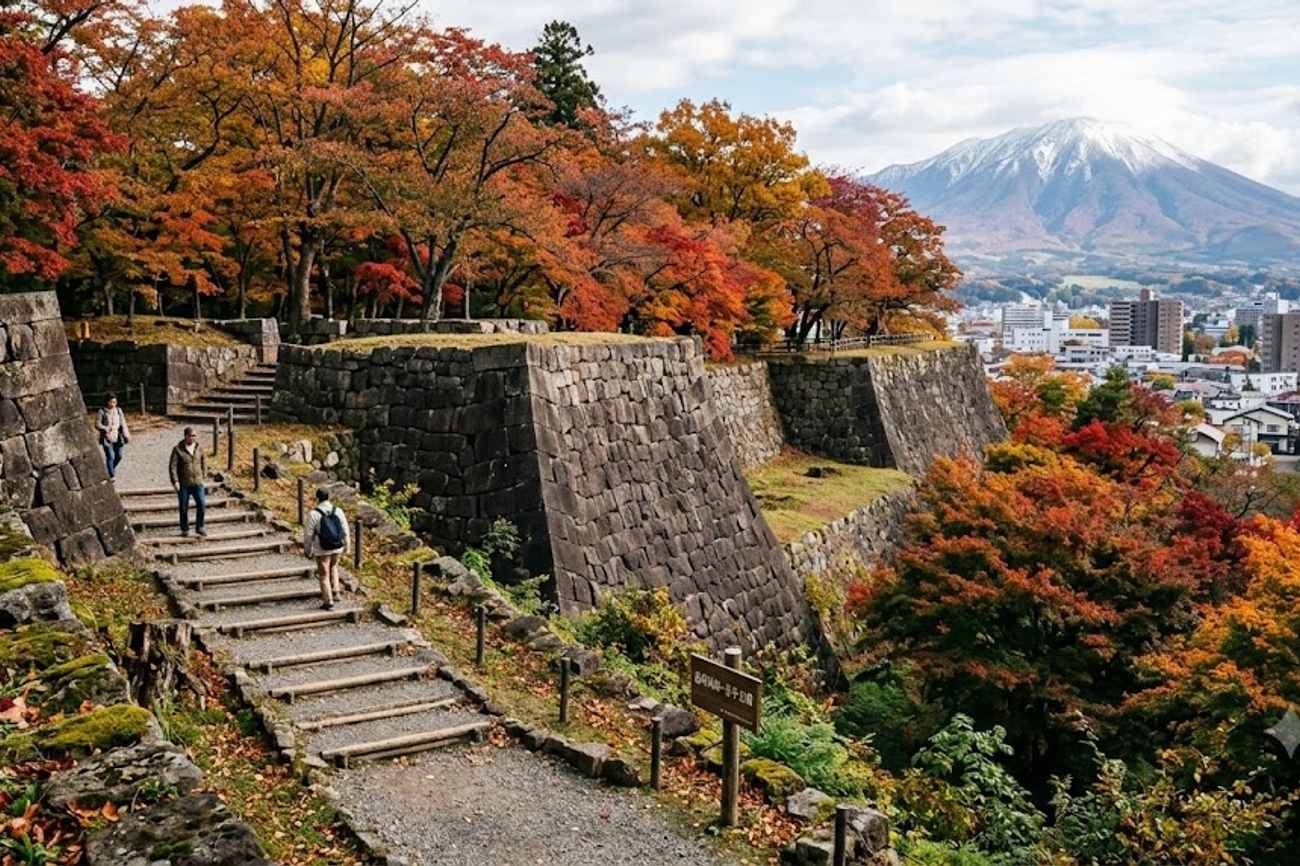
Image generated by AI
A Strategic Fortress of the Morioka Clan
The Morioka Castle ruins serve as a preserved intersection of military history and natural beauty in Iwate Prefecture. Once the administrative heart of the Morioka clan, the site is now a public park where the most striking remnants are the massive granite stone walls constructed over 200 years ago.
Strategically positioned on a hill, the fortress allowed the Morioka clan to maintain strict control over regional political events and vital trade routes. Unlike the earthen defenses common across the Tohoku region, this stronghold utilized locally sourced granite, reflecting the natural geology of Iwate.
Construction began in 1597 and reached completion in 1633. For two centuries, it stood as the primary symbol of authority for the local warlords governing the Morioka Domain during Japan's feudal era.
The Transition from Fortress to Public Park
The decline of the samurai era during the Meiji period fundamentally altered the site's purpose. Following the Boshin War, government reforms dismantled the old domain systems to reduce the power of former samurai administrations.
By 1874, the majority of the castle's structures were demolished. Only the granite walls and a single storehouse survived, serving as the sole physical links to the site's military past.
The land remained dormant until 1906, when park designer Yasuhei Nagaoka transformed the grounds into Iwate Park. This redevelopment shifted the site from a restricted military zone to a community space where heritage and recreation coexist.
Seasonal Tourism and the Iwate Park Experience
Morioka Castle is a year-round destination, with the aesthetic of the ruins shifting dramatically across four seasons:
- Spring: The park becomes a primary destination for cherry blossom viewing, contrasting soft pink blooms against the grey granite walls.
- Summer: Dense green landscapes offer a cool, urban escape for visitors exploring Morioka City.
- Autumn: The foliage transforms the park into a high-traffic location for photography and nature walks.
- Winter: Snow-covered fortifications create a stark, dramatic atmosphere, offering a serene experience for those avoiding crowds.
Literary Connections: Poetry and Heritage
Beyond military history, the ruins are a pilgrimage site for fans of Japanese literature. The peaceful atmosphere of the grounds inspired two of Japan's most celebrated poets: Takuboku Ishikawa and Kenji Miyazawa.
The park features dedicated monuments to these writers, integrating literary tourism into the historical visit. This connection highlights the site's evolution from a place of war and control to a place of artistic inspiration.
Visitor Logistics and Access
Located in the center of Morioka City, the ruins are highly accessible and free of admission fees, making them a budget-friendly addition to any Tohoku itinerary.
Transportation from JR Morioka Station
| Method | Route/Detail | Estimated Time |
|---|---|---|
| City Loop Bus | Stop: Morioka Joato Koen | ~10 Minutes |
| Taxi | Direct to Park Entrance | Fast Access |
| Walking | City center pedestrian route | 15–20 Minutes |
Key Takeaways
- Architectural Distinction: Built with granite stone walls instead of traditional earth, reflecting Iwate's local resources.
- Historical Timeline: Constructed between 1597 and 1633; most structures demolished in 1874.
- Cultural Value: Combines samurai history with the literary legacy of Kenji Miyazawa and Takuboku Ishikawa.
- Accessibility: Free entry, located in central Morioka, and accessible via bus, taxi, or walking from the JR station.
FAQ
Is there an entrance fee for Morioka Castle Ruins? No, the site is part of a public park and is free to visit year-round.
What is the best time to visit for photography? Spring (cherry blossoms) and Autumn (colorful foliage) are the most visually striking seasons.
What remains of the original castle? While the main buildings were demolished in 1874, the original granite stone walls and a storehouse remain.
Related Travel Guides
Disclaimer
This article is for informational and educational purposes only. It does not constitute legal, financial, or professional advice. While we strive to provide accurate and up-to-date information, travel policies, regulations, and conditions change rapidly. Always verify information with official sources before making travel decisions. Nomad Lawyer makes no representations about the accuracy, reliability, completeness, or suitability of the information provided. Readers should consult qualified professionals for advice specific to their circumstances. The views expressed in this article are those of the author and do not necessarily reflect the views of Nomad Lawyer.
Raushan Kumar
Founder & Lead Developer
Full-stack developer with 11+ years of experience and a passionate traveller. Raushan built Nomad Lawyer from the ground up with a vision to create the best travel and law experience on the web.
Learn more about our team →