
Submerged Ruins and Black Roses: Halfeti Emerges as Türkiye’s Premier Cultural Frontier
Explore Halfeti, Türkiye, featuring the sunken ruins of Old Halfeti, the rare black rose, and Rumkale fortress. Discover travel routes from Istanbul.
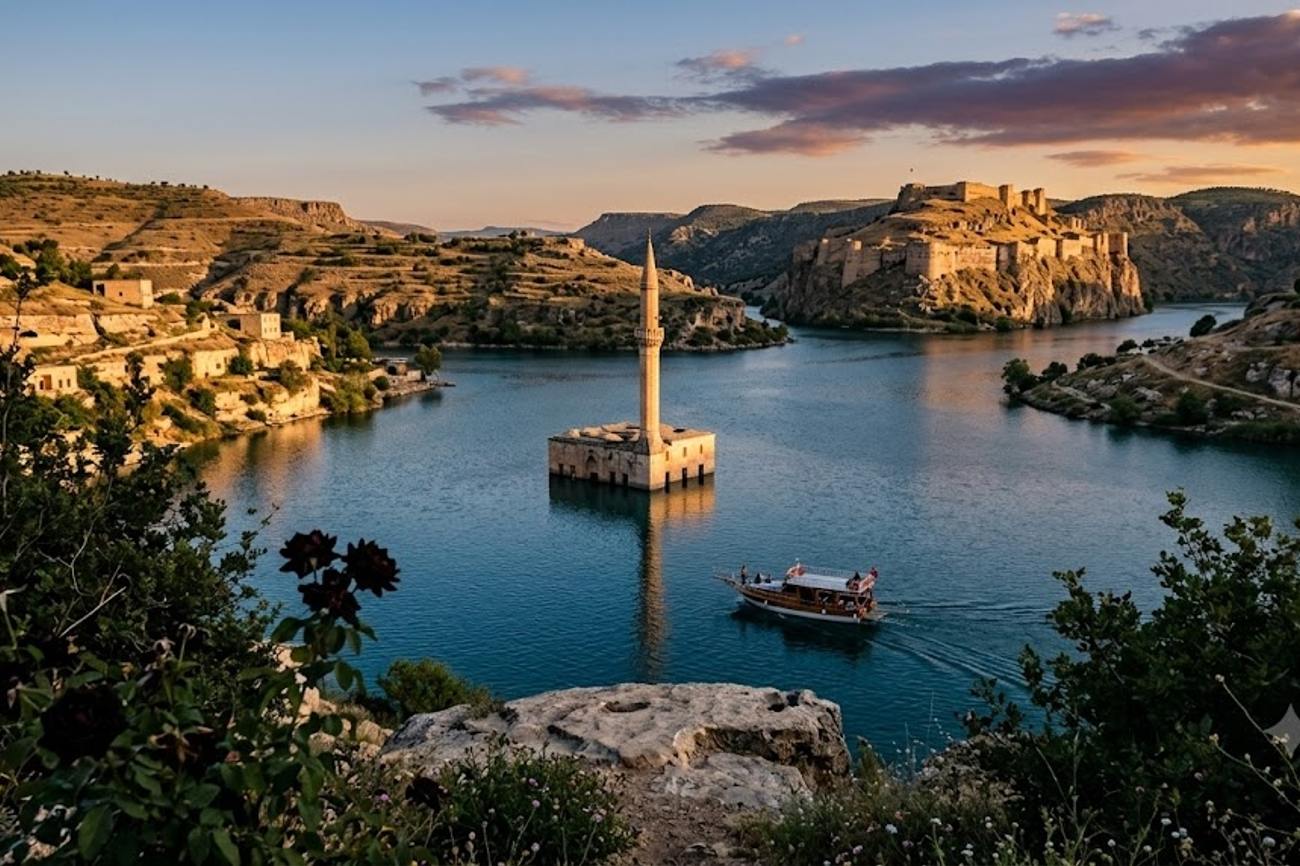
Image generated by AI
[Şanlıurfa, September 7, 2026] — The town of Halfeti, situated in the Şanlıurfa Province of southeastern Türkiye, is rapidly gaining international attention as a destination where geological drama meets ancient civilization. Defined by its position along the Euphrates River, the area provides a stark contrast to Türkiye's typical urban tourism, offering a landscape characterized by partially submerged villages, prehistoric fortifications, and a botanical rarity found nowhere else on earth.
Unlike the curated experience of Istanbul’s museums or the beaches of the Mediterranean, Halfeti forces a confrontation with the passage of time. The town's identity is split between the "New" town and the "Old" settlement, the latter of which now exists primarily beneath the surface of the river, creating a surreal environment where minarets and rooftops pierce the water.
Exploring the Sunken Heritage of Old Halfeti
The primary draw for visitors is the boat expedition through Old Halfeti. This journey across the Euphrates reveals the remnants of a community reclaimed by nature and water. The river's calm surface hides a complex layer of history, allowing passengers to drift past the ruins of homes and businesses that once formed a thriving riverside hub.
A central landmark of this aquatic journey is the Ulu Cami, or Grand Mosque. Constructed between 1804 and 1807, this Ottoman-era structure serves as a poignant symbol of the town's resilience and historical depth. The mosque's architecture reflects the aesthetic of the early 19th century, remaining a focal point for both spiritual reflection and architectural study despite the changing waterline.
Beyond the architecture, Halfeti is the exclusive home of the karagül, the legendary black rose. This flower is not merely a botanical curiosity but a cultural icon of the region. Due to the specific soil chemistry and climate of the Euphrates basin, the rose develops its signature dark hue, making it a primary objective for horticulturalists and luxury travelers seeking unique natural experiences.
Rumkale and the Crossroads of Ancient Empires
Further navigation down the Euphrates leads to Rumkale, a fortress perched precariously on a rocky peninsula. This site is more than a scenic lookout; it is a stratigraphic record of the civilizations that fought for control of the river's strategic waterways.
The fortifications at Rumkale bear the marks of several successive empires, including:
- The Urartians
- The Babylonians
- The Sumerians
- The Seljuks
- The Ottomans
For archaeology enthusiasts, Rumkale represents the strategic necessity of the Euphrates. The fortress served as a defensive bulwark and a customs point, controlling trade and troop movements for millennia. The juxtaposition of the sheer cliffs and the flowing river creates a dramatic backdrop for the ruins, cementing the site as one of the most visually striking archaeological locations in southeastern Anatolia.
Navigating the Journey from Istanbul to Halfeti
Reaching this remote corner of Türkiye from Istanbul is an expedition in itself, often mirroring the cultural transition from the European side of the Bosphorus to the heart of the Middle East. Travelers typically utilize a combination of rail and road transport to reach the Şanlıurfa region.
One common itinerary involves utilizing the Marmaray rail system from Yenikapi to Pendik, followed by a high-speed train connection toward Sivas. From Sivas, travelers transition to bus services heading toward Gaziantep, finally completing the trip via a taxi journey of approximately 57 miles to reach Halfeti.
This specific route transforms the transit into a cultural tour. Sivas, located in central Anatolia, serves as a hub for Seljuk and Ottoman history. Travelers stopping here can visit the Double Minaret Madrasa, the Sivas Grand Mosque, and the Divriği Great Mosque and Darüşşifa, the latter of which is renowned for its intricate stone carvings and historical significance.
Gastronomic Integration via Gaziantep
Many visitors choose to route their journey through Gaziantep, a city that serves as the culinary capital of Türkiye. The city's inclusion in UNESCO’s Creative Cities Network for Gastronomy makes it an essential stop for those seeking to understand the flavors of the region before arriving in the quietude of Halfeti.
Gaziantep offers a sensory bridge to Halfeti, where visitors can sample authentic regional dishes prepared with traditional methods. Beyond the food, the city houses the Zeugma Mosaic Museum, which contains some of the world's most sophisticated ancient mosaics, providing a thematic link to the archaeological wonders found at Rumkale.
For those opting for a slower pace, long-distance bus travel from Istanbul to Gaziantep offers a panoramic view of Türkiye's shifting geography. This overland route allows travelers to observe the transition from the metropolitan density of the west to the sprawling, rural landscapes of the southeast.
Infrastructure Shifts and Future Accessibility
The accessibility of southeastern Türkiye is poised for a significant upgrade. Current infrastructure projects include the testing of a new 312-kilometre high-speed railway designed to link Mersin and Gaziantep.
This development is expected to drastically alter travel timelines in the region:
| Route Segment | Current Travel Time (Approx.) | Future High-Speed Rail Time (Approx.) |
|---|---|---|
| Mersin to Gaziantep | 6.5 Hours | 2 Hours 15 Minutes |
This reduction in travel time is expected to increase the flow of tourists into the Şanlıurfa Province, potentially bringing more visibility to Halfeti and its surrounding historical sites.
Why This Matters: The Traveler's Perspective
For the modern traveler, Halfeti represents a shift away from "checklist tourism" toward "experiential travel." The attraction here is not just a monument, but the feeling of isolation and the visual evidence of environmental change.
From a logistical standpoint, the journey to Halfeti requires more planning than a trip to Cappadocia or Antalya, but the reward is a lack of overcrowding and a more authentic interaction with local customs. The "Information Gain" for the visitor lies in witnessing the intersection of human ambition (the fortresses and mosques) and natural power (the flooding of the valley). For those interested in sustainable or slow travel, the combination of the Sivas rail link and the Gaziantep culinary stop creates a comprehensive narrative of Turkish identity that cannot be captured in a short flight.
Related Travel Guides
Disclaimer
This article is for informational and educational purposes only. It does not constitute legal, financial, or professional advice. While we strive to provide accurate and up-to-date information, travel policies, regulations, and conditions change rapidly. Always verify information with official sources before making travel decisions. Nomad Lawyer makes no representations about the accuracy, reliability, completeness, or suitability of the information provided. Readers should consult qualified professionals for advice specific to their circumstances. The views expressed in this article are those of the author and do not necessarily reflect the views of Nomad Lawyer.