
Moab Utah Tourism Shift: From Primitive Camping to Luxury Desert Resorts
Analysis of Moab, Utah's evolving hospitality market, detailing the shift toward luxury glamping, adventure hotels, and strict BLM environmental regulations.
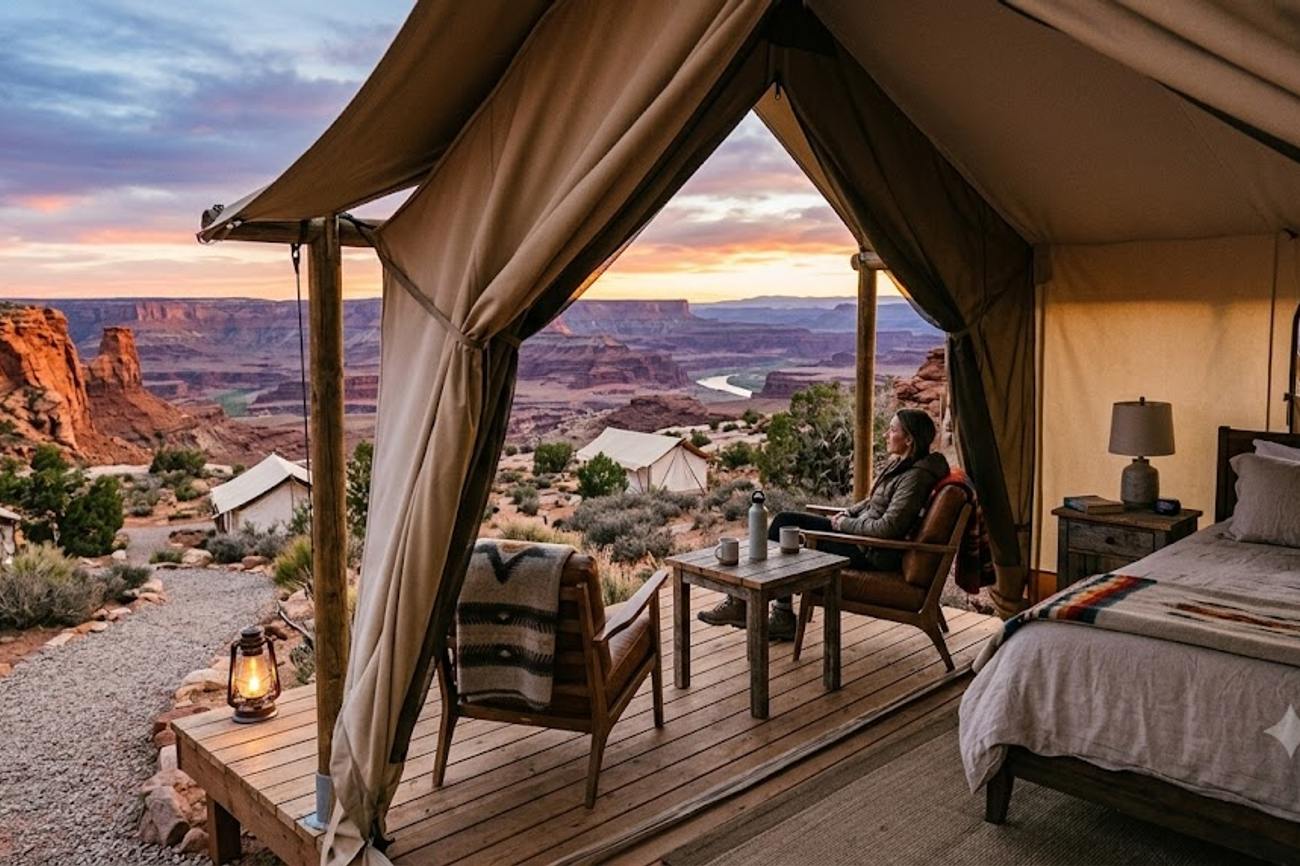
Image generated by AI
Moab, Utah, is undergoing a fundamental shift in its hospitality infrastructure. Historically serving as a primitive gateway to two iconic national parks, the region has expanded its offerings to capture a broader demographic, ranging from ultra-luxury travelers to specialized adventure athletes.
The current market evolution sees a move away from simple overnight stays toward "integrated experiences." Modern developments are now embedding activity centers directly into resort designs, allowing guests to transition from high-end amenities to mountain biking or hiking trails without leaving the property.
The Diversification of Moab Lodging
The accommodation market in the American Southwest has seen few shifts as drastic as Moab's. The region has moved beyond the traditional hotel model to establish five distinct stay categories:
- Free and Budget Camping: Targeted at van lifers, climbers, and backpackers prioritizing direct nature access.
- Budget Hotels and Campgrounds: Value-driven options providing basic AC and town proximity.
- Adventure Boutique Hotels: Specialized hubs for cyclists and hikers featuring gear storage and recovery amenities.
- Luxury Glamping: High-end tenting with private bathrooms and hotel-style service for experience-seekers.
- Riverside Luxury Resorts: Exclusive estates offering fine dining, spas, and private cabins.
Environmental Constraints and BLM Regulations
Despite the rise in luxury, primitive camping remains a core part of Moab's identity. However, increased tourism has forced the Bureau of Land Management (BLM) to implement stricter regulations to prevent the degradation of the landscape.
A primary concern is the protection of cryptobiotic soil—a living crust essential to desert health. Consequently, "wild camping" is increasingly restricted, with authorities mandating the use of designated sites. Furthermore, due to the slow rate of natural decomposition in arid climates, strict human waste management protocols are now enforced, requiring the use of approved disposal facilities.
The Rise of the "Adventure Hotel"
A new hospitality category is emerging: the Adventure Hotel. Properties like Gravity Haus Moab and Moab Springs Ranch are pivoting away from the traditional hospitality model to focus on community and wellness. These properties treat the hotel as a basecamp rather than a destination, offering specialized equipment rinse areas, secure bike storage, and recovery spaces.
For those seeking a middle ground, the downtown corridor remains a hub. Properties such as the Gonzo Inn, Aarchway Inn, and Wolfe’s Hotel Moab provide a balance of Southwestern personality and walkable access to Main Street's commercial services.
Data Table: Moab Accommodation Segmentation
| Accommodation Category | Best For | Main Features |
|---|---|---|
| Free and Budget Camping | Van travellers, climbers, backpackers | Low-cost, primitive facilities, direct nature access |
| Budget Hotels and Campgrounds | Value travellers | Basic rooms, AC, easy town access |
| Adventure Boutique Hotels | Hikers, cyclists, active travellers | Gear storage, bike facilities, recovery amenities |
| Luxury Glamping | Couples, photographers | Premium tents, private bathrooms, hotel services |
| Riverside Luxury Resorts | High-end travellers, families | Fine dining, spas, private cabins |
Why This Matters
From a logistical perspective, Moab is a case study in "Tourism Scaling." The transition from primitive campsites to luxury resorts indicates a shift in the visitor profile from the "hardy adventurer" to the "affluent experientialist."
For the travel industry, this proves that high-end luxury can coexist with rugged outdoor tourism if the infrastructure is specialized. The introduction of "recovery amenities" (spas, specialized gym equipment) specifically for hikers and bikers shows that luxury in this sector is no longer about gold leaf and linens, but about physical optimization and gear logistics.
Industry Outlook
Expect further tightening of BLM land-use permits as the region hits peak capacity. We anticipate a surge in "closed-loop" resorts—properties that provide everything from gear rental to guided excursions and luxury lodging within a single perimeter—to reduce the environmental footprint on public lands.
Internal Link Suggestions:
- Analysis of National Park Infrastructure Trends
- The Growth of Glamping in the American Southwest
- Sustainable Tourism Regulations in Fragile Ecosystems
Related Travel Guides
Disclaimer
This article is for informational and educational purposes only. It does not constitute legal, financial, or professional advice. While we strive to provide accurate and up-to-date information, travel policies, regulations, and conditions change rapidly. Always verify information with official sources before making travel decisions. Nomad Lawyer makes no representations about the accuracy, reliability, completeness, or suitability of the information provided. Readers should consult qualified professionals for advice specific to their circumstances. The views expressed in this article are those of the author and do not necessarily reflect the views of Nomad Lawyer.