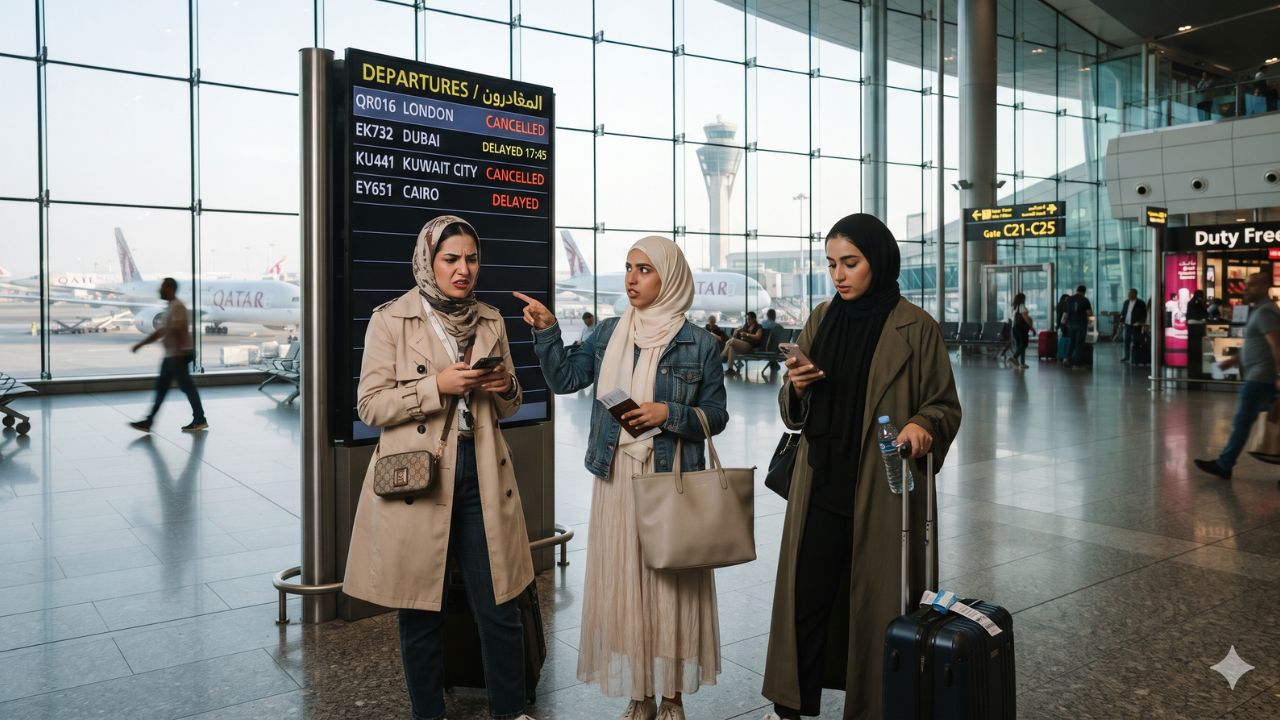
Middle East Flight Disruptions: 1,628 Delays and 70 Cancellations Impact Riyadh, Dubai, and Jeddah Hubs

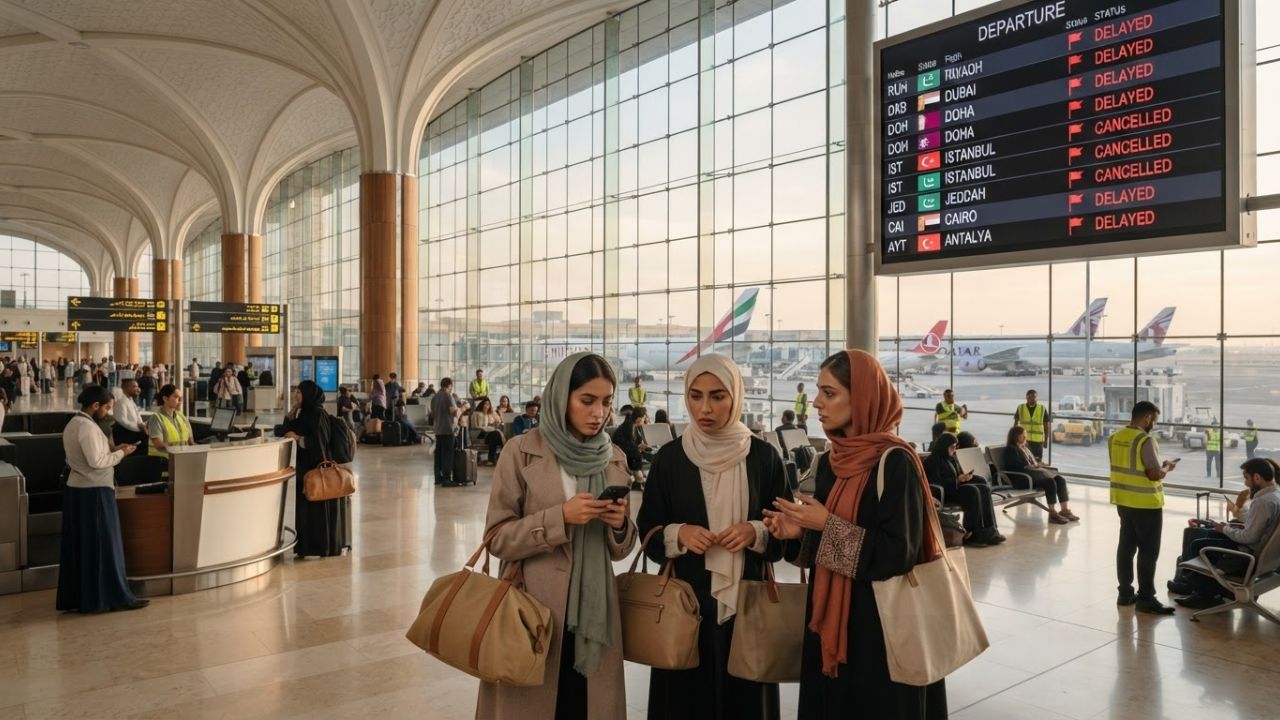
Commercial aviation corridors across the Middle East experienced widespread schedule friction on September 8, 2026, as operational tracking telemetry recorded 1,628 flight delays and 70 cancellations across major connecting hubs in the United Arab Emirates, Saudi Arabia, Qatar, Türkiye, Israel, Egypt, and Iraq. High-density transfer gateways absorbed the brunt of the backlog, with Ben Gurion International Airport logging 242 delays, Dubai International tracking 180 delays, and King Abdulaziz International Airport in Jeddah registering a regional high of 10 cancellations alongside 151 delayed services.
Real-time airspace telemetry compiled at 5:02 pm ET (September 9 at 1:02 am Gulf Standard Time / GST) revealed significant strain on global east-west transit itineraries. As intercontinental transfer flows collided with localized airspace flow controls, aircraft repositioning delays, and schedule recovery measures, passengers navigating major hubs encountered extended gate holds and revised departure timings.
Despite the elevated delay volumes, outright flight cancellations remained contained at 70 operations regionally, demonstrating that carriers prioritized schedule continuity through delayed turnarounds rather than system-wide flight cuts.
The Local Trend Revealed: Regional Air Corridor Strain and Hub Metrics
The operational pressure was concentrated across the Middle East’s primary transit nodes, which serve as intercontinental bridges connecting Europe, Africa, Asia, and North America. Ben Gurion International Airport in Israel registered the highest single-facility delay volume with 242 delays and two cancellations, including six delayed departures involving flights within, into, or out of the United States.
In the United Arab Emirates, Dubai International Airport (DXB) recorded 180 delays and eight cancellations, reflecting an origin cancellation rate of 3% and a destination cancellation rate of 5%. Abu Dhabi International Airport (AUH) logged 138 delays and three cancellations, while Sharjah International Airport (SHJ) recorded 63 delays and a single cancellation.
Saudi Arabia experienced broad operational challenges across both primary global gateways and domestic secondary aerodromes. King Abdulaziz International Airport (JED) in Jeddah logged 151 delays and 10 cancellations (with a 7% origin cancellation rate), representing the largest cancellation total among listed hubs. King Khalid International Airport (RUH) in Riyadh tracked 146 delays and five cancellations, with a 4% origin cancellation rate. King Fahd International Airport (DMM) in Dammam noted 21 delays and two cancellations, while Abha Regional Airport (AHB) in the southern Asir highlands logged 43 delays and three cancellations. Regional outposts in Gizan and Najran recorded zero flight delays but posted three and four cancellations respectively.
| Airport Facility | Code | Country | Flight Delays | Flight Cancellations | Origin Cancel % | Dest. Cancel % |
|---|---|---|---|---|---|---|
| Ben Gurion International | TLV | Israel | 242 | 2 | – | – |
| Dubai International | DXB | UAE | 180 | 8 | 3% | 5% |
| Cairo International | CAI | Egypt | 156 | 2 | – | – |
| King Abdulaziz International | JED | Saudi Arabia | 151 | 10 | 7% | – |
| King Khalid International | RUH | Saudi Arabia | 146 | 5 | 4% | – |
| Abu Dhabi International | AUH | UAE | 138 | 3 | – | – |
| Istanbul Airport | IST | Türkiye | 138 | 2 | – | – |
| Hamad International | DOH | Qatar | 137 | 5 | – | – |
| Istanbul Sabiha Gökçen | SAW | Türkiye | 95 | 11 | 4% | 7% |
| Sharjah International | SHJ | UAE | 63 | 1 | – | – |
| Abha Regional | AHB | Saudi Arabia | 43 | 3 | – | – |
| King Fahd International | DMM | Saudi Arabia | 21 | 2 | – | – |
| Erbil International | EBL | Iraq | 3 | 1 | – | – |
| Gizan Regional | GIZ | Saudi Arabia | 0 | 3 | – | – |
| Najran Domestic | EAM | Saudi Arabia | 0 | 4 | – | – |
Across the Bosporus, Türkiye’s commercial aviation corridors also absorbed compounding delays. Istanbul Airport (IST) and Istanbul Sabiha Gökçen International Airport (SAW) collectively recorded 233 delays and 13 cancellations, while Mediterranean leisure gateways including Antalya experienced knock-on schedule shifts. In Egypt, Cairo International Airport (CAI) handled 156 delays and two cancellations, while Erbil International Airport (EBL) in Iraq reported three delays and one cancellation.
Airline Operations: Gulf and Turkish Carriers Manage Schedule Pressure
Fleet telemetry confirmed that regional carriers absorbed the majority of schedule disruptions through operational delays rather than grounding rotations:
- Gulf Flag Carriers: Emirates and Qatar Airways recorded identical delay ratios, with both mega-carriers logging 18% delayed operations across their networks. Low-cost operator FlyDubai tracked 17% delayed services, while Saudi national carrier Saudia registered a 17% delay rate alongside 2% cancellations.
- Turkish Operators: Low-cost carrier Pegasus Airlines posted a 16% delay rate across its network. SunExpress reported 15% delays and 1% cancellations, while Turkish low-cost brand AJet recorded a 4% delay rate but the highest cancellation proportion at 3%.
Because Gulf carriers operate wave-based hub connection systems—where dozens of inbound flights arrive within narrow windows to transfer passengers to departing long-haul banks—a 30-to-45-minute delay on an inbound feeder can compromise onward connection banks to Europe, Africa, and Southeast Asia.
Cultural & Environmental Value: Slow Transit and Community Support
Extended delays across Middle Eastern aviation hubs present an opportunity to examine sustainable transit alternatives and localized community engagement.
When long ground holds occur, travelers are often confined to international transit concourses. However, forward-thinking regional transportation investments allow delayed passengers to pivot away from airside congestion. In Saudi Arabia, the fully electrified Haramain High-Speed Railway station integrated directly inside Jeddah’s Terminal 1 connects travelers to Mecca in 35 minutes and Medina in under two hours at zero direct emissions, providing an eco-friendly overland corridor that bypasses domestic flights.
Similarly, transit passengers in Dubai, Doha, and Riyadh can utilize electrified metro networks to venture beyond airport retail perimeters during multi-hour layovers. By visiting historic neighborhoods—such as Al-Balad in Jeddah with its UNESCO-protected coral-stone towers and wooden roshan balconies, or Souq Waqif in Doha—travelers channel economic spending directly to independent date merchants, spice traders, and local craftsmen, preserving centuries-old regional commerce.
Visitor Insider Tips: Navigating Middle Eastern Hub Layovers
For international travelers navigating unexpected schedule holds across the Gulf and Levant, localized tactics can streamline the transit experience:
- Navigating King Abdulaziz International (JED): If you face an extended layover at Jeddah Terminal 1, visit the terminal's 14-meter-tall central aquarium—the world's largest airport aquarium—home to more than 2,000 Red Sea marine creatures. For passengers delayed past four hours, order traditional Hejazi Saleeg (creamy broth-simmered rice topped with tender roasted chicken) at the dining terrace. If your connection extends overnight, consider booking a short trip to Al-Balad to experience night markets scented with frankincense and cardamom.
- Riyadh King Khalid (RUH) Transit Protocol: Terminal 5 serves domestic routes with seamless links. During extended day holds, travelers can connect via the Riyadh Metro to visit the UNESCO World Heritage site of At-Turaif in historic Diriyah, the historic mud-brick seat of the first Saudi state. When interacting in local spaces, dress respectfully covering shoulders and knees, and be mindful of short service pauses during the five daily prayer calls (Adhan).
- Dubai (DXB) and Doha (DOH) Quiet Havens: At Dubai International Terminal 3, escape gate announcements by heading to the Zen Gardens between Gates B7 and B11, featuring shaded seating and tranquil fish ponds. At Doha Hamad International, find respite inside The Orchard, an indoor tropical garden spanning 6,000 square meters beneath a sunlit glass canopy.
- Enforcing GACA and Regional Passenger Rights: In Saudi Arabia, the General Authority of Civil Aviation (GACA) enforces passenger protection regulations requiring airlines to provide refreshments and communication access for delays exceeding two hours, and complimentary hotel accommodation and airport transfers if delays extend beyond six hours between 10:00 pm and 6:00 am.
Tourism Outlook: Strengthening Resilience Across Middle Eastern Skies
The September 8 operational figures illustrate both the scale and the sensitivity of the Middle East's aviation ecosystem. As airports in Riyadh, Jeddah, Dubai, and Istanbul undergo multi-billion-dollar expansions to support national tourism visions, managing operational resilience during peak traffic periods remains vital.
Through advanced air traffic flow automation, enhanced airline coordination, and integrated high-speed ground rail connections, the region continues to build the infrastructure needed to maintain its position as the crossroads of global air travel.
Related Travel Guides
This article is for informational purposes. Flight routes, passenger regulations, visa rules, and transit advisories are subject to change by airlines and aviation authorities. Readers are advised to verify schedules and travel documentation with relevant carriers and border agencies before departure.
Related Stories
Middle East Air Travel Disruptions: 109 Flight Cancellations and 1,224 Delays Across Riyadh, Dubai, and Istanbul Airports
Middle East Flight Disruptions: Security Protocols and Airspace Halts Trigger 183 Cancellations and 1,274 Delays Across 13 Regional Hubs