
UAE and Saudi Arabia Christmas Flight Surges: Rising Airfares, Record Hub Traffic, and GACA Passenger Rights 2026

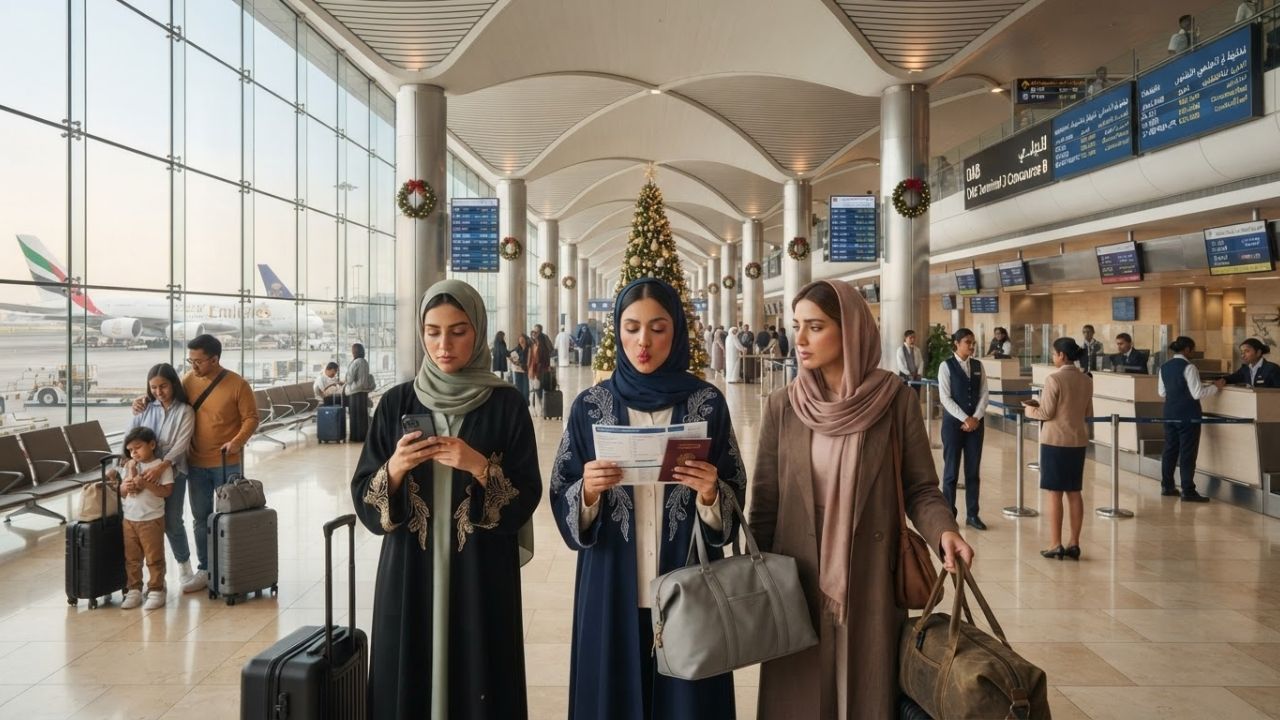
Airfares for December 2026 departures from the United Arab Emirates and Saudi Arabia have surged 30% to 50% above off-peak baselines as 69.5 million transit passengers in the UAE and 140.9 million travelers in Saudi Arabia compete for constrained airline seats. Driven by global jet fuel averaging US$152 per barrel and a record US$57 refinement crack spread, expatriate families face steep holiday costs while aviation authorities enforce strict passenger compensation rules under GACA and GCAA mandates.
The seasonal homecoming for millions of expatriate workers living in the Gulf Cooperation Council (GCC) region has become an extraordinary financial test. With expatriates comprising nearly 90% of the United Arab Emirates’ population and millions of international professionals driving Saudi Arabia's Vision 2030 development hubs in Riyadh, Jeddah, and Dammam, the December festive corridor represents peak annual travel demand.
However, an unprecedented convergence of skyrocketing jet fuel expenses, aircraft delivery backlogs from Boeing and Airbus, and record-shattering hub traffic has driven economy airfares to all-time highs. Rather than experiencing standard seasonal rate adjustments, families traveling home to London, Manila, Mumbai, or Cairo face capital expenditures that are altering regional holiday traditions.
The Local Trend Revealed: The December 2026 Fare Surge
Aviation pricing systems monitored across the Middle East indicate that the most severe ticket inflation is concentrated on the departure window between 15 and 23 December 2026—a timeframe directly synchronized with the closure of international schools and corporate holiday shutdowns across the Gulf.
Travel industry analysts report that ticket prices across high-density routes have escalated by 30% to 50% compared to standard off-peak periods, with fare tracking algorithms warning that standard economy tickets could double in price by late November if the current booking velocity continues. Expatriate travelers, anticipating severe capacity shortages, began securing seats as early as August 2026. This early purchasing surge rapidly cleared out entry-level fare buckets, allowing legacy carriers and low-cost carriers (LCCs) to apply aggressive yield-management premiums across remaining inventory.
The capacity squeeze is exacerbated by the astronomical scale of transit operations moving through Gulf hubs:
| Hub & Metric Indicator | Recorded Annual Volume (2025) | Growth / Operational Context |
|---|---|---|
| UAE Total Airport Traffic | 156.8 million passengers | +6.1% YoY growth (FCSC / GCAA data) |
| UAE Total Aircraft Movements | 855,300 flights | Split: 414,300 arrivals & 414,100 departures (+6.8%) |
| Dubai International (DXB) | 104.5 million passengers | World's busiest international hub gateway |
| Zayed International Abu Dhabi (AUH) | 34.2 million passengers | +10.7% YoY passenger surge |
| Sharjah International (SHJ) | 16.9 million passengers | Low-cost carrier hub network anchor |
| Northern Emirates Growth | Ras Al Khaimah (+56.8%) / Fujairah (+170%) | Rapid secondary airport expansion |
| UAE Transit Passenger Volume | 69.5 million transit passengers | Transit travelers competing directly with local residents |
| Saudi Arabia Airport Traffic | 140.9 million passengers | +9.6% YoY growth (GASTAT / GACA data) |
| Saudi International Passengers | 75.8 million travelers | Inbound and outbound international passenger flows |
| King Abdulaziz Jeddah (JED) | 53.5 million passengers | Religious pilgrimage and expatriate transit hub |
| King Khalid Riyadh (RUH) | 40.8 million passengers | Expanding commercial capital gateway |
| Saudi Daily International Run-Rate | 207,700 passengers daily | Ranked 18th globally in air connectivity index |
With 69.5 million of the UAE's 156.8 million passengers consisting of pure transit flyers connecting between continents, local residents must compete directly for seats against global connecting traffic, drastically reducing point-to-point festive seat availability.
Macroeconomic Cost Pressure: Fuel Spikes and Supply Chain Deficits
The fare surge is grounded in hard operational economics rather than arbitrary pricing. The International Air Transport Association (IATA) projects that the global airline industry’s fuel bill will expand by nearly 40% in 2026 to reach US$350 billion.
Three macroeconomic factors dominate airline operational costs:
- Jet Fuel Price Inflation: Jet kerosene prices are projected to average US$152 per barrel in 2026—a 68.9% increase over the US$90 baseline recorded in 2025.
- Historic Crack Spread: The refinement premium between crude oil and aviation kerosene has reached a record US$57 per barrel, severely penalizing airlines operating long-range widebody fleets.
- High Passenger Load Factors & Delivery Lags: With airlines expected to carry a record 5.1 billion passengers globally in 2026 at an average load factor of 84.0%, and with Boeing and Airbus facing multi-year delivery delays, airlines have zero spare aircraft to operate seasonal relief flights. Regional airspace diversions in the Middle East have added significant flight times and fuel consumption, further depressing daily aircraft utilization.
Regulatory Protections: GACA and GCAA Passenger Rights
In response to market pressures, civil aviation authorities in Saudi Arabia and the UAE have reinforced stringent, legally binding consumer protection frameworks:
The General Authority of Civil Aviation (GACA) in Saudi Arabia enforces its "Passenger First" regulations, guaranteeing cash compensation for flight disruptions:
| Operational Disruption Event | Mandatory GACA Compensation Level | Regulatory Provision |
|---|---|---|
| Flight Delay Exceeding 6 Hours | 150 Special Drawing Rights (SDR) (~SAR 900) | Immediate cash or transfer reimbursement |
| Cancellation (14 to 60 Days Notice) | 50% refund of unused ticket value | Mandatory penalty paid to passenger |
| Cancellation (14 Days to 24 Hours Notice) | 75% refund of unused ticket value | Accelerated compensation bracket |
| Cancellation (Under 24 Hours Notice) | 150% refund of unused ticket value | Maximum penalty for short-notice grounding |
| Involuntary Denied Boarding (Overbooking) | Up to 200% ticket compensation | Enforced if alternate routing is refused |
In the UAE, the General Civil Aviation Authority (GCAA) strictly enforces airline transparency on refund timelines and contract adherence. Concurrently, under updated International Civil Aviation Organization (ICAO) safety rules, both GACA and the GCAA strictly enforce portable battery restrictions: passengers are limited to a maximum of two power banks (each strictly under 100 watt-hours), and in-flight device charging from portable power banks is strictly prohibited to prevent battery fire hazards aboard full flights.
Cultural & Environmental Value: Staycation Shifts and Regional Community Spending
For the visitor, the real impact is observing how high airfares are transforming traditional remittance and vacation patterns into vibrant domestic exploration across the Arabian Peninsula.
Families facing exorbitant flight costs are increasingly opting for local winter staycations, redirecting travel budgets into the domestic economy. In the UAE, luxury resorts in Ras Al Khaimah (around Jebel Jais), cultural heritage eco-lodges in Sharjah’s Mleiha desert, and beachfront properties in Abu Dhabi are experiencing strong winter bookings. In Saudi Arabia, the winter cultural season—spanning Riyadh Season, the historic mudbrick district of Diriyah, and desert heritage glamping in AlUla—is drawing millions of domestic travelers who choose to explore the Kingdom rather than fly abroad.
For those determined to fly home, flexible financing has gained massive traction. Regional "Buy Now, Pay Later" (BNPL) platforms like Tabby and Tamara, integrated into major booking platforms such as Almosafer, allow families to split ticket costs over interest-free monthly installments, easing immediate holiday budget shocks.
Visitor Insider Tips: Navigating Gulf Holiday Travel
Expatriates and visitors planning travel through the UAE and Saudi Arabia in December 2026 should employ these strategic booking tips:
- Shift Departure Dates by 48 Hours: Avoid the hyper-peak departure dates of 17, 18, and 19 December. Booking departures prior to 12 December or flying on 24 or 25 December can unlock fare savings of 20% to 35%. For return legs, avoid the 2 to 6 January crush; returning after 8 January 2027 significantly lowers ticket costs.
- Utilize Secondary Regional Gateways: If nonstop flights from Dubai (DXB) or Riyadh (RUH) are cost-prohibitive, check departures from secondary airports. Explore Air Arabia from Sharjah (SHJ) or Ras Al Khaimah (RKT), Wizz Air from Abu Dhabi (AUH), or regional services from Dammam (DMM) and Medina (MED).
- Book via Accredited Split-Ticketing or Self-Transfers: Explore multi-carrier itineraries through regional transit hubs like Muscat (Oman), Kuwait City, or Bahrain on low-cost carriers (such as Flyadeal or flynas), ensuring a minimum self-transfer cushion of three to four hours between connecting sectors.
- Comply with Strict Power Bank Regulations: Security screeners at DXB, AUH, JED, and RUH will confiscate uncertified lithium-ion batteries. Ensure your power banks have clear capacity markings showing less than 100Wh (typically 20,000 mAh at 5V) and keep them in your carry-on baggage. Do not attempt to charge phones from power banks during flight.
- Indulge in Festive Gulf Gastronomy Locally: If spending the festive season in the GCC, embrace local hospitality. Savor traditional festive spreads including Emirati Machboos (spiced meat and basmati rice), savory Harees, and sweet date syrup dumplings (Luqaimat), alongside festive international culinary offerings across Dubai's Downtown and Riyadh's Bujairi Terrace.
Tourism Outlook: Fleet Expansions on the Horizon
While the 2026 holiday travel season presents tight capacity and steep fares, structural relief is approaching. Global commercial aircraft manufacturing supply chains are projected to normalize by late 2027, enabling Boeing and Airbus to clear delivery backlogs and allow carriers like Emirates, flynas, and Flyadeal to expand fleet operations.
Furthermore, the operational entry of Riyadh Air will inject substantial widebody and narrowbody capacity into Saudi Arabia, establishing fresh international connections and tempering fare volatility across the Arabian Peninsula. Until that capacity arrives, strategic early planning, consumer protection vigilance, and alternative domestic travel will guide GCC travelers through this high-demand holiday season.
Related Travel Guides
Disclaimer
This article is for informational and educational purposes only. It does not constitute legal, financial, or professional advice. While we strive to provide accurate and up-to-date information, travel policies, regulations, and conditions change rapidly. Always verify information with official sources before making travel decisions. Nomad Lawyer makes no representations about the accuracy, reliability, completeness, or suitability of the information provided. Readers should consult qualified professionals for advice specific to their circumstances. The views expressed in this article are those of the author and do not necessarily reflect the views of Nomad Lawyer.
Raushan Kumar
Founder & Lead Developer
Full-stack developer with 11+ years of experience and a passionate traveller. Raushan built Nomad Lawyer from the ground up with a vision to create the best travel and law experience on the web.
Learn more about our team →