
Severe Travel Chaos Sweeps the Middle East as Saudia and Kam Air Suffer 15 Flight Disruptions Across Riyadh, Istanbul, and Abu Dhabi: Latest Airline News
The Middle Eastern aviation grid is experiencing sudden operational strain, officially recording 9 flight delays and 6 outright cancellations that have disrupted critical transit hubs across four nations.

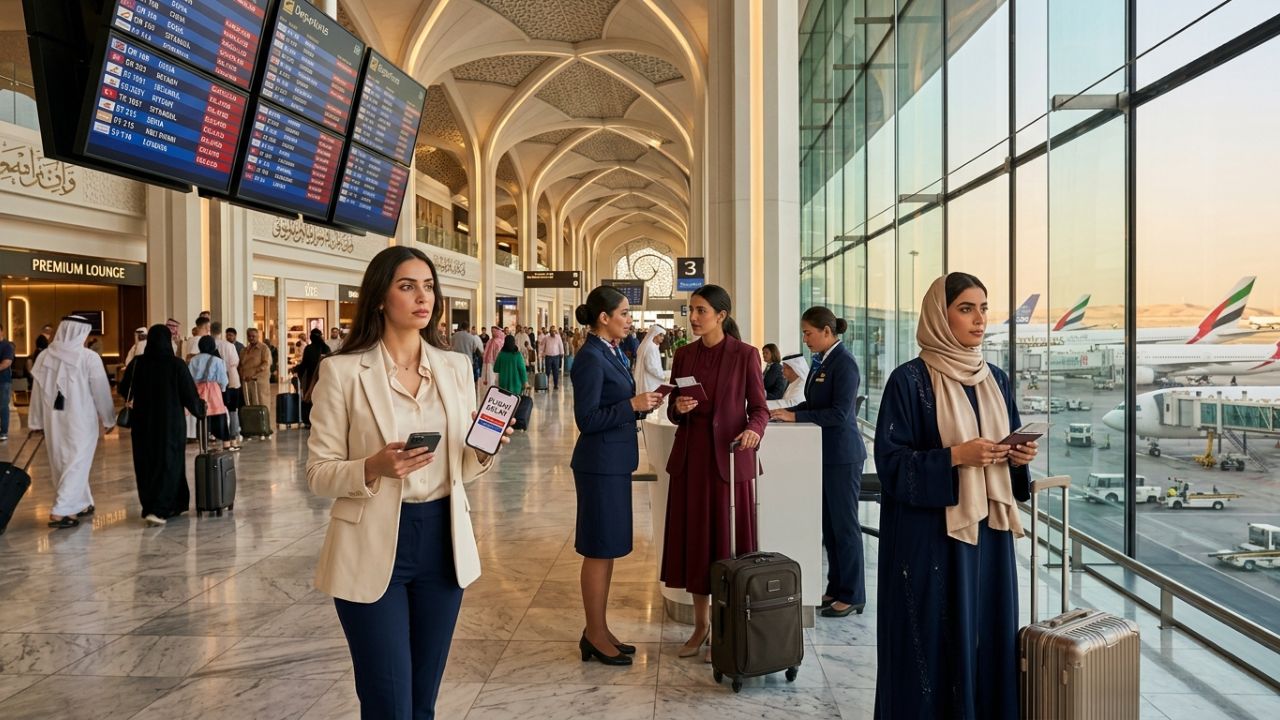
Image generated by AI
In a sudden and highly synchronous operational breakdown that has completely destabilized complex international transit itineraries, a severe wave of airport disruptions has hit the Middle Eastern aviation grid. According to official flight data recorded today, June 17, 2026, unexpected schedule instability triggered a highly disruptive wave of 9 flight delays and 6 outright cancellations across major regional hubs in Bahrain, Saudi Arabia, Türkiye, and the United Arab Emirates. As prominent operators like Saudia, Kam Air, and Pakistan International Airlines scramble to recover their scheduled rotations, intense travel chaos is currently rippling through massive global transit centers in Manama, Riyadh, Istanbul, and Abu Dhabi. While the total volume remains limited relative to the massive daily capacity of these hubs, the sudden synchronicity of these flight cancellations across four distinct nations represents the premier headline in today's breaking airline news and essential global aviation updates.
By introducing direct passenger coordination and dynamic scheduling backups, the regional aviation hubs target growing passenger demand across vital commerce sectors. The choice to coordinate flight departures in phases helps to manage gate capacity, supporting the country's broader regional transportation network.
Context: The Synchronous Schedule Collapse
For the thousands of corporate professionals and long-haul tourists relying on the Middle East's world-class aviation infrastructure for seamless transit, today's operational reality has introduced a sudden layer of immense logistical friction.
The widespread flight disruptions aggressively highlight the high stakes of modern intercontinental routing. When a massive global transit gateway like King Khalid International Airport in Riyadh or Istanbul Airport suffers sudden scheduling setbacks, the ripple effect instantly compromises international connecting networks stretching from Europe to Asia. Because seamless connectivity is the absolute lifeblood of the Gulf's aviation dominance, even minor structural disruptions—such as 15 total delays and cancellations—draw intense scrutiny from global aviation analysts. Tourism operators rely heavily on predictable timetables; when a major flag carrier like Saudia experiences abrupt cancellations, entire networks of pre-booked complex multi-destination itineraries are thrown into complete disarray.
To view live flight schedules, specific regional carrier route maps, or alternative connection options, travelers must consult official Middle Eastern aviation directories. For direct booking access, specific baggage rules, and immediate rebooking portals, passengers should check the official Saudia or Etihad Airways portals. To explore live flight tracking and monitor the exact severity of the rolling airspace bottlenecks, passengers can consult the official FlightAware tracking service.
Section-Wise Breakdown of the Regional Meltdown
King Khalid International Airport (Riyadh, Saudi Arabia)
The absolute highest volume of overall flight disruptions today was recorded at Saudi Arabia's premier gateway. King Khalid International Airport was hit by 2 outright cancellations and a substantial 5 flight delays, heavily compounding schedule adjustments for transiting passengers. The national flag carrier, Saudia, suffered a 100% cancellation hit on its disrupted operations (2 cancelled flights), while regional operator Flynas absorbed all 5 delays (3% delay rate).
Bahrain International Airport (Manama, Bahrain)
Operations in the island kingdom were similarly throttled. Bahrain International Airport officially registered 2 flight cancellations alongside 1 flight delay. Saudia again suffered the brunt of the absolute closures, logging 2 complete cancellations. Meanwhile, Air India Express recorded 1 delayed flight (25% delay rate), marking a subtle but highly frustrating interruption for inbound South Asian traffic.
Istanbul Airport (Türkiye) and Zayed International Airport (UAE)
The intercontinental mega-hub of Istanbul Airport saw its operations clipped, reporting 1 cancellation and 2 delays. Kam Air took a massive 50% cancellation hit (1 cancelled flight), while UR Airlines suffered a 100% delay rate (2 delayed flights). Further south, Zayed International Airport in Abu Dhabi recorded a single flight cancellation by Pakistan International Airlines (16% cancellation rate), alongside a single flight delay attributed to the local carrier, Etihad Airways.
Technical Roster: Middle Eastern Disruption Matrix
To ensure absolute factual accuracy regarding the specific airlines driving this highly synchronized aviation failure, the following table details the exact operational metrics generated by the regional breakdown:
| Major Airport Location | Total Disruptions | Key Affected Airlines & Exact Delay/Cancellation Metrics |
|---|---|---|
| King Khalid Int'l (Riyadh) | 5 Delays, 2 Cancellations | Saudia (2 Canc), Flynas (5 Del) |
| Bahrain Int'l (Manama) | 1 Delay, 2 Cancellations | Saudia (2 Canc), Air India Express (1 Del) |
| Istanbul Airport (Türkiye) | 2 Delays, 1 Cancellation | Kam Air (1 Canc), UR Airlines (2 Del) |
| Zayed Int'l (Abu Dhabi) | 1 Delay, 1 Cancellation | Pakistan International Airlines (1 Canc), Etihad Airways (1 Del) |
Passenger Impact: Stranded in Transit
For the everyday passengers currently trapped inside these massive Middle Eastern and transcontinental terminals, the logistical reality demands immediate tactical intervention.
The primary impact of these 15 disruptions is the devastating destruction of complex, multi-leg international itineraries. When an outbound delay in Riyadh causes a subsequent connecting flight to be missed in Istanbul, the responsibility for rebooking generally rests with the operating carrier—provided the passenger booked a single, unified ticket. However, passengers who assembled "hacker fares" across unlinked airlines must now negotiate their own rescue flights. Vouchers for complementary meals, refreshments, and hotel accommodations (including vital ground transfers) are typically distributed when delays extend for several hours, but navigating the massive terminals to secure these duty-of-care provisions from customer service desks adds severe emotional and physical exhaustion to the transit experience.
Industry Analysis: Resilience Amidst Minor Ripples
Aviation industry analysts view the 15-flight disruption wave across the Middle East as a fascinating test of the region's immense structural resiliency.
Analysts note that while 6 cancellations and 9 delays are statistically insignificant compared to the thousands of flights managed daily by Riyadh, Abu Dhabi, and Istanbul, the synchronicity of the disruptions exposes the inherent vulnerability of highly scheduled global transit. If schedule inconsistencies are repeatedly observed at these major gateways, international tour operators will inevitably adopt a highly cautious approach when routing lucrative, high-yield tourist groups through the region. However, because these specific cancellations are limited today, analysts expect the overall trajectory of regional tourism to remain highly resilient. The state-of-the-art infrastructure maintained by the UAE, Saudi Arabia, and Türkiye is explicitly designed to absorb these minor operational ripples without causing prolonged, systemic damage to the broader travel ecosystem.
Actionable Advice for Surviving Regional Flight Disruptions
If you are a traveler relying on Saudia, Kam Air, or Pakistan International Airlines during this sudden disruption wave, execute this extreme survival checklist immediately:
- Demand Duty of Care Provisions: Under the strict passenger rights frameworks enforced in jurisdictions like Türkiye and the UAE, airlines are legally obligated to provide meals, hotel accommodations, and transport if the delay exceeds specific hourly thresholds. Demand these vouchers from the airline representative immediately.
- Keep Digital Documents Ready: Do not rely on printed boarding passes. Keep your digital booking references, mobile boarding passes, and official carrier notifications readily accessible on your smartphone to expedite the rebooking process at chaotic customer service desks.
- File Formal Compensation Claims: Monetary compensation or comprehensive refunds may be claimable depending on the exact terms of your ticket and local laws. You must retain your exact flight details and delay receipts to successfully file a formal claim with your respective airline post-travel.
- Audit Unified Ticketing: If a Saudia cancellation in Bahrain causes you to miss a connection in Riyadh, the airline is legally bound to secure your onward travel on the next available flight, but only if your itinerary was purchased as a single, unified ticket.
FAQ: Middle East Airport Flight Disruptions 2026
How severe is the current operational breakdown across Middle Eastern airports?
The regional aviation network experienced a sudden schedule instability, officially recording 9 flight delays and 6 outright cancellations across Manama, Riyadh, Istanbul, and Abu Dhabi.
Which specific airlines are most affected by this travel chaos?
The disruption wave primarily impacted Saudia, Kam Air, and Pakistan International Airlines, alongside delays affecting Flynas, UR Airlines, Air India Express, and Etihad Airways.
Are passengers entitled to compensation or hotels for these delays?
Yes. Depending on the jurisdiction (such as passenger rights laws in Türkiye or the UAE), airlines are standardly required to provide complimentary meals, hotel accommodation, and ground transfers for extended delays.
The Breaking Point of the Global Transit Model
The wave of 15 flight disruptions rippling through Bahrain, Saudi Arabia, Türkiye, and the UAE proves definitively that even the world's most advanced aviation infrastructure remains vulnerable to sudden scheduling collapses in 2026. By entirely devastating the highly scheduled operations of Saudia, Kam Air, and PIA, this operational ripple has ruthlessly exposed the fragility of complex, multi-destination itineraries. As regional airlines desperately attempt to reposition their fleets and rebook stranded transit passengers, travelers must accept a brutal reality: navigating global mega-hubs requires extreme itinerary flexibility, aggressive digital contingency planning, and a deep understanding of local passenger rights to survive unexpected flight cancellations.
Key Takeaways
- Sudden Regional Breakdown: The Middle Eastern aviation grid suffered 9 flight delays and 6 outright cancellations across four primary international hubs.
- Riyadh Absorbs the Heaviest Blow: King Khalid International Airport in Saudi Arabia recorded the highest volume with 5 delays and 2 cancellations.
- Saudia Operations Disrupted: The national flag carrier, Saudia, suffered a total of 4 outright flight cancellations across Riyadh and Bahrain.
- Passenger Rights Variations: Affected passengers must navigate varying consumer protection laws, from robust Turkish frameworks to distinct Gulf nation regulations, to secure compensation.
- Duty of Care Obligations: Airlines are legally required to provide meals, hotel accommodations, and airport transport for delays extending past specific hourly thresholds.
Related Travel Guides
Severe Travel Chaos Paralyzes Australia Across Major Airlines
Kuujjuaq Airport Isolated by Severe Air Inuit Flight Disruptions
Middle East Flight Delays and Turkish Passenger Rights Strategies on Reddit
Disclaimer
This article is for informational and educational purposes only. It does not constitute legal, financial, or professional advice. While we strive to provide accurate and up-to-date information, travel policies, regulations, and conditions change rapidly. Always verify information with official sources before making travel decisions. Nomad Lawyer makes no representations about the accuracy, reliability, completeness, or suitability of the information provided. Readers should consult qualified professionals for advice specific to their circumstances. The views expressed in this article are those of the author and do not necessarily reflect the views of Nomad Lawyer.
Kunal K Choudhary
Co-Founder & Contributor
A passionate traveller and tech enthusiast. Kunal contributes to the vision and growth of Nomad Lawyer, bringing fresh perspectives and driving the community forward.
Learn more about our team →