
Miami Joins Orlando and More Emerging as the Top Sources for Boosting US Tourism by Welcoming the Most International Tourists in 2026
Miami Joins Orlando and More Emerging as the Top Sources for Boosting US Tourism by Welcoming the Most International Tourists in 2026

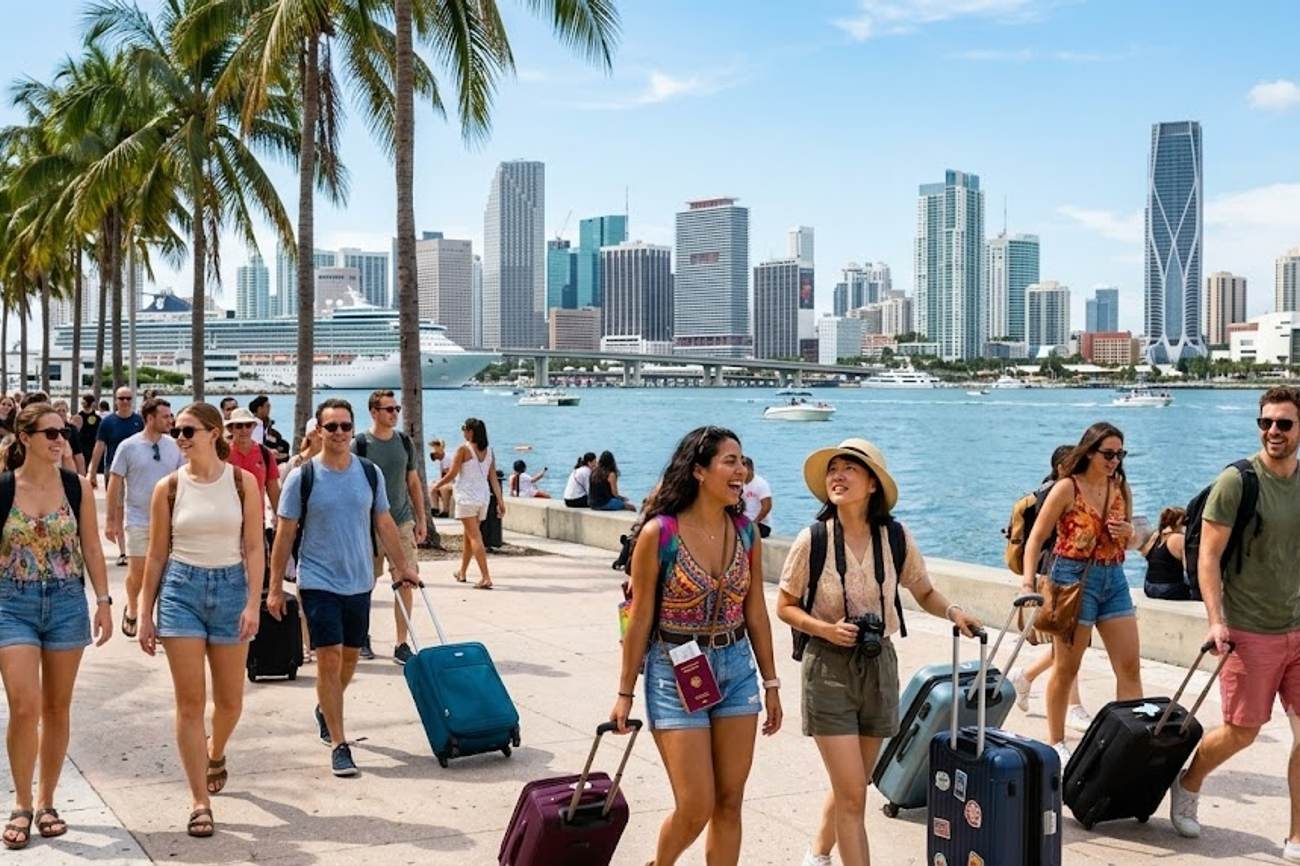
Image generated by AI
Imagine landing at Miami International Airport this summer, only to find the terminal operating at a capacity far exceeding previous years, with queues stretching through customs as the city welcomes a record-breaking surge of international arrivals. For the traveler, this means longer wait times and a higher probability of logistical friction; for the aviation analyst, it signals a massive shift in how global traffic is entering the United States in 2026.
The 2026 US Gateway Surge: Miami and Orlando Lead the Charge
The current international tourism data for 2026 reveals a stark divergence in how US ports of entry are performing. While several major gateways are experiencing a downturn, five specific hubs—Miami, Orlando, Dallas, Houston, and Honolulu—are seeing a significant uptick in international visitor volumes. This growth is not uniform, but the combined impact is substantial, with these five cities acting as the primary engines for US tourism expansion.
From January through June 2026, these five gateways processed a combined 5,201,208 international visitors. This is an increase of 170,973 travelers compared to the 5,030,235 recorded during the same window in 2025, representing a collective growth rate of approximately 3.4%. If these trends persist, projections suggest these hubs will handle roughly 6.93 million international visitors by the end of August 2026.
Miami has established itself as the volume leader. Between January and June 2026, the city welcomed 2,510,046 international tourists, surpassing the 2,472,813 visitors from the previous year. While the growth percentage is a modest 1.5% (an addition of 37,233 people), the sheer scale of Miami's operation makes it the most critical entry point in this dataset. Miami serves as a dual-purpose hub: it is both a final destination for those seeking luxury shopping and nightlife and a primary transit point for passengers connecting to the Caribbean and Latin America.
Orlando, conversely, is the growth champion. The city saw its international arrivals jump from 898,282 in the first half of 2025 to 974,267 in the first half of 2026. This 8.5% increase—adding 75,985 visitors—puts Orlando on the verge of hitting the 1 million visitor mark within a six-month window. Unlike Miami's transit-heavy model, Orlando's growth is driven almost exclusively by high-intent leisure travel focused on theme parks and resorts.
In Texas, Dallas and Houston are providing a powerful one-two punch. Dallas recorded an 8.0% surge, moving from 538,325 to 581,540 visitors. Houston saw a steadier increase of 1.9%, rising from 602,398 to 613,708 international arrivals. Together, they solidify Texas as a primary corridor for business, energy-sector travel, and medical tourism. Finally, Honolulu maintained a positive trajectory, albeit a slow one, with 521,647 visitors in the first half of 2026, a slight increase of 0.6% over the 518,417 visitors from 2025.
Affected Routes and Gateways
The following table outlines the specific performance and projections for the growing US gateways:
| Port of Entry | YTD June 2026 | YTD June 2025 | Visitor Increase | YoY Growth | Projected Aug 2026 |
|---|---|---|---|---|---|
| Miami (MIA) | 2,510,046 | 2,472,813 | +37,233 | +1.5% | ~3,346,728 |
| Orlando (MCO) | 974,267 | 898,282 | +75,985 | +8.5% | ~1,299,023 |
| Houston (IAH) | 613,708 | 602,398 | +11,310 | +1.9% | ~818,277 |
| Dallas (DFW) | 581,540 | 538,325 | +43,215 | +8.0% | ~775,387 |
| Honolulu (HNL) | 521,647 | 518,417 | +3,230 | +0.6% | ~695,529 |
| Total | 5,201,208 | 5,030,235 | +170,973 | +3.4% | ~6,934,944 |
Your Rights as a Passenger
When traveling through high-growth hubs like MIA or MCO, the increased volume often leads to operational strain, resulting in delays, cancellations, or lost luggage. Depending on your point of origin and the airline you are flying, different legal protections apply.
For passengers flying into these US gateways from the European Union or the UK, the most powerful protections are EU261/2004 and the UK's mirrored regulations. If your flight from an EU/UK airport to Miami or Orlando is cancelled or delayed by more than three hours, you may be entitled to cash compensation of up to €600 (or £520), provided the disruption was not caused by "extraordinary circumstances" (such as extreme weather or air traffic control strikes). You can check your specific flight status via British Airways Flight Status or similar carrier pages to document the exact time of arrival.
If you are flying on a US-based carrier or departing from a US airport, your rights are governed by the US Department of Transportation (DOT). While the US does not have a mandatory cash compensation law for delays like the EU, the DOT has recently tightened rules regarding refunds. If your flight is cancelled or significantly changed, you are entitled to a full refund of the ticket price—even for "non-refundable" tickets—if you choose not to travel on the alternative offered. You can verify these protections at the US DOT Air Consumer portal.
For those experiencing luggage delays in these crowded hubs, the Montreal Convention governs international carriage. Airlines are liable for damages caused by delay or loss of baggage up to approximately $1,700 USD per passenger. It is essential to file a Property Irregularity Report (PIR) before leaving the airport. For those seeking to recover these funds without the hassle of airline bureaucracy, platforms like AirHelp can assist in filing claims.
Rebooking Strategy and Alternatives
With Miami and Orlando handling over 67% of the growth in this dataset, these airports are prone to "bottlenecking." If you encounter a disruption at these gateways, consider the following strategies:
- The Florida Pivot: If Orlando (MCO) is paralyzed by delays, check availability at Tampa International (TPA). While it requires a drive, it often serves as a reliable alternative for those heading to Central Florida. Similarly, if Miami (MIA) is overwhelmed, Fort Lauderdale (FLL) is a viable alternative for Latin American and Caribbean connections.
- Texas Hub Hopping: Because Dallas (DFW) and Houston (IAH) are both seeing growth, they often have reciprocal agreements between major carriers. If a DFW flight is cancelled, request a re-route through IAH.
- Monitoring Real-Time Flow: Use FlightRadar24 or FlightAware to see if a specific airport is experiencing a systemic ground stop. If you see a pattern of diverted flights at MIA, contact your airline immediately to request a rebooking before the general queue forms.
- Refund vs. Rebooking: In the current 2026 growth climate, airlines are often overbooked. If you are offered a flight two days later, it is often more economical to take a full DOT-mandated refund and book a one-way ticket on a competitor airline that may have underutilized capacity.
FAQ: US Gateway Tourism 2026
Am I entitled to compensation for delays at Miami or Orlando airports? If you flew from the EU/UK, yes, under EU261/UK261 for delays over 3 hours. For US-to-US flights, you are generally not entitled to cash compensation for delays, but you are entitled to a refund if the flight is cancelled.
Can I get a full refund if my flight to a growing hub is cancelled? Yes. Under US DOT rules, if your flight is cancelled and you choose not to accept the alternative flight offered, the airline must provide a full refund to your original form of payment.
What should I do if my luggage is lost at a high-volume airport like MIA? Immediately file a Property Irregularity Report (PIR) at the airport baggage desk. Keep all receipts for essential items purchased during the delay to claim reimbursement under the Montreal Convention.
Which Florida airport is currently the busiest for international arrivals? Miami is the largest by volume, having welcomed 2,510,046 international visitors in the first half of 2026, though Orlando is growing at a faster percentage rate (8.5%).
Navigate the surge with legal precision and strategic foresight.
Related Travel Guides
- Ottawa Along With Halifax and More in Supercharging Canada Domestic Tourism With Record Travel Demand in 2026
- UK Tourist Tax Threat as East Anglian Tourism Overnight Levy Sparks Fears Across Norfolk and Suffolk
- New Mexico Outpaces Nevada, Kentucky and More US States In Gray Divorce As Older Population Reshapes Travel And Lifestyle Trends
Disclaimer
This article is for informational and educational purposes only. It does not constitute legal, financial, or professional advice. While we strive to provide accurate and up-to-date information, travel policies, regulations, and conditions change rapidly. Always verify information with official sources before making travel decisions. Nomad Lawyer makes no representations about the accuracy, reliability, completeness, or suitability of the information provided. Readers should consult qualified professionals for advice specific to their circumstances. The views expressed in this article are those of the author and do not necessarily reflect the views of Nomad Lawyer.
Kunal K Choudhary
Co-Founder & Contributor
A passionate traveller and tech enthusiast. Kunal contributes to the vision and growth of Nomad Lawyer, bringing fresh perspectives and driving the community forward.
Learn more about our team →