
Aviation Updates: Massive Miami International Airport Meltdown Triggers Terrifying Travel Chaos as 125 Delays and Flight Cancellations Paralyze Florida
As a massive operational collapse completely suffocates Miami International Airport, desperate global travelers face terrifying flight cancellations and agonizing international airport disruptions.

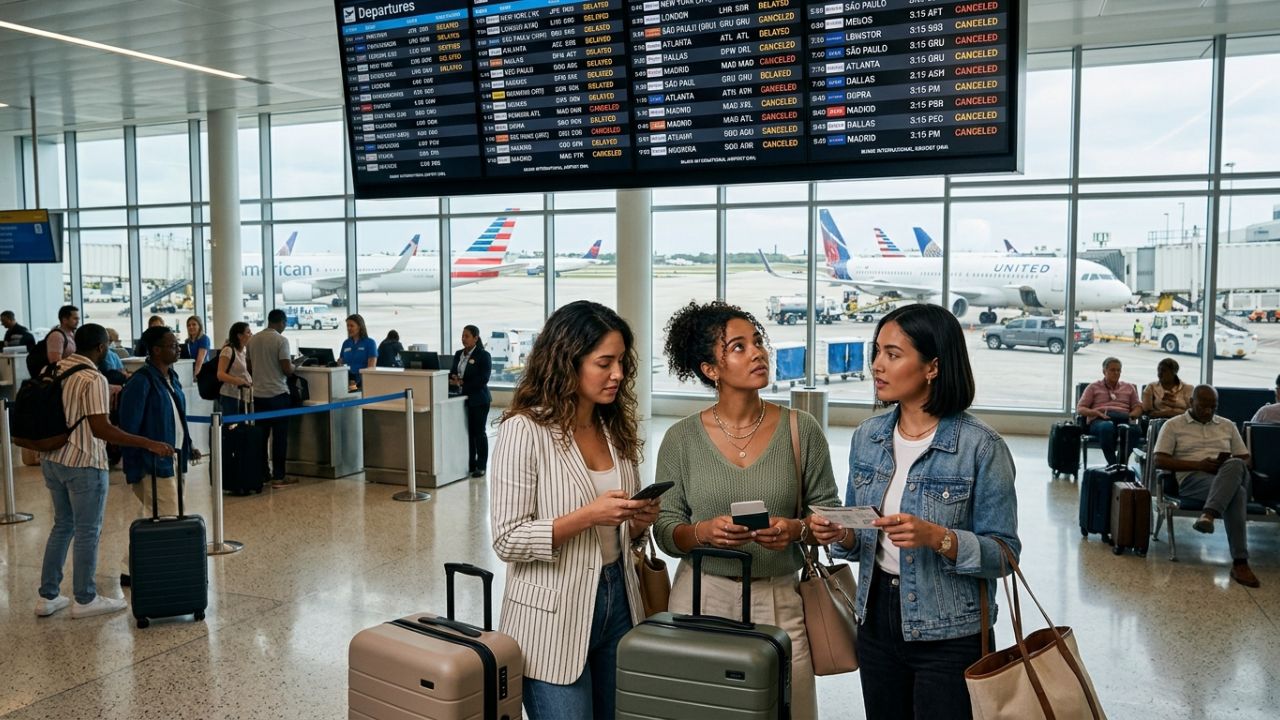
Image generated by AI
Aviation Updates: Massive Miami International Airport Meltdown Triggers Terrifying Travel Chaos as 125 Delays and Flight Cancellations Paralyze Florida
As incredibly severe terminal gridlock and massive legacy airline network failures completely suffocate the primary aviation gateway of South Florida, tens of thousands of global passengers are trapped in terrifying travel chaos as American Airlines, Delta, United, Spirit, and Frontier execute massive flight delays and crippling flight cancellations aggressively paralyzing operations across Miami, rippling violently into New York, Atlanta, Dallas, London, Madrid, and São Paulo.
While incredibly exhausted global passengers desperately navigate an incredibly brutal peak travel season, a massive, highly destructive operational meltdown is actively shattering the absolute highest levels of American commercial aviation. According to the absolute latest breaking airline news, Miami International Airport (MIA) has officially collapsed under the crushing weight of systemic hub congestion and severe operational friction. Desperate to ensure that severe, localized regional gridlock does not completely destroy the entire intercontinental network, airlines are violently battling a massive logistical backlog in South Florida. At the time of reporting, real-time operational tracking systems confirmed an agonizing total of 125 severe delays and 9 outright flight cancellations targeting the airport, completely stranding massive volumes of domestic and international travelers indefinitely.
This highly critical operational collapse explicitly exposes Miami not just as a vital leisure and Latin American transit point, but as a heavily congested, deeply fragile capacity zone prone to sudden, catastrophic failure. By violently overwhelming ground handling crews, Federal Aviation Administration (FAA) protocols, and aircraft rotation schedules, this systemic breakdown is directly driving massive travel chaos that routinely plagues travelers attempting to transit through under-resourced mega-hubs. Because traditional Florida transit nodes frequently suffer from severe tarmac congestion leading to massive, unannounced airport disruptions, this current meltdown serves as an absolute warning. It completely bypasses the terrifying logistical nightmares of simple thunderstorms, representing a structural failure of the hub-and-spoke system that forces major carriers—including American Airlines, Delta Air Lines, United Airlines, Spirit, and Frontier—into a brutal, high-stakes battle of schedule revisions and agonizing tarmac holding patterns.
Aviation Updates: The Collapse of the South Florida Corridor
This massive, highly structural shift in regional network stability perfectly illustrates the intense, incredibly fragile nature of modern domestic and international mobility.
According to highly detailed, official aviation updates, this strategic capacity failure was explicitly triggered by the severe stress placed on mainline regional and international networks. The sheer density of the disruptions applies across almost the entire operational day, effectively capping outbound flow at one of the nation's most vital logistical arteries. Because primary connecting hubs are increasingly crippled by rolling travel chaos stemming from systemic airspace restrictions and aircraft repositioning delays, funneling massive passenger volumes through Miami is currently a massive logistical gamble. This massive breakdown prevents a unified, highly reliable transit model, instead generating severe, cascading knock-on delays that ripple violently across the entire global air traffic system, directly breaking vital flight paths connecting Florida to major hubs across the globe.
Section-Wise Breakdown: Navigating the Paralyzed Hub
The sudden, massive evolution of these critical transit failures actively impacts several incredibly distinct, highly sensitive operational dynamics at Miami's central airport.
The Domestic Gridlock: New York, Atlanta, and Dallas
At the absolute core of this massive operational pivot is the total logistical failure affecting domestic operations. As the absolute epicenter of the crisis, Miami’s domestic terminals are actively trapping passengers in massive, agonizing customer service queues. Because legacy carriers like American, Delta, and United, alongside ultra-low-cost carriers like Spirit and Frontier, operate incredibly tight turnaround schedules, the 125 localized delays immediately sever the domestic network. This targeted destruction of the short-haul and medium-haul framework immediately severs the vital air bridge connecting Florida to primary hubs like New York, Atlanta, and Dallas, stranding domestic families and corporate travelers in incredibly long queues.
The International Collapse: London, Madrid, and São Paulo
The ultimate execution of this highly destructive failure heavily targets massive long-haul international operations. While domestic flights suffer rolling delays, the international widebody network is also completely failing to stabilize operations. The massive backlog in Miami actively threatens vital transatlantic and South American connections. Passengers destined for London, Madrid, and São Paulo are facing incredibly terrifying uncertainty as rolling delays threaten to destroy their incredibly expensive, highly coordinated international itineraries, severing Florida's critical link to European and Latin American financial centers.
The FAA and TSA Intervention
While the airline networks absorbed the massive bulk of the raw numbers, federal agencies are desperately attempting to manage the physical terminal crisis. The Transportation Security Administration (TSA) is aggressively advising passengers to arrive early to combat massive physical security queues, while the Federal Aviation Administration (FAA) is actively deploying traffic management initiatives to prevent a total airspace lock down over the Florida peninsula.
Flight Details and Verified Disruption Impact Matrix
To fully understand the exact structural parameters of this massive performance collapse and how airlines are desperately attempting to navigate complex regional congestion, the following matrix explicitly details the operational failures directly recorded at the hub.
Confirmed Miami Disruption Impact Matrix
| Operational Metric | Documented Failure / Impact |
|---|---|
| Miami International Airport | 125 severe delays, 9 outright flight cancellations. |
| Major Airlines Impacted | American Airlines, Delta Air Lines, United Airlines, Spirit, Frontier. |
| Domestic Hubs Severely Disrupted | New York, Atlanta, Dallas. |
| International Corridors Severely Disrupted | London, Madrid, São Paulo. |
| Supervising Authorities | Federal Aviation Administration (FAA), Transportation Security Administration (TSA). |
Data explicitly reflects the massive, highly structural operational collapse currently paralyzing the South Florida gateway, directly forcing massive legacy and low-cost carriers to violently abandon their daily flight schedules.
Passenger Impact: The Financial and Emotional Toll
For the highly demanding passengers actively engaged in this massive global mobility crisis, traditional, highly anticipated peak travel is currently viewed as completely terrifying and incredibly unpredictable.
The immediate consequence of these massive baseline delays is measured in the thousands of passengers violently displaced throughout the MIA terminals. Passengers facing these massive airport disruptions are forced to seek alternative arrangements, suffering intense anxiety as they endure prolonged terminal waits and multi-hour customer service queues. Families beginning vacations, business travelers rushing to meetings, and international visitors arriving in South Florida are explicitly warned that their carefully planned itineraries are currently in a state of rolling failure. Departing tourists stranded at the airport face unexpected out-of-pocket expenses for airport dining, while incoming travelers suffer late hotel check-ins, missed rental car reservations, and ruined vacation timelines across the Miami and Miami Beach hospitality sectors.
Industry Analysis: The Economics of Systemic Congestion
Aviation structural analysts strictly point out that this massive, multi-national operational collapse perfectly illustrates the extreme, highly vital importance of heavily optimized, continuous airspace management.
Aviation data explicitly indicates that massive global carriers are absolutely desperate to secure rapid tarmac turnarounds to actively combat the terrifying reality of capacity saturation. This massive travel backlog carries distinct economic consequences for the Miami hospitality industry. When massive widebody aircraft arriving from London or São Paulo are delayed by localized air traffic congestion or late aircraft from prior destinations, it creates a massive ripple effect that suppresses the entire regional tourism economy. Until expanded airport infrastructure and staffing strategies stabilize the domestic and international framework, relying on a deeply fragile hub-and-spoke infrastructure completely destroys the reliance on scheduled leisure rotations.
Conclusion: A Highly Congested Floridian Future
The massively evolving infrastructure dynamics directly defining the integration of massive passenger volume into the Miami network violently reflect a much broader, highly critical structural transformation currently dominating how American commercial aviation is physically managed in 2026.
Rather than violently forcing massive domestic traffic through deeply congested, highly restricted, delay-prone legacy networks heavily reliant on fragile domestic and international transit points, global travelers must actively reconsider routing through MIA without massive buffer times. As airlines aggressively struggle to clear the backlog and the FAA attempts to streamline corridor processes, travelers actively navigating the incredibly busy summer sector must absolutely remain highly vigilant. To actively survive potential travel chaos this evening, passengers must aggressively monitor all breaking aviation updates, actively utilize verified airline mobile applications to receive real-time notifications, and perfectly understand that escaping modern airport disruptions fundamentally requires accepting that South Florida schedules are currently heavily delayed and highly volatile.
Key Takeaways
- Massive System Failure: Miami International Airport (MIA) suffers a catastrophic operational slowdown, logging 125 delays and 9 flight cancellations.
- Airlines Severely Impacted: American Airlines, Delta Air Lines, United Airlines, Spirit, and Frontier are actively battling slow tarmac turnarounds.
- Major Hub Gridlock: The chaos severely disrupted domestic flights destined for New York, Atlanta, and Dallas.
- International Collapse: The breakdown violently interrupted massive long-haul connections to London, Madrid, and São Paulo.
- Authority Intervention: The FAA and TSA are actively attempting to manage the massive terminal and airspace gridlock.
- Passenger Survival Strategy: Stranded travelers are aggressively urged to keep medications and chargers accessible in carry-ons, bypass physical queues, and use digital apps for rapid rebooking during the ongoing travel chaos.
Related Travel Guides
Massive UAE Visa Bombshell: Strict New 30-Day Escape Window Announced
Travel Chaos Cripples Spain as Iberia and Ryanair Suffer 1,079 Delays
Disclaimer
This article is for informational and educational purposes only. It does not constitute legal, financial, or professional advice. While we strive to provide accurate and up-to-date information, travel policies, regulations, and conditions change rapidly. Always verify information with official sources before making travel decisions. Nomad Lawyer makes no representations about the accuracy, reliability, completeness, or suitability of the information provided. Readers should consult qualified professionals for advice specific to their circumstances. The views expressed in this article are those of the author and do not necessarily reflect the views of Nomad Lawyer.
Preeti Gunjan
Contributor & Community Manager
A passionate traveller and community builder. Preeti helps grow the Nomad Lawyer community, fostering engagement and bringing the reader experience to life.
Learn more about our team →