
3,895 Flight Delays and 91 Cancellations Hit US Airlines June 2026: Chicago, New York, San Diego in Crisis
Over 3,800 flights delayed across major US airports as Delta, Southwest, United, and Alaska Airlines grapple with widespread disruptions caused by thunderstorms and operational constraints.

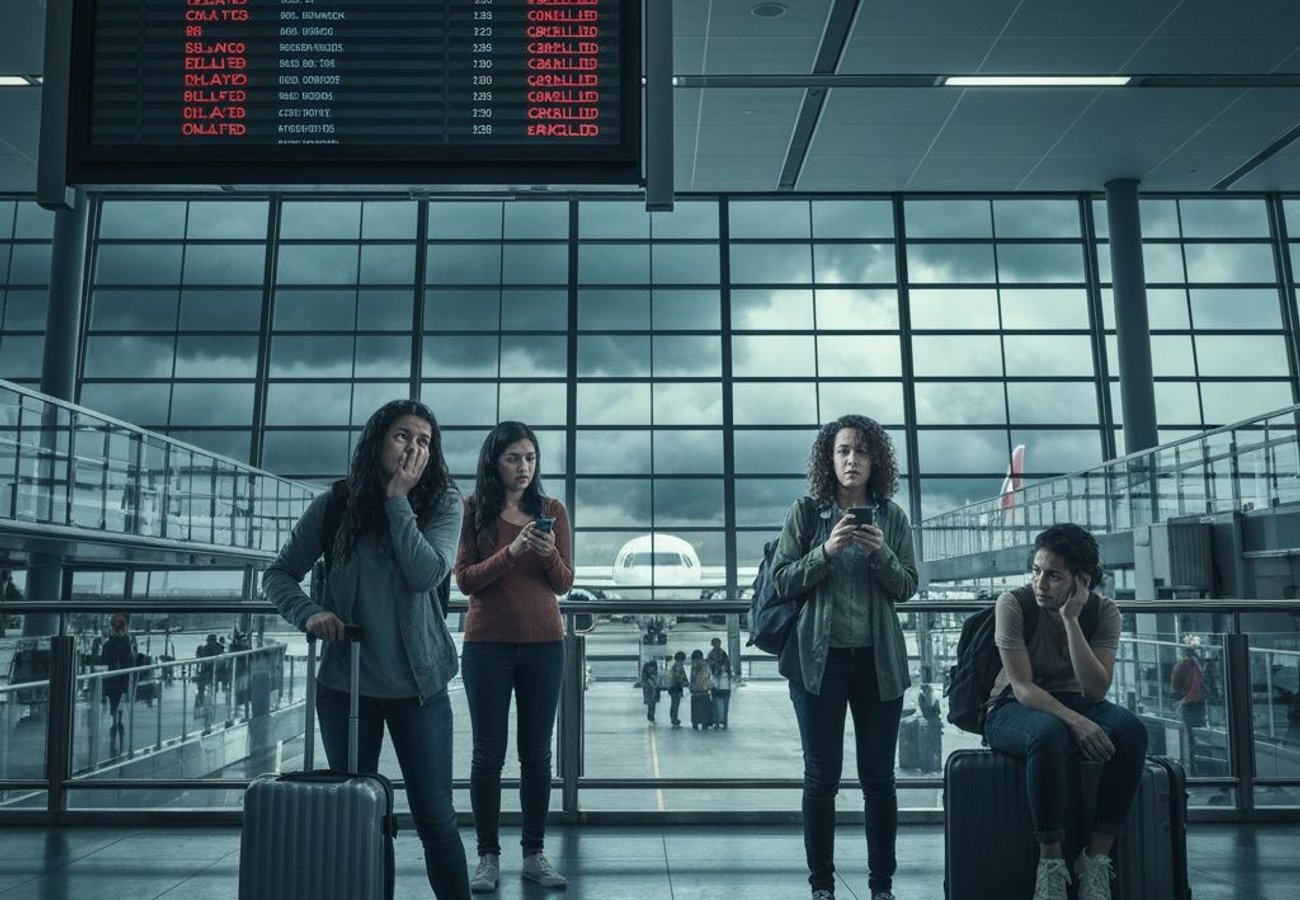
Image generated by AI
A Perfect Storm: When America's Airways Ground to a Halt
June 10, 2026 will go down as a day when the U.S. aviation system buckled under pressure. Thousands of passengers found themselves stranded across the country as 3,895 delayed flights and 91 cancellations cascaded through major hubs from coast to coast. This wasn't a localized incident—it was a systemic breakdown affecting every major airline and nearly every significant airport in the nation.
I've covered travel disruptions for years, but the sheer scale of what unfolded on this single day was staggering. From Chicago O'Hare to San Diego International, from LaGuardia in New York to Charlotte Douglas, passengers faced mounting frustration and cascading missed connections.
The Numbers That Tell the Story
The disruption wasn't evenly distributed. Southwest Airlines bore the brunt with 911 delayed flights—more than double any other carrier. American Airlines reported 528 delays, while United counted 434 delays across its network. Delta Air Lines logged 334 delays, and SkyWest managed 407 delays despite operating a smaller fleet.
Reddit: "Spent 8 hours at ORD yesterday. Watched three consecutive Southwest flights get cancelled before mine finally pushed back." — r/travel
The cancellation numbers, while smaller, told a critical story: SkyWest cancelled 15 flights, United cancelled 14, and American Airlines grounded 10. For passengers, these weren't just statistics—they meant missed business meetings, ruined vacations, and the cascade effect of being rebooked onto flights already overbooked by hours.
Which Airports Suffered Most?
Chicago O'Hare International (ORD) led the disaster list with 21 cancellations and 409 delays. The airport's notoriously congested airspace combined with heavy volume created a perfect storm. Nearby, Dallas-Fort Worth International (DFW) reported 6 cancellations and 311 delays, while Denver International (DEN) implemented a full ground stop due to airport volume, resulting in 2 cancellations and 190 delays.
The East Coast wasn't spared. Boston Logan International (BOS) recorded 4 cancellations and 127 delays. Atlanta's Hartsfield-Jackson (ATL), consistently America's busiest airport, reported 3 cancellations and 213 delays—a reminder that even the most efficient operations can be overwhelmed by cascading failures.
San Diego International (SAN) reported 5 cancellations and 50 delays. LaGuardia (LGA) in New York struggled with 6 cancellations and 79 delays, compounded by airport initiatives and adverse weather pushing arrival delays to 15 minutes on average.
Why It Happened: The Root Causes
Weather was a significant factor. Detroit Metro Wayne County (DTW) experienced arrival delays averaging 45 minutes due to thunderstorms. Seattle-Tacoma International (SEA) saw ground delays averaging 37 minutes caused by strong wind conditions. San Francisco International (SFO) reported ground delays averaging 49 minutes due to operational issues.
But weather alone didn't explain the crisis. Airport volume constraints played an equal role. Denver International issued a ground stop specifically due to airport volume. Chicago O'Hare, already operating at near-maximum capacity, saw the volume issue compound into cascading delays that rippled through the entire system.
Operational challenges—maintenance issues, crew scheduling conflicts, and ramp congestion—contributed significantly. Southwest Airlines, despite operating primarily point-to-point routes designed to minimize connection complexity, couldn't escape the fallout. Its 911 delays suggest the disruption was systemic, not isolated to a single airline's network.
Who Bore the Brunt?
Passengers traveling through key hubs absorbed most of the impact. Business travelers connecting through Chicago, New York, or Atlanta faced cascading delays as incoming flights fed into an already-congested system. International travelers connecting to Canada, Puerto Rico, and major European hubs experienced multiplied delays.
Tourism was hit hard. Peak summer travel season meant family vacations were derailed. Conventions, conferences, and corporate events experienced no-shows from stranded passengers. The ripple effect extended beyond the airlines themselves—hotels near airports reported cancellations, ground transportation saw demand spikes, and airport restaurants became makeshift lodging for the stranded.
What Passengers Can Do: A Survival Guide
Check Official Airline Channels Immediately. Visit your airline's website or mobile app—not social media. Official channels provide real-time gate information, rebooking options, and policy updates. The FlightAware platform and airport websites offer independent status tracking.
Understand Your Rights. Under Department of Transportation regulations, passengers on cancelled flights are entitled to rebooking on the next available flight or a refund. Most airlines waived change fees for affected passengers, but you must contact them proactively.
Arrive Even Earlier Than Usual. With ground delays averaging 15-49 minutes at major hubs, arrive at least 3 hours early for domestic flights. Gate information changes frequently during disruptions.
Consider Alternate Airports. Passengers flying into congested hubs should check nearby alternatives. Flying into Oakland instead of San Francisco, Burbank instead of Los Angeles, or Newark instead of LaGuardia sometimes offered faster routes and shorter delays.
Monitor Weather Advisories. The National Weather Service and local airport websites provide hourly updates. Understanding when conditions are expected to improve helps you plan next moves.
Keep Essentials Accessible. Snacks, water, phone chargers, and medications should be in your carry-on, not checked luggage. Extended terminal time tests your patience; comfort supplies matter.
The Bigger Picture: Is the System Resilient Enough?
This June 2026 disruption raises fundamental questions about U.S. aviation infrastructure. When weather and volume constraints can trigger nearly 4,000 delays simultaneously, we're operating dangerously close to system capacity. The Federal Aviation Administration (FAA) has been working on NextGen air traffic modernization for years, but implementation remains incomplete.
The concentration of hub airports means single-point failures have massive ripple effects. Chicago, Dallas, Atlanta, and New York move such enormous passenger volumes that any disruption at these airports impacts not just their immediate destinations but connections nationwide.
Airlines, meanwhile, operate with minimal schedule buffers. The pursuit of efficiency has left little room for recovery when disruptions occur. A single delayed aircraft cascades through an entire day's schedule because turnaround times are optimized to the minute.
Looking Forward
Travelers heading to major U.S. airports should expect continued operational challenges during peak travel periods. The combination of aging infrastructure, weather volatility, and schedule density means disruptions will continue. Building in extra time, monitoring conditions closely, and staying flexible with bookings aren't just helpful—they're now essential travel practices.
The June 10, 2026 disruption wasn't an anomaly. It was a warning that America's aviation system is operating at its limits. Until infrastructure investments catch up with demand, passengers will continue facing delays that test their patience and derail their plans.
Stay informed, arrive early, and remember: the best travel plan is one with a backup plan.
Related Travel Guides
Disclaimer
This article is for informational and educational purposes only. It does not constitute legal, financial, or professional advice. While we strive to provide accurate and up-to-date information, travel policies, regulations, and conditions change rapidly. Always verify information with official sources before making travel decisions. Nomad Lawyer makes no representations about the accuracy, reliability, completeness, or suitability of the information provided. Readers should consult qualified professionals for advice specific to their circumstances. The views expressed in this article are those of the author and do not necessarily reflect the views of Nomad Lawyer.
Raushan Kumar
Founder & Lead Developer
Full-stack developer with 11+ years of experience and a passionate traveller. Raushan built Nomad Lawyer from the ground up with a vision to create the best travel and law experience on the web.
Learn more about our team →