Miami International Airport Flight Disruptions After Fatal Amazon Prime Air Boeing 767 Crash 2026

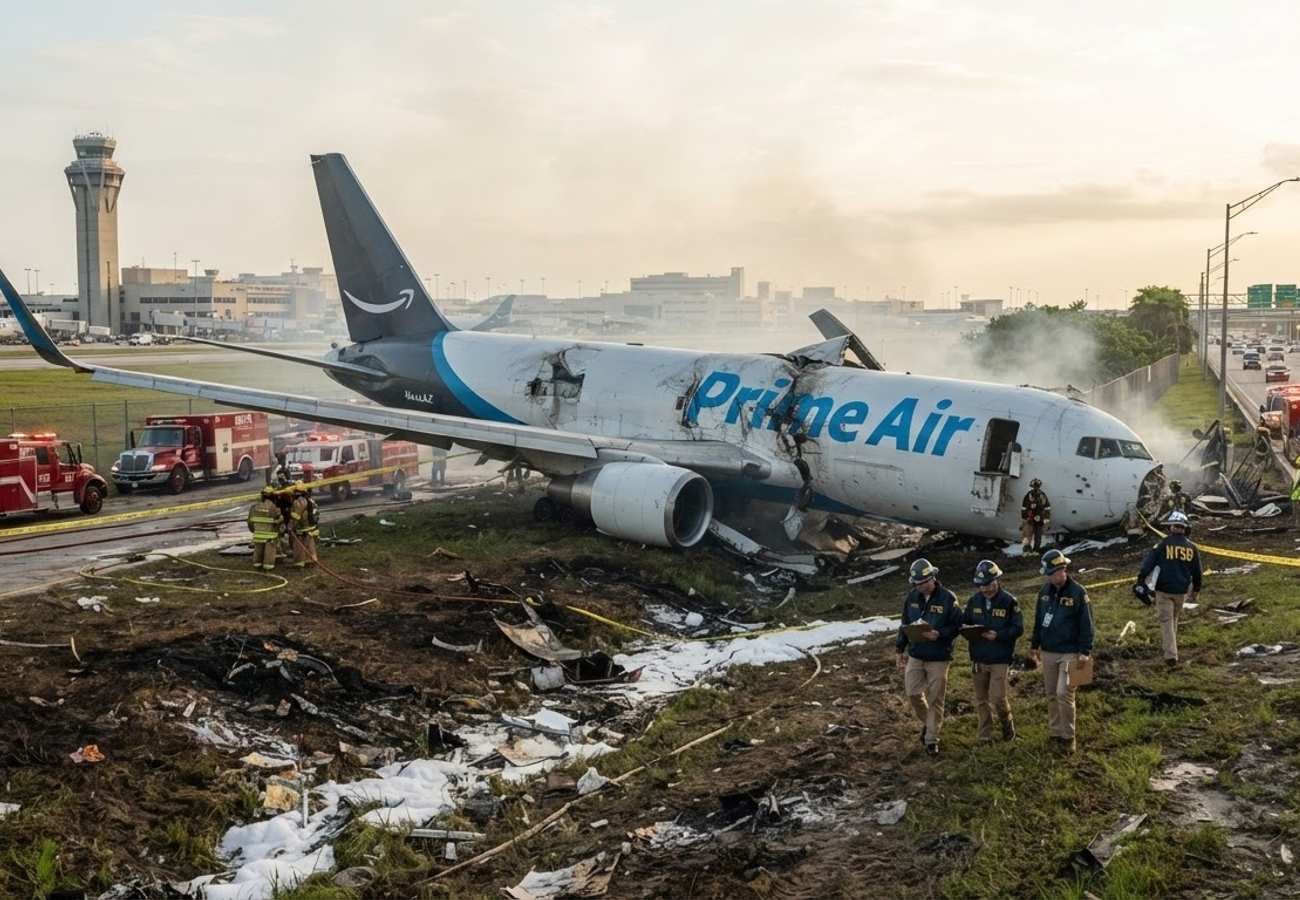
Image generated by AI
Flight operations at Miami International Airport (MIA) remain strained following a catastrophic runway overrun by an Amazon-branded cargo jet that resulted in five fatalities.
The incident, which occurred on Sunday, September 6, 2026, has triggered a ripple effect of cancellations and delays across domestic and international passenger schedules, as the airport operates with limited runway capacity.
The Core Transit Update: Runway Overrun and Operational Impact
Shortly after 2 p.m. local time on September 6, a Boeing 767-300ER freighter operating for Amazon’s Prime Air service—and flown by contractor 21 Air—overshot Runway 30. The aircraft breached the airport perimeter near Northwest 42nd Avenue, striking multiple vehicles and igniting a large fire. Official reports confirm five deaths and at least five injuries among those on the ground and on board.
The Federal Aviation Administration (FAA) immediately instituted a ground stop for all departures and arrivals at Miami International. This freeze forced incoming flights to divert to alternate Florida hubs, including Orlando, and left departing aircraft stranded on taxiways.
While cargo operations have largely resumed, passenger traffic continues to face significant bottlenecks. As of Monday, September 7, airport authorities have kept at least one runway closed to facilitate the recovery of the wreckage and the ongoing investigation.
Miami International Airport Status & Route Specifications
The current operational capacity is severely limited, impacting specifically the "peak banks" of departures common in the afternoon and evening.
| Parameter | Current Status / Detail | Impact Level |
|---|---|---|
| Active Runways | 2 of 4 currently open | High Constraint |
| Cancellations | 30+ flights (as of Monday morning) | Moderate |
| Primary Diversion Hubs | Orlando (MCO), Fort Lauderdale (FLL) | Moderate |
| Affected Routes | Domestic US, Caribbean, Latin America | High |
| Aircraft Involved | Boeing 767-300ER (Converted Freighter) | N/A |
| Operator | 21 Air (Contractor for Prime Air) | N/A |
Traveler Logistics Guide: Navigating MIA Disruptions
From a ground-level perspective, the best way to navigate the current instability at Miami International is to anticipate "rolling delays"—where a delay in one flight cascades into several others due to limited runway slots.
Booking and Connection Advice If you are connecting through MIA to the Caribbean or Latin America, allow for a minimum of 4-6 hours between flights. Because aircraft and crews are currently cycling back into position from diversions, the risk of a missed connection is elevated.
Alternative Airport Strategies For those with flexible itineraries, Fort Lauderdale-Hollywood International (FLL) is the most viable alternative for domestic travel. For long-haul international flights, check if your carrier has shifted capacity to Orlando.
Digital Transit Policies Ensure your airline app notifications are enabled. Many carriers have issued rebooking waivers for itineraries touching MIA during this window. If your flight is canceled, request a "re-accommodation" rather than a refund to secure a seat on the limited available flights.
Infrastructure Impact Assessment
The closure of a primary runway during the late-summer and early-fall peak period has stripped MIA of its operational margin. The airport was already operating at high utilization; the loss of 50% of its runway capacity means any further weather disruptions will likely result in immediate, widespread delays.
The incident also highlights a systemic vulnerability in the "contractor model" used by e-commerce giants. The crashed aircraft was operated by North Carolina-based 21 Air. This reliance on a patchwork of third-party operators and older converted passenger jets (many from the 1990s) is now under scrutiny by safety advocates, following a similar fatal 767 contractor crash near Houston in 2019.
Investigation Focus
Federal investigators are currently analyzing the landing sequence, specifically focusing on:
- Touchdown Point: Evidence suggests the aircraft touched down too far down the runway, reducing available stopping distance.
- Environmental Factors: Weather reports indicate stormy conditions and gusty winds, with the possibility of a quartering tailwind that may have lengthened the landing roll.
- Technical Data: Recovery of the cockpit voice recorder and flight data recorder is underway to determine the use of braking systems and approach speed.
Recovery efforts continue as the aviation industry evaluates the safety frameworks of outsourced cargo networks.
Related Travel Guides
This article is for informational purposes. Flight routes, passenger regulations, visa rules, and transit advisories are subject to change by airlines and aviation authorities. Readers are advised to verify schedules and travel documentation with relevant carriers and border agencies before departure.
Related Stories

South America Emerges as Premier Long-Haul Choice for European Travelers in 2026: Cultural and Luxury Travel Guide

United Airlines Launches Nonstop Newark to St. Croix Flights: US Virgin Islands Travel Guide and Crucian Heritage