
Mexico Travel Advisories 2026: What US Level 2 Warnings Really Mean for Tourists and Insurance
Mexico travel advisories from the United States, Canada and the United Kingdom flag crime and kidnapping risks in 2026, yet record-breaking visitor arrivals show why regional context, state-level risk maps and insurance fine print matter far more than alarming national headlines.

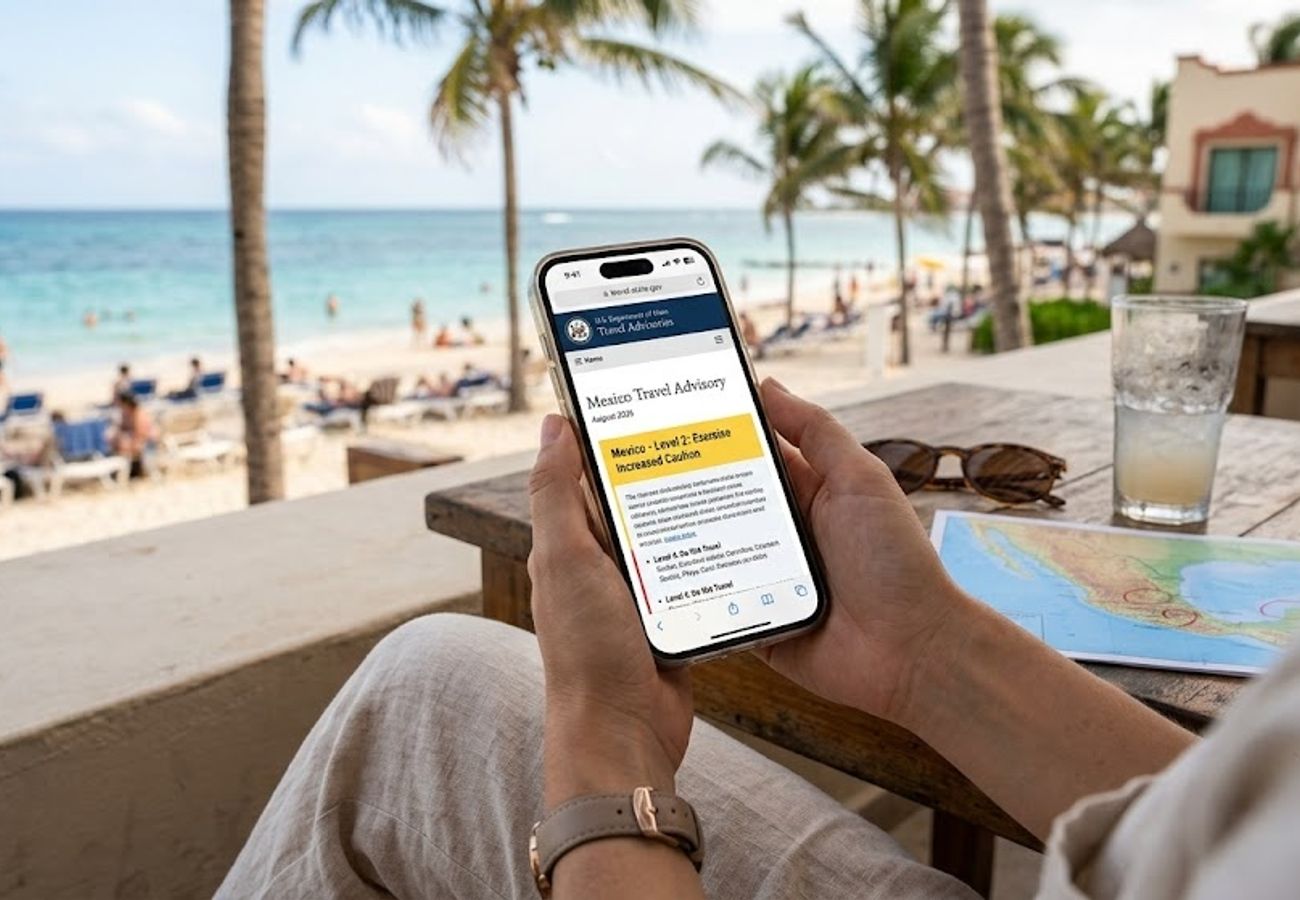
Image generated by AI
MEXICO CITY, August 23, 2026 — More than 21 million international air passengers landed in Mexico in a single year, even as the Mexico travel advisory issued by the U.S. State Department told Americans to exercise increased caution across the entire country. That collision between record-breaking tourism and sobering government warnings defines the Mexico safety debate in 2026, and knowing how to read the alerts may be the most valuable pre-departure research any traveler can do.
Mexico currently holds an overall Level 2 rating from Washington, a classification tied to crime, kidnapping and security risks. Yet Mexican government figures show international air arrivals in 2023 surpassed pre-pandemic levels, and broader visitor counts keep the country near the top of global tourism rankings. Officials and risk analysts say both realities coexist — which is exactly why the warnings demand careful interpretation rather than reflexive cancellation.
US, Canada and UK Issue Layered Mexico Travel Warnings
The American advisory system does not treat Mexico as a single risk zone. Alongside the national Level 2 label, the State Department publishes separate assessments for every Mexican state, flagging some as places where travelers should reconsider travel and a handful where travel is not recommended at all.
Other governments deliver similarly graded messages. Canada's Mexico advisory, updated in summer 2026, urges a high degree of caution nationwide and identifies regions where nonessential travel should be avoided because of crime, civil unrest or infrastructure disruptions. The United Kingdom advises against all but essential travel in selected areas while outlining routine precautions for the country's major resort corridors.
The demand side tells a different story. United Nations tourism statistics and industry analyses show international arrivals across the Americas rebounded strongly in 2023, with Mexico recovering faster than many competing destinations. Government data confirms the country remains among the most visited on earth.
That coexistence of alarming language and robust arrivals explains why a Mexico travel advisory can look frightening in isolation. A national-level warning, stripped of regional detail, hides the conditions most visitors actually encounter on the ground.
How Mexico's State-by-State Risk Levels Actually Work
The U.S. system runs on four tiers, from Level 1 (exercise normal precautions) to Level 4 (do not travel), and applies a distinct rating to each state. Recent guidance keeps the country at Level 2 overall while placing specific states — including parts of Tamaulipas and certain border and interior regions — at Level 4 because of persistent violence and kidnapping risk.
Canada pairs its national advisory with a color-coded map highlighting areas where travelers are urged to avoid nonessential trips. Government pages explain that crime, conflict, natural disasters and infrastructure limitations all feed into each risk level. The United Kingdom follows a comparable model, reserving its strongest language for specific regions while offering practical safety guidance elsewhere.
The problem, analysts say, is amplification. Headlines and social media posts seize on the starkest phrases — kidnapping, cartel violence — without noting that resort zones such as parts of Quintana Roo, Baja California Sur and the Yucatán Peninsula may carry lower risk assessments than certain inland corridors.
A single country label is a composite of many regional ratings. Conditions in a remote border state can differ radically from those in a tightly managed tourism zone hundreds of miles away, and the advisory structure is built to reflect exactly that.
Flight Cancellations and Insurance Fine Print Catch Mexico Travelers Off Guard
Government notices do more than rank danger. They shape how airlines, tour operators and insurers respond when conditions shift. In early 2026, Canadian industry statements urged travelers in Mexico to review their policies after episodes of regional violence triggered flight cancellations around Puerto Vallarta, Guadalajara and Manzanillo.
Publicly available guidance from insurers and government portals stresses that traveling against official advice can affect coverage. Canadian guidance on global disruptions directs travelers to check for exclusions tied to regional conflicts, fuel shortages or civil unrest, then points readers back to country-specific advisory maps. The United Kingdom warns that some policies may be invalidated if a traveler visits an area where the government formally advises against all but essential travel.
For Mexico-bound visitors, the fine print carries real financial weight. Many travelers limit itineraries to states with lower advisory levels, staying within what their insurance providers consider acceptable. That distinction rarely survives a short news alert, yet it can decide whether a medical evacuation or trip interruption claim is honored.
Advisories, in other words, operate as both safety tools and legal signals. Reading how airlines and insurers interpret them matters as much as reading the security sections themselves.
Reading Beyond the Headline on Mexico Safety
Risk analysts consistently describe advisories as starting points, not verdicts. Government pages for Mexico encourage travelers to study state-by-state guidance, monitor local news and register for alert systems that push updates when conditions change. The same resources flag seasonal hazards — hurricane activity in the Pacific and Atlantic basins, seismic risk and occasional infrastructure disruptions — that can affect a trip as much as crime trends.
Scale provides context too. Public tourism statistics show Mexico welcomed tens of millions of international visitors across 2023 and 2024, even while some regions carried Level 3 or Level 4 warnings. Every incident matters to those affected, but the overall rate of serious harm among tourists remains low relative to the sheer volume of arrivals.
The risks are nonetheless real and documented. Crime and kidnapping remain concerns in specific corridors, and local disputes can shift conditions quickly in places that previously felt stable. Recent trilateral statements by the United States, Mexico and Canada around the 2026 World Cup acknowledged that balance directly, stressing open travel alongside coordinated public-health and security measures across North America.
For anyone weighing a trip, the task is interpretation, not dismissal. Reading the full advisory, focusing on regional breakdowns, confirming insurance implications and tracking developments in specific destinations converts stark national language into a precise, actionable risk picture.
Mexico's Tourism Economy Depends on Precision, Not Panic
Tourism powers a significant share of Mexico's national output and employment, according to government releases and international tourism reports. The country has surpassed pre-pandemic visitor numbers and holds its position as a top global destination by arrivals, sustained by steady demand from North America and Europe.
That success raises the stakes of how warnings are written and read. Overly broad alerts can steer visitors away from low-risk areas and squeeze local economies built on tourism revenue. Overly optimistic messaging can leave travelers unprepared for genuine hazards. Analysts argue the most effective advisories are specific, frequently updated and paired with practical guidance on reducing exposure to risk.
Mexico has become the clearest test case for that philosophy: a country where millions travel safely each year while documented dangers persist in defined regions.
Why This Matters for Travelers Booking Mexico Right Now
For the traveler, this means the advisory level attached to a specific state — not the national headline — should drive every booking decision. A Level 4 rating in Tamaulipas has no direct bearing on a resort stay in Quintana Roo, but an insurer's exclusion clause tied to official advice absolutely does.
From a legal and logistical standpoint, the gap between "increased caution" and "do not travel" determines whether claims are paid, whether medical evacuation coverage holds and how airlines handle rebooking during disruptions. Travelers who check their policy wording against the current advisory map before departure protect themselves from the most expensive surprises.
The practical checklist is straightforward: read the full state-level advisory rather than the national summary, verify insurance exclusions against planned destinations, register for government alert systems and monitor local news in the days before departure. Mexico's 2026 advisory landscape rewards exactly that kind of precision.
In Mexico's case, the warning label and the welcome mat exist side by side — and informed travelers are the ones who know the difference.
Related Travel Guides
Disclaimer
This article is for informational and educational purposes only. It does not constitute legal, financial, or professional advice. While we strive to provide accurate and up-to-date information, travel policies, regulations, and conditions change rapidly. Always verify information with official sources before making travel decisions. Nomad Lawyer makes no representations about the accuracy, reliability, completeness, or suitability of the information provided. Readers should consult qualified professionals for advice specific to their circumstances. The views expressed in this article are those of the author and do not necessarily reflect the views of Nomad Lawyer.
Raushan Kumar
Founder & Lead Developer
Full-stack developer with 11+ years of experience and a passionate traveller. Raushan built Nomad Lawyer from the ground up with a vision to create the best travel and law experience on the web.
Learn more about our team →