
Maryland, Michigan & Massachusetts Compete for US Tourism in 2026

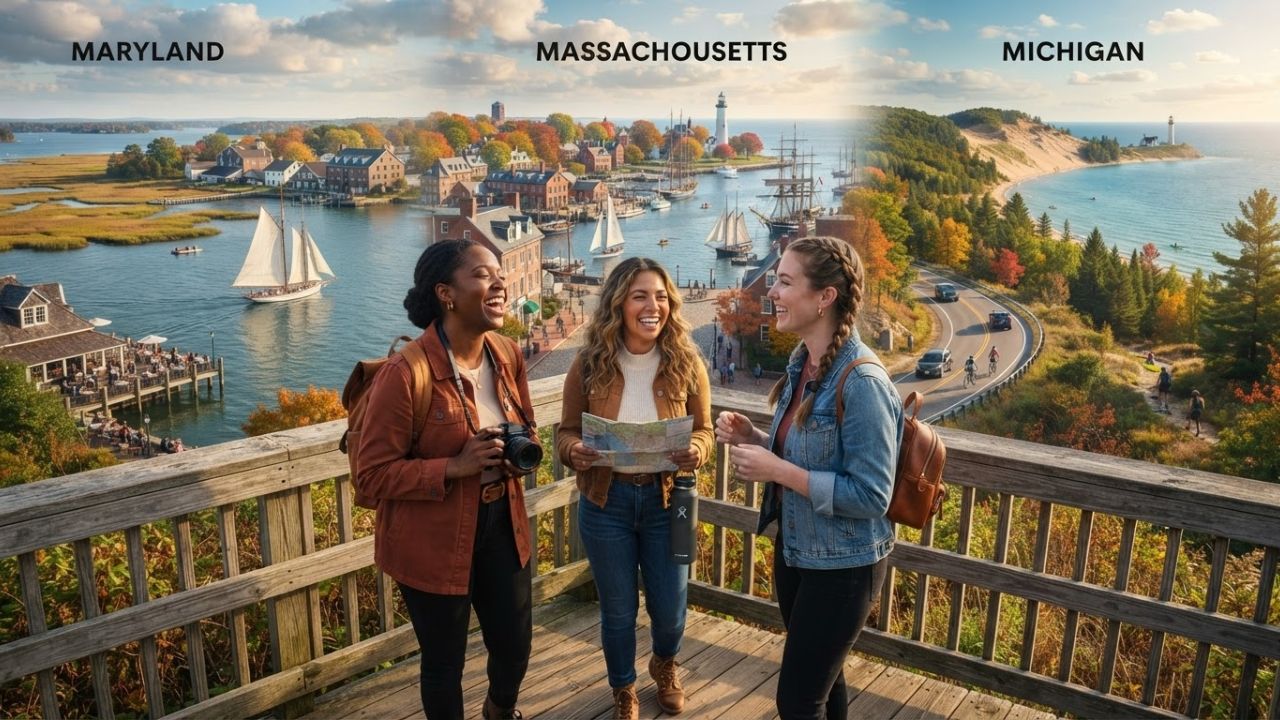
Maryland, Massachusetts, and Michigan are driving unprecedented domestic and international visitor growth across 2025 and 2026, collectively generating over $76 billion in direct traveler spending through coastal getaways, major international sports spectacles, and four-season outdoor adventures.
As traveler preferences pivot toward regional exploration, culinary authenticity, and eco-conscious leisure, this tripartite state competition highlights three distinct regional strategies. Maryland is leveraging international sports spillover and Chesapeake Bay conservation, Massachusetts is converting seven 2026 FIFA World Cup matches and America250 celebrations into global visibility, and Michigan is consolidating its Midwestern supremacy by turning 3,200 miles of freshwater shoreline into a four-season empire.
The Local Trend Revealed: Tri-State Tourism Economics
The transition from post-pandemic recovery into long-term strategic expansion has established clear performance benchmarks across the Mid-Atlantic, New England, and the Upper Midwest.
| State | 2025 Direct Spending Baseline | 2026 Growth Catalysts | Primary Feeder Markets | Key Regional Strengths |
|---|---|---|---|---|
| Maryland | $21.2+ Billion | 2026 FIFA World Cup regional spillover (D.C. & Philadelphia), Chesapeake Bay eco-tours | PA, VA, Washington D.C., DE, NY, Canada, UK, Germany, India, France | Atlantic beaches, maritime heritage, blue crab culinary trails |
| Massachusetts | $24.8 Billion | Seven FIFA World Cup matches (Gillette Stadium), America250, Sail Boston | NY, CT, RI, NH, PA, UK, Canada, Germany, France, China | Revolutionary history, Boston heritage, Cape Cod, academic centers |
| Michigan | $30.7+ Billion ($54.8B economic impact, 131M trips) | 20th Anniversary "Pure Michigan" campaign, Canadian border recovery, Upper Peninsula | IL (Chicago), OH, IN, WI, in-state residents, Ontario, UK, Germany, Japan | 3,200 miles of freshwater coast, Mackinac Island, Detroit revival |
Maryland: Chesapeake Ecology and Strategic Mega-Event Proximity
Nicknamed "America in Miniature" for packing sandy barrier islands, tidal wetlands, historic cities, and Appalachian peaks into a compact geography, Maryland’s visitor spending surpassed $21.2 billion in 2025. Approximately 77% of all overnight and day-trip visitors originate from within the surrounding eight-state Mid-Atlantic corridor, with more than 30 million prospective travelers residing within a four-hour drive.
In 2026, Maryland is capitalizing on its strategic position along the Interstate 95 artery between two primary 2026 FIFA World Cup host cities: Washington D.C. and Philadelphia. International arrivals via Baltimore/Washington International Thurgood Marshall Airport (BWI) are pairing match attendance with multi-day stays in historic Annapolis, Baltimore’s maritime districts, and the coastal wilderness of Assateague Island.
Massachusetts: Global Visibility and the 250th Revolutionary Milestone
Massachusetts recorded $24.8 billion in direct visitor spending in 2025, supported by strong hotel average daily rates (ADR). In 2026, the Bay State is experiencing an unprecedented convergence of global travel milestones. Gillette Stadium in Foxborough is hosting seven 2026 FIFA World Cup matches, projecting 450,000 international visitor stays. Concurrently, the nationwide launch of America250—celebrating the 250th anniversary of the American Revolution—and the Sail Boston international tall ships festival are drawing cultural travelers across Europe, Latin America, and Asia through Boston Logan International Airport.
Michigan: The Four-Season Great Lakes Juggernaut
Michigan reigns as the highest-earning tourism economy among the trio, recording $30.7 billion in direct spending, 131 million trips, and a total economic footprint of $54.8 billion in 2025. Over 80% of leisure volume stems from regional auto travel across the Upper Midwest, with 30 million residents living within a six-hour drive. Celebrating the 20th anniversary of its celebrated "Pure Michigan" campaign in 2026, the state is capturing surging cross-border auto traffic from Ontario, Canada, alongside record demand for Upper Peninsula wilderness exploration.
Cultural and Environmental Value: Distinct Regional Identities
For the traveler, the value of this regional rivalry lies in the authentic cultural and environmental encounters offered by each destination:
- Maryland's Maritime Heritage & Conservation: From the skipjack sailing fleet dredging oysters on the Chesapeake to the Harriet Tubman Underground Railroad Byway on the Eastern Shore, travel directly connects with living conservation. Collaborative efforts between the Maryland Office of Tourism and the Oyster Recovery Partnership have rebuilt natural oyster reefs that filter bay waters while supporting local watermen.
- Massachusetts' Revolutionary Living History: Walking the 2.5-mile red-brick Freedom Trail in Boston or exploring battlefields in Lexington and Concord immerses travelers in early democratic history. Maritime towns like Salem and Plymouth protect centuries-old coastal architecture while connecting travelers to Cape Cod and Martha’s Vineyard.
- Michigan’s Freshwater Wilderness: With over 3,200 miles of Great Lakes coastline, travelers encounter car-free historic preservation on Mackinac Island, towering sand bluffs at Sleeping Bear Dunes National Lakeshore, and sandstone sea caves at Pictured Rocks in the Upper Peninsula.
Community & Eco-Focus: Low-Impact Exploration Across Regions
Sustainable travel practices are essential to protecting the delicate natural assets that drive this multi-billion-dollar tourism economy.
- Maryland: Travelers are encouraged to trade motorboats for kayak eco-tours through Blackwater National Wildlife Refuge—often called the "Everglades of the North"—and patronize restaurants displaying the state’s "True Blue" certification, which guarantees that menus feature authentic, wild-caught Chesapeake blue crabs rather than imported alternatives.
- Massachusetts: Boston's compact layout and extensive MBTA transit network allow visitors to explore historic districts entirely on foot or by electric rail. Strict coastal regulations on Cape Cod, Martha’s Vineyard, and Nantucket restrict single-use plastics and protect fragile salt marsh ecosystems.
- Michigan: Environmental stewardship in Michigan centers on preserving pristine freshwater resources. Visitors to Sleeping Bear Dunes and Pictured Rocks follow strict Leave No Trace guidelines to prevent erosion of ancient sand formations. On Mackinac Island, all motor vehicles have been prohibited since 1898, preserving air quality and historical tranquility through horse-drawn carriages, walking paths, and bicycles.
Visitor Insider Tips for Navigating the Big Three
Each state demands specific local know-how to unlock the best experiences while dodging peak crowds:
- Optimal Visiting Windows:
- Maryland: Visit from September through late October. Ocean temperatures in Ocean City remain warm, the autumn blue crab harvest peaks with heavy, flavorful meat, and historic Annapolis experiences fewer summer sailing crowds.
- Massachusetts: Early June or late September provides idyllic weather for walking Boston's cobblestone streets and touring Harvard and MIT before summer tourist lines peak.
- Michigan: Late August through September offers warm Lake Michigan waters in Traverse City, abundant orchard harvests on the Old Mission Peninsula, and uncrowded Great Lakes shorelines.
- Local Dining Rituals You Must Experience:
- Maryland: Order steamed blue crabs dusted in J.O. Spice or Old Bay at a traditional waterman’s crab shack. Grab a mallet, spread newspaper across the picnic table, and wash it down with an Original Orange Crush—the official state cocktail crafted with freshly squeezed orange juice, orange vodka, triple sec, and lemon-lime soda.
- Massachusetts: Savor a bowl of creamy New England clam chowder paired with oyster crackers in Boston’s North End, followed by a warm, butter-basted lobster roll.
- Michigan: Sample a warm Cornish pasty (a savory beef, rutabaga, and potato pastry turnover) in the Upper Peninsula, or order crispy Detroit-style square pizza with caramelized cheddar edges.
- Hidden Sanctuaries Off the Beaten Path:
- Maryland: Hunt for millions-of-years-old fossilized Miocene shark teeth along the sandy bluffs of Calvert Cliffs State Park on the Western Shore.
- Massachusetts: Escape to the secluded maritime trails and tidal dunes of the Crane Estate in Ipswich, north of Boston.
- Michigan: Stargaze at Headlands International Dark Sky Park near Mackinaw City, one of the premier dark-sky sanctuaries in the Midwest.
Tourism Outlook
The competition among Maryland, Massachusetts, and Michigan underscores the geographic variety driving American domestic and international tourism in 2026. Maryland's seafood culture and Mid-Atlantic sports connectivity, Massachusetts' Revolutionary milestones and World Cup matches, and Michigan's Great Lakes wilderness appeal demonstrate that destination success relies on authentic regional identity.
As global and domestic travelers seek immersive, eco-friendly journeys that balance outdoor recreation with cultural heritage, all three states are well positioned to sustain their historic economic momentum throughout 2026 and well into 2027.
Related Travel Guides
Vermont Leads America's Greenest States for Eco-Travel in 2026
Washington DC Fall 2026 Travel Guide: Smithsonian Anniversaries
10 Best Seafood Shacks and Coastal Trails in Maryland According to Reddit
Disclaimer
This article is for informational and educational purposes only. It does not constitute legal, financial, or professional advice. While we strive to provide accurate and up-to-date information, travel policies, regulations, and conditions change rapidly. Always verify information with official sources before making travel decisions. Nomad Lawyer makes no representations about the accuracy, reliability, completeness, or suitability of the information provided. Readers should consult qualified professionals for advice specific to their circumstances. The views expressed in this article are those of the author and do not necessarily reflect the views of Nomad Lawyer.
Raushan Kumar
Founder & Lead Developer
Full-stack developer with 11+ years of experience and a passionate traveller. Raushan built Nomad Lawyer from the ground up with a vision to create the best travel and law experience on the web.
Learn more about our team →