
Philippines’ First Airport Subway Link: The Insider Guide to Navigating Manila NAIA Terminal 3
The Philippines breaks ground on its first airport subway link at NAIA Terminal 3, cutting travel times from Valenzuela to 40 minutes across a 33-km underground line.

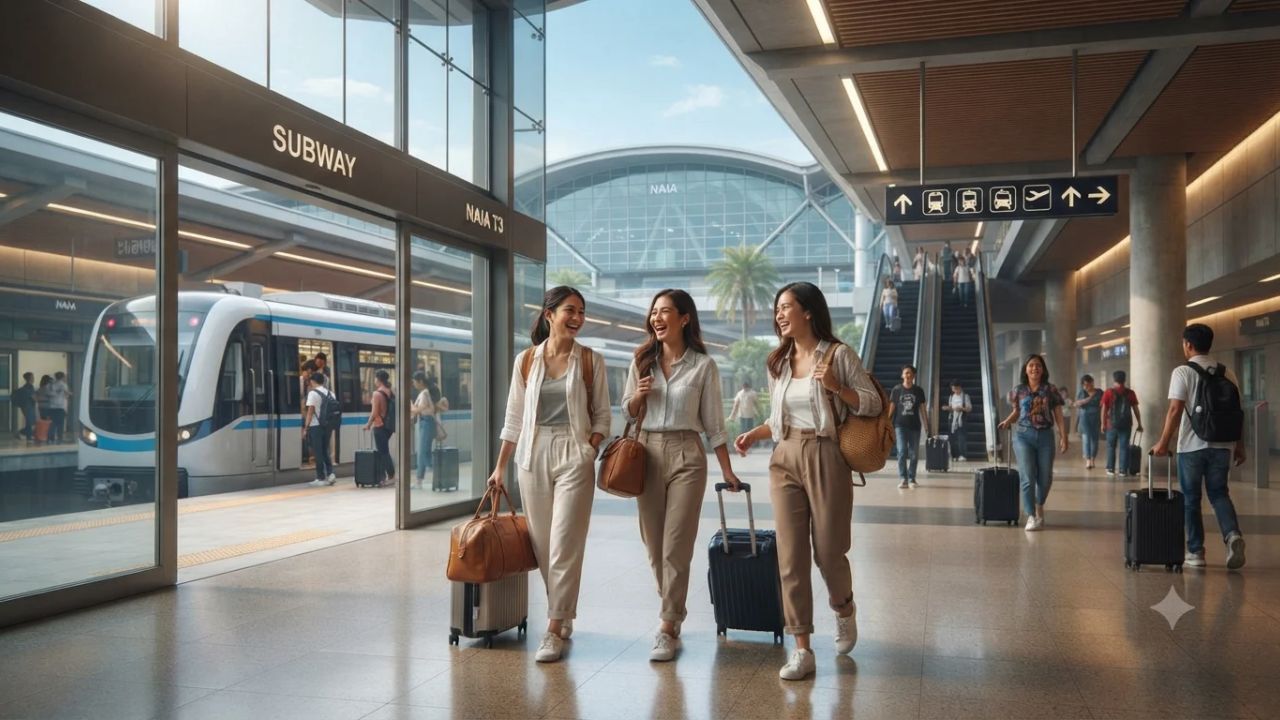
Image generated by AI
For any traveler who has ever landed at Ninoy Aquino International Airport, the ultimate endurance test has never been clearing immigration—it is the notorious multi-hour crawl across the gridlocked asphalt of Metro Manila. In a historic infrastructure turning point, the Philippine government has commenced construction on the country's first direct airport mass transit link: the NAIA Terminal 3 Subway Station, designated as Contract Package 109 of the ambitious 33-kilometre Metro Manila Subway Project. When fully commissioned across its 17 stations, this underground rail corridor will compress the commute from northern Valenzuela City to the airport from an unpredictable one hour and 35 minutes down to an exact 40-minute journey, fundamentally transforming how millions of overseas visitors and daily commuters navigate the archipelago’s gateway.
The Subterranean Leap: Inside Manila’s 33-Kilometre Subway Revolution
Metro Manila's surface road congestion has long dictated the rhythms of Philippine aviation. Missing a flight because of unexpected standstill traffic along Epifanio de los Santos Avenue (EDSA) or Andrews Avenue is a collective rite of passage familiar to both local commuters and global travelers. The groundbreaking of Contract Package 109 represents an aggressive technical solution engineered to bypass the city's surface congestion entirely.
Overseen through the Department of Transportation (DOTr) Philippines, the airport subway component encompasses approximately 2.413 kilometres of specialized underground track and subterranean station infrastructure dedicated specifically to NAIA Terminal 3. As part of the broader 33-kilometre, 17-station trunk line, the system will connect northern residential districts in Valenzuela through Quezon City, Ortigas, and the commercial core of Bonifacio Global City (BGC) directly into the airport’s international departure gates.
The project is built to handle explosive passenger demand. Projections show the NAIA Terminal 3 subway station will process around 70,000 daily passengers by 2035, climbing steadily to 74,000 daily transit users by 2045. By transitioning tens of thousands of travelers off highway bypasses and onto high-capacity electrified rail, the subway provides predictable transit schedules that insulate passengers from monsoon downpours and peak-hour road bottlenecks.
What Makes Metro Manila and NAIA Terminal 3 Different
To navigate air travel in the Philippines effectively, travelers must understand NAIA's unique multi-terminal geography. Unlike integrated global airports connected by automated people movers, NAIA’s four terminals operate almost as independent entities encircling the active runways, with several kilometres of congested public roadways separating them. Terminal 3 is the largest and most modern facility, serving major international airlines and serving as the primary hub for domestic carrier Cebu Pacific.
Beyond the airport perimeter, Manila presents a dynamic clash of eras and urban energies. Within a short drive, visitors transition from the historic 16th-century stone bastions of Intramuros—home to San Agustin Church, designated as a celebrated UNESCO World Heritage Centre Baroque Church of the Philippines—to the futuristic pedestrian boulevards, public art installations, and upscale dining enclaves of Bonifacio Global City.
The city's vibrant street transport—custom-painted stainless steel jeepneys, tricycles, and motorized pedicabs—provides an intimate cultural contrast to the multi-billion-dollar underground subway tunneling below. Experiencing Manila through an insider lens means embracing this duality: admiring colonial heritage and street-food culture while leveraging modern infrastructure to explore the country's 7,641 islands.
Visitor Insider Tips
Navigating NAIA while the subway project progresses demands precise tactical planning. When booking flights, double-check your terminal number. Moving between Terminal 3 and Terminal 1 or 2 currently requires taking an airside transfer shuttle or hiring a taxi on public streets. If you have an inter-terminal connection, reserve a minimum three-hour buffer to avoid missing your onward flight.
When departing Terminal 3 by road today, always instruct your driver to take the elevated NAIA Expressway (NAIAX). Paying the modest highway toll allows you to soar above the chaotic surface intersections of Pasay City, connecting directly to Skyway Stage 3 and reaching Makati or BGC in twenty to thirty minutes.
Avoid aggressive unmetered taxi touts stationed inside the arrivals hall. Instead, walk out to the designated ride-hailing booths for Grab (Southeast Asia’s leading ride app) where dispatchers assign verified drivers, or queue at the official yellow metered airport taxi ranks where staff record your destination on a paper slip for security.
For your accommodation base, choose hotels within Bonifacio Global City (BGC) in Taguig or Legazpi Village in Makati. These pedestrian-friendly districts offer leafy parks, third-wave coffee shops, and reliable security.
When it comes to dining, venture beyond airport concessions to savor authentic Filipino flavors. Head to Poblacion in Makati or Binondo (the world’s oldest Chinatown) to sample sizzling pork sisig served on smoking cast-iron platters with calamansi citrus, rich beef bulalo simmered with bone marrow, and sweet halo-halo layered with crushed ice, evaporated milk, and purple ube jam.
Cultural and Environmental Context
The transition from smoke-belching surface traffic to an electrified mass transit subway marks a critical environmental milestone for the Philippines. Metro Manila is home to over 14 million residents, and road-based vehicle emissions represent a primary contributor to urban air pollution.
By diverting up to 74,000 daily travelers from private cars, diesel vans, and taxis into high-efficiency underground trains, the subway project will drastically lower fuel consumption and greenhouse gas emissions along the capital’s southern transport corridors.
Furthermore, this infrastructure upgrade promotes social equity. Coordinated through the Department of Tourism - Philippines, seamless airport connectivity makes it easier for international travelers to venture out toward regional eco-tourism hubs in Palawan, Siargao, and the Cordillera mountains, while ensuring that thousands of airport ground staff, hospitality employees, and daily shift workers enjoy reliable, affordable transportation between suburban communities and the capital's economic center.
FAQ: Visiting Manila and NAIA Airport 2026
How long does it currently take to travel between NAIA and downtown Manila?
Depending on time of day, driving between NAIA Terminal 3 and Makati or BGC takes 25 to 45 minutes via the elevated NAIAX expressway, but can exceed 90 minutes during rainy peak-hour traffic.
Can passengers walk between terminals at Ninoy Aquino International Airport?
No. Terminals 1, 2, 3, and 4 are separated by active runways and public roads. Transfers require airport shuttle buses, private taxis, or rideshare vehicles.
Do international tourists need a visa to visit the Philippines?
Citizens from over 150 countries, including the US, Canada, the UK, and EU nations, can enter the Philippines visa-free for tourist stays up to 30 days, provided they hold a valid passport and return ticket.
What is the safest transport option from NAIA Terminal 3 arrivals?
Booking an official Grab ride-hail vehicle or using the official metered yellow airport taxi queue provides the safest, regulated transit from the terminal.
Manila’s energy has always been defined by its motion, and its future belongs to the rails that carry travelers smoothly beneath its streets.
Related Travel Guides
Northeast Corridor Train Journey: How Baltimore, DC, Philadelphia, and New York Form One Trip
10 Best Things to Do in Manila for First-Time Visitors According to Reddit 2026
Disclaimer
This article is for informational and educational purposes only. It does not constitute legal, financial, or professional advice. While we strive to provide accurate and up-to-date information, travel policies, regulations, and conditions change rapidly. Always verify information with official sources before making travel decisions. Nomad Lawyer makes no representations about the accuracy, reliability, completeness, or suitability of the information provided. Readers should consult qualified professionals for advice specific to their circumstances. The views expressed in this article are those of the author and do not necessarily reflect the views of Nomad Lawyer.
Raushan Kumar
Founder & Lead Developer
Full-stack developer with 11+ years of experience and a passionate traveller. Raushan built Nomad Lawyer from the ground up with a vision to create the best travel and law experience on the web.
Learn more about our team →